Bride of Pinbot
Updated September 2026
#204
A classic 90s sequel featuring a robotic femme fatale with innovative metamorphosis gameplay mechanics.
Copied!
Rate Your Hype
About This Theme
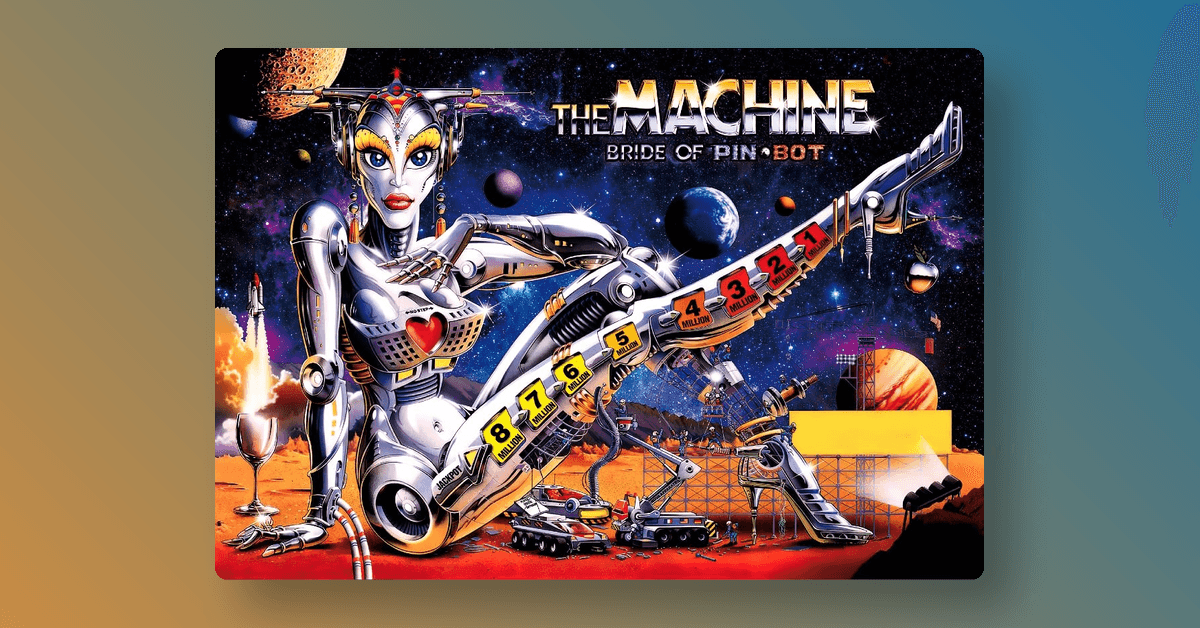
Bride of Pinbot is a classic pinball machine originally released by Williams in 1991 as a sequel to the 1986 game Pin*Bot. Designed by Python Anghelo with artwork by John Youssi, the game features a distinctive female robot head playfield feature with illuminated eyes and metamorphosis mechanics that transform the mechanical bride throughout gameplay. The machine holds significant cultural importance in pinball history as it represented a technological leap in animatronics and interactive playfield features during the early 1990s golden age of pinball. Its retro-futuristic aesthetic and memorable design elements have made it a beloved collector's item, with the game consistently ranking among fan favorites in the pinball community.
Pinball enthusiasts frequently reference Bride of Pinbot in online discussions, with the machine receiving 37 community mentions across various forums. Players often cite the game as a formative experience that introduced them to the hobby during childhood, with several users noting how its striking visual design and accessible gameplay helped hook them on pinball as young players. The game's aesthetic appeal continues to resonate with collectors, with one community member mentioning they kept a Bride of Pinbot in their house for years before expanding their collection. References to the machine also appear in discussions about other potential pinball themes, where users suggest incorporating similar mechanical features like the signature ramp that the robot head could push balls down.
A Bride of Pinbot pinball machine would excel as a theme due to its rich visual possibilities and proven gameplay mechanics. The original featured groundbreaking elements including the animated bride head with moving eyes, a complex metamorphosis sequence activated by building the bride throughout gameplay, and a distinctive purple and pink color scheme that could be enhanced with modern LED lighting technology. Sound and music opportunities would include electronic voice callouts from the bride character, synthesized soundtracks evoking the original's 1990s electro aesthetic, and dramatic audio cues accompanying the transformation sequences. The gameplay structure naturally lends itself to progressive modes where players work toward completing objectives that build and activate the bride, offering both straightforward shot-making for casual players and deeper strategic elements for competitive enthusiasts.