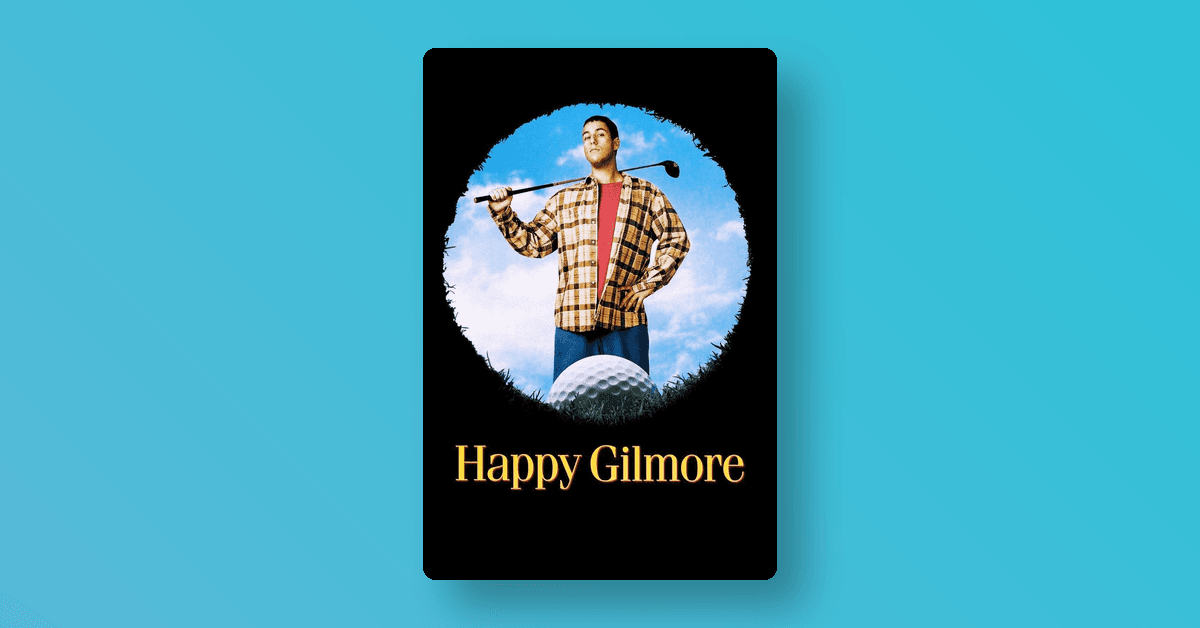
Happy Gilmore
WantedUpdated September 2026
#244
An underdog sports comedy with explosive moments and memorable catchphrases perfect for pinball chaos.
Copied!
Rate Your Hype
About This Theme
Happy Gilmore is a 1996 sports comedy film starring Adam Sandler as a failed hockey player who discovers a talent for golf and enters the professional golf tour to save his grandmother's house. Directed by Dennis Dugan and featuring Christopher McDonald as antagonist Shooter McGavin, along with Carl Weathers as one-handed golf mentor Chubbs Peterson, the film became a cult classic and remains one of Sandler's most quotable and beloved comedies. The movie grossed over 41 million dollars and helped establish Sandler as a leading comedic film star of the late 1990s. Its cultural impact endures through countless memorable lines, memorable characters, and its unique blend of hockey aggression with country club refinement, making it a regularly referenced touchstone in sports comedy.
Pinball enthusiasts have discussed Happy Gilmore as a potential theme across 27 community mentions, with fans particularly drawn to the film's adult-oriented humor as a refreshing alternative to superhero and family-friendly themes that dominate modern pinball releases. Players have expressed enthusiasm for the property alongside other 1990s comedy classics, citing a desire for more mature, nostalgia-driven content. The film's enduring popularity, quotable dialogue, and visual iconography make it an attractive candidate for pinball adaptation, with one enthusiast noting it would work well as part of a broader Sandler-universe concept.
The film offers substantial pinball design opportunities that align well with mechanical gameplay elements. Proposed features include a one-eyed alligator scoop with an opening jaw mechanism referencing Chubbs' backstory, a clown mouth lock shot from the mini golf scene, and a Shooter McGavin bash toy as a recurring antagonist feature similar to the Black Knight. The film's distinctive locations provide natural playfield elements: the miniature golf course, the driving range, the pro tour settings, and the climactic tournament at the fictional Tour Championship. Audio integration would be particularly strong given the film's quotable script, with Carl Weathers' Chubbs providing instructional callouts, while the soundtrack could incorporate both the film's licensed music and original score. Visual elements like the VW Beetle crashed on the green, the gold jacket prize, and Happy's hockey-style putting approach would translate effectively to pinball artwork and toy design.