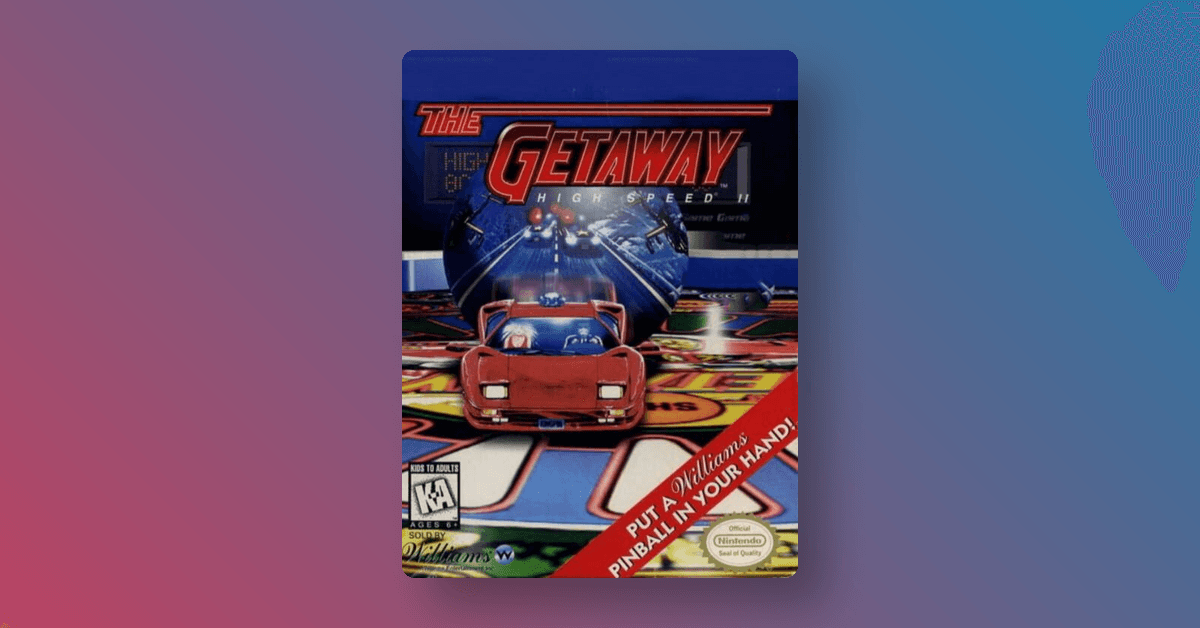
The Getaway: High Speed II
Updated September 2026
#29870/100 community hype
High-speed chase pinball with police pursuits, supercharger ramp, and adrenaline-fueled jackpot scoring action.
Copied!
Rate Your Hype
About This Theme
The Getaway: High Speed II pinball machine is a 1992 Williams release that serves as the sequel to the 1986 classic High Speed. The game continues the high-speed police chase theme of its predecessor, featuring a red sports car pursued by law enforcement through various roadway scenarios. The machine became a significant title in pinball history due to its innovative use of a Supercharger mechanism that physically accelerates the ball using magnetic force, creating genuine speed sensations during gameplay. The game's design by Steve Ritchie, with art by Mark Sprenger, captured the thrill of automotive pursuit and became one of the best-selling pinball machines of the early 1990s. Its cultural significance extends beyond its commercial success, as it represents a peak era of Williams pinball design and established gameplay mechanics that influenced subsequent racing-themed machines.
Pinball enthusiasts frequently discuss The Getaway: High Speed II in online communities, with particular attention to its distinctive features and potential for customization. Players have noted the effectiveness of adding custom music tracks to enhance the driving experience, with some mentioning that certain high-energy songs work exceptionally well during multiball sequences. The game's title and theme also come up in discussions about original versus licensed pinball concepts, with its chase-themed gameplay serving as a comparison point when evaluating potential new machine ideas. The community appreciation for The Getaway reflects both nostalgia for 1990s Williams machines and recognition of its enduring gameplay quality, with collectors actively seeking machines for restoration projects.
The Getaway: High Speed II would work exceptionally well as a modern pinball machine theme due to its rich visual and gameplay possibilities. The original featured a dynamic playfield with a working traffic light, a gear shift mechanism, and the signature Supercharger that propelled balls at high velocity through loops and ramps. A contemporary interpretation could expand on these elements with LED lighting effects simulating police lights and headlights, video mode integration showing pursuit sequences, and enhanced mechanical features. The audio landscape offers significant opportunities, from engine revving sounds and police sirens to a rock-oriented soundtrack that emphasizes speed and adrenaline. The ball-go-fast concept that made the original memorable could be amplified with modern technology, including more sophisticated magnetic acceleration systems and faster-paced scoring modes that reward aggressive play, making it an ideal candidate for appealing to both nostalgic collectors and new players seeking high-energy pinball experiences.