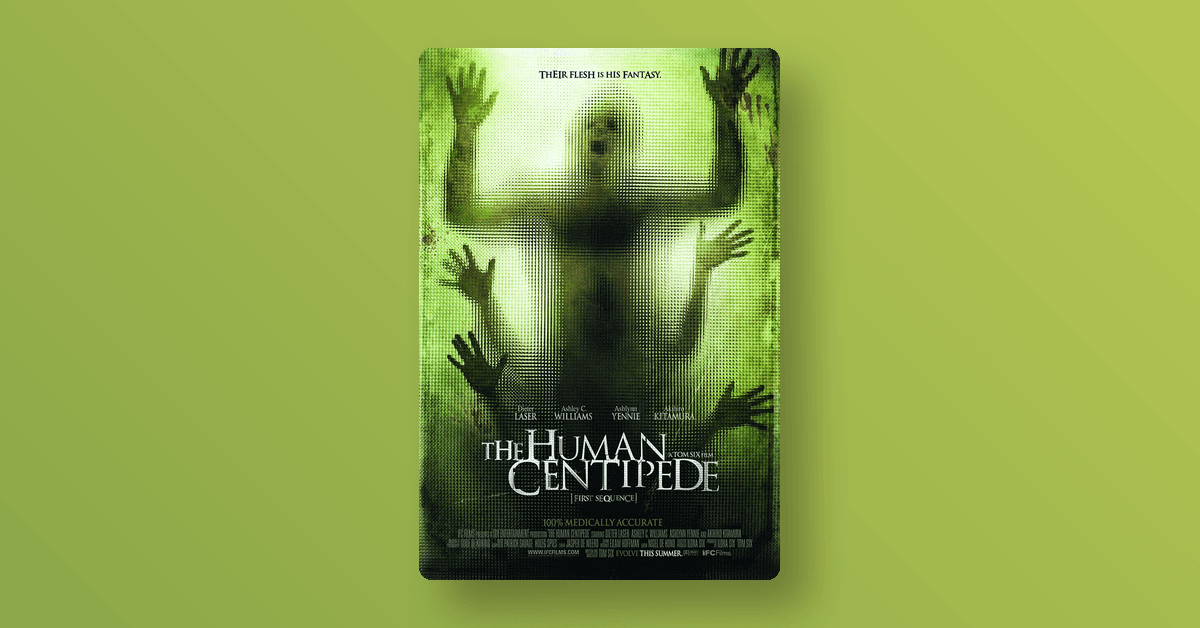
The Human Centipede
WantedUpdated September 2026
#289
Body horror meets bumpers in this grotesquely unforgettable theme that would shock and disgust players.
Copied!
Rate Your Hype
About This Theme
The Human Centipede pinball machine has emerged as a recurring topic of discussion among pinball enthusiasts, particularly in relation to horror-themed games. The Human Centipede is a controversial horror film franchise that began in 2009 with director Tom Six's The Human Centipede (First Sequence), followed by two sequels in 2011 and 2015. The original film depicts a deranged surgeon who kidnaps three victims to surgically connect them in sequence, creating the titular "centipede." Despite its extremely disturbing premise and graphic content, the franchise achieved significant cultural notoriety as a cult phenomenon, frequently referenced in discussions of extreme horror cinema and shock value entertainment. The films sparked widespread debate about the boundaries of horror filmmaking and became embedded in popular culture as a reference point for grotesque or uncomfortable concepts.
Pinball community discussions about a potential Human Centipede machine have appeared primarily in speculation threads, with fans noting both the theme's obvious shock value and surprising gameplay possibilities. One recurring suggestion involves using magnetized balls that stick together to represent the film's central concept, creating unique multiball mechanics where connected balls would move as a linked unit through the playfield. This would create an unprecedented gameplay challenge where players must adapt to controlling multiple balls simultaneously in formation. Other enthusiasts have mentioned the theme as a potential fit for manufacturers specializing in horror content, often mentioned alongside other extreme or cult horror properties. While many comments are tongue-in-cheek, the discussions reveal genuine interest in how such a controversial property could translate to pinball's family-friendly arcade environment.
A Human Centipede pinball machine would present distinctive design opportunities despite the challenging source material. Visual themes could draw from the film's sterile laboratory aesthetic, clinical horror imagery, and the stark black and white cinematography of the second film. The playfield could feature surgical implements, laboratory equipment, and abstract representations of the film's grotesque imagery rendered in a stylized manner appropriate for public arcade settings. Sound design opportunities include the films' unsettling musical scores and the memorable voice work of actor Dieter Laser as the antagonist Dr. Heiter, whose theatrical German-accented dialogue became iconic among horror fans. Gameplay mechanics beyond the connected ball concept could include modes representing the surgeon's twisted experiments, escape sequences, and progression through the trilogy's escalating scenarios. The machine would need to balance the franchise's extreme reputation with pinball's requirements for broad appeal, likely emphasizing dark humor and camp elements over explicit horror to make the theme viable for commercial production.