White Water has been a perennial entry on the community's remake wishlist — more "give us a remastered White Water" than "give us a sequel," but the desire for something in that lineage has been persistent. On the Kineticist Hype Index, the general "White Water" entry — which captured chatter about Yukon Yeti, "Whitewater 2," and general requests for a remake — sat at #67 heading into the reveal. Not a top-tier title, but a persistent presence — steady interest rather than a fever pitch.
Nordman's foamcore mockups had been floating around Pinside for years, and Turner had been rumored as the likely home for the game. But there was no official confirmation until the reveal dropped the day before TPF — with playable units on the show floor 48 hours later.
The day-one response suggested the White Water connection carried real weight even at a modest Hype Index ranking. Turner said in reveal-day interviews that orders were "close to halfway there" and had already surpassed total Merlin's Arcade numbers — though it's unclear whether that figure reflects end-customer deposits or includes distributor allocations. Those numbers come from Turner directly and haven't been independently verified, but if they're in the ballpark, it's a strong start for a boutique manufacturer's third title.
Notable Storylines
From Deeproot to Turner
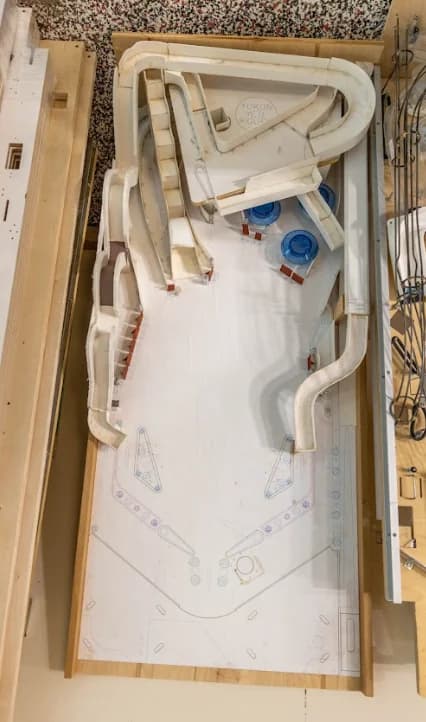
Yukon Yeti started life at Deeproot Pinball around 2018, where Nordman designed the game alongside story writer Quinn Johnson. Foamcore mockups were built and eventually photographed by Pinside users. Nordman left by the end of 2019; Deeproot collapsed into SEC fraud charges and Chapter 7 bankruptcy in 2021 without shipping a single machine.
Chris Turner purchased Deeproot's IP at the March 2022 bankruptcy auction, keeping Yukon Yeti and Merlin's Arcade. The game came back to life around TPF 2023, when Nordman approached Turner about finally building it. Nordman and engineer Zofia Ryan took the original foam core to 3D CAD, and Turner's team built the whitewood from there. This is the Deeproot-era design — not the separate White Water sequel concept called Wild Water that Nordman developed at American Pinball, which never reached production.
Quinn Johnson is still credited as story writer. Some of the people who started this game in 2018 are the same ones finishing it in 2026.
The Visible Ball Lock vs. The Moving Yeti
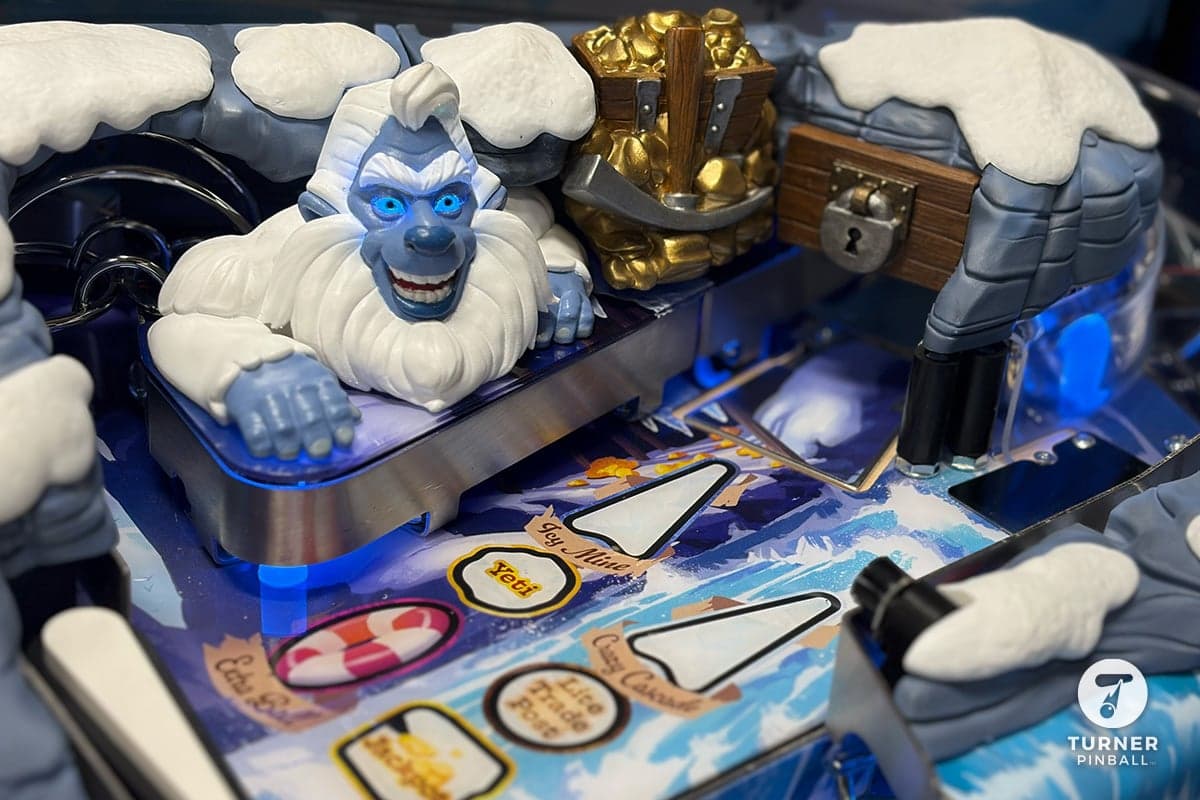
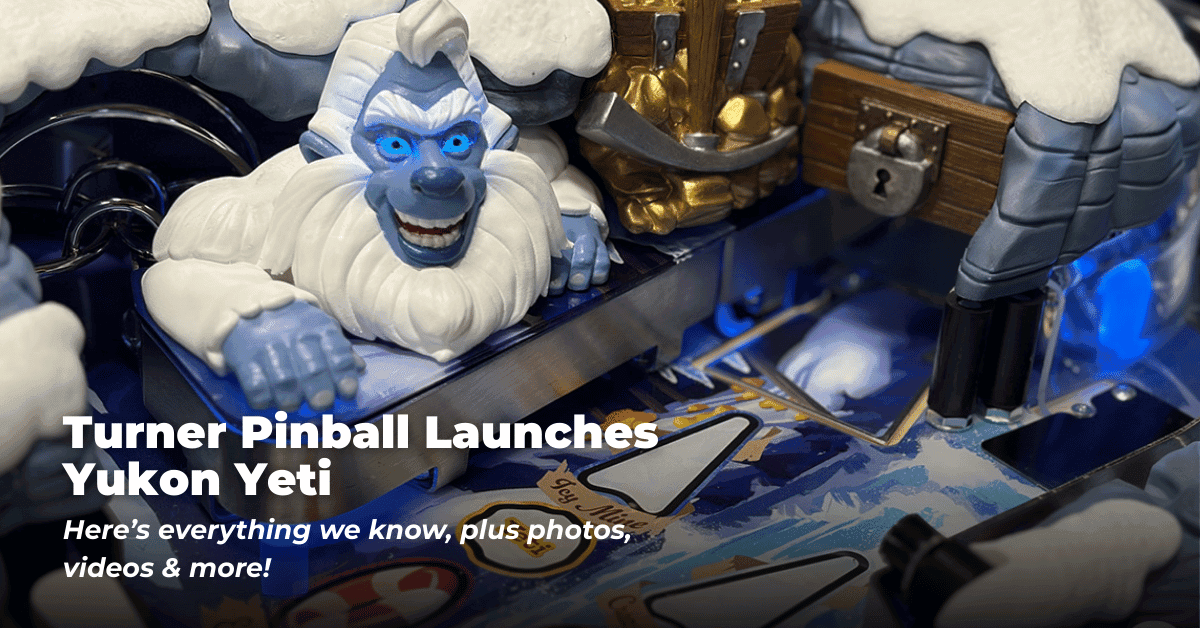
The first thing White Water fans will notice: the Yeti sculpt on the upper playfield doesn't move. On a spiritual successor to a game whose motorized, fur-covered Yeti was one of the most memorable mechs of the 1990s, this is a polarizing choice.
Turner's explanation, shared across multiple podcasts on reveal day, is rooted in a lesson from Merlin's Arcade. That game had a moving Merlin mech with two servos, 3D printing, and a cloth overcoat — and it didn't register with buyers. What people did complain about was the invisible subway ball lock. Turner's takeaway was that if players can't see the balls locked on the playfield, the lock might as well not exist. So for Yukon Yeti, the team prioritized a massive visible ball lock over a moving toy.
The game actually has two servo outputs built into its system specifically for the Yeti — they just chose not to use them. Turner has said they could make the head turn, but didn't think it would add enough to justify the trade-off. The moving Yeti lives instead in the Northern Lights topper, where an articulating Yeti head reacts to jackpots, tilts, and multiball shots, blinking and turning to watch the player.
It's a bet. Community reaction was split — some appreciate the trade-off logic, others see a missed opportunity on a game that invites direct comparison to a 33-year-old original. Whether the 5-ball avalanche mech compensates for the static Yeti is something TPF will start to answer.
An Original Theme in a Licensed World
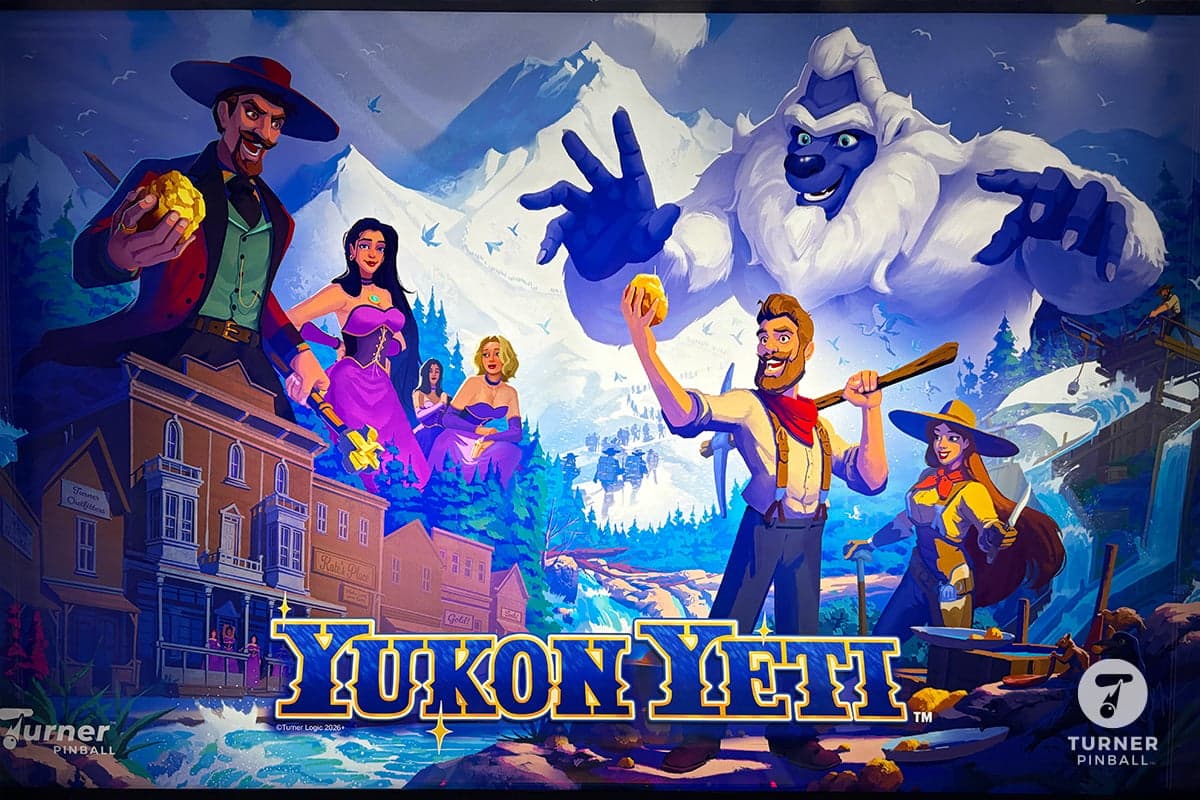
Yukon Yeti is an original IP built around the Klondike Gold Rush. That's rare in 2026 pinball, where most reveals from the major manufacturers are anchored to licensed properties. As Nordman said in a 2018 interview on the Head2Head Pinball Podcast, the original theme behind Yukon Yeti had been "in the back of my mind for a while. But since it was an unlicensed theme, it was never getting done" at previous employers. The theme gives Turner's design team full creative control over the art, story, and rules without the constraints (or costs) of a license.
The concept — gold rush chaos, avalanche multiballs, a mischievous yeti, historical figures like Soapy Smith, the Chilkoot Trail — has real personality. Turner has acknowledged that this is new territory for his company — Ninja Eclipse and Merlin's Arcade both required hands-on play at shows before buyers committed. Yukon Yeti is the first Turner game where the theme itself is generating orders before anyone has touched a flipper.
The Single-Edition Model
Like most boutique manufacturers, Turner is shipping one edition rather than splitting into Pro/Premium/LE tiers — the Legendary Edition at $9,999, capped at 500 units. Accessories are handled through a la carte upgrades and a bundled All-In Package at $2,250 (saving $250 versus buying everything separately). Everyone gets the same game, and you choose your extras.
Merlin's Arcade had two tiers — 500 Legendary units and 800 Arcade units — and by all indications didn't sell particularly well. The single-edition approach simplifies things for a manufacturer at Turner's scale.
Turner Is Scaling Up
Turner recently purchased approximately 17 acres near his current location in the San Antonio area and plans to build a new manufacturing facility within about six months, potentially increasing production capacity by roughly four times. The current facility has served Turner well but has limitations for scaling production. If Yukon Yeti sells through and Turner hits its shipping targets, the new facility opens up the possibility of larger runs on future titles.
Pricing & Editions
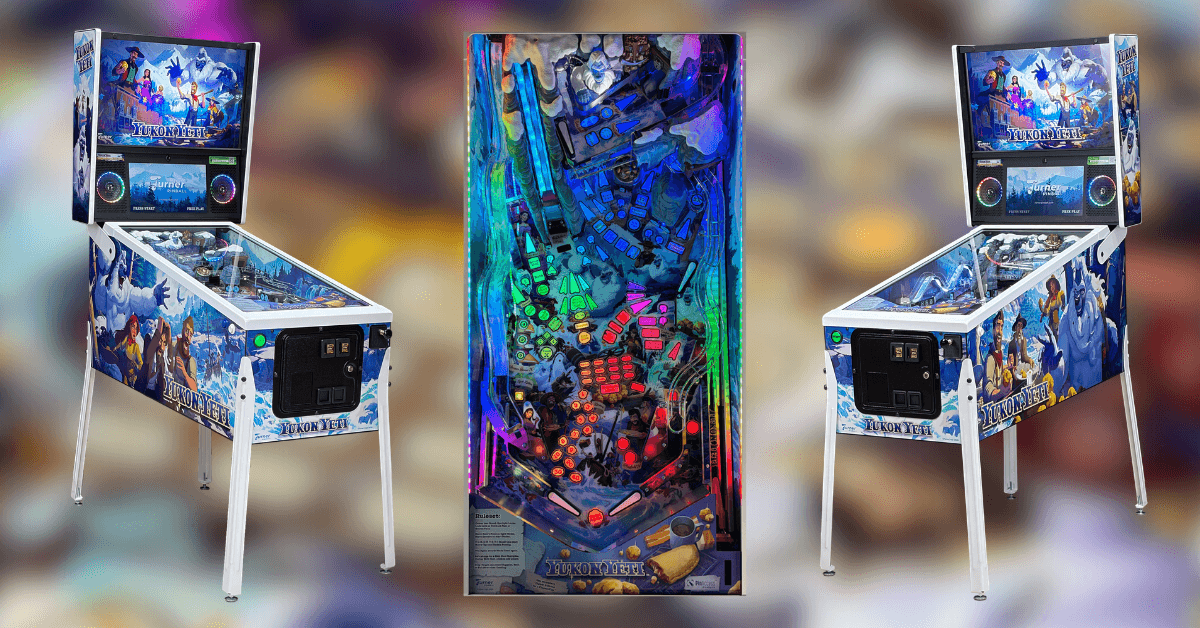
- Legendary Edition: $9,999 (500 units, $2,000 deposit required)
All-In Package (save $250):
- Anti-reflective glass
- Shaker / knocker package
- Premium sound with speaker LEDs
- Cabinet interior art blades
- Premium cabinet-back sliders (nylon, replacing wooden rails)
- Game-themed dust cover
- Premium Northern Lights topper (with articulating Yeti head, Aurora Borealis light projection)
- Package price: $2,250 (upgrades valued at $2,500)
- Estimated total with game: $12,249
A La Carte Upgrades:
- Anti-reflective glass: $250
- Shaker / knocker package: $250
- Premium sound with speaker LEDs: $250
- Standard topper: $300 (underlit flat plastics with game interactivity)
- Cabinet interior art blades: $100
- Premium cabinet-back sliders: $50
- Premium Northern Lights topper: $1,500
- Game-themed dust cover: $100
- Choose your game number: $100
At $9,999 base ($12,249 fully loaded), Yukon Yeti sits in the same price range as Stern Premiums and Jersey Jack titles with major licensed IP. Turner has always done unlicensed themes, but this is the first time they're asking $10,000 for one.
Production Timeline
Turner estimates Legendary Edition units will begin shipping in summer 2026. Two units will be on the floor at Texas Pinball Festival (March 20-22, 2026) alongside two Merlin's Arcade machines. Code is at approximately 80% completion, with 5 of 12 modes playable at TPF — described as the most mature code Turner has ever brought to a first public showing. Turner has indicated the game may also appear at Pintastic or PinFest through dealer partners, though nothing is confirmed.
Notable Features
5-Ball Avalanche Lock
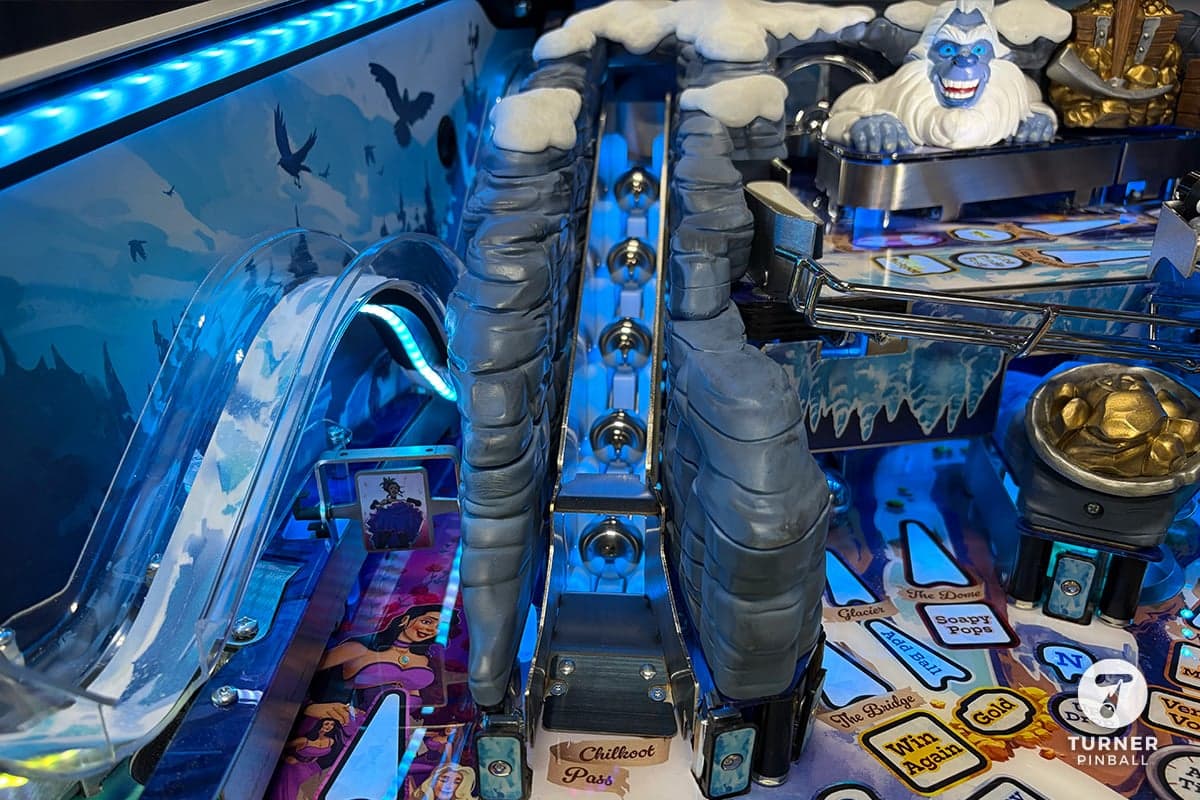
The signature mech and the reason the Yeti doesn't move. A stair-step ball lock on the Avalanche ramp holds up to five balls, each sitting on a visible step. The concept has a historical antecedent in the ski lift mech on Gottlieb's 1993 Wipe Out, though the scale here goes well beyond that. The mechanism is dual-function: balls can lock on the stairs and dump for Avalanche Multiball, or they can continue up the staircase, tip over the top, and feed the upper playfield flipper.
Turner designed the avalanche sequence to escalate tension — at ball three, the callouts warn the mountain is rumbling and the shaker motor kicks in. Ball four intensifies ("the mountain's getting unstable"). Ball five triggers the full avalanche: the stairs flatten like a trap door, all five balls cascade into the playfield, the machine is shaking, and you're in five-ball multiball. Turner has compared the design intent to the Attack from Mars saucer — the kind of physical moment that sticks with you.
Players get a choice at ball three: keep locking for higher-ball multiball with bigger jackpot multipliers (3x at three balls, up to 5x at five), or start multiball early. Risk and reward baked into the mech.
Wavy Rapids Ramp
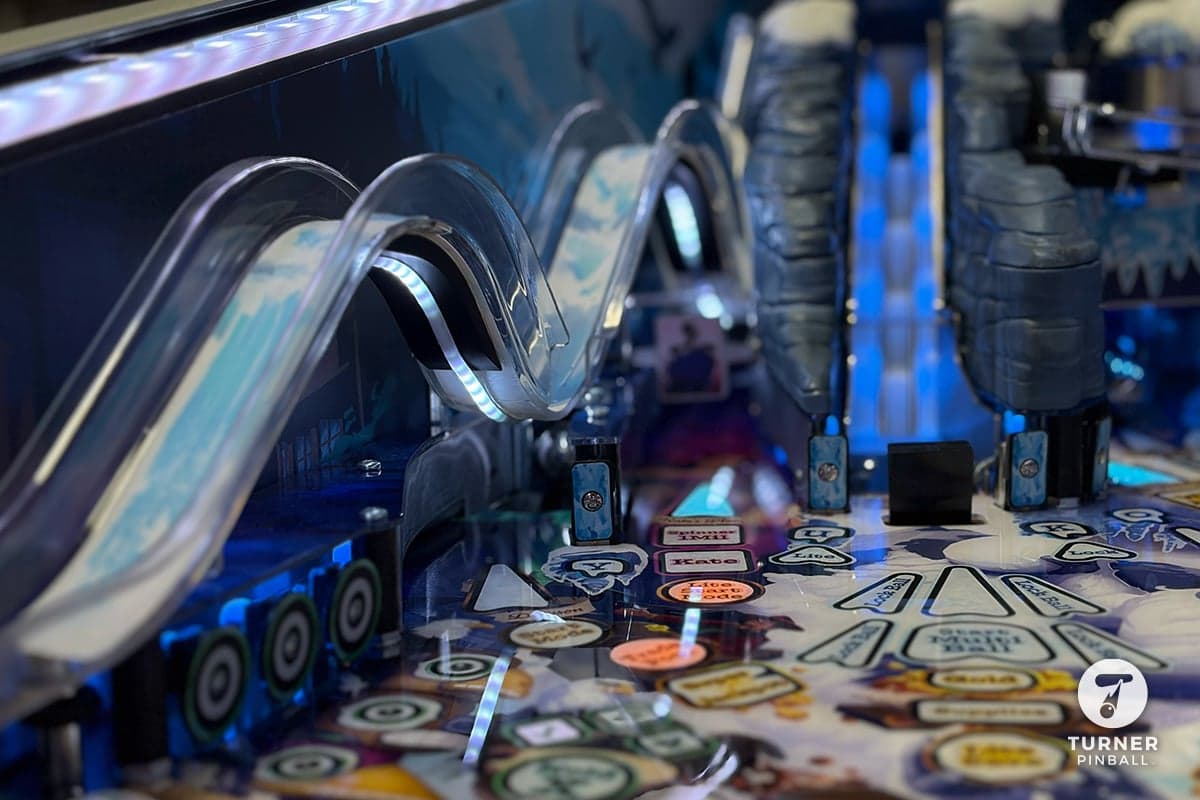
White Water players will recognize this immediately. The sculpted wavy ramp carries two large airtime hills — bigger than the original — with RGB LEDs running underneath in a racing-light pattern. It's a late shot off the upper flipper, looping around the left side of the playfield. Turner has said the engineering is dialed in — they spent time getting the trajectories right to prevent air balls off the hills, and the ball hugs the ramp through both humps.
Four Flippers and a Mid-Playfield Flipper
The game runs four flippers total, including a mid-playfield flipper that wasn't part of the original White Water layout. This opens up shot combinations from the center of the playfield and, critically, makes the upper playfield more accessible. Turner designed the upper playfield for loopability — if you miss a shot up top, the ball feeds back to the mid-right flipper, and you can shoot right back up. A contrast to White Water's upper playfield, where missing a shot meant a long trip back down.
Yeti's Trapdoor
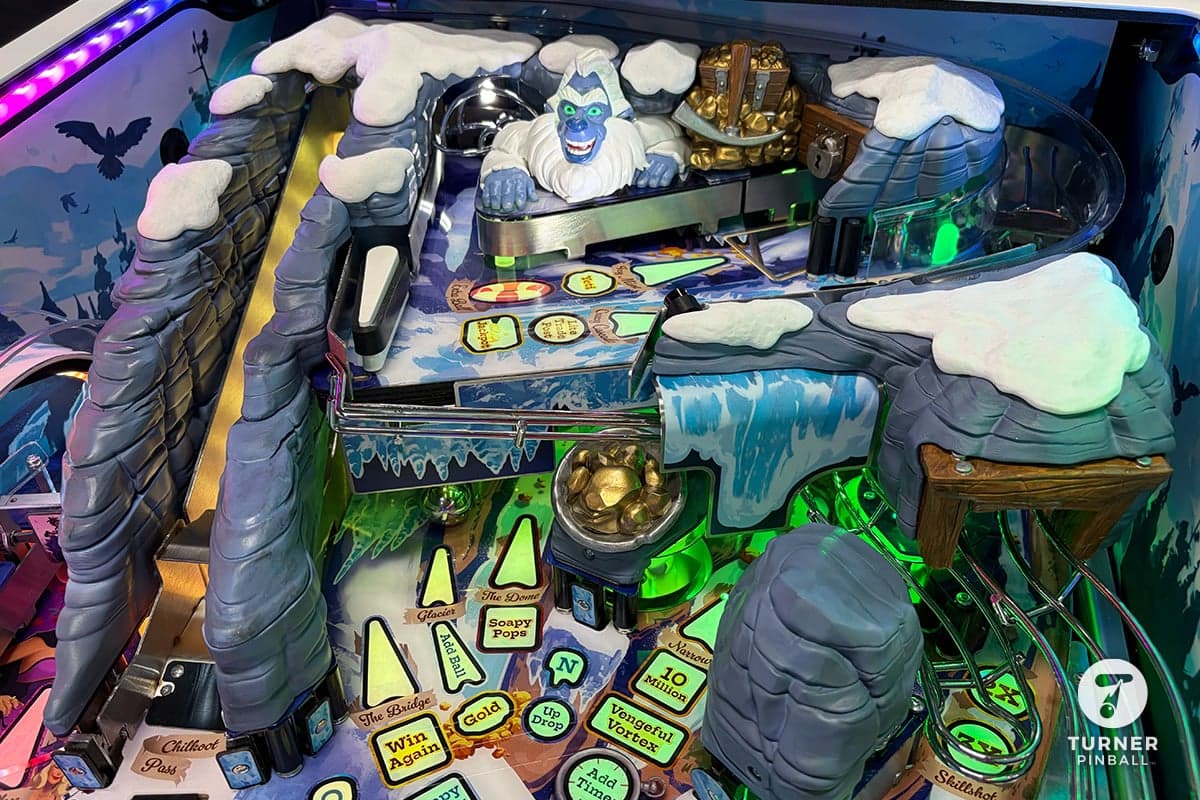
On the upper playfield, a trapdoor near the Yeti serves two functions. As a reward, it opens to reveal the Yeti's stash — the pop bumpers and bonus area. As a penalty, the Yeti can trap your ball mid-play. Turner's team engineered the timing so the trapdoor can rise after you've already pressed the flipper button, capturing the ball before you can react. The Yeti is coded as a prankster throughout the game — sabotaging shots, stealing progress, messing with you — and this mech is the physical expression of that.
Hidden Yeti Ball Lock
Behind the upper-right flipper, two optos and a post create a concealed ball lock that can hold two balls for a secondary multiball. This feature was Turner's addition — not part of Nordman's original foam core design. Turner's team identified an opportunity to add an additional lock where the original design just had a pass-through shot. You can stage a ball against the post from below, and a secret diverter trap door controls access. Newton ball action releases locked balls when the mode triggers.
Finesse Flip
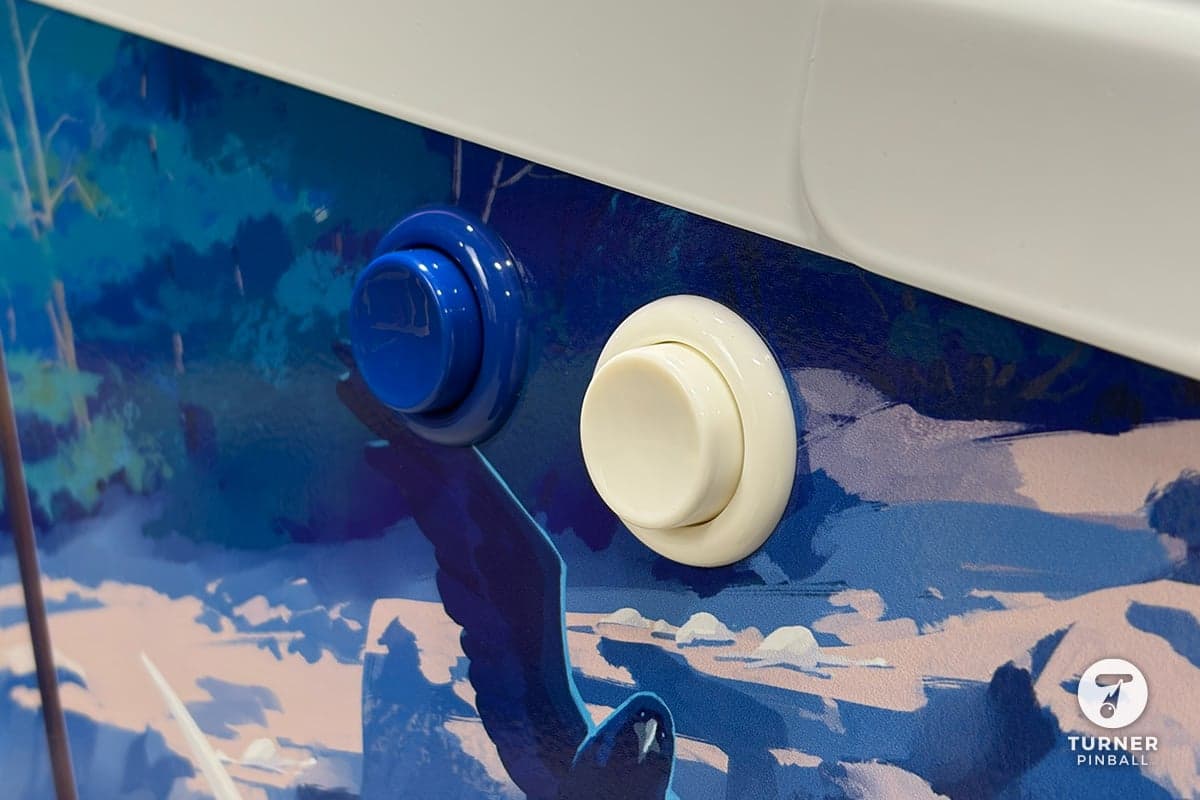
Secondary flipper buttons on both sides of the cabinet perform a tap pass, transferring the ball from one main flipper to the other. This is a Jon Norris-designed feature that first appeared on Turner's Merlin's Arcade. It adds a skill move that doesn't exist on most modern machines.
Cabinet and Glass System
Turner's cabinet design carries over from their previous games: the glass sits in a hinged frame that lifts up like a car hood rather than the traditional slide-out. The lockdown bar, back armor, and side armor all come off as one piece, and the RGB LEDs are embedded in the lift-top cover with wireless contact plates for power — no connectors. The icy white powder coat drew initial skepticism online, though others have argued it fits the Yukon theme better than a standard black cabinet would. The 13-ply 3/4-inch plywood cabinet with black laminate and UV-clearcoat bottom is the same construction Turner has used since Ninja Eclipse.
Rules & Gameplay
Yukon Yeti is built around 12 base modes and three wizard modes, with rules written by Jon Norris. The game is structured as a narrative progression through the Klondike Gold Rush. Turner has said it's designed to feel familiar to White Water players without replicating those rules — which they couldn't do even if they wanted to, due to IP constraints.
This is a deep ruleset. There are multiple interlocking progression systems running simultaneously — supplies, gold nuggets, a treasure map, a claim tier, mode unlocks — and the Yeti and Soapy Smith are coded as active antagonists who steal from you mid-game. Here's how the major systems work.
Modes: The game starts with 5 modes available. Complete 2000lbs of supplies to unlock 4 more. Play the Claim mode to unlock the rest. Modes can be played as timed single-ball or as two-ball multiball (bought with gold nuggets). Shoot Kate's Place spinner to light the Dawson shot for mode start. Complete all 12 modes to play the Northern Lights wizard mode. Complete all 12 in rotation for Super Northern Lights with higher scoring.
Gold Nuggets: The game's currency, echoing White Water's scoring design. Each nugget scores 1M times multiplier as outhole bonus and adds 1M to the standard jackpot value. The best way to farm them: trigger the Yeti Hurryup (by spelling YUKON YETI), collect it, then shoot the upper playfield trap door — this sends the ball to the pop bumpers, which award nuggets per hit. The Glacier (Newton ball) and drop target also award nuggets when lit, with payouts scaling by claim tier: 1 nugget at no claim or Good, 2 at Better, 3 at Best. Gold nuggets can be spent at the Trading Post to buy game enhancements or used to upgrade modes to multiball versions. The Yeti can steal your nuggets. If he does, shoot Golden Falls (under the upper-right flipper) to recover them.
Avalanche Multiball: Complete Lite and Lock at Chilkoot Pass to lock balls in the stair-step mech. At three balls locked, you choose: lock more or start multiball. The fifth ball starts it automatically. The number of balls locked when you start determines the maximum jackpot multiplier — 3X for three balls, 4X for four, 5X for five. Win 5 jackpots to light the Super Jackpot at Dawson. During any multiball, shoot the Glacier to add a ball when lit.
Yeti Multiball: The hidden ball lock's payoff. Trap a ball behind the upper-right flipper at Golden Falls when lit to lock it (carries over between players). Trap another or hit the locked ball from below to start Yeti Multiball. During this mode, all playfield scoring is duplicated as the jackpot value (10M minimum). Trap a ball under the flipper again to collect. A very different feel from Avalanche — this one rewards aggressive scoring during multiball rather than hitting specific jackpot shots.
Treasure Map: A 12-segment meta-progression that runs across the entire game. Each segment requires a specific achievement — a Super Jackpot, completing 2000lbs of supplies, a 3-way combo, a skill shot, and so on. Completing all 12 segments triggers the Yukon Yeti Secret Stash wizard mode, which awards a minimum of 20 gold nuggets plus additional nuggets accumulated and won during the mode.
Supplies: The game tracks supplies by weight. Completing 2000lbs unlocks additional modes, holds your bonus multiplier between balls, and protects you from Soapy Smith's theft. The drop target awards supplies when lit.
Spell YUKON YETI: Completing the target bank cycles through three rewards in order — Soapy Hurryup, Yeti Hurryup, then Double Scoring.
Playfield Multipliers: Double Scoring (from spelling YUKON YETI) and 5X Scoring (starts with a mode after completing 5 or 10 modes) are both timed and can stack to 7X.
Theft: The Yeti steals gold nuggets and Soapy Smith steals supplies — unless you've locked in 2000lbs. Stolen items can be recovered at Golden Falls under the upper-right flipper.
Skill Shot: Lag the ball to the upper-right flipper and hit a hidden rollover to build a 2X or 3X multiplier, then complete flashing combo shots. Or let it drop to the lower flippers for a Super Skill Shot with an additional multiplier. Making 4-5 consecutive skill shot combos wins the Skill Shot Jackpot (25M minimum).
Finesse Flip: The secondary cabinet buttons perform a tap pass, but the feature has a recharge mechanic. The flipper lamps show green (full power), yellow (weakening), and red (may not have enough power to work). Spam it and the pulse gets too weak to transfer the ball. Wait a few seconds to recharge.
Out-of-Mode Mini-Features: When you're not in a mode or multiball, six mini-features are available: Spinner 1M (timed), Vengeful Vortex 10M (timed), Soapy Pops (adds to Soapy's bounty), Stampeder Chaos (300K per pop), Yeti Pops (gold nuggets per pop), and Combos (started from the bottom right return lane, with escalating value and a potential extra ball).
Win Again: When a feature or mode ends, the Win Again shot may flash briefly. Hit it to collect the total score from the just-completed feature a second time.
Art and Audio
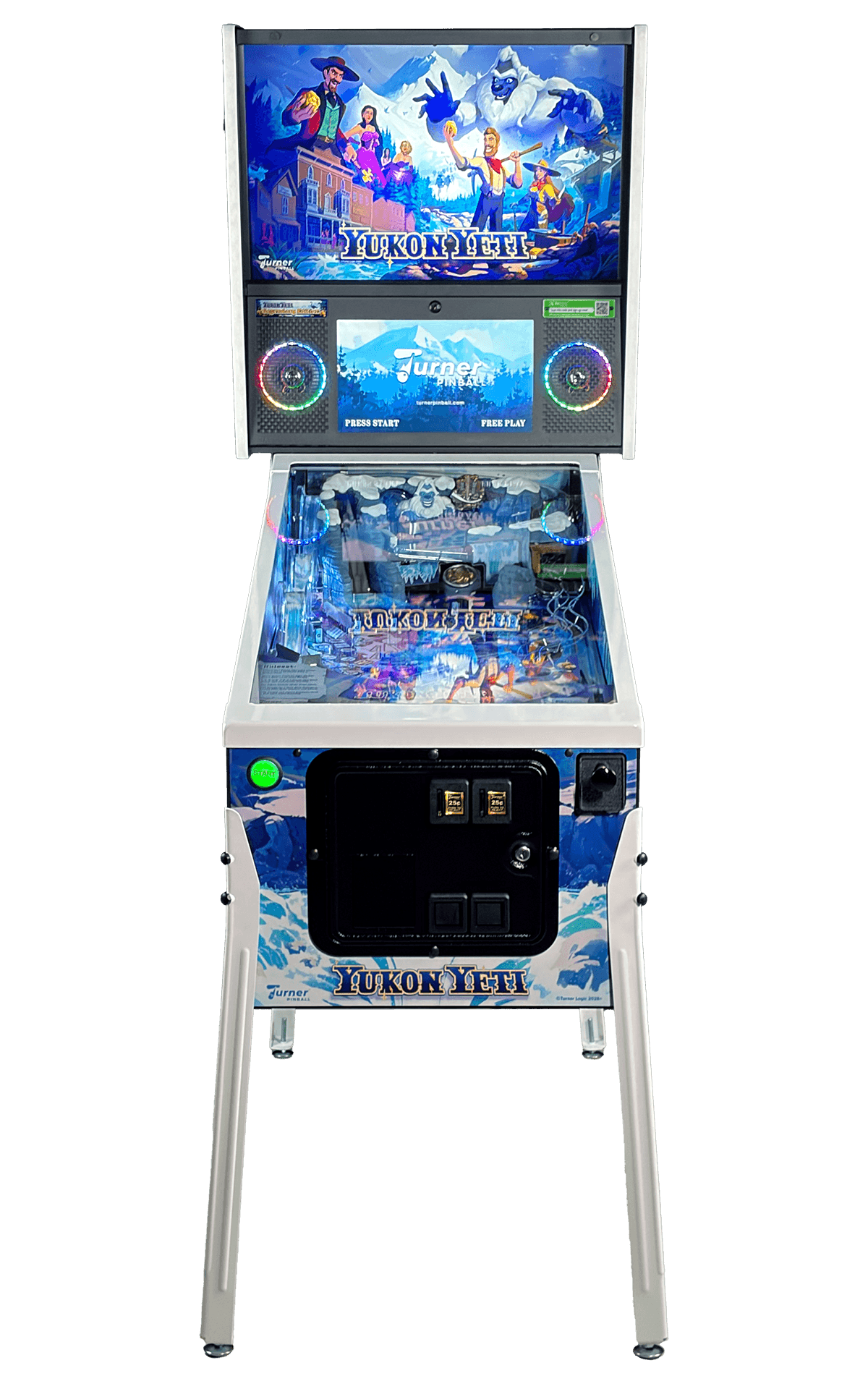
Art: Brad Duke handled the art for Yukon Yeti, as he did for Ninja Eclipse and Merlin's Arcade. The style here is different from both his previous Turner work and the original White Water's John Youssi artwork — Duke went with what he calls a "painterly style" that emerged mid-development. The original art direction looked more like his other games, but Duke pushed to try something different and redid significant portions of the package. The result changed the look of the Yeti substantially, with more flowing fur textures and a warmer color palette.
Turner has been direct about not being a fan of the original White Water art, calling it dated — especially the cabinet art. There was never a discussion about making Yukon Yeti look like a throwback.
Community reception is mixed. Some have praised the color palette — whites, blues, purples, and touches of gold carried across cabinet, backglass, and playfield. Others find it a miss compared to Youssi's original, or see it as too close to Duke's other Turner work. Animation quality hasn't been widely previewed yet — most content from the reveal focused on playfield photos and the trailer, which showed limited animation.
Audio: There is no dedicated sound designer or composer credited on Yukon Yeti. Pinball News reported that "sound design and music comes from a variety of sources, overseen and edited by Chris Turner" — worth noting given that White Water's callouts are some of the most quoted in pinball history. According to Turner, Nordman pushed for an old-school, ragtime-influenced direction to match the Gold Rush setting, and Turner has indicated the audio is one of the easier things to adjust if player feedback warrants changes.
Early reactions to the trailer audio have been mixed to negative. Commenters on Pinside and social media flagged the sound quality and music as a weak point, with some questioning whether the sound design matches White Water's audio legacy. The voice callouts are performed by Canadian voice actors, fitting the Yukon setting. Whether the in-game audio experience differs meaningfully from what the trailer conveyed remains to be seen at TPF.
Launch Media
Trailer
Gameplay Preview

Colin is the chief pixel pusher at Kineticist. He's a lifetime gamer who became enamored with pinball after taking in a family copy of the 1979 classic Joker Poker (the EM version). Since then he's bought, sold and repaired many machines, competed in all kinds of tournaments, and contributes to This Week in Pinball, the New England Pinball League, and Pin-Masters of New England. Previously, Colin spent over a decade working in marketing for agencies and tech startups. He also started and ran a music blog, happy hour website, and wrote a regular craft beer review column for Central Track in Dallas. Once aspired to be an artsy film director.
Like what you're reading?
Get pinball news, analysis, and deep dives delivered to your inbox.