Slow, Then Fast: Meet the Builders Behind Pinball's AI-Era App Boom

If last year's Harry Potter art controversy was part one of the story of AI in pinball, this is its second.
This year in pinball, there's been a quiet explosion, one we haven't seen in many years. Not in games (though there have been plenty of those), or new players, or new content creators. The explosion this year has been in pinball services, apps, and websites.
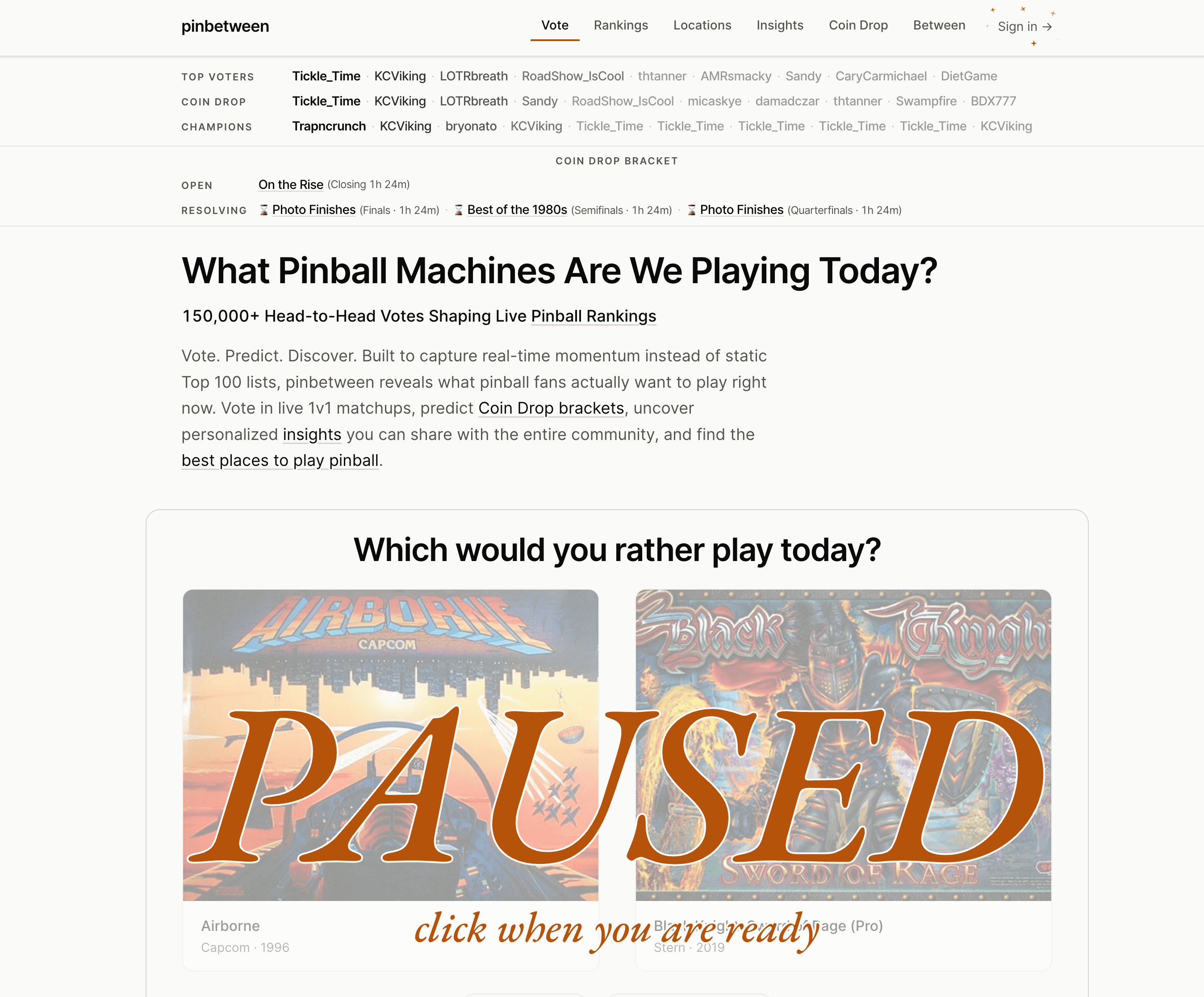
It used to be that I could count on one hand the number of new entrants in the pinball app and website space in any given year (and some years there weren't any at all). This year I've tracked no fewer than 15 that have either launched or gained real traction since the start of the year. Three of them are rankings and reviews apps. pinballranker.com arguably has the most traction, but there's also pinbetween, built by a long-time pinball website operator, and pinballrank.com, a similar idea, whose domain registration date suggests it may have launched up to a month before pinballranker.com came online.
Two are aimed primarily at operators: Pinventory and Reportdesk. A couple more are playing around with experimental features like repairs and game valuations — Silverball Labs and PinballGPT.
Community, database, and player-focused apps make up another cluster: The Pinball Archive, PinProf, House Ball, and Pinball Scout.
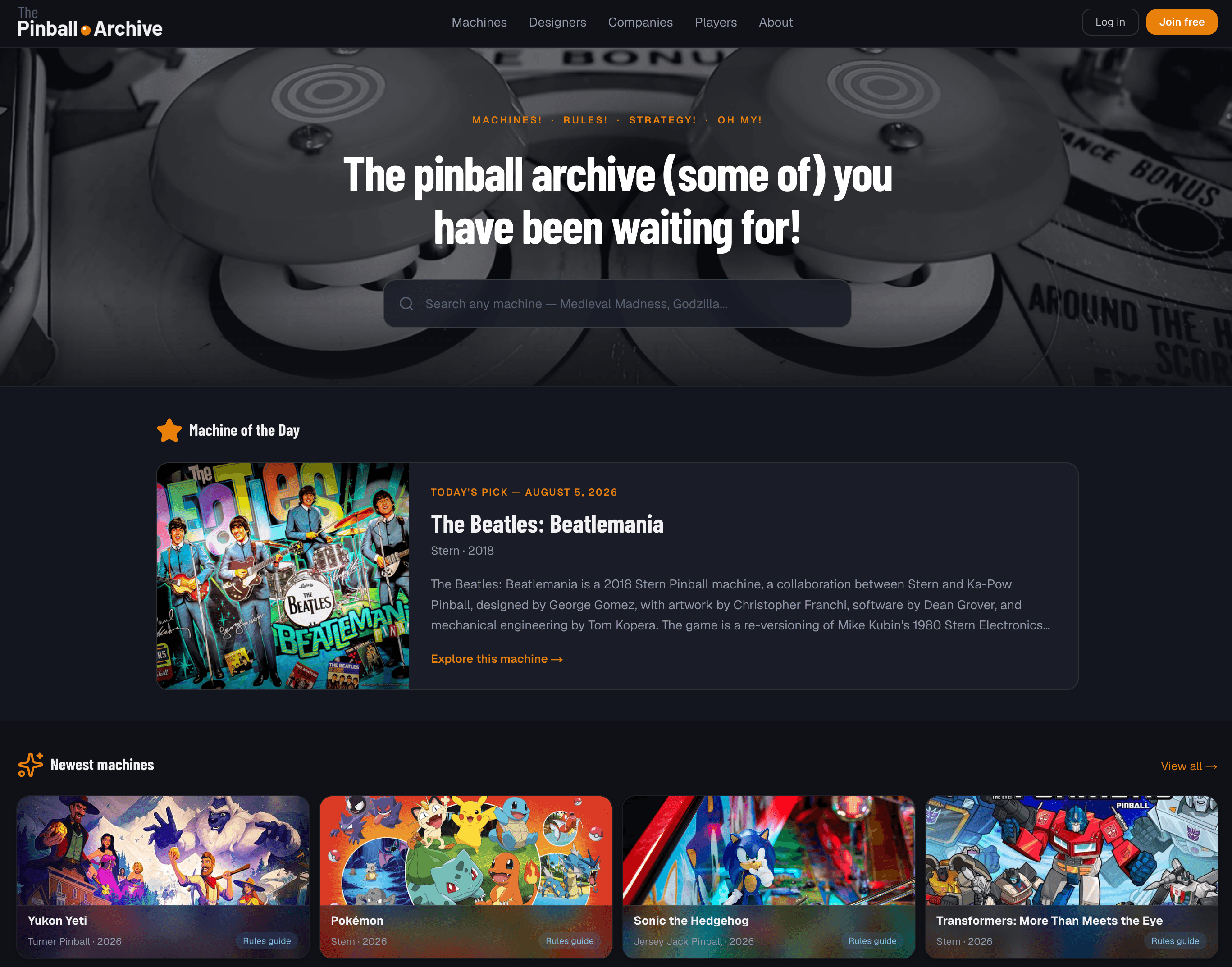
Then the tooling. Pinball Respawn helps players create new rules for their games, and cade.run provides developer tools for people looking to make their own. There's even PinballDex, which fills the gap for Pokémon Pinball's current lack of Pokedex tracking through Insider Connected. And a whole alternative marketplace to Pinside in tiltandtoken.com.
While we haven't been able to verify the dev stacks for every site listed, what most of them seem to have in common is the use of modern agentic coding tools like Claude Code, OpenAI's Codex, or any number of other site-building tools like Cursor and Lovable.

Pinball Map has a better view of this than I do. It spent years handing out free, open API access to anyone who asked; on July 16 it announced that access would require an approved key, and closed the gate two weeks later. The reason it gave was volume — "every week there are about two of these new apps popping up," it wrote, "devouring our resources." That's a quicker clip than the 15 I've tracked, but I'm only counting the ones that launched or found an audience; they're counting everything that hits their servers. Across the community, from IPDB to Pinside, site owners are struggling to meet the needs of their human users alongside the rise in automated traffic.
None of this should surprise anyone who's been watching the AI engineering space. Last November, observers of that circle started calling the stretch the "November Inflection", when a series of model releases, combined with better ways to use them, made it significantly easier to write usable, production-quality code in a fraction of the time, without the headaches that had plagued coding models until then.
A few weeks later, over the Christmas holidays in the United States, Claude Code itself would have its own viral moment, fueled by word of mouth in developer and tech circles as people were able to play with the latest versions of these new tools on various side and hobby projects. GitHub, a popular cloud-based developer service, logged a billion commits across the whole of 2025. It's now running nearly 275 million a week — a pace GitHub COO Kyle Daigle says puts the platform on track for 14 billion commits this year.
Similar growth stories are playing out across the economy. Apple's App Store saw almost double the number of new app submissions in the first half of 2026 as it saw for all of 2025.
Everywhere you look, AI is being pointed at some sector of the economy to turn out more work, faster. And as the models, tooling, and best practices improve, so does the finished output. Vincent Quigley, a Software Engineer Manager for Sanity, a popular SaaS platform for content teams, wrote about how his team doesn't write code anymore.
How work gets done and shipped is changing, and tech is at the front of it again.
It's little wonder that even in a hobby niche as small as pinball, we'd start to see these effects too. Pinball has always drawn a technically adept (some would say nerdy) audience to its enthusiast circles. We like to hack up our games with mods, install our own fan-produced game code, repair games, build games, and of course, build apps, websites, and other tools to support the community and our interests within it.
While pinball may have lagged the broader tech world by a few months, we caught up quickly.
Even in my own work on Kineticist, I remember talking with a developer friend at the end of 2025 about better organizing our content, integrating a few stray services, and moving off a more-complicated-than-it-needed-to-be stack of SaaS and no-code tools. He suggested I look at Claude. Over the holidays, I dug in hard. I learned how to use Claude Code in a terminal. Learned a few best practices and started creating a few practice projects to see what was even possible. Soon I was rebuilding our entire website and erasing years of tech debt along the way.
In this piece, I team up with co-author Benjamin Plotkin to take a closer look at this new class of pinball apps and the builders behind them. Everyone we talked to uses AI development tools in one way or another. Some, like Conor Wilson, developer of the newly popular PinballRanker.com, have used it sparingly. Others, like Will Oetting and Ed Giardina, developers of Silverball Labs and Pinventory.app, use it far more. All three are experienced developers.
Benjamin goes first, with Conor and Pinball Ranker.
Conor Wilson Builds PinballRanker.com Mostly by Hand, with a Sprinkle of AI Support
By Benjamin Plotkin

One new pinball project that's gotten a fair amount of positive exposure (thanks in part to support from the Wedgehead Pinball Podcast) is PinballRanker.com, a fun, vibes-based alternative to the Pinside Top 100. Built by Seattle-based software developer Conor Wilson with virtually no AI support, the site's premise is simple: you're presented with two pinball machines, and your job is to pick the better one. As soon as you've chosen, you're presented with a new head-to-head matchup; by repeating this process, you'll generate a personal pinball rankings list, in addition to contributing to the global rankings.

A fan of pinball since his college days at Indiana University in Bloomington (where he zeroed in on a Family Guy machine in the student union), Wilson had harbored a desire to build a pinball-related app for some time; he was inspired to create Pinball Ranker because he felt the weighted category-based model used by Pinside often led to inaccurate rankings.
"Everyone knows about the Pinside Top 100. It gets referred to a lot, and I think it is nice that the pinball community has this thing we all can reference, but we're not always satisfied with the way the rankings work," Wilson explains. "I would sometimes rank things on Pinside, and at the end of it, a rating for a game was higher than another rating for a game that I knew I liked better. And I would think, 'Hold on a second. What happened here? What arbitrary category did I rank too high that I ended up with this game being higher than I think it should be?'"
While he acknowledges that Pinside's comprehensive ranking methodology is valid, Wilson points out that the point of pinball is to have fun, and Pinball Ranker's "trust your gut" approach reflects this philosophy.
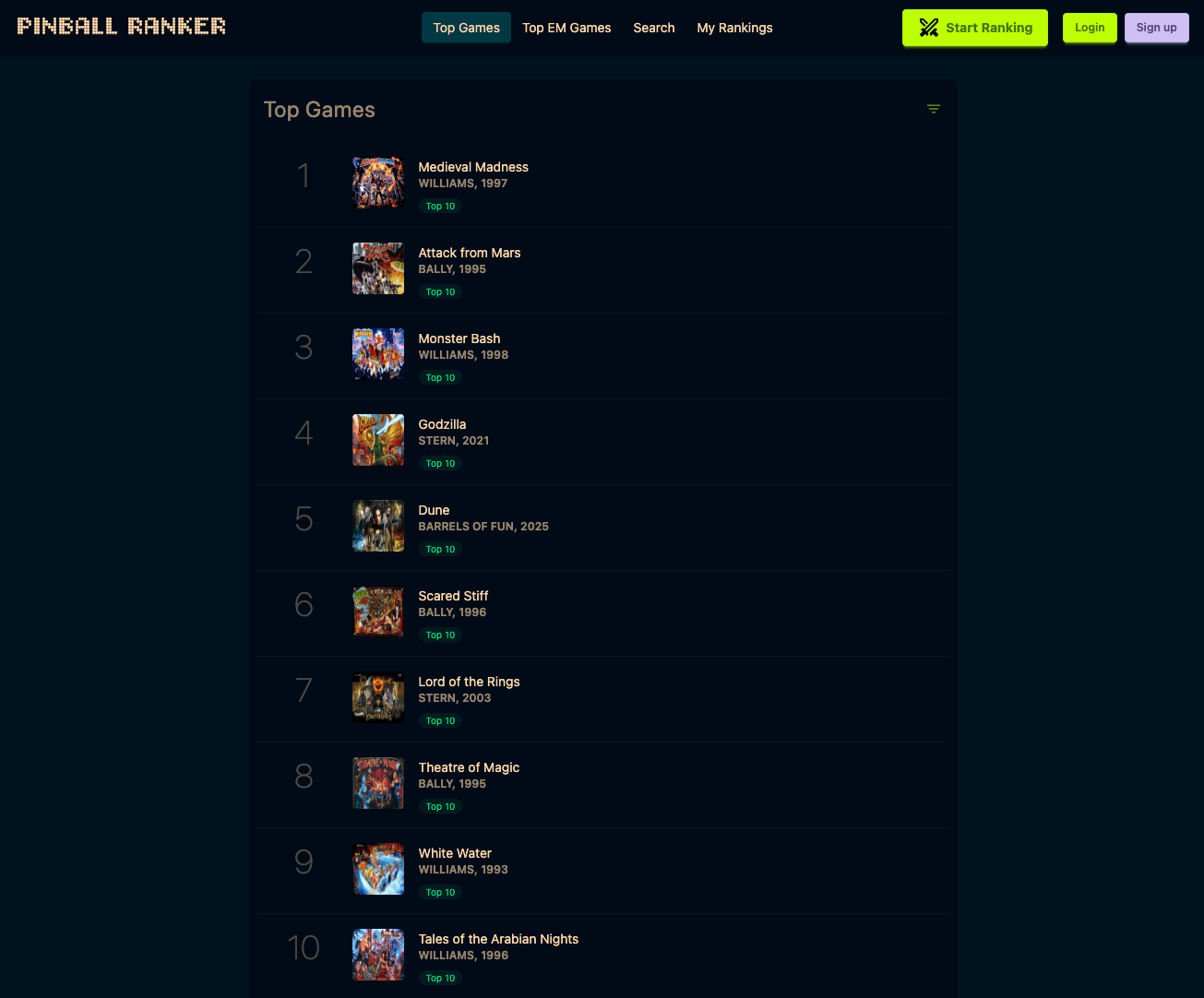
"What I encourage everyone to do whenever I talk to people about pinball is, 'Don't overthink it. Just follow your gut,'" Wilson avers. "I think it's fun to talk about this art package on this game, or which game has better music. But, ultimately, asking yourself, 'What game do I enjoy more?' is a little more ephemeral than that. It's a taste thing. It's a sense of joy. You can't really measure it, but you know it, you know?"
Wilson is a seasoned programmer with over a decade of experience working for leading technology companies (he's currently at Reddit, following stints at Amazon and AirBnB), but his career focus is on mobile app development, so Pinball Ranker was a stretch outside of his comfort zone. Instead of relying on vibe-coding to expedite implementation of his passion project, Wilson chose to limit its complexity.
"In my day job, I'm mostly doing iOS development. I'm not much of a web developer," he admits. "My goal was to try to ship this as fast as possible and get people using it. So, wherever I could, I made choices with the technology stack to try to simplify it. All of it is just basic templates through Django with interactivity added through something called HTMX, which is basically better jQuery. I wanted it to be simple and performant. The goal was to get this shipped out as quickly as possible with as few headaches as possible. I had an MVP [minimum viable product] in mind, and just relentlessly focused on getting that shipped."
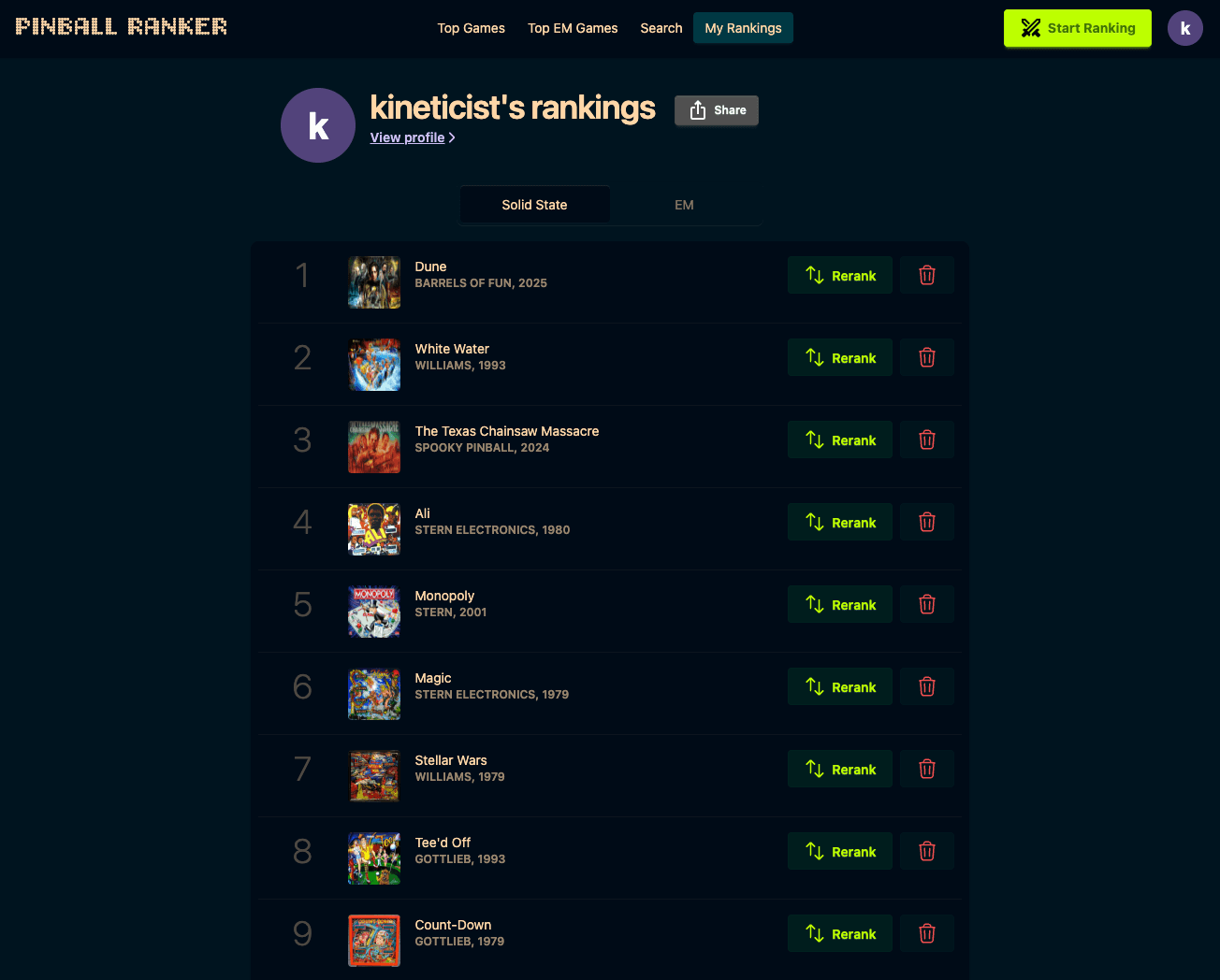
While Wilson takes pride in building Pinball Ranker by hand, he admits that there was one particular use case where AI was helpful: troubleshooting Cascading Style Sheet (CSS) annoyances.
"All of the logic is by hand," Wilson confirms. "And I try to do all the UI by hand, but occasionally I would run into a thing where I was trying to get one thing positioned exactly next to some other thing, and every time I tried, it wasn't working. Copilot's just sitting right there in VS Code, so I'd ask it, 'Hey, why is this thing not lined up with this other thing?' And then it would generate some CSS to fix my mistake. I avoid it for core logic for sure, because I frankly just don't trust it for that kind of stuff. I'm confident in my own abilities to reason through those problems and come to solutions that I think would work best, and that's kind of where I intend to stay. I have my own concerns with AI, both in terms of its general effects on society and in not trusting the code it generates all that much. And Pinball Ranker is a fun project for me – I don't want to cede the fun stuff to AI."
Despite his skepticism of generative AI, Wilson remains pragmatic about the technology, recognizing its value for helping developers familiarize themselves with sprawling software libraries.
"At a large company like Reddit, you have very large code bases, oftentimes many code bases," he states. "And whenever I'm working on a project that is kind of taking me outside of the scope of the module that I'm usually working in, I do find the AI tools can be very useful for quickly ramping up on a code base. It is very good at summarizing things. In fact, it's gotten disturbingly good at summarizing where now, if you ask it how something works, it'll even generate a flow chart for you."
The discourse regarding AI and pinball manufacturing has, thus far, focused on aesthetic concerns (accusations of "AI slop" art are rampant); not much has been said about the software side. Wilson suspects that its value may be limited due to the insular and relatively small scope of pinball software.
"I'm kind of curious how useful AI actually will be for writing the code for pinball," he says. "It's not like Stern has a bunch of their code out there that's being scraped into LLMs. You're doing something where I'm sure there was no training data for it at all. So, if you say, 'Hey, Claude, write me pinball-related software that will work on Stern Spike 3; here's the list of rules,' will it even know what that means? I'm assuming not, just because that's such a niche within a niche, you know?"
Wilson is troubled by the economic and environmental impacts of widespread AI adoption; resigned to its continued existence, however, he holds hope that societal pressure can ensure its transition into sustainability.
"As a society we haven't shown much willingness to reduce our usage of things in the name of sustainability," he admits. "That said, so far, AI is not so ingrained into our lives that it's impossible to imagine more push back against its excesses. Ultimately, I'd like to see regulations which set sustainability requirements for data centers as well as penalties for trying to move polluting or resource-intensive activities to countries with fewer environmental protections. AI exists and, barring some sort of Butlerian Jihad, I don't see it going away. So the question becomes, how do we work to ensure that the continued use of that technology doesn't come at the cost of the environment, our health, our jobs, and our humanity."
Ed Giardina and Will Oetting Learn to Build with AI Coding Tools
Both of them started in the same place: they wanted to learn the tools.
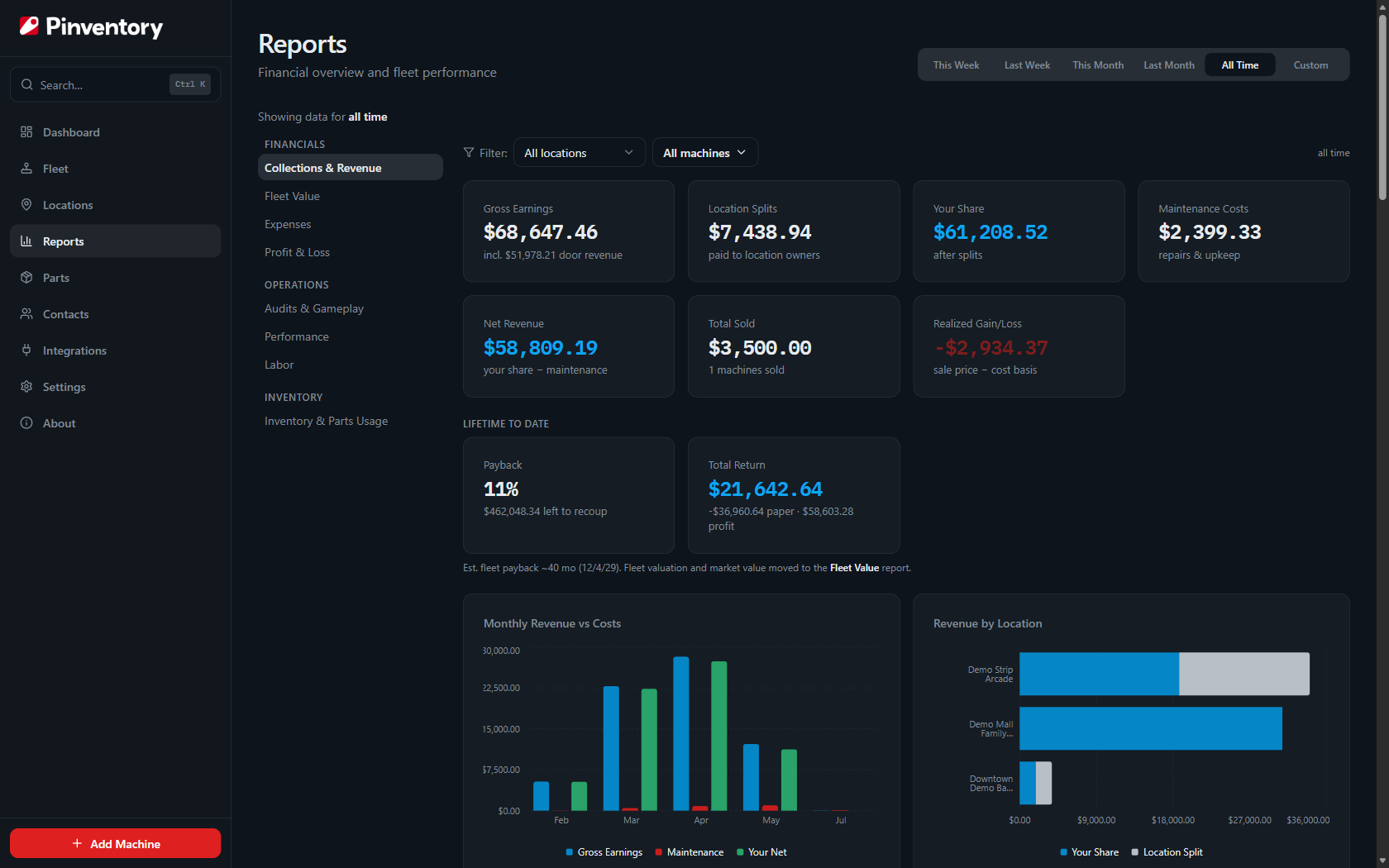
Giardina has been building data-driven business software for 24 years — "apps that take in data, manage the lifecycle of a business and its events, and spit out actionable information" — and made the IFPA Mobile App. Pinventory came out of wanting a pinball-specific answer to "all the workflows and operations that come from owning pinball machines." But the tooling was its own goal: "A big driver of this project is my desire to learn to use AI responsibly and to prove you can build a big, reliable platform without 'slop'."
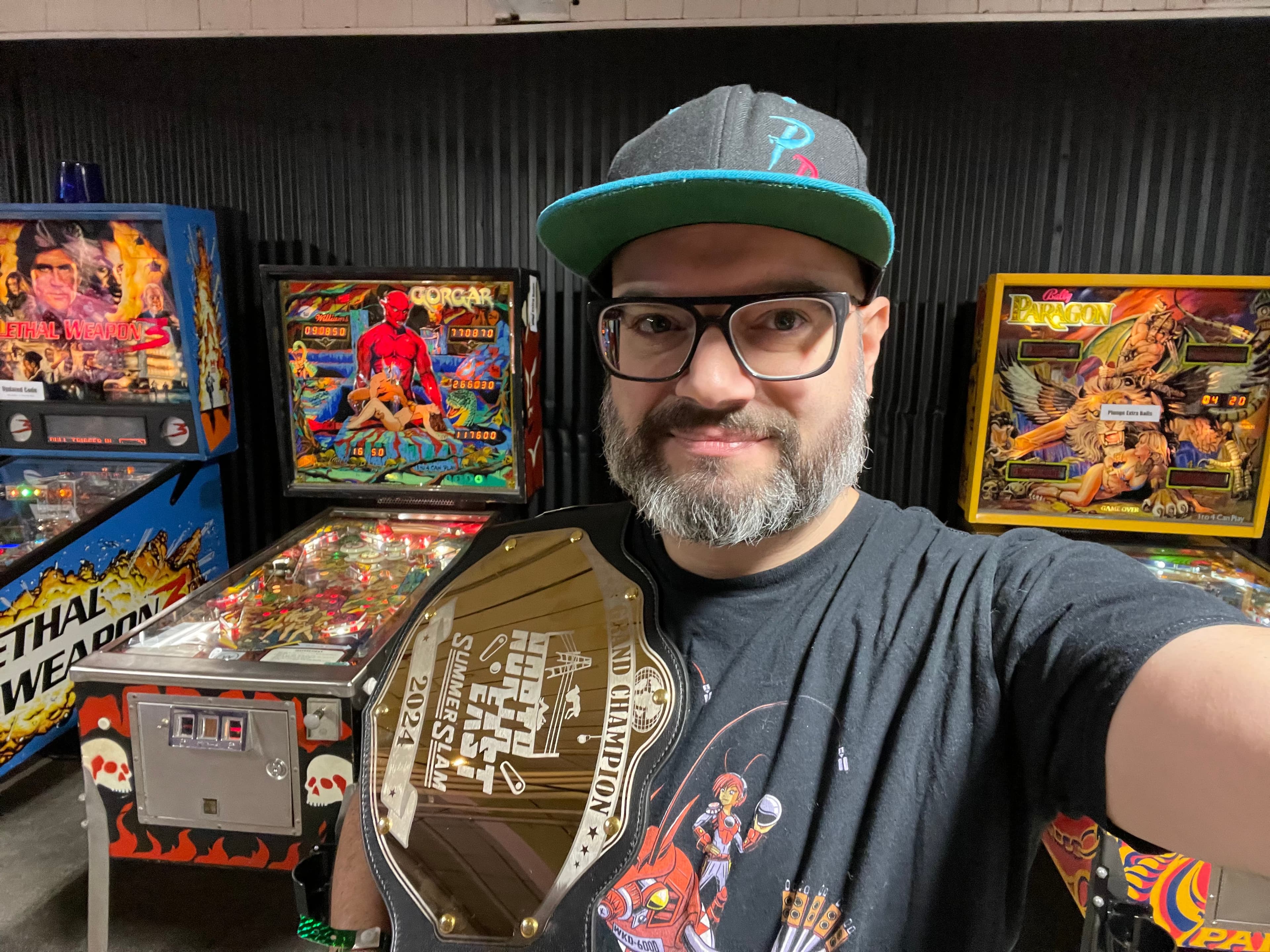
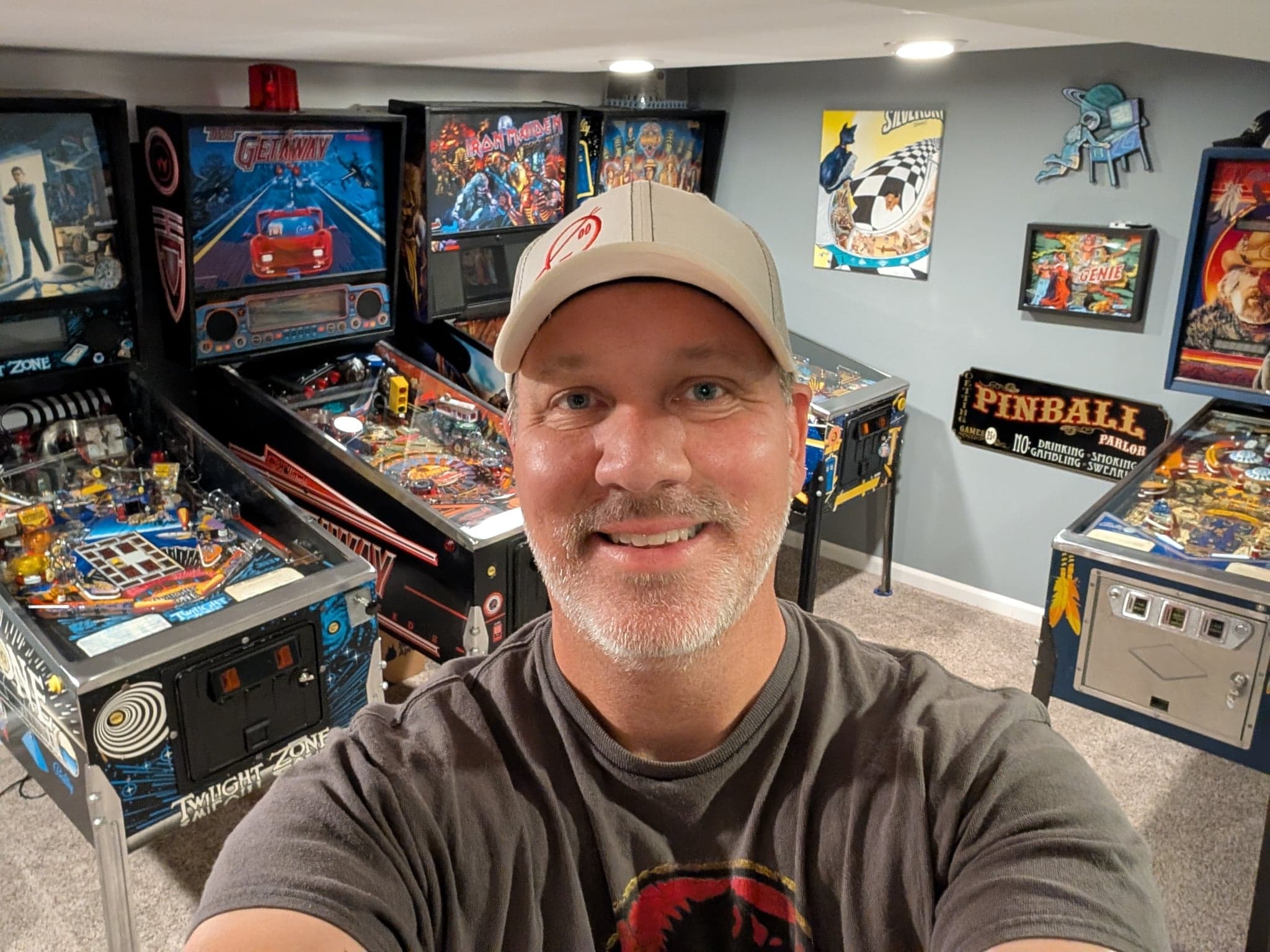
Oetting has been in software for over 25 years. He came to pinball in 2017, when he bought and fixed up a Bounty Hunter for his father-in-law, who had suffered a traumatic brain injury; Oetting thought the game might help him rebuild some hand-eye coordination. Once it was delivered he missed having one himself, and started collecting and doing repair work. He says he now likes shopping out and refurbishing games more than playing them. He also worked the tech side of This Week in Pinball under founder Jeff Patterson, and kept it running before it came to me. Silverball Labs began from the same impulse Giardina describes: "I had started using AI for development in my professional career and wanted a project that could both further my learning of AI's capabilities and help out the pinball hobby that I love."
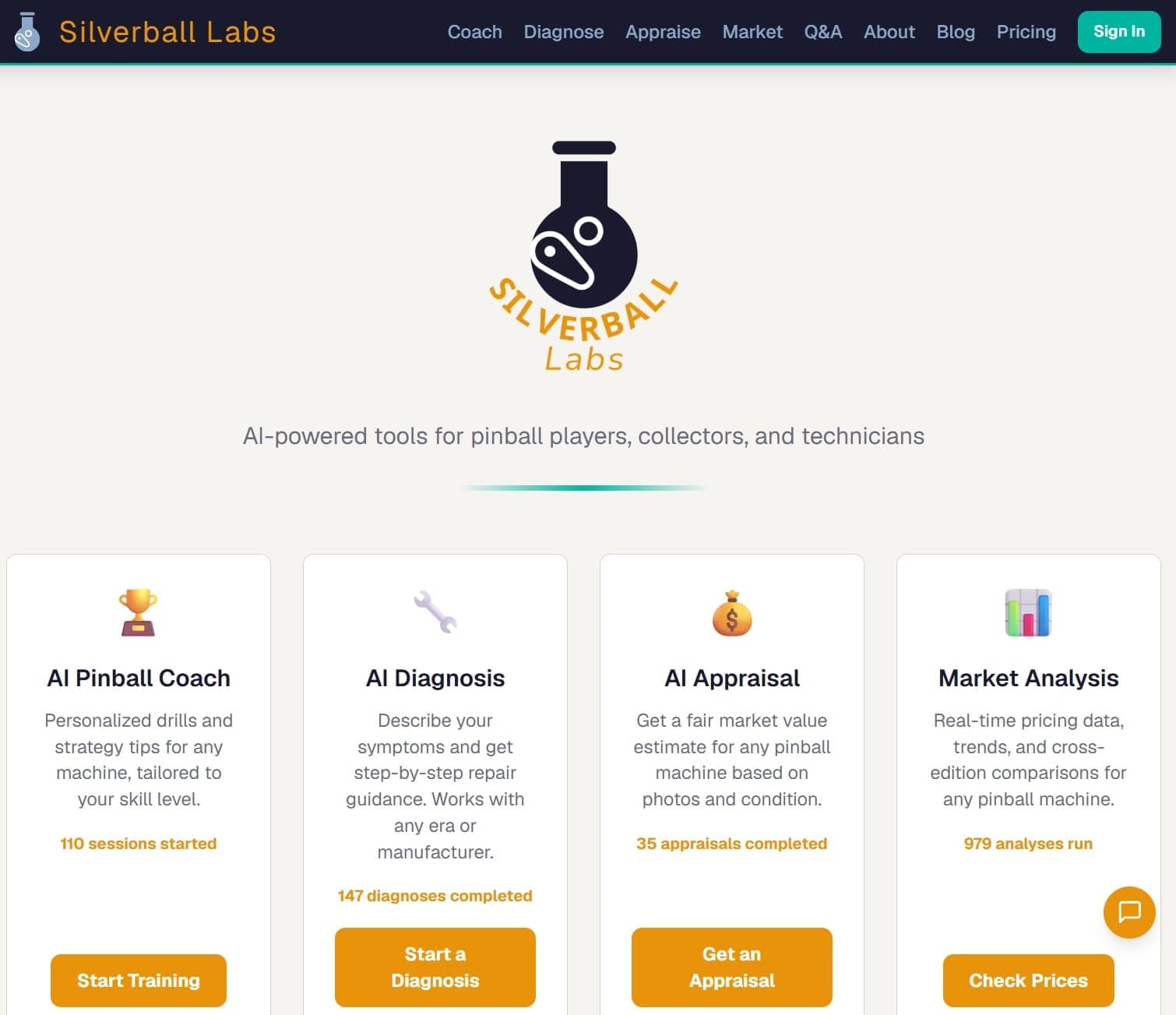
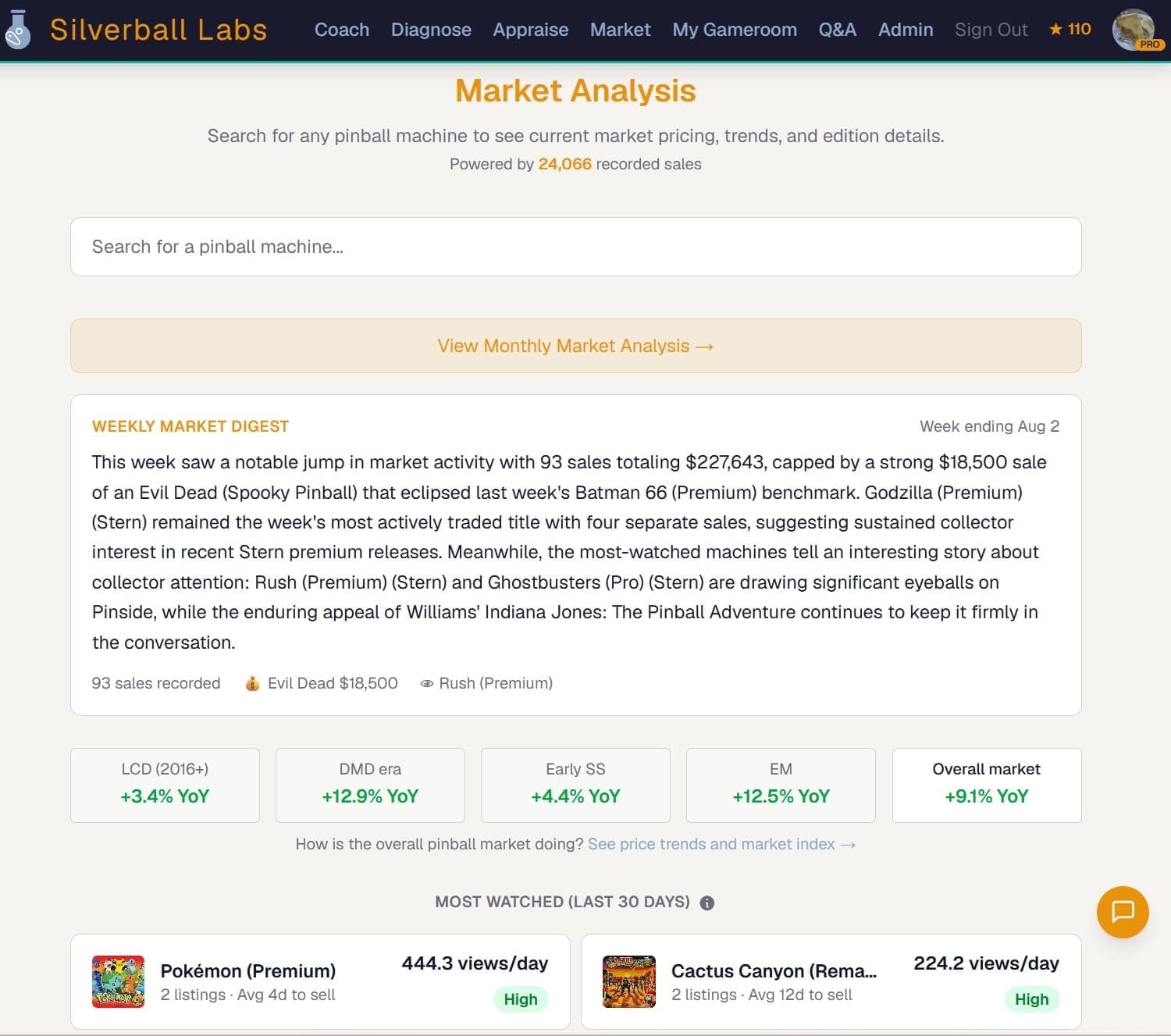
Silverball Labs runs four tools: AI Coach, which builds game-specific training sessions out of rulesheets and strategy guides; AI Diagnosis, a repair chat that takes photos and answers from manuals and schematics, with citations; AI Appraisal, which values a game from photographs against real sales data; and Market Analysis, which tracks prices and trends and maintains a Pinball Market Index.
Giardina describes the build as "Slow, then fast. Once I had real users, the ability to quickly ship software that people seemed to want was intoxicating." He started on "pretty rudimentary 'site maker' style AI tools just to get a proof of concept out there," outgrew them, and moved to Postgres and React, using Anthropic's toolsets for their AI assistance. "The first three months I built mostly what I thought made sense, and it's only over the last two months that I've gotten real feedback from users who are finding its flaws and places where it could really shine."
On the back end of Silverball Labs, the stack is Claude Code and the Claude API, with retrieval-augmented generation over community rulesheets and repair wikis, native citations back to those sources, multimodal input — photos, video, schematics, audio — and "a two-phase agent pipeline for appraisal that separates cheap perception from expensive judgment." Oetting documents the methodology on the Silverball Labs blog.
Neither thinks the things they have built would have existed two years ago. Giardina puts the old cost at "tens of thousands, minimum." Oetting doesn't believe Silverball Labs "would even have been possible 18 months to two years ago."
Giardina notes the rapid changes AI has wrought in the software industry: "The last six months have literally been transformative. I could write pages and pages on it, but three years ago AI was a joke and now I would be fired from my job if I wasn't using it."
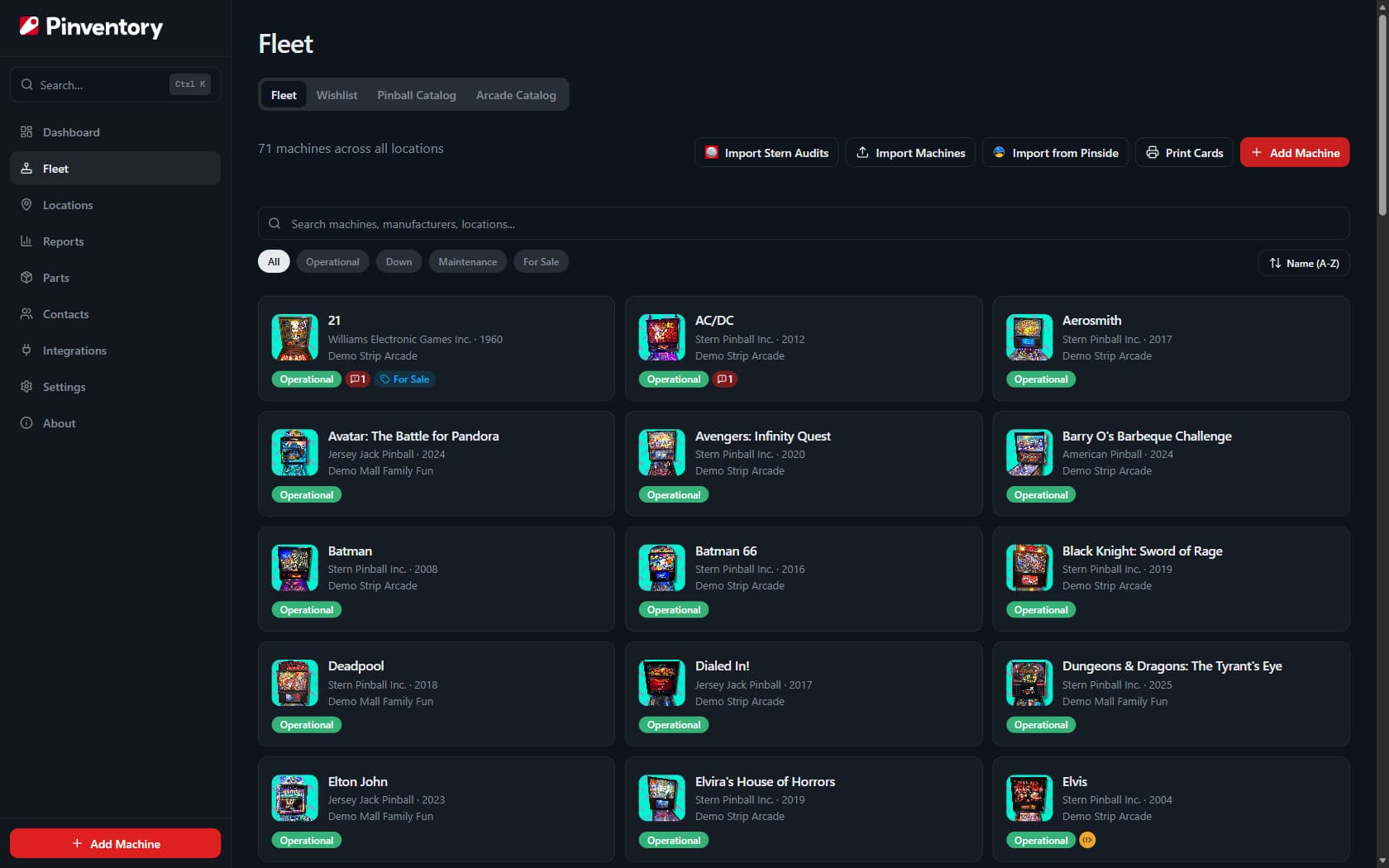
Both apps are being used. People have written to Oetting to say the tools helped them resolve an issue with a game or work out the right price to list one. Giardina's audience is operators, and he talks about them in specifics: "Pinball is a tight-margin operation. The games are $7,000 and a good operator is buying three to five games a year, minimum." Pinventory users can track mileage, write off Marco orders, group part reorders to save shipping, and get issue notifications: "You need to know when a game is down right away, or it's costing you money to wait until the next visit."
The code still gets checked. "I review every line of code even if an agent generated it, which is the gift or curse of being a software engineer," Giardina says. The part he won't hand over isn't code at all, but customer service: "Actually talking with customers/operators, learning where my assumptions are wrong, and solving their problems. That's something I never want to outsource, because then what's the point?"
Oetting describes the work as "both freeing and frustrating," and says it takes experience to do at all: "You need a good sense of where you want the code to go and a strong development background to wrangle AI into doing what is needed, not just what it wants to do. AI will always give you an answer or result, but that doesn't mean it is the best way to do it." His remaining problem sits upstream of the model. "Our struggle isn't necessarily with AI at this point, but with providing it the correct data," he states. The repair tool needs manuals that are often "not in an OCR-readable PDF format, or are licensed," while the appraisal and market tools need sales figures from more locations, which "requires sellers to share information they might prefer to keep private."
The community has treated the two projects differently. Giardina says the response has "been good!" — his only real friction has come from people wary of entering collection and business details into an online platform, which he says he understands and has answered with safeguards and a privacy policy. Silverball Labs has "received both good reviews and some all-out attacks," Oetting says; some people "completely discount the tools or even attack the idea simply because they dislike AI, without ever even trying them out." He adds, "I've even had some folks use an AI chat tool with a negative prompt to look for reasons to dislike Silverball Labs so that they can reassure themselves they should continue to be against AI."
Some of that is about where the AI sits. Giardina uses it to build Pinventory; the app itself is about quarters and mileage and Marco orders, and a user never touches a model. Oetting put the AI into the product, and then into the names: AI Coach, AI Diagnosis, AI Appraisal.
Asked where he lands on the divide in pinball over AI — slop generator or legitimate tool — Oetting set it in a wider frame. "That divide exists not only in pinball, but throughout society right now. It is understandable since people have seen the incorrect results and hallucinations. It is an issue, but with proper use and continued improvements, AI will become more useful to the pinball community. We are working through that now and I hope Silverball Labs is leading the way."
Giardina's answer to the same question was shorter: "There was bad software and bad art before AI. It's just way easier to make now." His longer version is about volume. "Software engineering used to be a natural gatekeeper; it was too hard to learn to build things and the tech moved too fast," he says. "Now, the gates are down. Which means the percentage of software goes up, so the chances of an average person encountering bad software goes up. People blame AI, and that's fair; it's making it easier to release, but the quality of anything put out will really come back to the quality of the time and effort the people making this stuff put in."
When we asked Giardina if we'd missed anything he wanted to cover, he pivoted to aesthetics, responding, "AI art assistance is really, really controversial because we are surrounded by art and design and marketing. Harry Potter and other games got some pushback for using AI tools in creating art. I think this is the hardest field to execute AI tooling judiciously. I don't want to see a prompt to game art pipeline." He'd accept a version of it — generate five thematic ideas, refine them with drawing tools, use AI to finalize and blend — but not the pipeline itself. "I think the pinball community will continue to struggle with this before they get it right," he continues. "No one cares if AI wrote my game code, I just want it to work. But you can tell when low-effort AI work went into game art."
Giardina experimented with AI-generated art for Pinventory, and then hired a Boston-area creative named Jannie Touch to create the logo. He says he audits his own work for the same thing: "We are going to see a lot of it in our environment and it won't feel great, so I am sensitive to every decision that goes into Pinventory. Are the stock photos representative? Are the tools actually useful or are they using hyped-up AI 'features'?"
Neither Oetting nor Giardina expects the manufacturers to move quickly. "I don't think manufacturers will quite be on board within a year," says Oetting. "They will want to see it proven useful and consistent before they even consider integration." Giardina wonders if cost will be a roadblock: "Everyone will use it to some degree. Whether it remains cheap enough for that to be true is a bigger question."
On the environmental question, they don't land in the same place. Giardina thinks the long-term benefits win, and expects a correction once investors stop subsidizing compute — he compares it to housing in 2008, where a reset brought a new normal after real pain, then adds, "But ya know. I am tech-biased." Oetting doesn't see a clear path to resolution. "The environmental damage from data centers worries me quite a bit. I've always been a conservationist, being an Eagle Scout and enjoying the outdoors often." He also knows the data centers get built regardless, and hopes for a balance.
Wilson kept the tools at the edge of his project and built the rest by hand. Giardina and Oetting moved them closer to the center, learned them deliberately, and shipped things people in this hobby are now using. Different paths, and neither one of them is wrong.
What Comes Next?
Over the next 12 months, I expect we'll see more sophisticated uses of AI tools in pinball, mirroring their adoption everywhere else. Since the community reaction to Jersey Jack's Harry Potter release and its AI-generated artwork, most commercial providers, manufacturers especially, seem to be tiptoeing around saying anything public about AI at all.
Artists tend to rally around human-only output, but as video and audio models keep improving, I believe we'll see more artists experimenting with them, particularly on the commercial side. Look around creator circles and there's already a cottage industry of people using these tools to push their own output further (even in pinball, where AI-generated YouTube thumbnails and other artifacts are becoming increasingly common).
My guess is that engineering and coding teams are already experimenting far more regularly, and we'll see the results sooner rather than later — if we haven't already. More sophisticated game code, faster release cycles, more fully-featured customer apps like Stern's Insider Connected. Employers everywhere are asking staff to be versed in these tools, so any developer thinking about staying employable is learning them.
Slowly, community acceptance will grow. Maybe in fits and starts, but as the outputs get better and AI use becomes more normalized, it'll likely fade into the background, the way most tools do. We'll go back to judging execution and output, not the tactical minutiae of production. As for the societal and environmental impacts of AI data centers, we hope that community activism, government regulation, and technological innovation come together to resolve these issues…because clearly, AI isn't just going to fade away.

Colin is the chief pixel pusher at Kineticist. He's a lifetime gamer who became enamored with pinball after taking in a family copy of the 1979 classic Joker Poker (the EM version). Since then he's bought, sold and repaired many machines, competed in all kinds of tournaments, and contributes to This Week in Pinball, the New England Pinball League, and Pin-Masters of New England. Previously, Colin spent over a decade working in marketing for agencies and tech startups. He also started and ran a music blog, happy hour website, and wrote a regular craft beer review column for Central Track in Dallas. Once aspired to be an artsy film director.

Benjamin Plotkin grew up flipping pins in bowling alleys in the 1970s…then he got distracted by the video game boom of the 1980s. Completing his "prodigal son" arc post-pandemic, he has returned to the hobby with a passion and focus that, frankly, scares him just a little bit. Benjamin plays in multiple leagues and weekly tournaments in and around Los Angeles and enjoys keeping his pinball machines – including a well-loved Stern Electronics Stars – up and running. He keeps himself in quarters leading a team of student software developers at a state university, and in a past life, he was a music journalist, writing and editing for a number of trade publications. Someday he's going to get the band back together, too.
Like what you're reading?
Get pinball news, analysis, and deep dives delivered to your inbox.