If you’re a rock fan or even just a fan of music in general, chances are you’ve heard of the band Rush at some point. They were significant contributors to “prog-rock” in the late 70s, briefly shifting to synthesizer-driven rock in the 80s before returning to their more traditional roots in the 90s… as traditional as you can call a band that constantly places random props on stage.
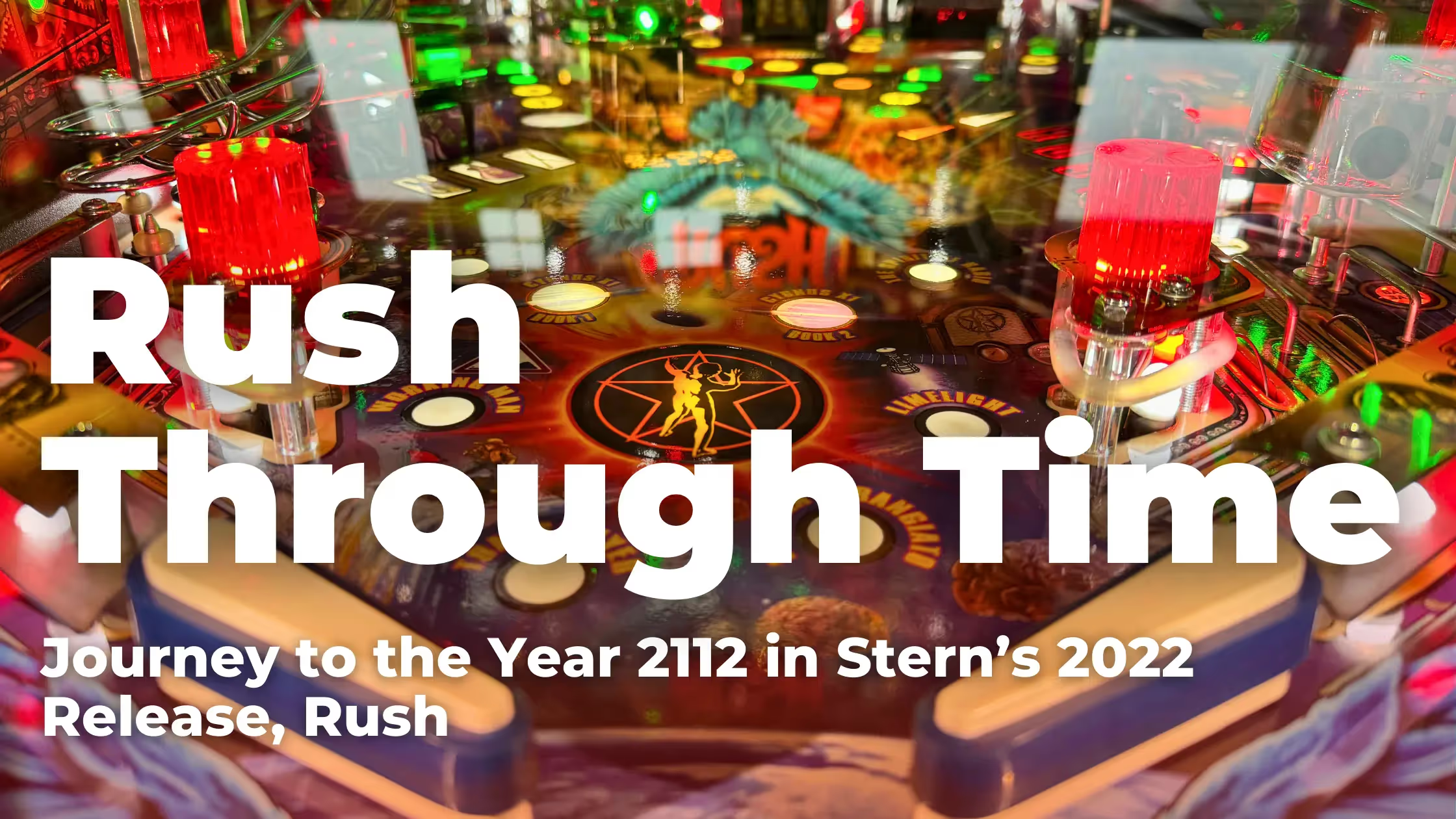
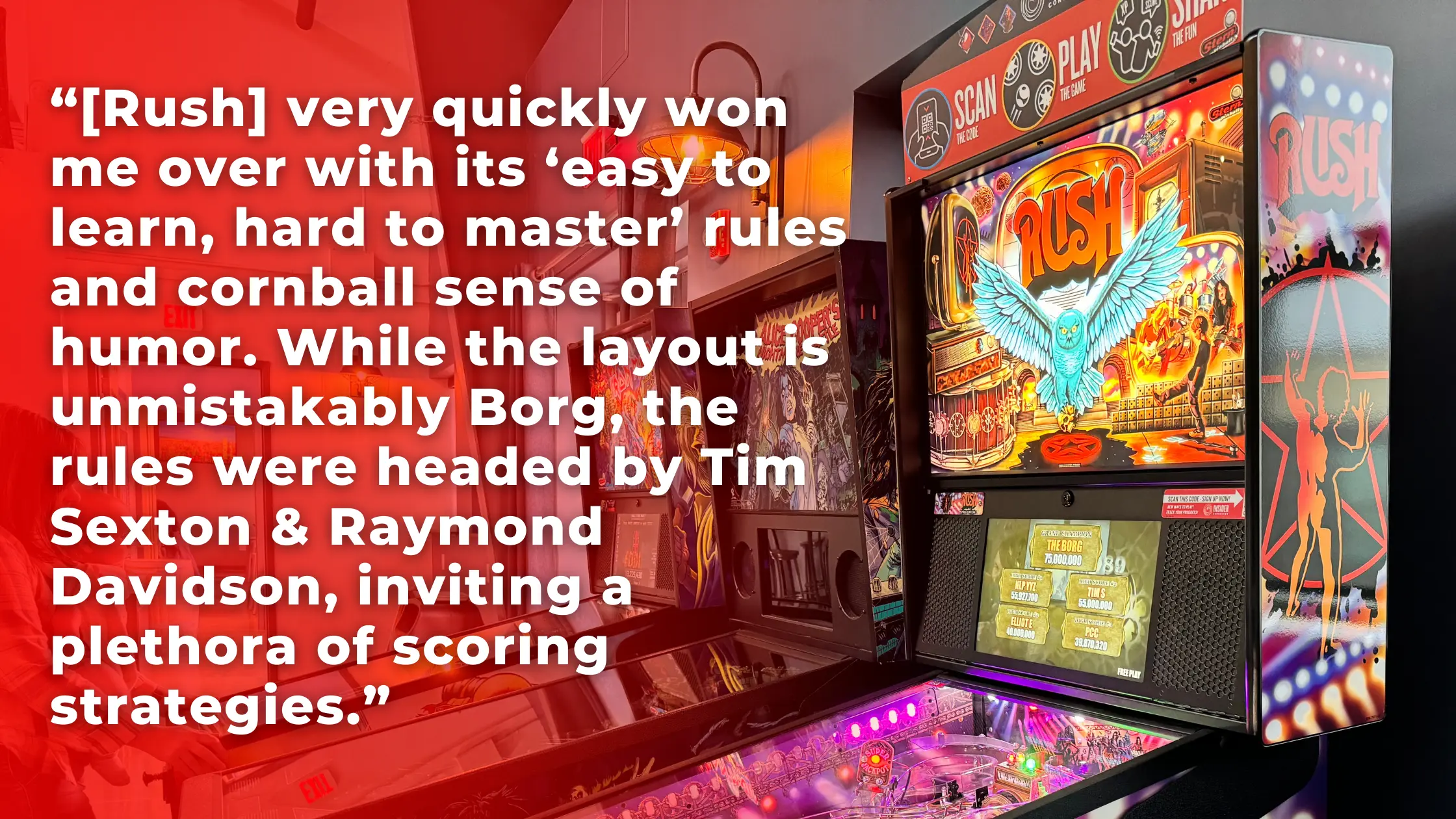
Writing this article, I barely had any knowledge about the band whatsoever prior to the release of Stern’s Rush in 2022, so the fact that the game very quickly won me over with its “easy to learn, hard to master” rules and cornball sense of humor speaks to how great it truly is. While the layout is unmistakably Borg, the rules were headed by Tim Sexton & Raymond Davidson, inviting a plethora of strategies comparable to mode boosting in Black Knight: Sword of Rage and the many methods of collecting years, comparable to trophy collecting in Avengers Infinity Quest. I’ve gotten a lot of questions from people asking how to best play Rush for high scores – I hope this article can help.
Rush Pinball Details
Take part in a wide variety of scenarios to collect time machine years for a trip to the far future of 2112, all accompanied by the music (and humor) of Rush.
- Manufacturer: Stern
- Year: 2022
- Design: John Borg
- Code: Tim Sexton, Raymond Davidson
- Mechanics: Elliot Eismin
- Art: Michael Barnard
- Animation: Chuck Ernst, Paul Chamnankit
- Sound: Bob Baffy
Rush Playfield Overview
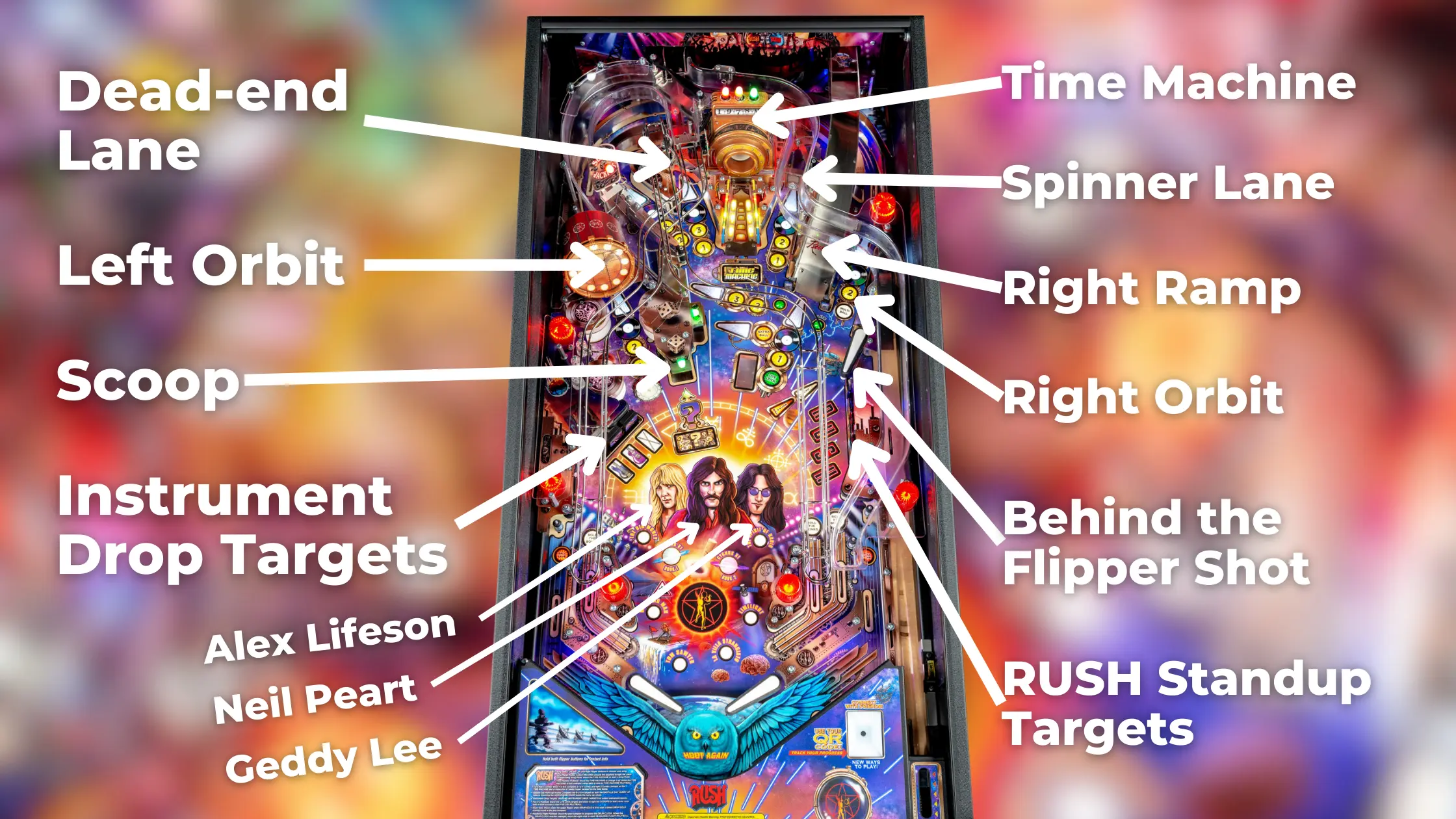
The playfield of Rush is roughly a mirror image of that of TRON: Legacy, a common complaint that was lobbied against the game at release. However, just because it looks similar doesn’t mean it plays the exact same. Two banks of targets are located near the left and right flippers; on the left side are the instrument drop targets, which are important to complete as they will collect instruments that can be “activated” at the standup target behind them. On the right side of the playfield are the RUSH standup targets, which light the Bastille Day hurry-up at the right ramp when completed – all four targets must be shot again during the hurry-up to complete it.
The left side of the playfield is primarily occupied by the left orbit, which must be made as a precise shot between the game’s three bumpers, alongside the scoop and dead-end lane directly above it – and two side shots that must be made from the upper flipper. There are two entrances to the scoop, one that can be shot directly from the flippers (ideally made as a backhand from the left flipper) and one that can only be hit from the upper flipper. A great way to consistently shoot for the upper scoop is to shoot the left orbit and hold the upper flipper such that the momentum from the orbit shot propels the ball into the scoop.
The game’s major gimmick is the time machine located at the dead center of the playfield. Shooting the time machine starts modes, collects combo jackpots and albums, and starts multiball modes – needless to say, it’s an important shot to master and can best be hit with a controlled shot from the left flipper. If the time machine isn’t lit for anything, it will eject the ball directly to the flippers; otherwise, it will always feed the ball to the upper flipper. To the right of the time machine is the spinner lane, an easy way to feed the upper flipper and shoot for the side ramp and upper loop on the left side of the playfield.
The right half of the playfield is home to the game’s steep right ramp and two “light lock” targets gating it. The ramp and the targets are important shots to master, as Far Cry Multiball – awarded after locking two balls - can be a very lucrative multiball mode if played well. The right orbit is comparatively less important and can generally be ignored unless required during a mode. Also, on the right half of the playfield is an oft-ignored shot behind the upper flipper, used as an alternate way of collecting extra balls and to start the drum solo scoring feature when lit. Just like the right orbit, this shot is best left ignored – shots into the bumpers, even off the plunger, can be deadly.
The action button has several different uses, none of which are that obvious. If nothing is currently lit at the button, it will reposition the diverter between the two ramps, swapping where the ramps send the ball – generally not worth considering, but it can help if you struggle with post passing and want the ball on a certain flipper badly. If the button is flashing blue or green, holding it will use “The Weapon” and either spot every single playfield shot or add-a-ball, depending on what albums the player has and what modes are active. Using “The Weapon” strategically is key to massive scores on Rush.
Scoring on Rush is slightly lower than average for its era. Great players can expect to break a billion, but a great starting point for newer players is 50M or 100M. Scoring gradually becomes higher and higher as the game goes on – the farther you get in the game, the more points are at stake!
Rush Quick Guide
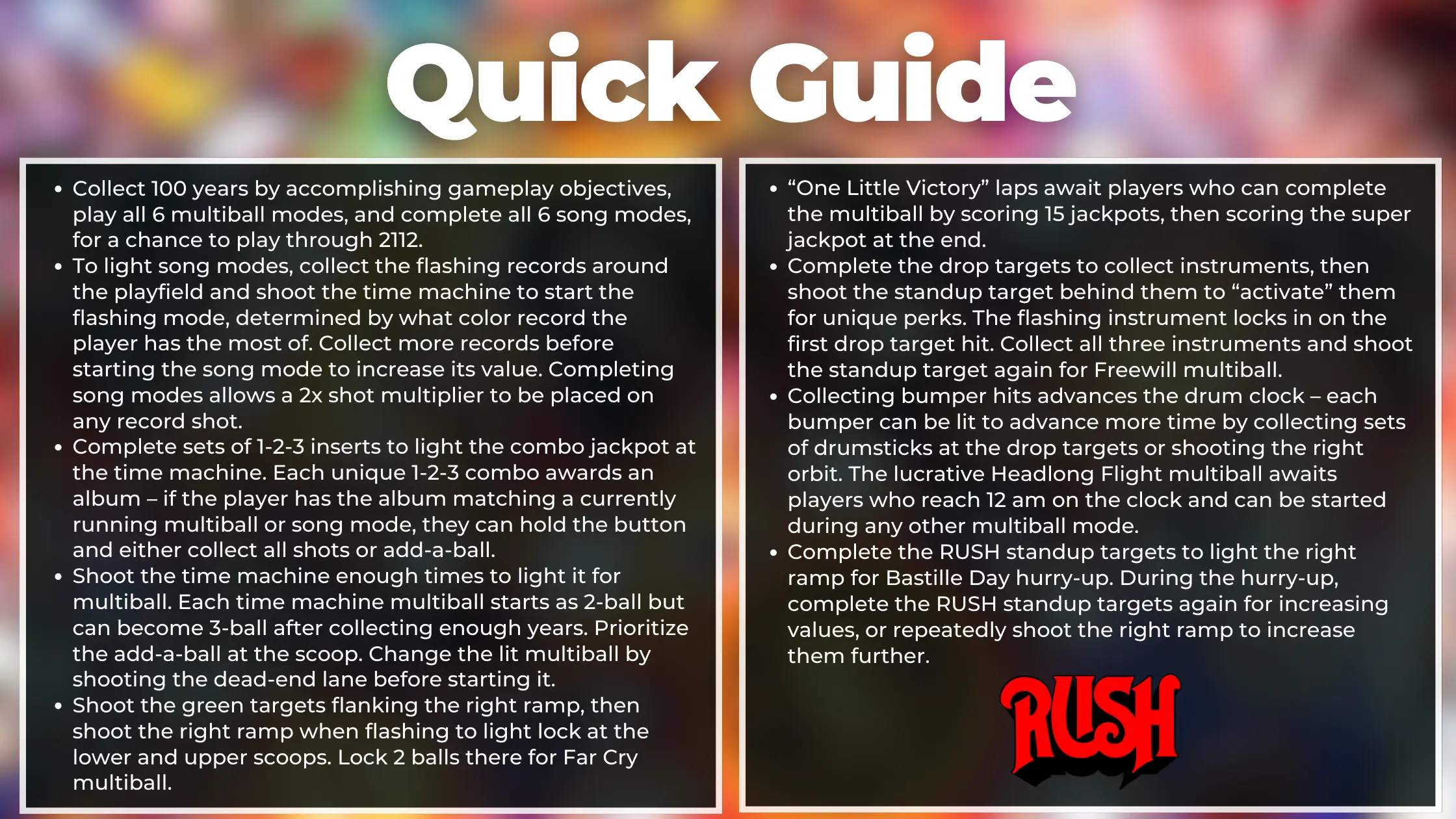
- Collect 100 years by accomplishing gameplay objectives, play all 6 multiball modes, and complete all 6 song modes, for a chance to play through 2112.
- To light song modes, collect the flashing records around the playfield and shoot the time machine to start the flashing mode, determined by what color record the player has the most of. Collect more records before starting the song mode to increase its value. Completing song modes allows a 2x shot multiplier to be placed on any record shot.
- Complete sets of 1-2-3 inserts to light the combo jackpot at the time machine. Each unique 1-2-3 combo awards an album – if the player has the album matching a currently running multiball or song mode, they can hold the button and either collect all shots or add-a-ball.
- Shoot the time machine enough times to light it for multiball. Each time machine multiball starts as a 2-ball but can become a 3-ball after collecting enough years. Prioritize the add-a-ball at the scoop. Change the lit multiball by shooting the dead-end lane before starting it.
- Shoot the green targets flanking the right ramp, then shoot the right ramp when flashing to light lock at the lower and upper scoops. Lock 2 balls there for Far Cry multiball.
“One Little Victory” laps await players who can complete the multiball by scoring 15 jackpots, then scoring the super jackpot at the end. - Complete the drop targets to collect instruments, then shoot the standup target behind them to “activate” them for unique perks. The flashing instrument locks in on the first drop target hit. Collect all three instruments and shoot the standup target again for Freewill multiball.
- Collecting bumper hits advances the drum clock – each bumper can be lit to advance more time by collecting sets of drumsticks at the drop targets or shooting the right orbit. The lucrative Headlong Flight multiball awaits players who reach 12 am on the clock and can be started during any other multiball mode.
- Complete the RUSH standup targets to light the right ramp for Bastille Day hurry-up. During the hurry-up, complete the RUSH standup targets again for increasing values or repeatedly shoot the right ramp to increase them further.
Skill Shots
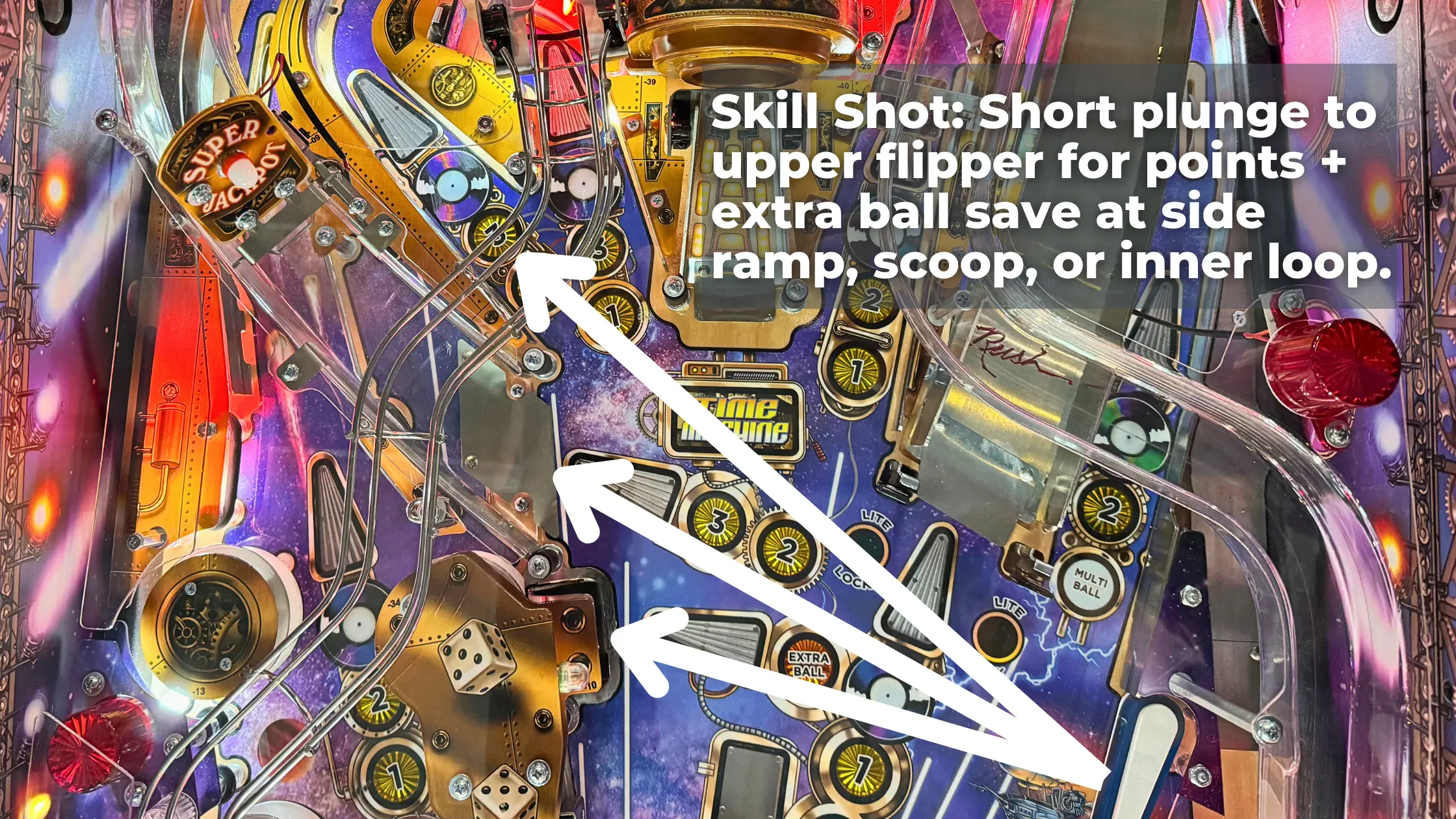
My #1 rule of thumb on Rush is to avoid full plunging at all costs. The bumpers on this machine can be deadly, and you’re better off short plunging to the upper flipper. This is also how you gain access to the game’s skill shots – they can either be awarded at the side ramp or side scoop or increased in value with repeated shots to the upper loop. Most importantly, each skill shot awards additional ball save time, a godsend on Rush machines set up for tournament play.
What the Heck is a Song Mode?
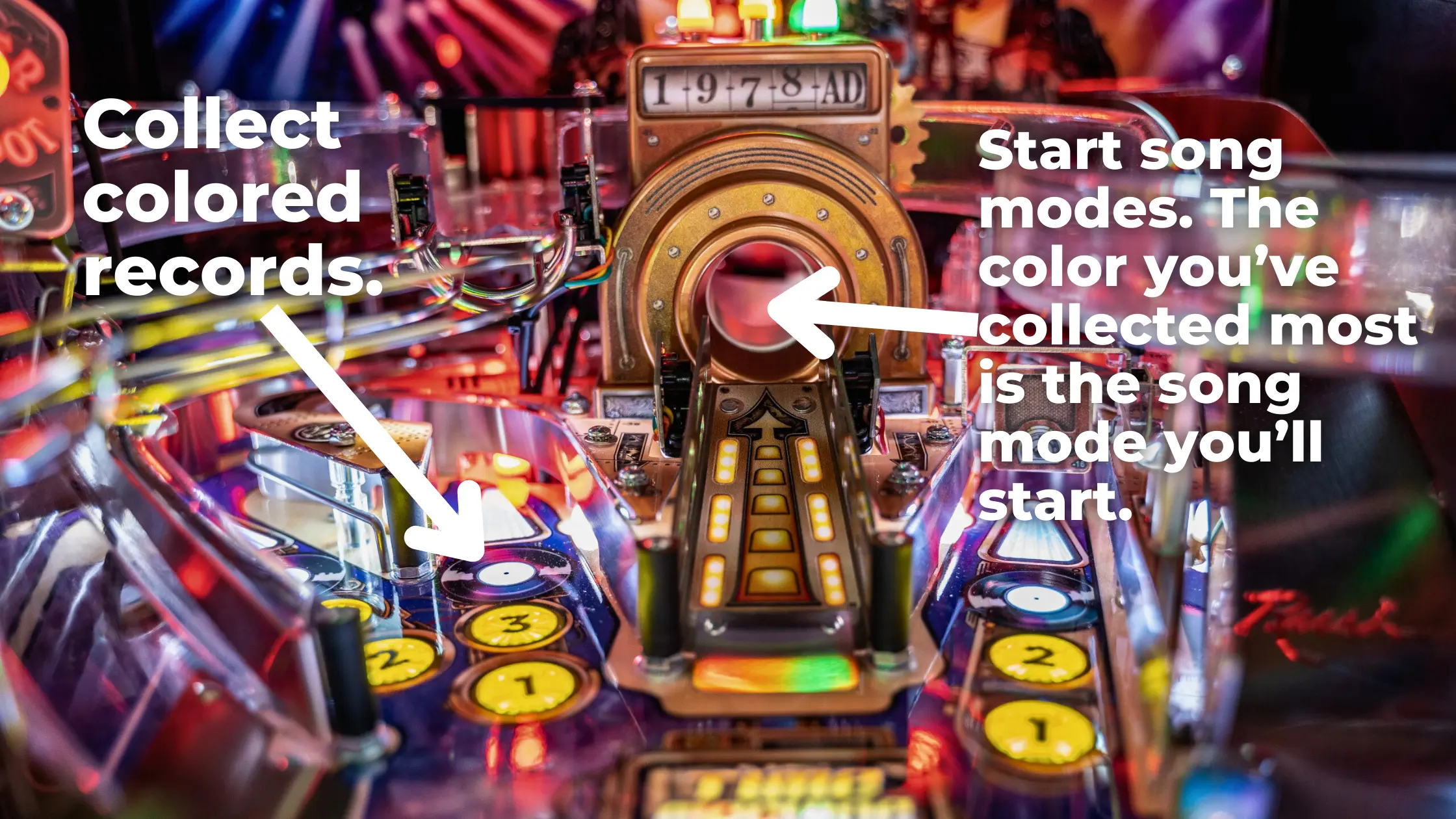
I’ve seen a few people confused about the song modes on Rush—not only what to do during them but also how they’re lit or determined. I hope this section will clear some things up.
Song modes are lit at the time machine by collecting the colored records flashing around the playfield. The song mode that starts is determined by what colored record the player has the most of. For instance, if the player has more green records than any other color, Limelight will be the next mode to start. You can boost the value of modes by collecting more records of any color before starting them.
Song modes are important to complete, especially in the early game, as each mode completed awards +5 years towards the next time machine upgrade, or +10 years if the mode was completed with a total score of at least 80M. Regardless of the score, each mode completed also allows the player to place a 2x shot multiplier on any colored record shot on the playfield. For multipliers, I like to ignore the right orbit at all costs and prioritize the innermost shots: the upper loop, dead-end, spinner lane, and right ramp.
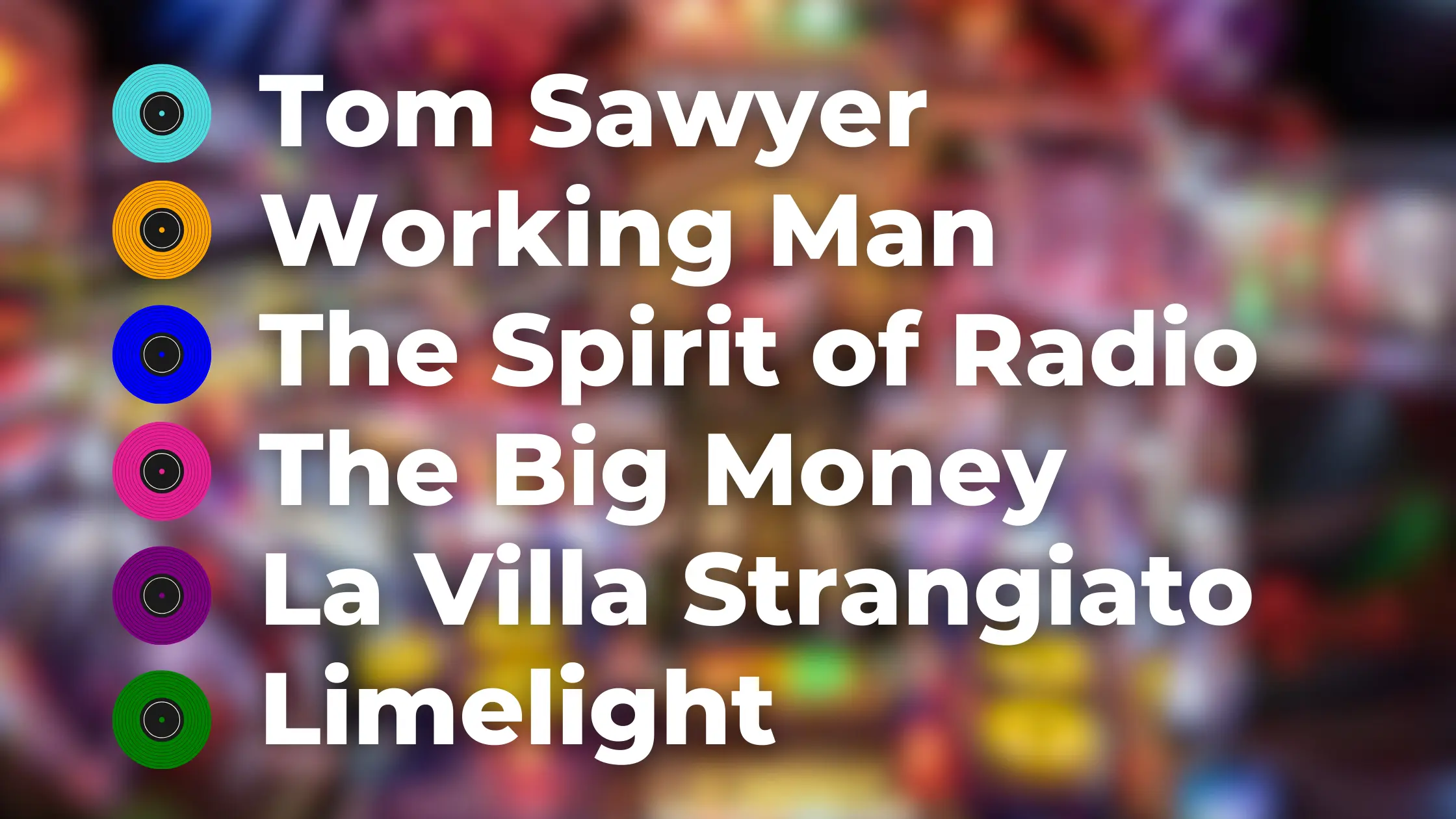
The six song modes play in the following ways:
- Tom Sawyer (Cyan): This mode requires many shots to complete. First, shoot both orbits, then both ramps and finally, make every single shot once. The orbits at the start can be tricky, but this is otherwise a great mode to bring into a multiball.
- Working Man (Orange): Another good mode for multiball stacking. Collect switch hits and make shots on the left side of the playfield to advance the workday clock – you start at 9 am and must shoot the left orbit to clock out at 5 pm.
- The Spirit of Radio (Blue): I approach this mode in different ways depending on where I am in the game. You need to collect five jackpots at the dead-end lane to complete the mode, but they can be increased in value by shooting the spinner or the flashing shots. In the early game, try and complete it quickly, but in the late game it might be worth maximizing.
- The Big Money (Pink): I treat this mode as multiball fodder, but it can be worth a decent amount if you focus on the flashing shots above all else. All shots increase a jackpot that gets awarded at the time machine after making enough of them, but you can keep making shots to multiply the jackpot further.
- La Villa Strangiato (Purple): My personal favorite mode and one I always play without multiball if possible – this mode can be massive but requires the player to know which shots light ahead of time. The right ramp lights to start a long 12-way combo sequence spreading across the entire playfield, with successive quick shots increasing the multiplier. Even at minimal value, a great La Villa run can make or break tournament games of Rush.
- Limelight (Green): Another “multiball fodder” mode. Each shot adds 5% fame, the goal is to get to 100% fame without the “15 seconds of fame” timing out. The quickly flashing shots add more fame, score more points, and start out on the left side.
Combo Jackpots, Albums, and Weapons, Oh My
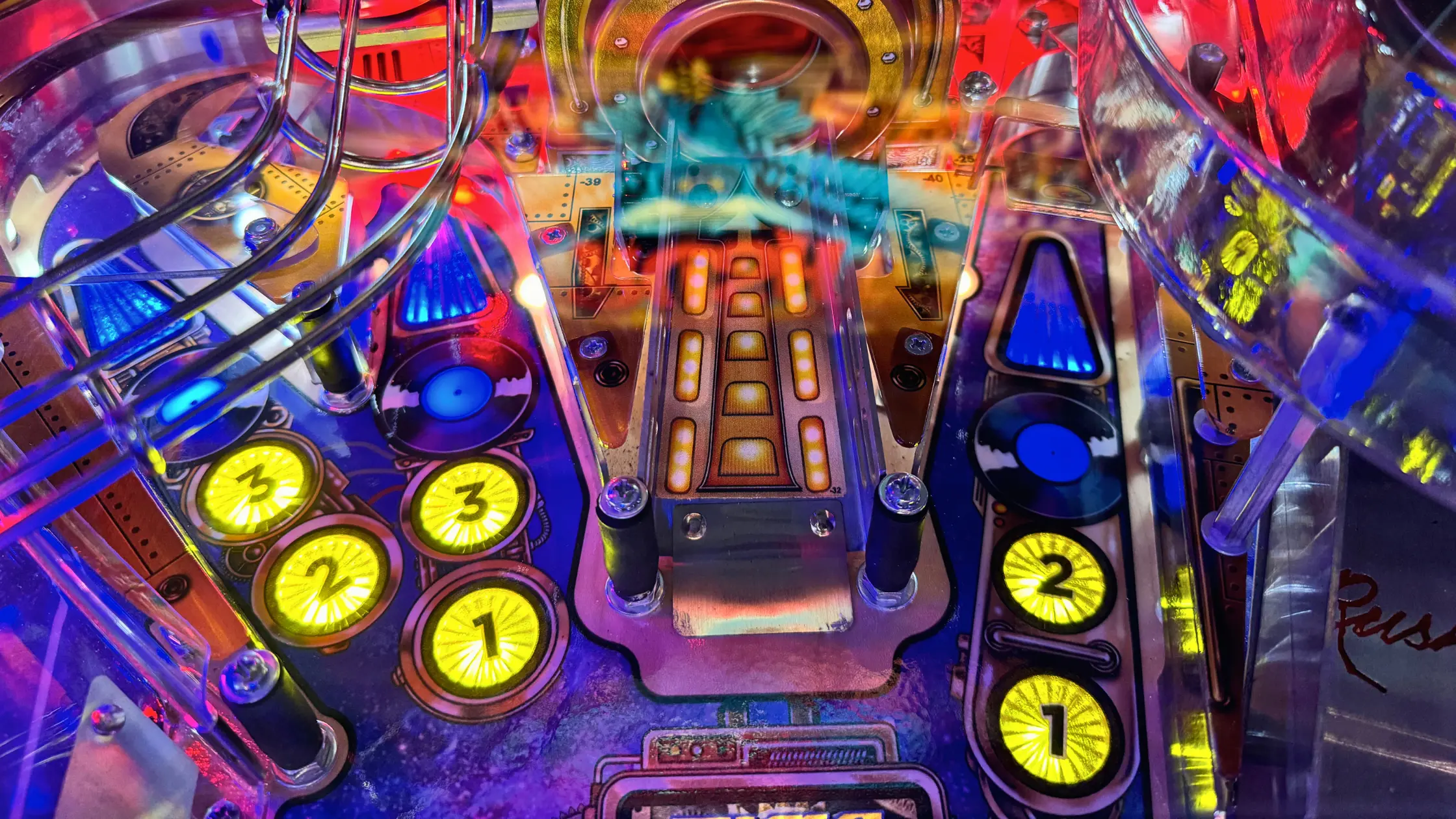
The other rule on this game that people ask me about all the time are the combo jackpots and their importance to overarching scoring strategy. They might not seem significant at first glance but they can be quite significant because of the albums that they award.
The flashing “1” inserts in front of every single shot indicate that they will start a 3-shot combo sequence – just shoot the flashing “2” and “3” shots that light following it to complete the combo and light the time machine for the combo jackpot, worth a value that increases with every subsequent combo jackpot you collect. While the points from combo jackpots are solid, especially with a 2x collect available at the side ramp immediately following scoring one, the big draw of combo jackpots are the albums awarded by scoring them.
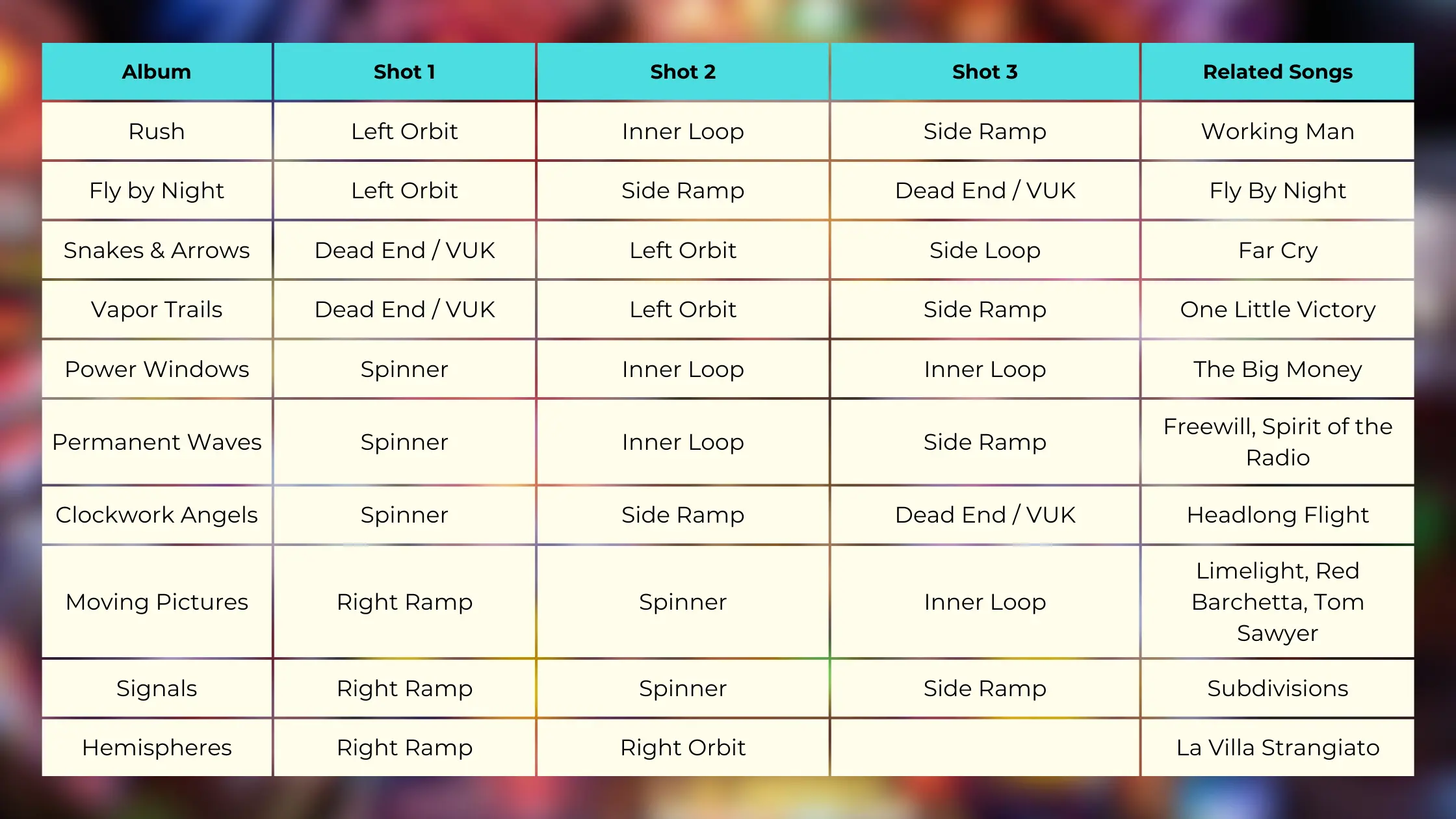
I provided a graph in this section listing which albums correspond to which songs and, thus, which multiballs or song modes they’re linked to. If you have a matching album and currently running song mode or multiball, the action button will start flashing to activate the Weapon when held. If a song mode is running, the Weapon will collect all lit shots; if a multiball is running, then it will add-a-ball. You can have weapons of both types active, in which case the mode that was started first will be prioritized. This is a great way to get tons of mileage out of modes and multiballs!
The Many Multiballs
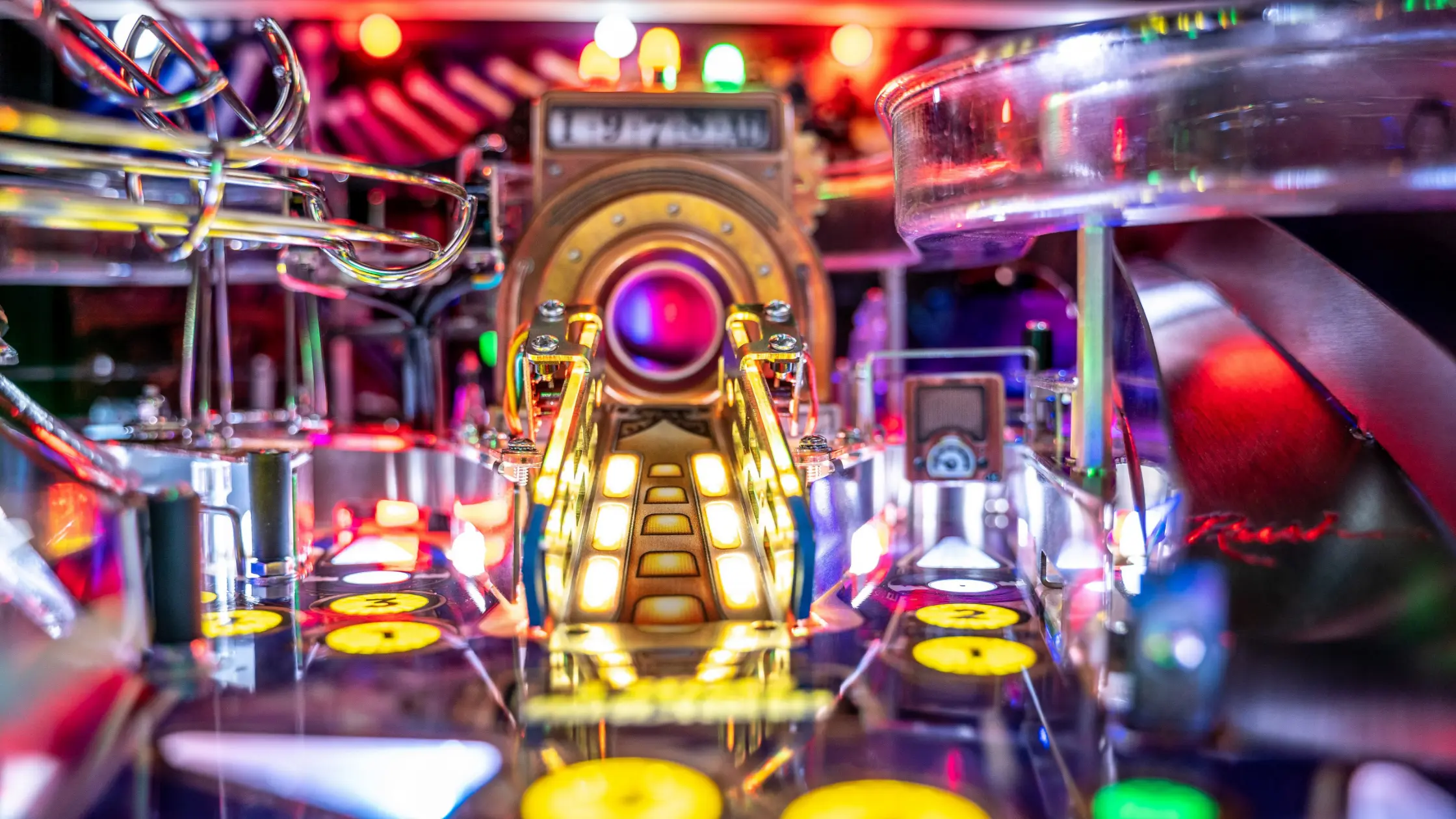
There are six different multiball modes to start on Rush – three of them are started by shooting the time machine enough times, while the three others are started in other ways. Most of the multiballs are mutually exclusive, except for Headlong Flight that can stack with any currently running multiball.
At the start of the game, most of the multiball modes will only be 2-ball affairs. You can add balls either by completing the return lanes and collecting the mystery award at the scoop or by upgrading the time machine by collecting years (through other game achievements).
The multiball lit at the time machine can be changed by shooting the dead-end lane.
- Red Barchetta: One of the three multiball modes from the time machine. Shoot the flashing shots to score jackpots and shift gears with shots to the bumpers. Every gear shift increases the jackpot values, with victory laps available after “straining the limits of machine and man” at gear 6.
- Subdivisions: One of the three multiball modes from the time machine. The first shot during this multiball will always be at the time machine – then the jackpots will “divide” in shot position, moving to the spinner and dead-end lane, and so on, until you can collect jackpots at all major shots to light the super jackpot.
- Fly By Night: One of the three multiball modes from the time machine. Every jackpot or double jackpot collected at the flashing shots lowers the playfield lighting, which also lowers with switch hits. Dim the playfield completely to light the super jackpot at the time machine.
- Far Cry: The “main” multiball started by completing the green targets near the right ramp, lighting the lock by shooting the right ramp, and then locking two balls at either scoop through this process. Shoot all the rainbow-colored shots for jackpots, with a super jackpot available at the time machine after scoring 15 jackpots. This is a great multiball to use the Weapon during.
- Freewill: Lit at the “activate instruments” standup target, once all three instruments have been collected. Shoot any lit shot for jackpot, then shoot it again for a double jackpot. Jackpot scoring can be doubled – and a ball can be added – by shooting the “activate instruments” target enough times.
- Headlong Flight: Every bumper hit advances the drum clock – once the time reaches midnight, the right orbit will light to start Headlong Flight multiball. This multiball plays just like the LT-5 multiball from Corvette – shoot the upper loop and side ramp for jackpots, with a super jackpot at the right ramp. While tough to reach, scoring in this multiball can add up!
Instruments, or “I can play three keyboards and a bass, and you can’t even hit the ball?”
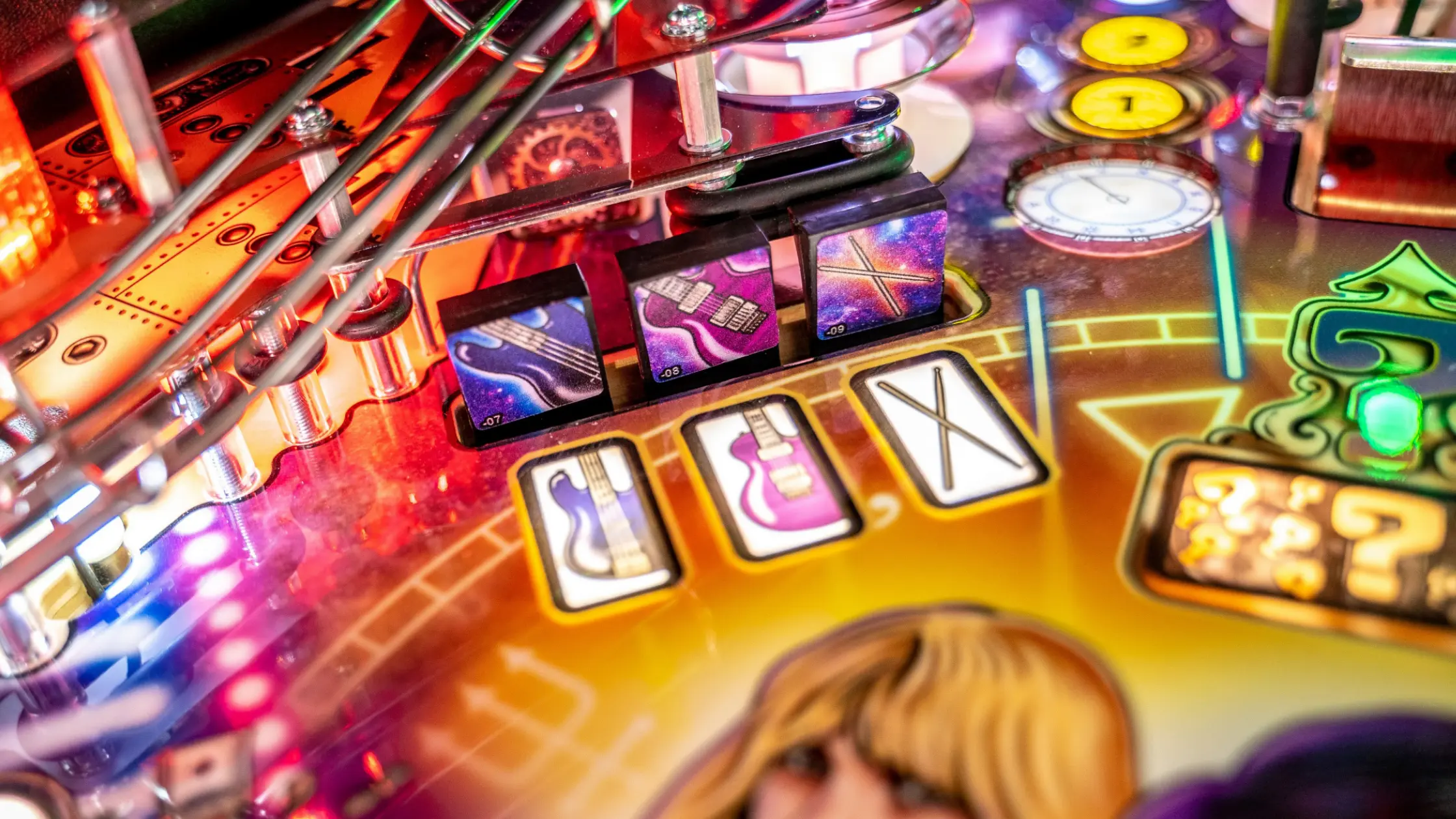
The instrument drop targets are another overlooked aspect of Rush's scoring strategy. They behave similarly to the drop targets on The Walking Dead and are similarly important, but for different reasons—they will increase the values of certain playfield features or award perks that can greatly boost scoring when “activated” at the standup target behind the drops. Lock an instrument in by shooting any drop target, then complete the drop targets to collect it. Freewill multiball lights after collecting one of each instrument.
The three instruments are:
- Bass: Increases the base combo values. When activated, all combos score double and can be collected during multiball modes (normally, they can’t).
- Guitar: Increases the value for spinner hits. When activated, adds a +1x multiplier to spinner lane shots.
- Drumsticks: Increases the values for bumper hits and lights Drum Solo at the lane behind the upper flipper (massive, timed boost to bumper scoring). When activated, all bumper hits score 2x and count 2x minutes towards drum clock progression.
Happy Bastille Day, Everyone!
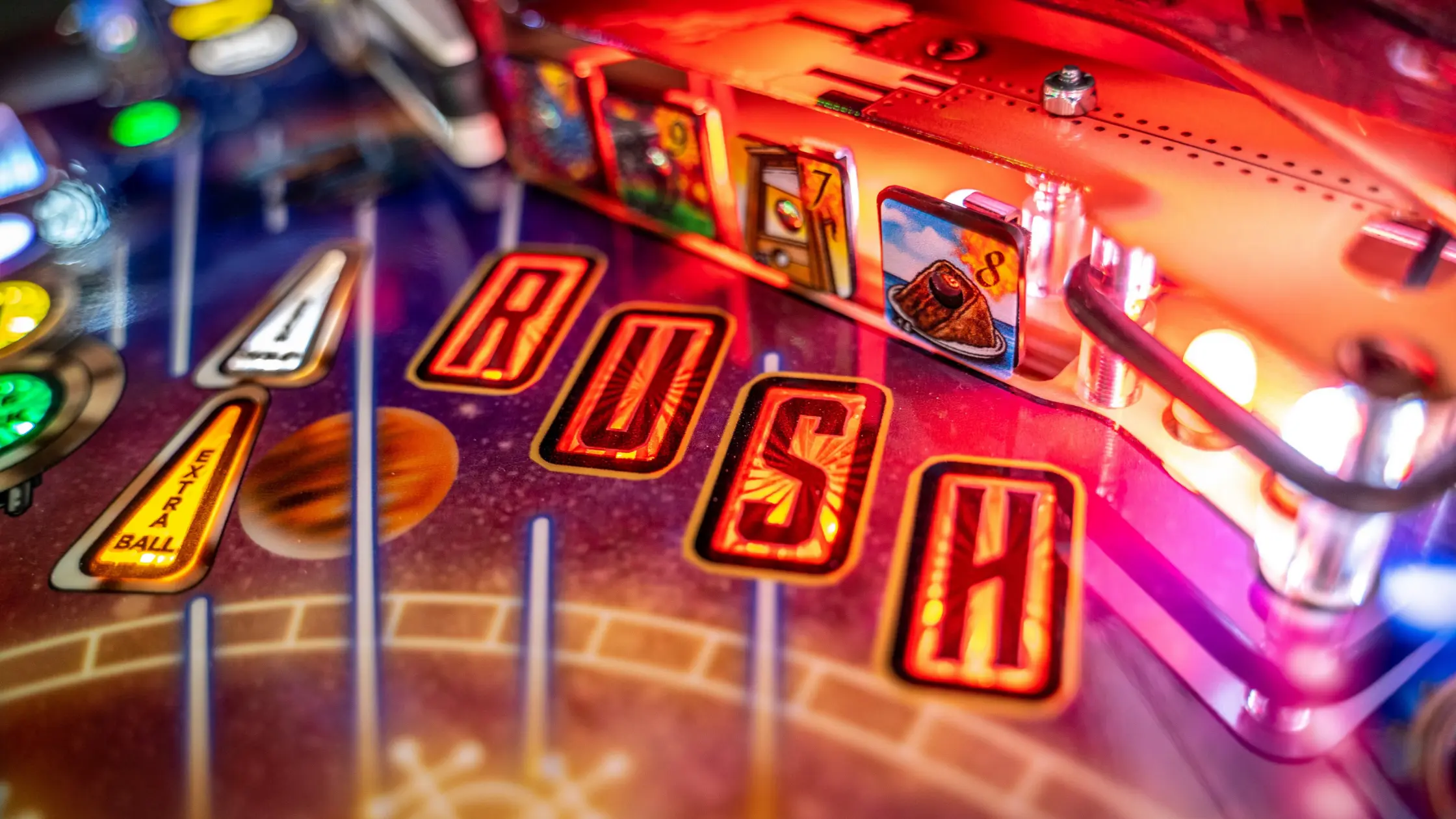
Bastille Day hurry-up is a quick but difficult way to earn time machine years and some decent points. Once the RUSH standup targets have been completed, a shot to the right ramp starts the hurry-up, at which point the standup targets must be completed again to complete the hurry-up.
Bastille Day is generally not worth going for on its own, but during a hectic multiball, it might be worth going for. You can also substantially increase the base hurry-up values by looping the right ramp at any point during the hurry-up.
I Read Your Guide, Now What?
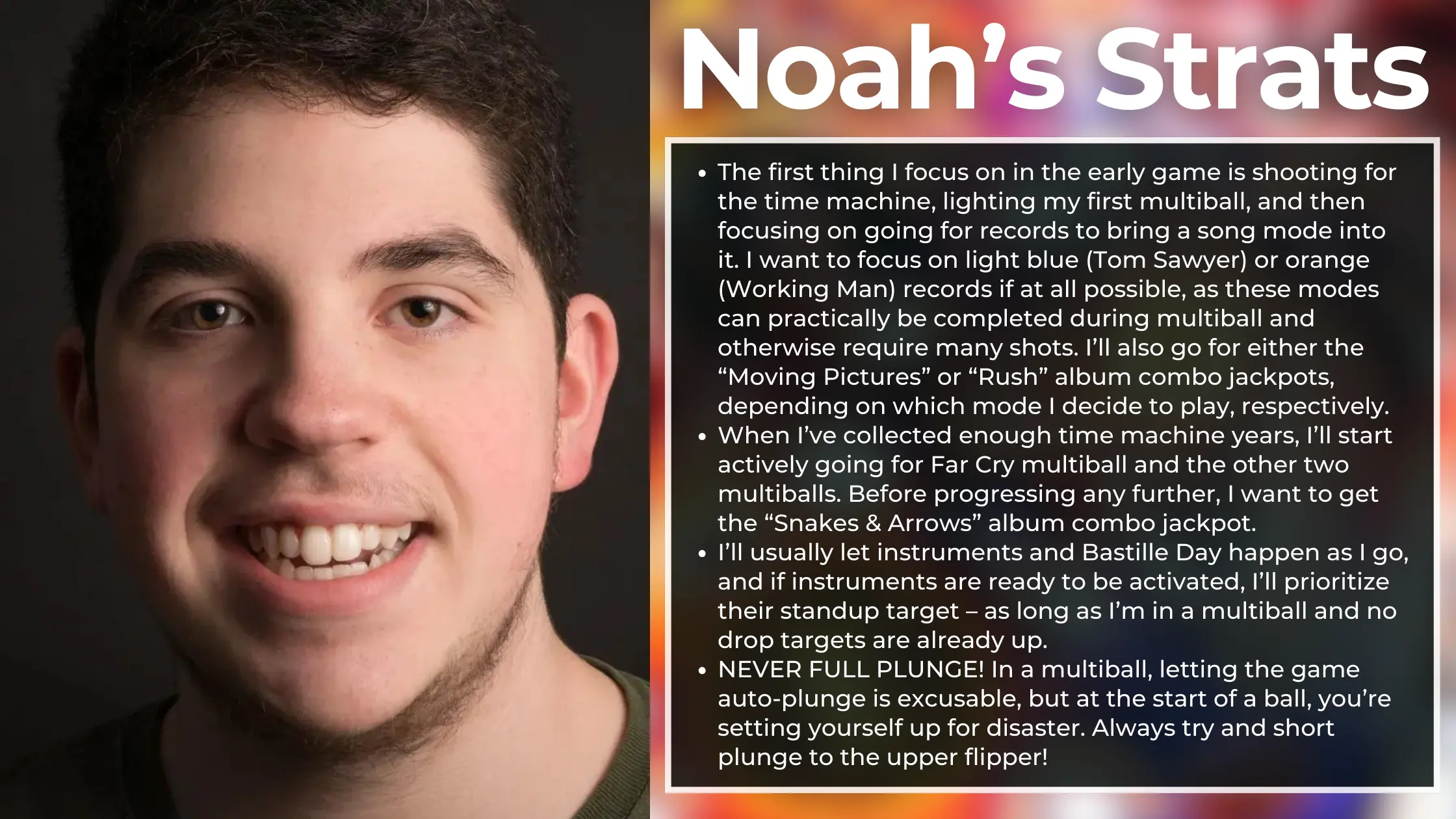
Here are my overall strategies for how I’d best approach scoring on Rush:
- The first thing I focus on in the early game is shooting for the time machine, lighting my first multiball, and then focusing on going for records to bring a song mode into it. I want to focus on light blue (Tom Sawyer) or orange (Working Man) records if at all possible, as these modes can practically be completed during multiball and otherwise require many shots. I’ll also go for either the “Moving Pictures” or “Rush” album combo jackpots, depending on which mode I decide to play, respectively.
- When I’ve collected enough time machine years, I’ll start actively going for Far Cry multiball and the other two multiballs. Before progressing any further, I want to get the “Snakes & Arrows” album combo jackpot.
- I’ll usually let instruments and Bastille Day happen as I go, and if instruments are ready to be activated, I’ll prioritize their standup target – as long as I’m in a multiball and no drop targets are already up.
- NEVER FULL PLUNGE! In a multiball, letting the game auto-plunge is excusable, but at the start of a ball, you’re setting yourself up for disaster. Always try and short plunge to the upper flipper!

VHS collector, media archivist, and pinball rules aficionado, Noah has been invested in the hobby since he was a teenager - much to the surprise of his parents and others his age. As an expert on brand new machines he’s the guy to call if you’re new to the hobby, or an experienced player who wants some help. Noah hopes to participate in and perhaps even win major tournaments like INDISC as his skills improve and desires for pinball to become a more inclusive hobby.
Like what you're reading?
Get pinball news, analysis, and deep dives delivered to your inbox.
Related Posts
More in Pinball Tutorial or browse all topics.