
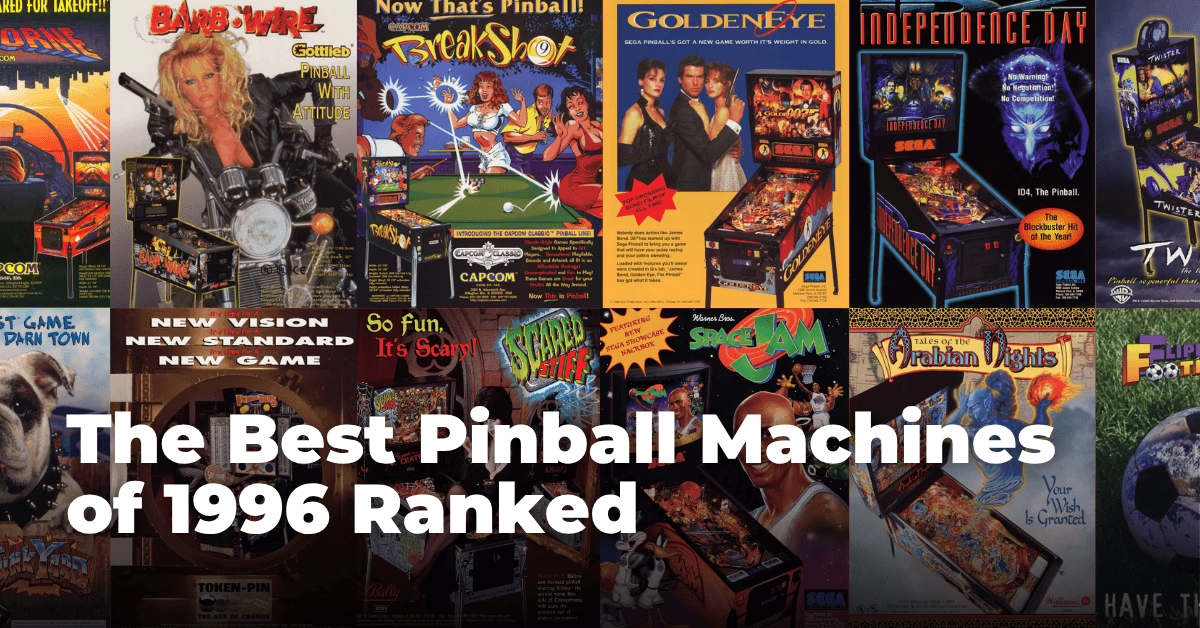
Following the fantastic year of pinball machines that was 1995, the industry slowed down slightly in 1996, with companies like Gottlieb, Bally, and Williams producing fewer machines. Throughout '96, a dozen new pins graced arcade floors, some far better than others, marking an interesting year during the dot-matrix golden age. In this Sega- and Capcom-heavy year, more than a few surprises emerged as better-than-expected, though an equal number were underwhelming. As these machines all celebrate their 30th anniversary in 2026, I thought it'd be fun to whip up a list of every pinball machine from 1996, ranked worst to best.
Keep in mind, this ranking is entirely subjective and based on my opinion alone. I'm eager to hear everyone's personal lists, so let us know your top 5 pins of 1996 in the comments here or on social media.
Note: Prototypes, novelty machines, international releases, and canceled games are not included on this list.
The Pinball Class of 1996 from Worst to Best
12. Flipper Football (Capcom)
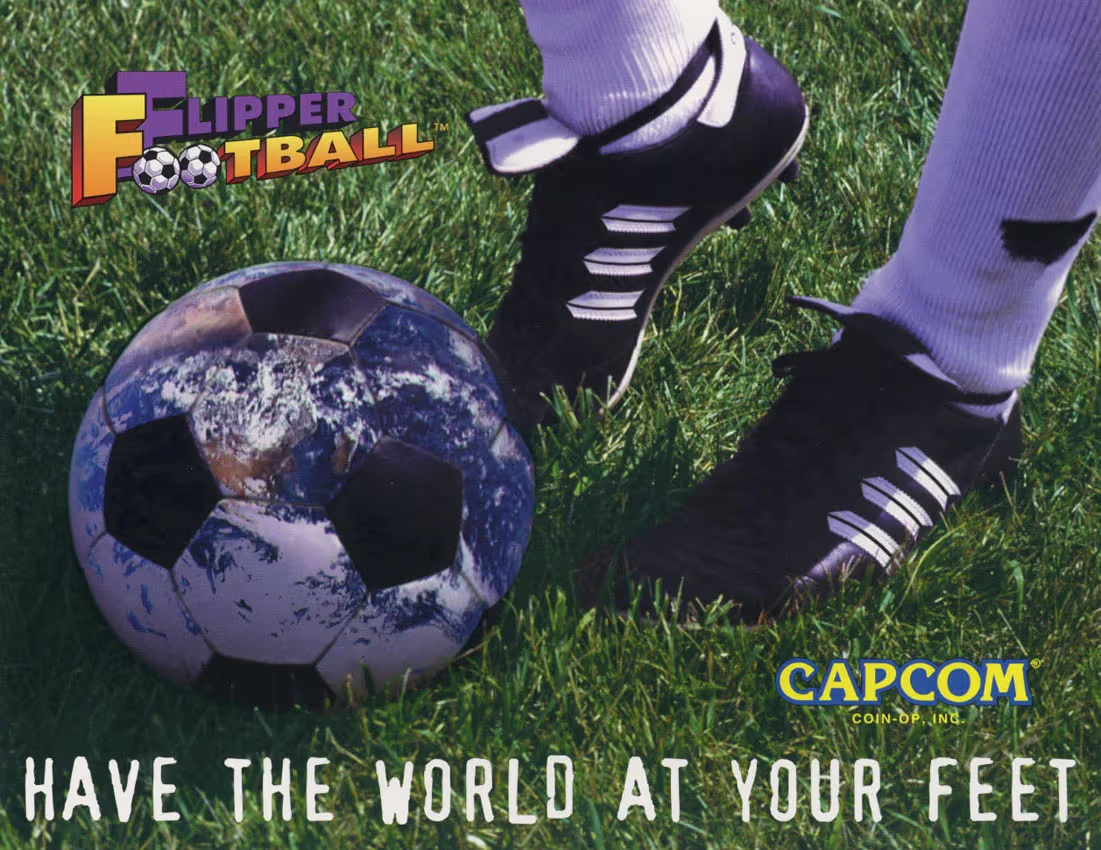
Flipper Football isn't a terrible game, but it's awfully repetitive and toes the line of what's considered a traditional pinball machine. Designed by Bryan Hansen and Python Anghelo, it's one of Capcom's most unique machines, but in this case, being unique does not equal being fun to play. While it's true that you can bat the ball around on Flipper Football and have a decent time, prolonged play of this soccer-themed machine leaves a lot to be desired. It's kind of like World Cup Soccer, minus most of the things that make World Cup Soccer fun.
Apart from the interesting art package, which casts the entire playfield and plastics in a grassy green, this four-flipper game doesn't make great use of its shootable elements. The overall objective of the game is to score as many goals as possible, achieved by knocking down the goalie drop targets at the top of the playfield and then shooting past them. This makes the most viable strategy to shoot up the middle over and over again, with very little reason to deviate. An in-game timer limits how long you play, which is kind of a good thing, as games of Flipper Football drag on, with no outlanes or punishing feeds to speak of. It doesn't really work as a normal pinball machine, and it also fails to compete with classic bar games like foosball, making Flipper Football a quirky oddity without much substance.
11. Space Jam (Sega)
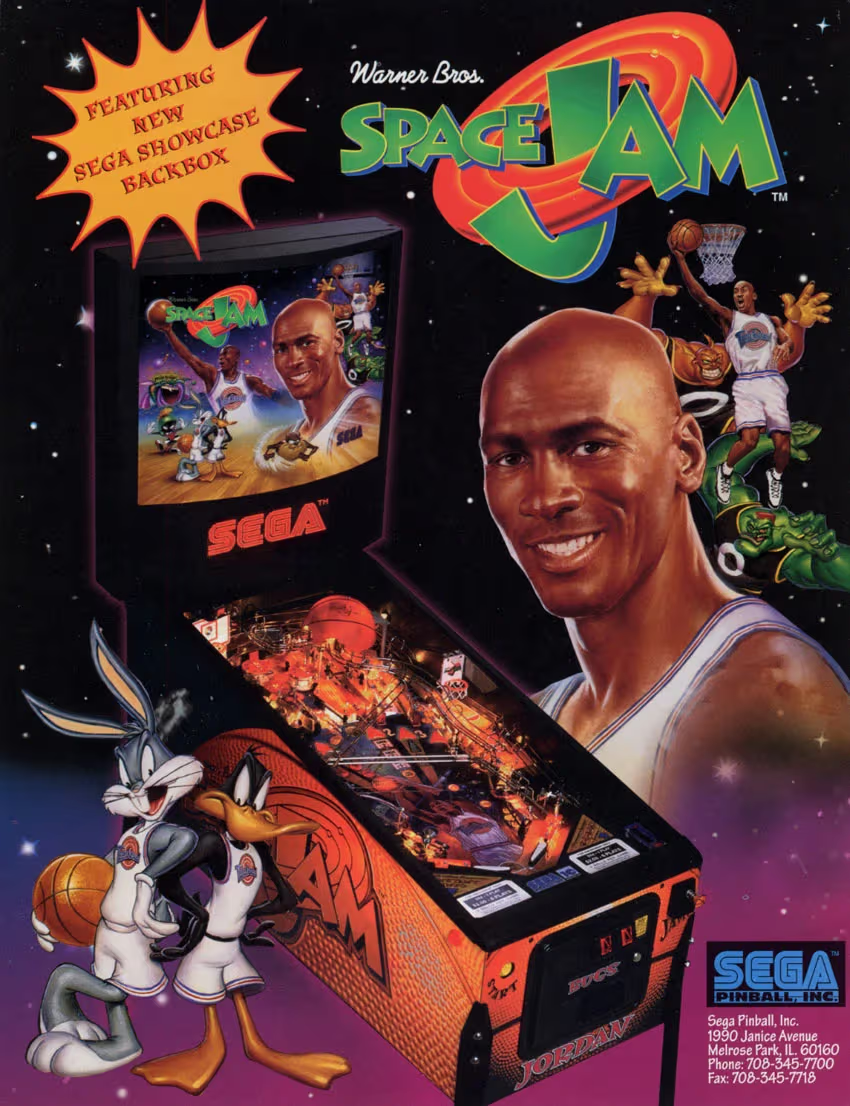
When it comes to silly '90s movies, Space Jam is a nostalgic classic, combining the cartoon world of Looney Tunes with NBA basketball. Looking to cash in on the movie's success, Sega created a Space Jam pinball machine, but unfortunately, time has not been kind to this licensed product. Even when compared to its peers of the era, Space Jam significantly lacked depth and replayability. Without Michael Jordan's likeness or the movie licensing behind it, Sega's Space Jam would probably not have the few fans that it does.
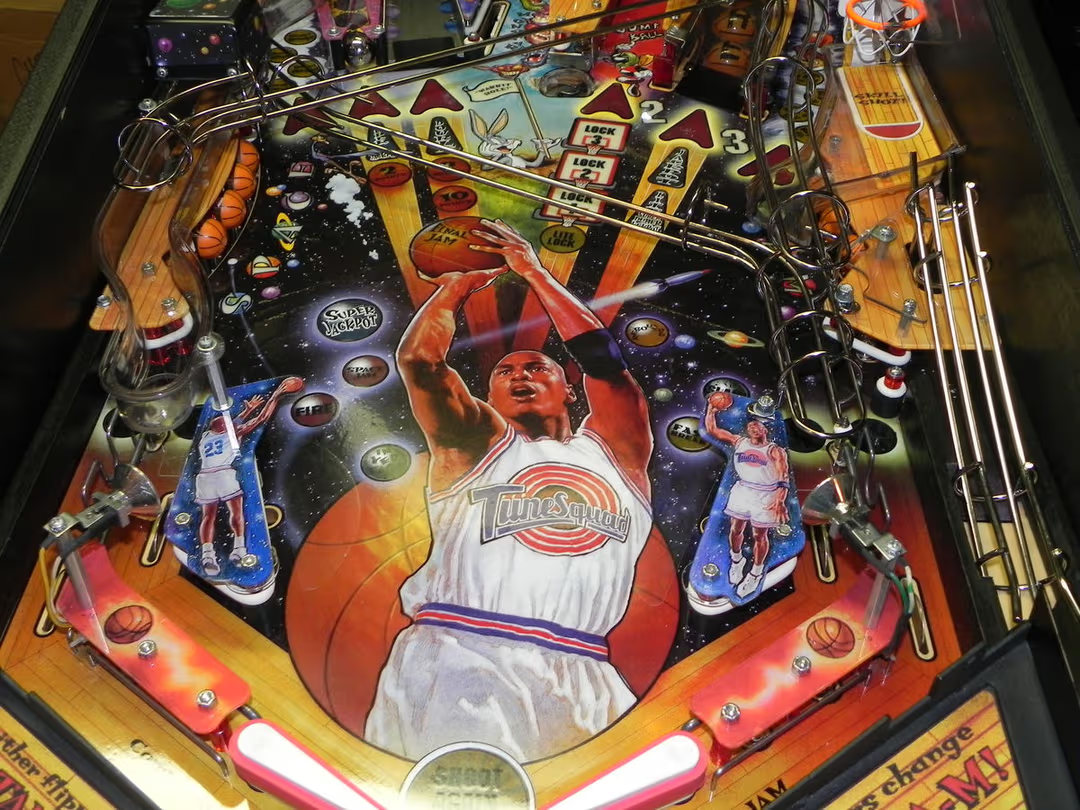
To be fair, Space Jam is a colorful title that can be fun to shoot around on, but a closer examination of the rules exposes a shallow game without much complexity. In order to access the wizard mode, players must complete a handful of objectives around the playfield, including a jackpot in multiball, scoring some pop bumper hits, shooting the orbits, and more. Due to the game's basic fan layout, these objectives are very reasonable with just a bit of practice, and the subsequent wizard mode is a disappointing 5-ball multiball that's not great for scoring. It can be fun to score some baskets by shooting the ball up the left ramp, but besides that, and granting some nostalgia for the '90s, Space Jam doesn't hold much entertainment value.
10. Airborne (Capcom)
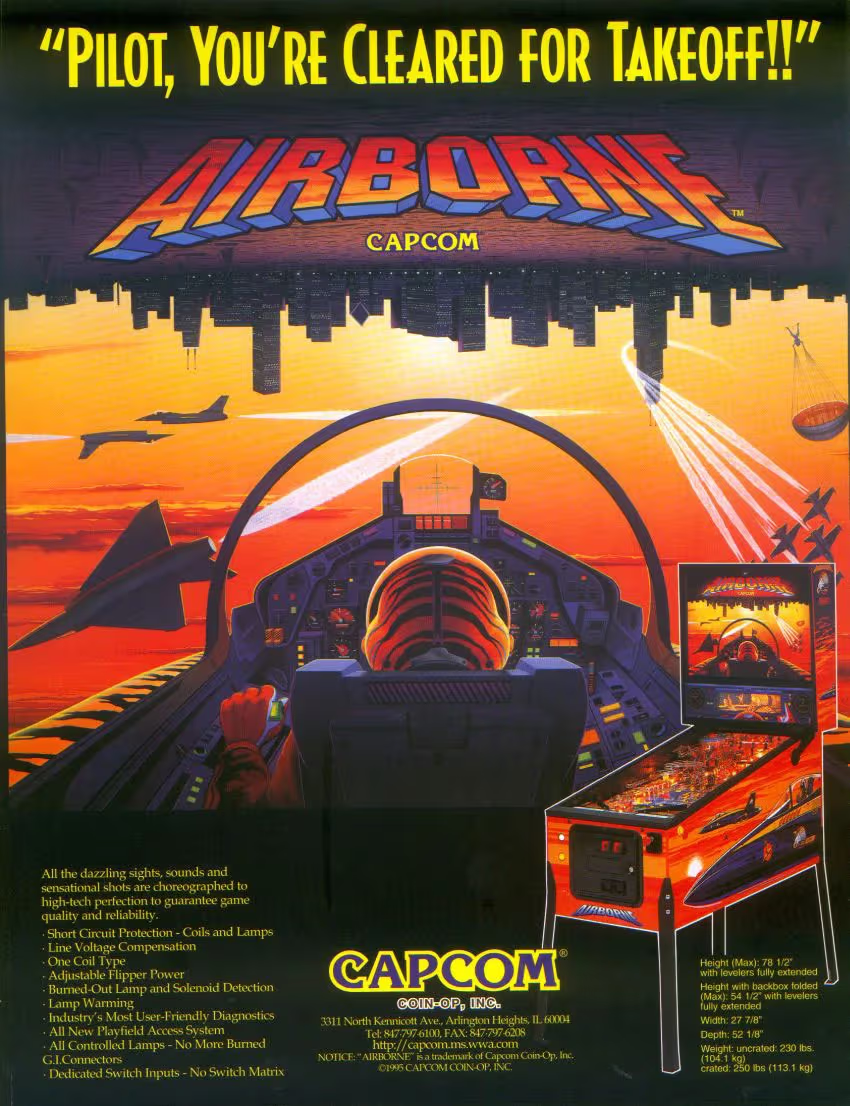
Capcom didn't have a very long or successful run in pinball, and Airborne is a prime example of the manufacturer's often mediocre design. Though the game puts you in the seat of a jet plane and tasks you with pulling off crazy stunts, this doesn't translate all that well in the gameplay. Instead, Airborne feels like an odd imitation of F-14 Tomcat (Williams, 1987), and one that's very late to the party.
In this fast-playing machine, players must travel around the world, pulling off cool plane maneuvers for points, while ripping ramps and surviving the reject-heavy playfield. There are two ramps near the center of the playfield that can be fun to shoot, but more often than not, you'll catch one of the many stand-up targets, and the ball will come flying back at you. Airborne has decent rules, but for a game that's about flying through the sky unrestricted, the machine lacks flow and feels stilted during play. Out of Capcom's handful of machines, Airborne is only better than Flipper Football, but that's not really saying much.
9. Independence Day (Sega)
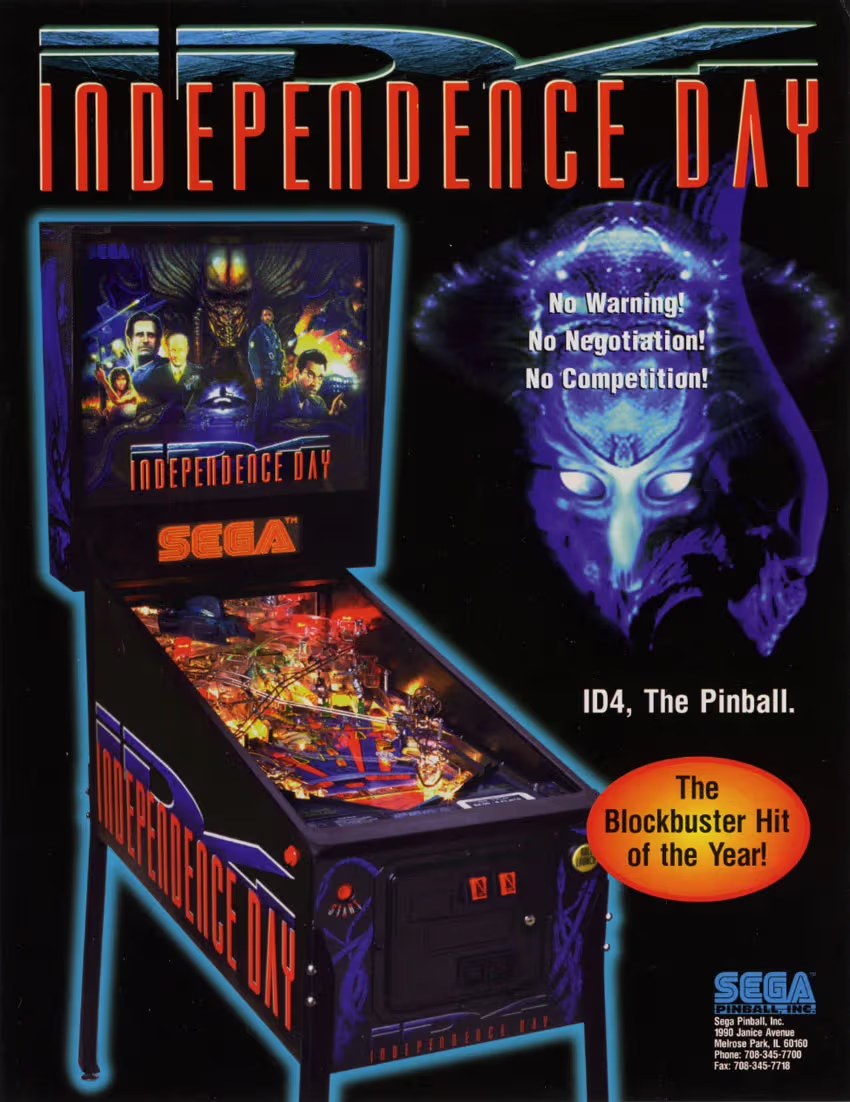
Sega games have a tendency to be surprisingly good or downright obnoxious, but Independence Day is a bit of an outlier in that regard. No one part of the game is particularly infuriating, but at the same time, nothing really stands out. Based on the 1996 movie of the same name, Independence Day is all about protecting Earth from an alien invasion, and though the theme integration is lackluster, this pin still shows potential.
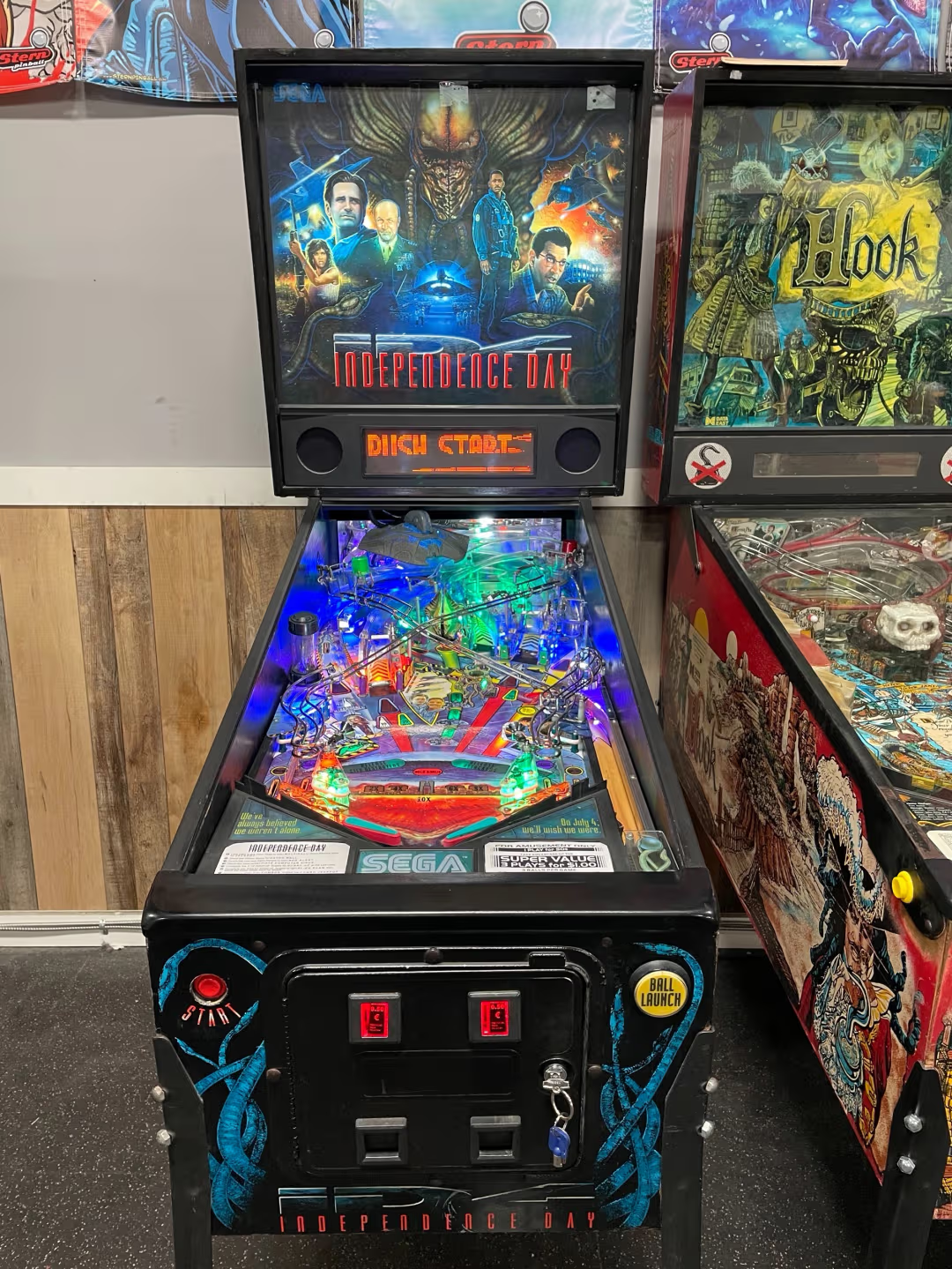
The big issue with Independence Day, like some of the other games on this list, is a very shallow set of rules. Without any real modes to speak of, the game becomes a shooting gallery for multiball and hurry-ups, grinding away at small objectives in hopes of a big score. While the art package is good enough, the audio design is pretty grating, with poor sound quality and repetitive call-outs. To be fair, though, the playfield design offers great flow, and with an emphasis on ripping combos off inlane feeds, it can be rather fun to shoot. Whenever I see Independence Day at a pinball show or convention, I usually fire it up for some mindless flipping. It's not a bad game, but it's not one I'd spend more than a few minutes on.
8. Barb Wire (Gottlieb)
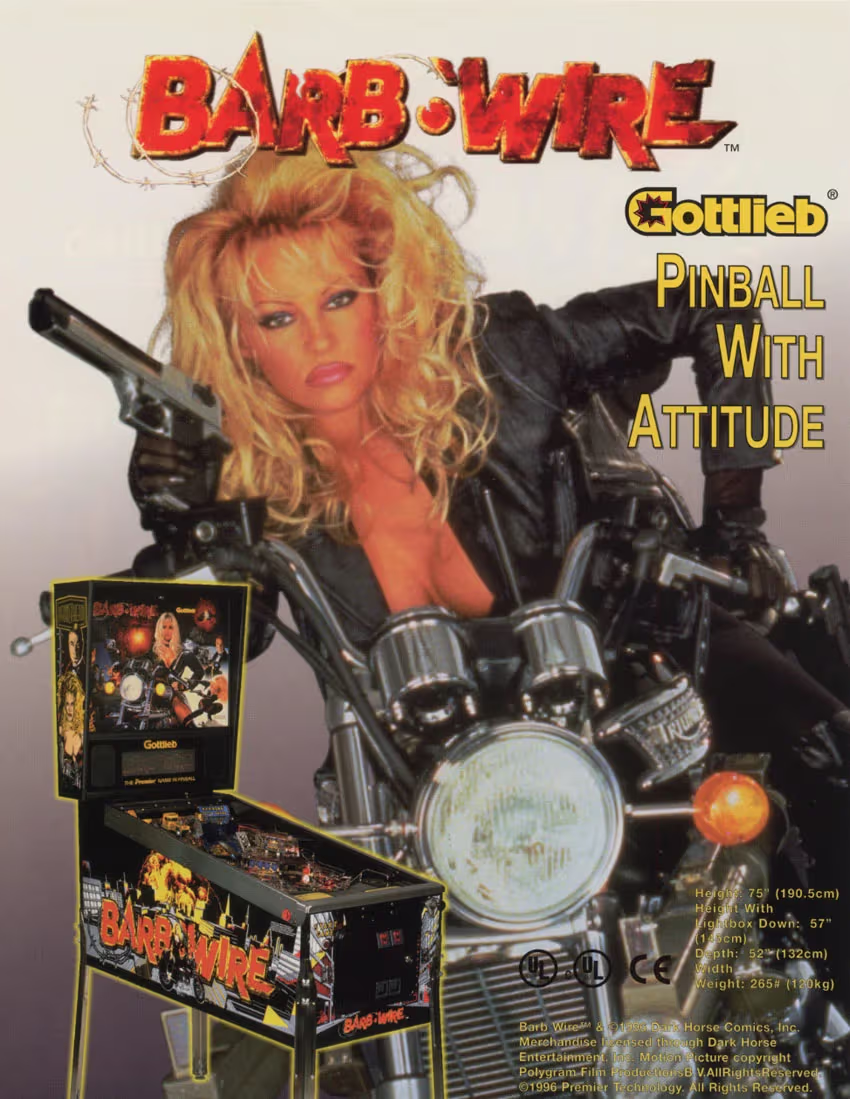
Notable for being the last machine that Gottlieb released before they shut down in 1996, Barb Wire is an eye-catching game, at the very least. Based on the movie and comic of the same name, this pin totes a scantily clad Pamela Anderson on the backglass and all over the playfield, and woos you into dropping a few quarters with its gruff, biker theme. However, the lack of gameplay depth and somewhat repetitive nature make it hard to keep coming back, though some enjoyment can be found by turning your brain off and ripping shots.
If you're looking for deep and varied modes, you won't find them in Barb Wire, but if multiball is your thing, there's plenty of that to enjoy. In Barb Wire, you're always working toward one multiball or another, and even if you're not trying, you'll likely fall into one by chance. In base play, hitting the various white shots around the playfield eventually leads to a multiball, or you can start one of the four modes in the game by shooting the Big Fatso shot, three of which are multiballs. If you can complete all four modes, you can then jump into the Haywire wizard mode, which, of course, is a multiball. Comboing ramp shots can also be satisfying, but the real focus here is on Pamela Anderson and constant multiball action. If neither of those things sound very interesting to you, Barb Wire probably won't either.
7. Breakshot (Capcom)
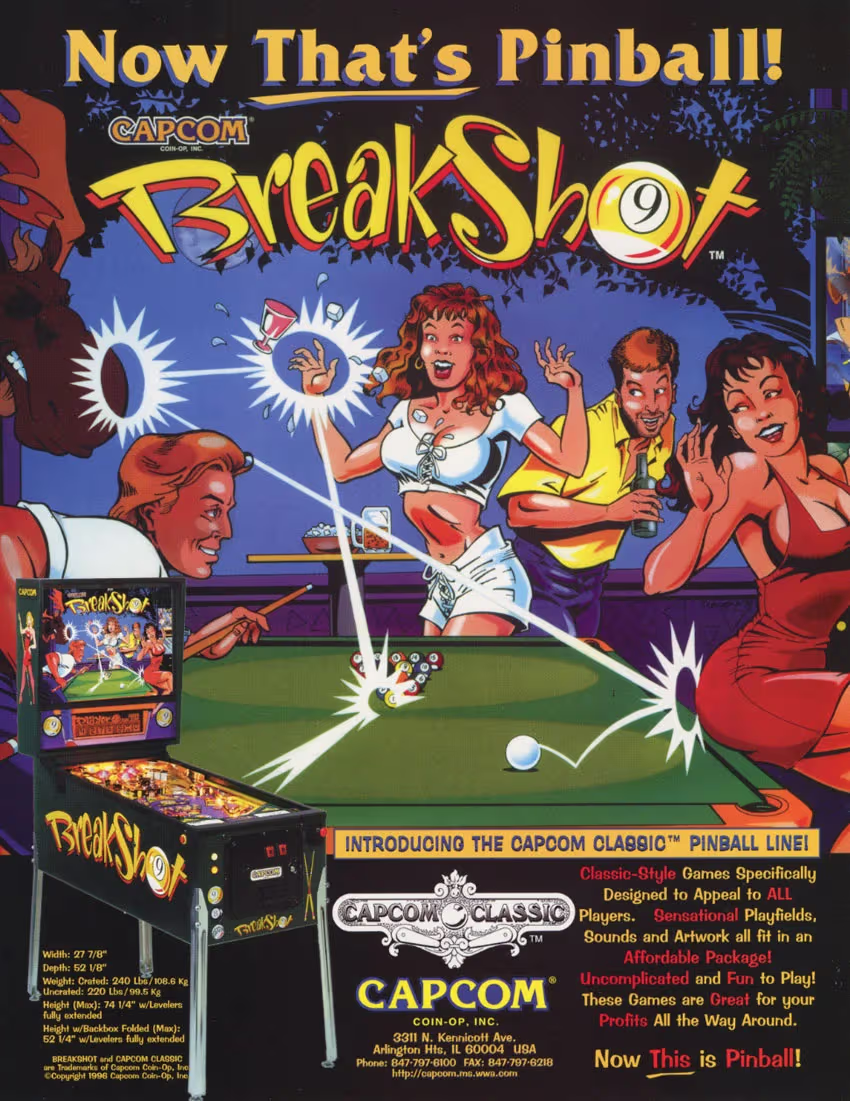
Billiards is one of the most common themes you'll see in pinball machines (along with playing cards), so it's occasionally tough to distinguish one pool-themed pin from another. Still, Capcom decided to try their hand with this tried-and-true theme, and for all intents and purposes, the result is pretty damn playable. While Breakshot might not wow you with originality, it's a decently fun flip with a retro-inspired playfield, and an approachable pin that players of all skill levels should find engaging.
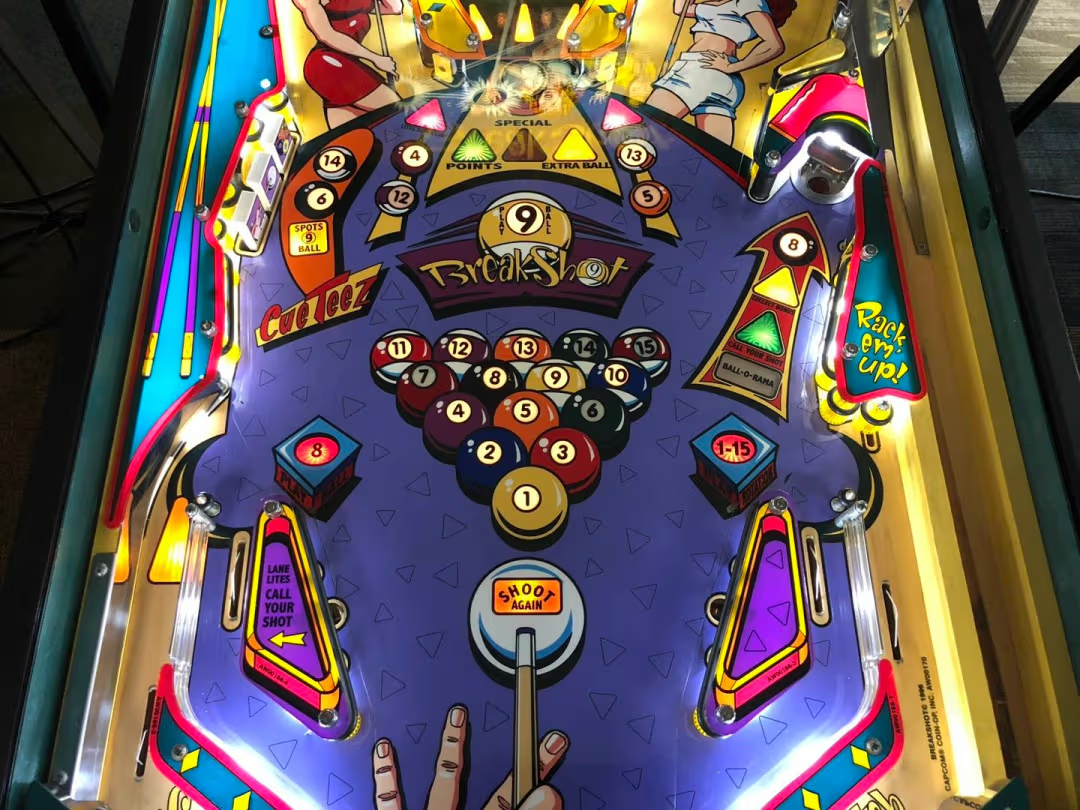
Despite being a mid-'90s game, Breakshot doesn't have any fancy ramps or bash toys. Instead, the playfield is EM-inspired, reminiscent of other billiards-themed pins like Eight Ball Deluxe. At the start of the game, you'll dive into one of several modes, modeled after billiards rules variants, including eight ball, nine ball, and rotation, with a final "Cutthroat Countdown" wizard mode for skilled players to shoot for. The general objective is to sink pool balls by shooting various targets around the playfield, while a unique center ball lock mech replicates the feeling of an initial "breakshot," leading you toward multiball. It's a pretty basic game, but the colorful art, upbeat sound package, and great balance of challenge make Breakshot a game that I always enjoy coming back to, even if only for a few plays every now and then.
6. Safe Cracker (Bally)
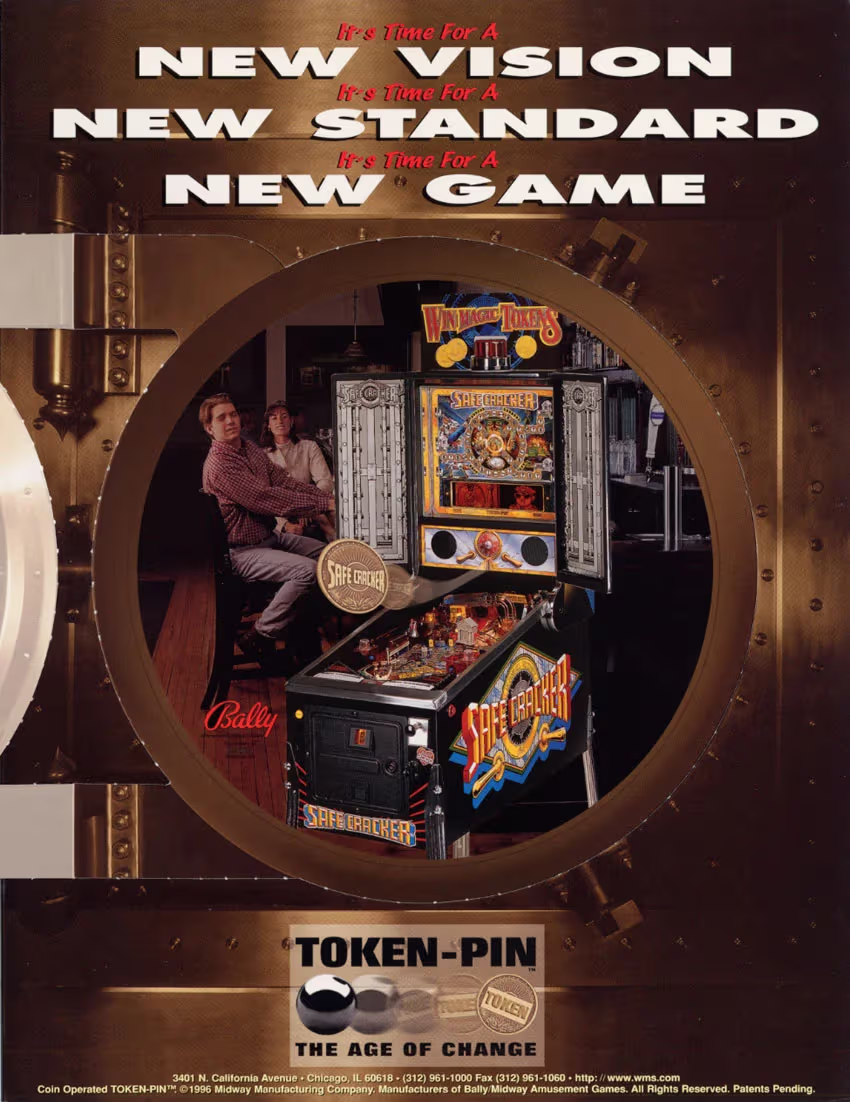
Designed by Pat Lawlor, Safe Cracker is one of the most divisive games of the 1990s. While some players adore its cutesy, smaller cabinet and gimmick-heavy nature, others have nothing but bad things to say. As soon as you set eyes on Safe Cracker, it's clear that Bally was going for a non-traditional machine, but whether or not it's fun to play is completely up for debate. Unlike most pins, Safe Cracker puts you on a timer and tasks you with breaking into a bank vault on a notably small playfield, which involves a board-game-style mechanic on the backbox, dice rolls, and more than a little bit of chance.
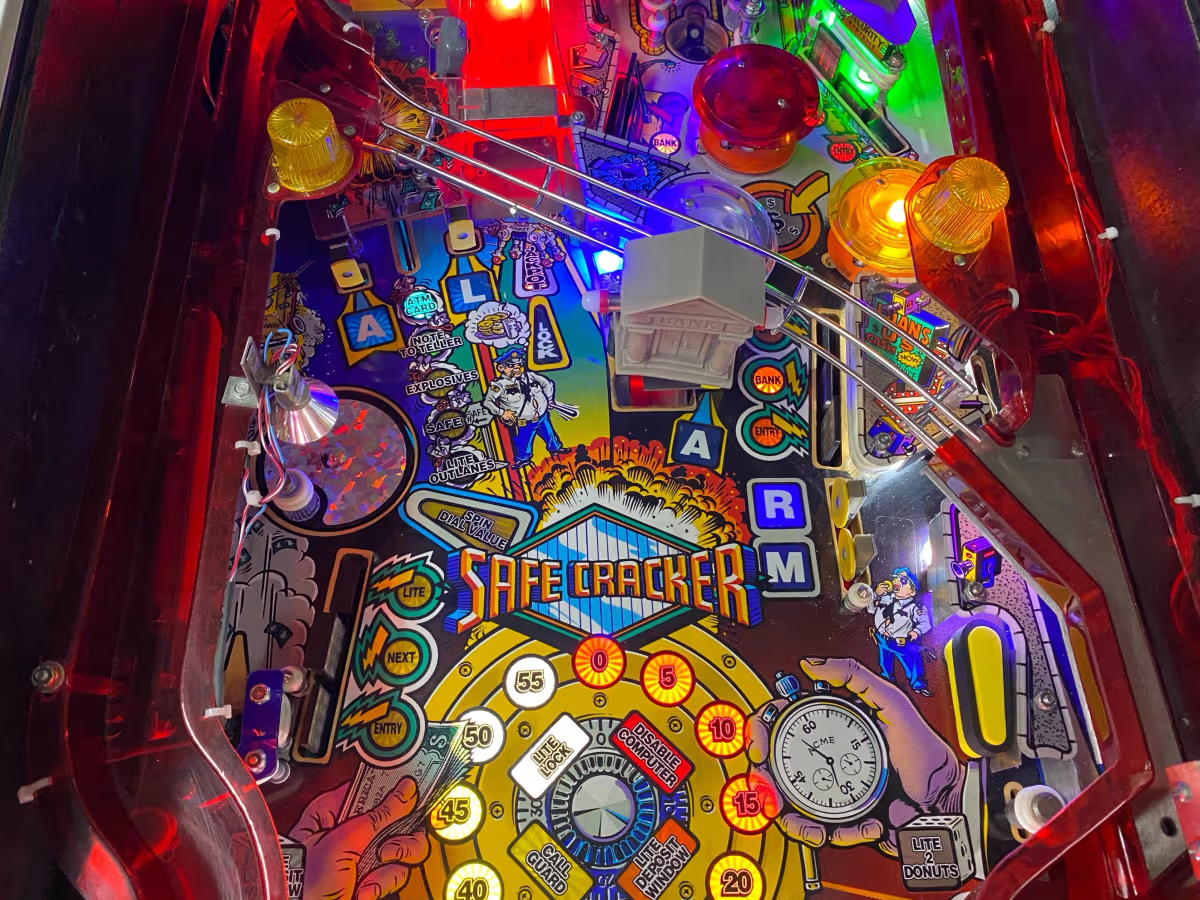
Of course, Safe Cracker's big claim to fame is its token-dispensing gimmick. If you manage to break into the vault successfully, a fancy token will spill out from the backbox, rolling its way down the glass and into your expectant hands. Finally obtaining a token after numerous tries is one of the most rewarding things in pinball, but once you've accomplished that, there's not much else to keep you coming back. Given the timed nature of the game, the playfield isn't really designed for high score attempts, but is more like an interactive toybox that leads you to the dice-rolling backbox. Still, I've always enjoyed my token attempts on Safe Cracker, and since it's pretty rare, I always make a point to play it if I see one out on location. Without that novelty factor, Safe Cracker might be lower on this list, but any machine that spits money at me for winning (fake or not) is worthy of some bonus points.
5. Twister (Sega)
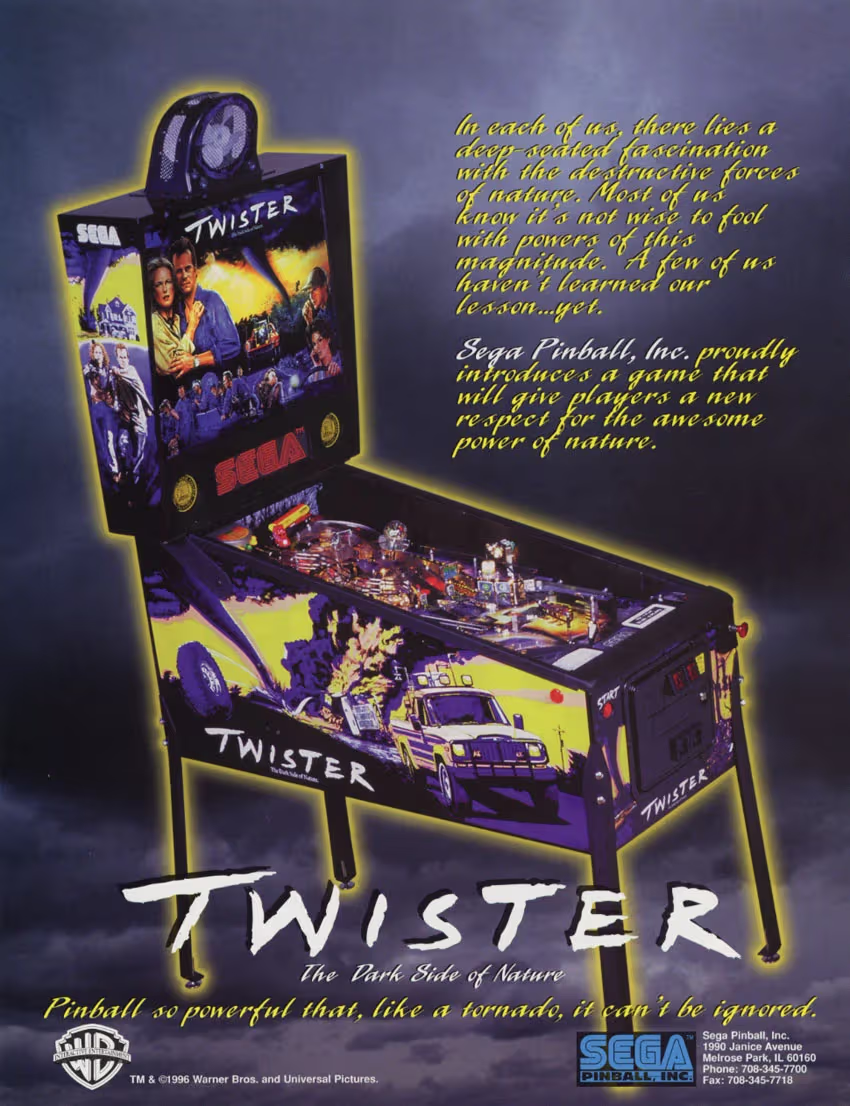
Out of all the games on this list, Twister is the most blatant "guilty pleasure," at least in my opinion. Based on the movie of the same name, this pin features a whole lot of Bill Paxton, some ripping music, and a spinning disc that adds some chaos to the mix. While the theme isn't all that great (unless you really like the Twister movie), the playfield is decent enough to shoot, the multiballs are enjoyable, and it's a perfect game for when you just want to smack the ball around.
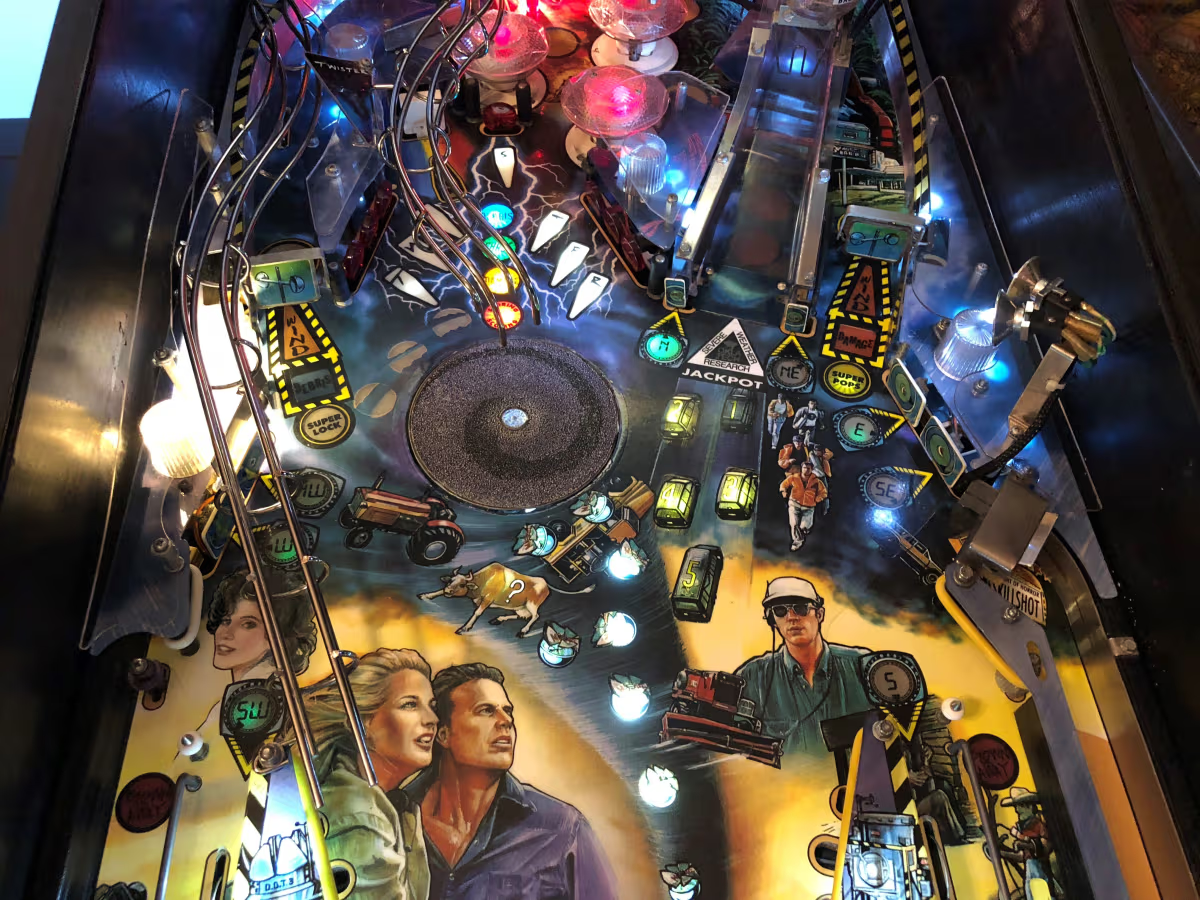
In terms of rules, Twister doesn't have any standout modes, but instead, a lot of background features to aim for. Similar to Whirlwind, there are compass targets around the playfield, and when you hit them all, various awards can be earned. Other features can be accessed by nailing the Twister targets, but apart from double scoring and hurry-ups, you won't find much variety. Instead, the three main multiballs are the focus, which can be started by hitting enough ramps, orbits, and lock shots. In addition to Cannister multiball, which starts by flinging your balls off the spinning disc, I particularly like "Cow Multibull," because cows, of course. Overall, Twister isn't that deep, but spinning discs, mooing cows, Bill Paxton, and fun multiball play push it up into the top 5 pinball machines of 1996.
4. GoldenEye (Sega)
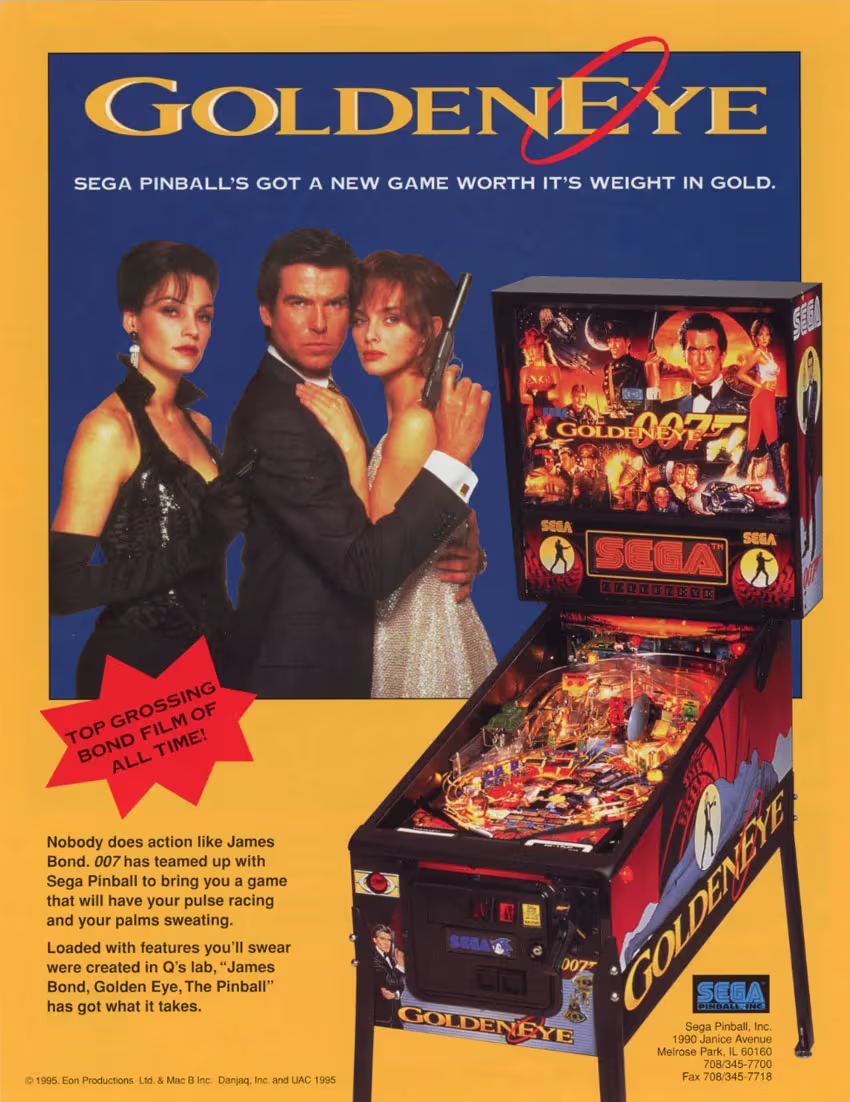
If you couldn't tell by the games featured on this list so far, 1996 was a year of movie tie-in games for Sega, and between the four games that were released, GoldenEye was their best stab at it. Based on the James Bond movie of the same name, this pin offers just as much action as the Hollywood blockbusters, with a notably more accessible playfield than most other Sega games of the era. With a handful of easy ramps, some interesting modes, and a super satisfying satellite mech, GoldenEye sets itself apart from the rest of Sega's library, making for a game that's rewarding both casually and competitively.
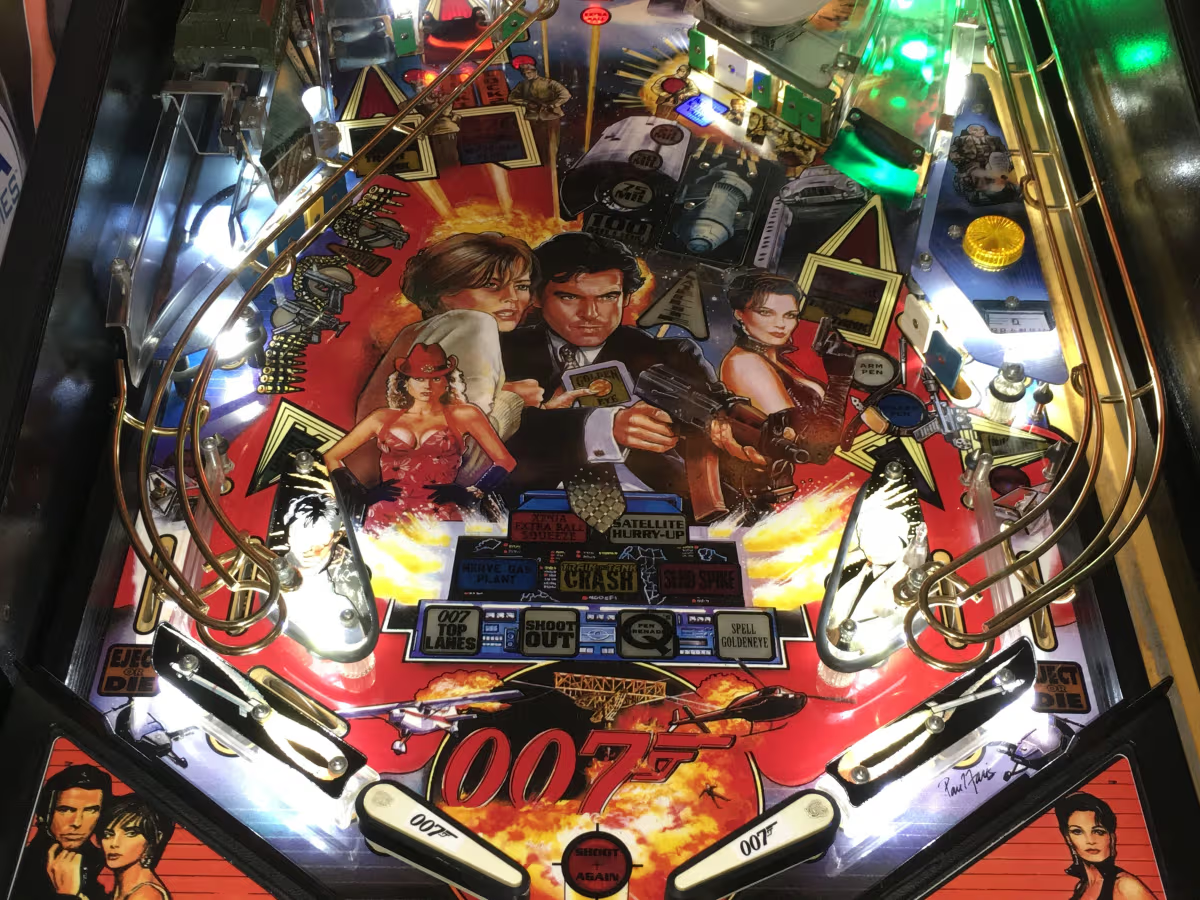
First and foremost, GoldenEye does a good job with its theme integration, as the artwork is evocative of the film, the sounds and callouts are recognizable, and there's a good sense of speed and immediacy within the rules. There are five modes to try, all of which replicate moments from the movie, but these vary in quality. Most modes involve shooting ramps or hitting a hurry-up, but are still worth decent points if you can pull them off. The real star of the show is Satellite multiball, which sees a ramp pop up out of the playfield, letting you shoot directly at the rotating satellite toy, sticking your ball on the magnet in the middle. This shot feels satisfying every single time, giving you a perfect push of excitement as you enter the main multiball of the game and start ripping jackpots. At its worst, GoldenEye can be a bit clunky, but when it's flowing, it's one of the best games Sega ever made.
3. Junk Yard (Williams)
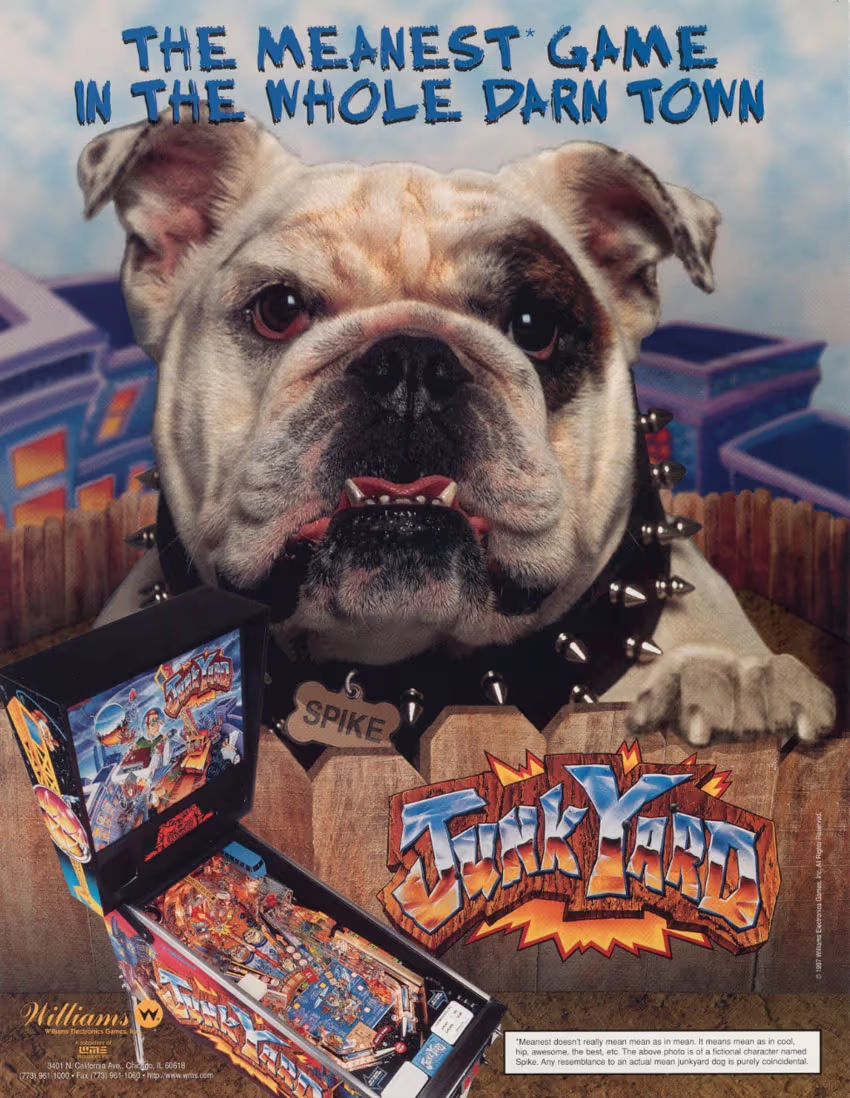
Junk Yard is another divisive pinball machine from 1996, with a love-or-hate reputation that's pretty clear-cut. At first glance, it's a pretty open playfield, with just a few ramps and a floating crane that you bash for multiball, and not much else. Since the main theme of the game is junk, your end goal is to collect various pieces of junk and craft items, all while embarking on weird adventures. What Junk Yard lacks in playfield variety, it makes up for with tons of personality, plenty of quirky moments, and some fantastic pinball cameos, so to speak.
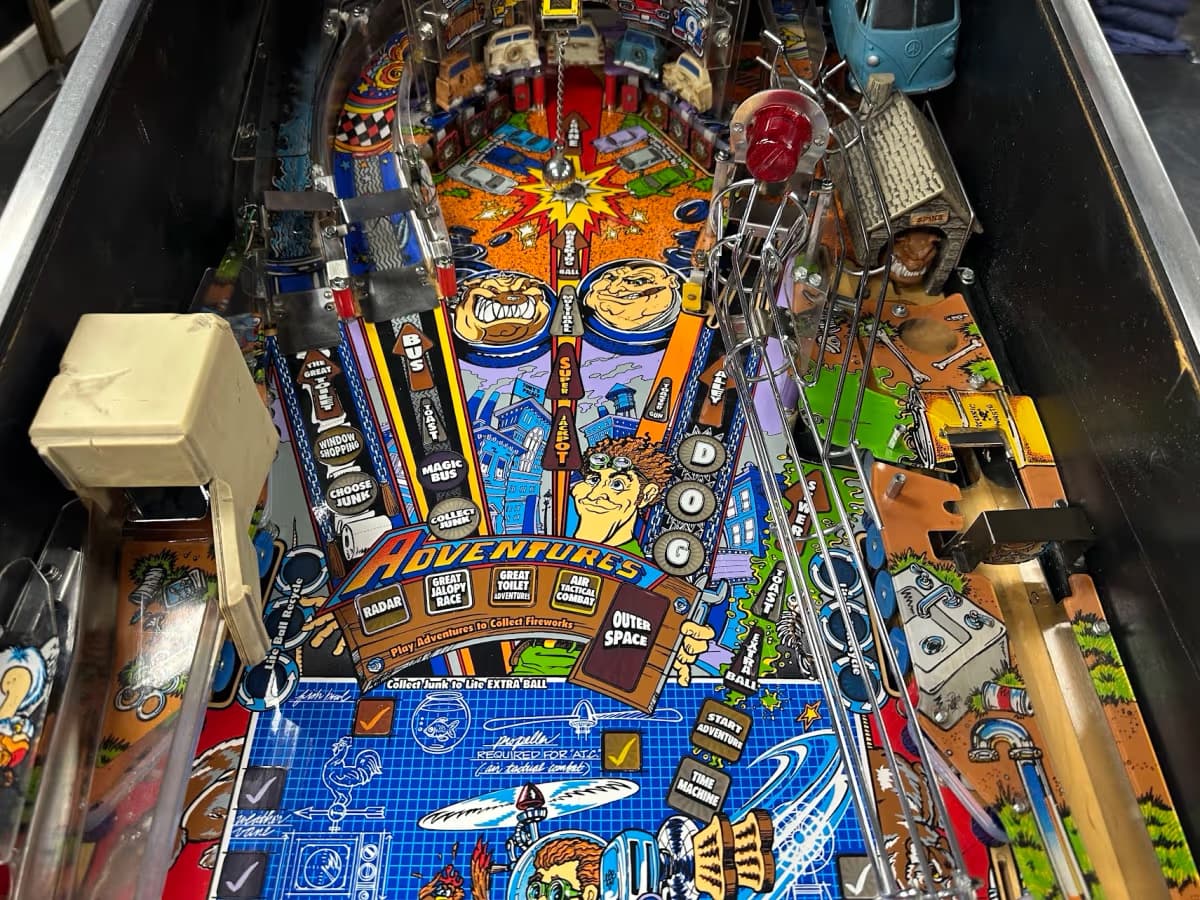
To be blunt, I like everything about Junk Yard, apart from a few gripes with the playfield flow. It might be very straightforward, but there's something satisfying about collecting the various junk and the small amount of strategy therein. Bashing the crane for multiball is fun enough and can be very worthwhile when it comes to points, but for my money, the absolute best part of the game is the Time Machine. By lighting the Time Machine via skillshot or the Magic Bus feature, you revisit modes from other classic pins, like Move Your Car from Creature from the Black Lagoon, The Mamushka from The Addams Family, Saucer Attack from Attack from Mars, and more. I can understand the gripes with the playfield layout and rules, but the Time Travel modes are fun pieces of meta content that I absolutely adore.
2. Scared Stiff (Bally)
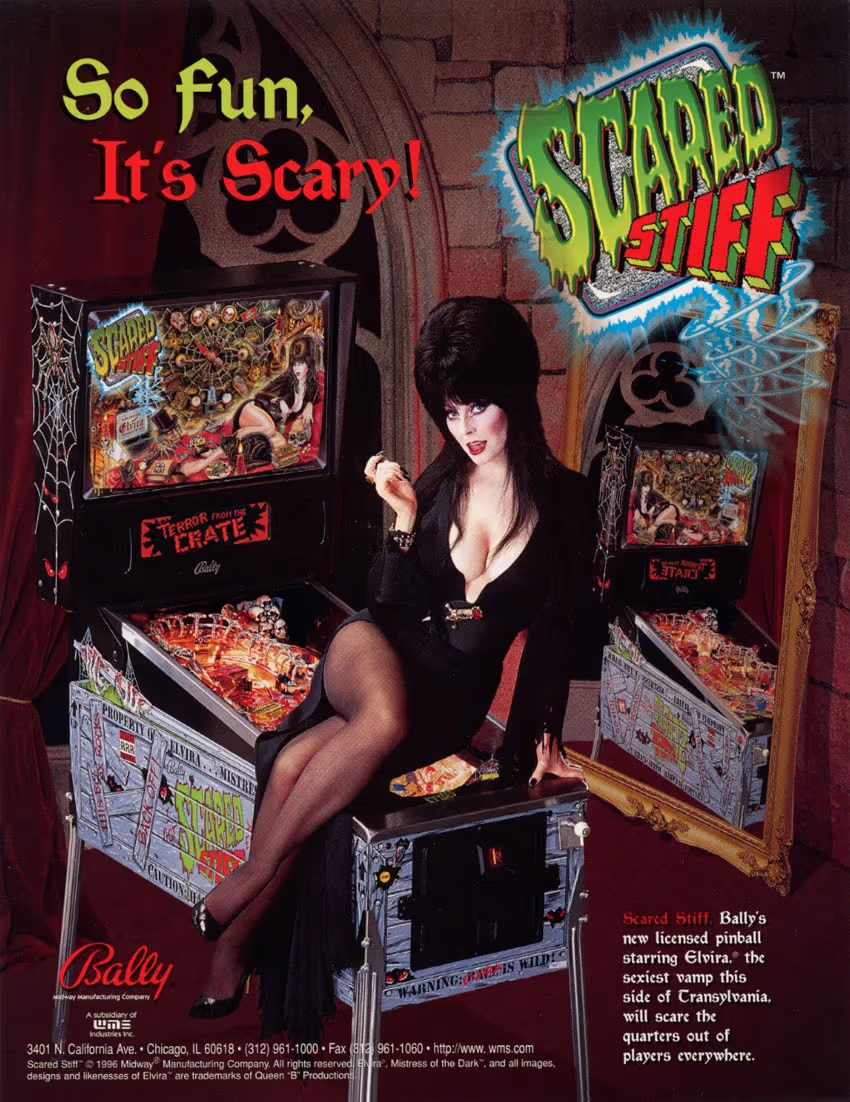
Slightly sleazy, somewhat seductive, and supremely satisfying to play, it's no wonder why Scared Stiff is the most sought-after pinball machine in the Elvira trilogy. This 1996 Bally release, designed by Dennis Nordman, succeeds in every aspect, with standout elements that combine to create one of the best DMD-era games in all of pinball. It's not particularly difficult, nor does it have deep layers of strategy, but Scared Stiff proves that sometimes, simplicity is the best path toward general entertainment.
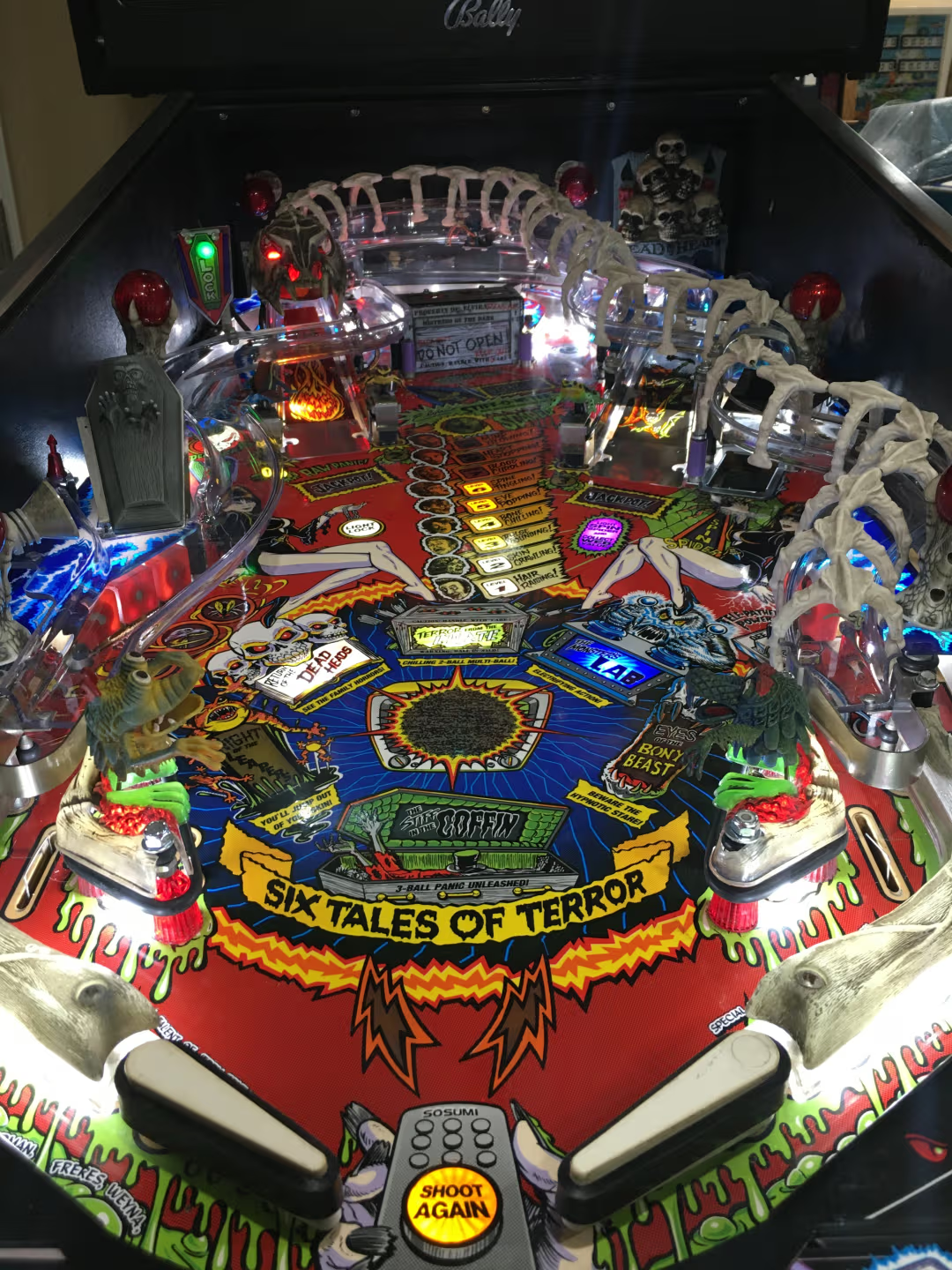
From the jump, Scared Stiff woos you in with its fun horror-lite theming, thanks to vivid playfield art, excellent callouts, and a big ol' spider on the backbox. When it comes to gameplay, Scared Stiff is exceptionally approachable, as the six main "tales" have objectives that are easy to suss out. Multiball is easily accessible by drilling the crate in the center, while extra rewards can be obtained from the spinning spider wheel, adding a bit of strategy to the mix. Once you've cleared all six tales, you start the wizard mode, which sees you continuing to nail the crate in pursuit of big scores. Sure, reaching the wizard mode is relatively easy, but even once you've completed it, Scared Stiff remains replayable, thanks to its smooth ramps and signature style. Like many other pinheads, I have a soft spot for the Elvira trilogy, and Scared Stiff is my favorite of the bunch, so it absolutely deserves its high placement on this list.
1. Tales of the Arabian Nights (Williams)
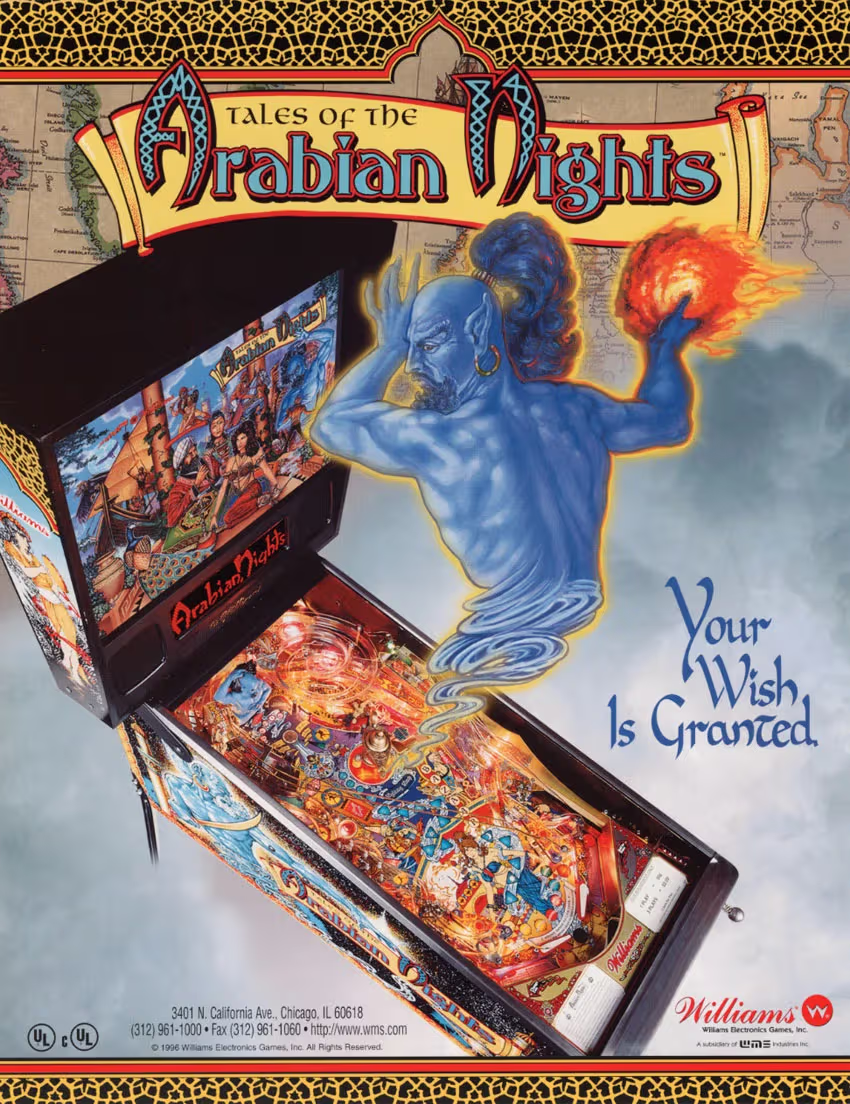
We play pinball for a lot of reasons. Some like to chase high scores, others like to sit back and watch the flashy lights and general chaos, and some are just there to flip. For me, the best part of pinball is the progression of modes and feeling of completion as you battle through a particularly tough wizard mode and finally cross the proverbial finish line. Across the entire DMD era, 1996 or otherwise, there are few games that do that as well as Williams' Tales of the Arabian Nights. Complete with flying carpets, wish-granting genies, magical lamps, and a princess to rescue, it's one of the finest pinball adventures of all time.
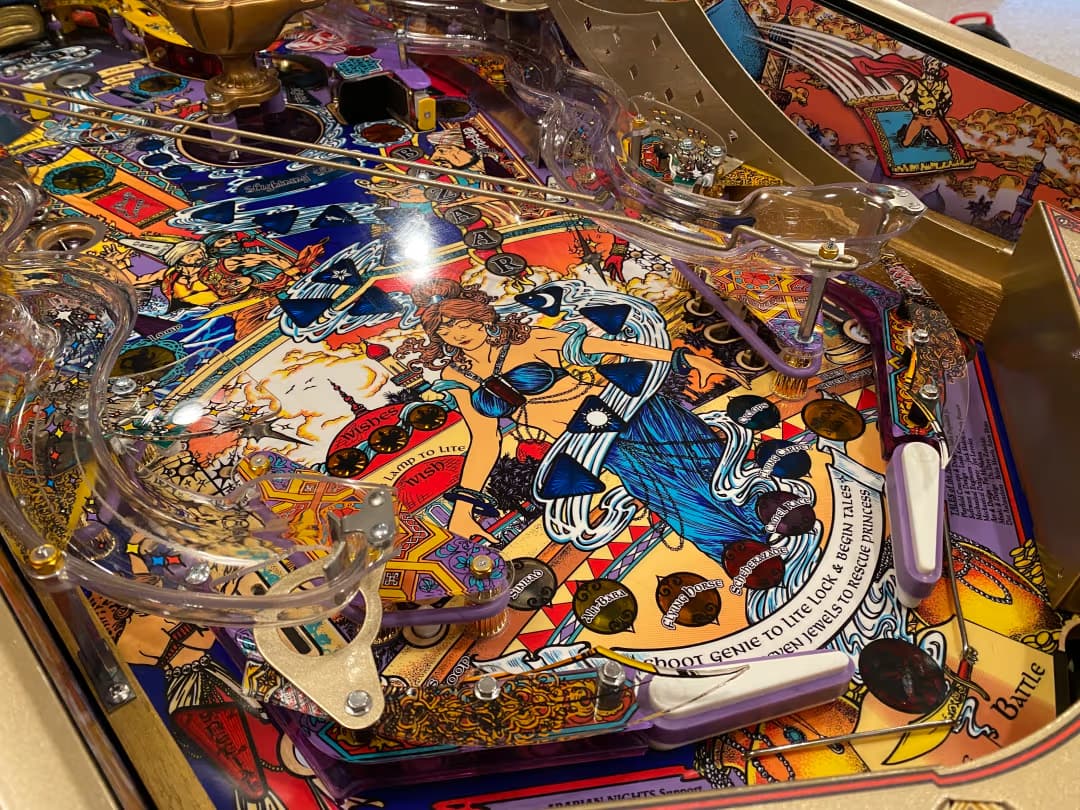
Tales of the Arabian Nights is a beautiful game: you need only look at the playfield for a few moments to figure that out. Thankfully, that beauty is not skin deep, as the playfield boasts several fun mechs, like a spinning lamp and genie bash toy, as well as some interesting ball paths and sneaky shots. In the game, the main objective is to complete the seven tales, collect their respective jewels, and then battle the genie to free the princess. These modes put you in a variety of thematic situations, tasking you with flying around on your magic carpet, winning a camel race, fighting a cyclops, and more. Reaching the wizard mode is a sizable task, and completing it requires quite a bit of skill, but it's a challenge that feels reachable once you've put in the work.
When compared to other '90s classics like Attack from Mars, Monster Bash, and Medieval Madness, Tales of the Arabian Nights might not be as infinitely replayable, but in my opinion, it does a better job of translating its story into playable form. It's an incredibly good-looking game that's always fun to play, and one that never feels unfair, leaving your success to skill and skill alone. With one of the best wizard modes of its era, a jaw-dropping art package, and fantastic theme integration, Tales of the Arabian Nights is, without a doubt, my pick for the best pinball machine of 1996.


Comments