Every few months, someone in the pinball community raises questions about Project Pinball.
The cycle is familiar by now. Someone pulls up the 990 filings on ProPublica, sees $600,000 in net assets and a 3-star rating on Charity Navigator, and starts asking where the money goes. A Reddit thread gains traction. Someone in a Facebook group shares a screenshot. The questions compound: Why is a pinball charity sitting on $600,000? Why does its founder take a salary? Is there something fishy going on here?
Earlier this year, this reached a new pitch. An anonymous individual sent Kineticist a dossier of allegations about Project Pinball's finances, raffle operations, and organizational structure. Some of the claims were specific. Others were speculative. A few were demonstrably wrong. But the underlying questions — about transparency, governance, and what an $850,000-a-year pinball charity actually does with its money — are the same ones that have been circulating in pockets of the community for a while now.
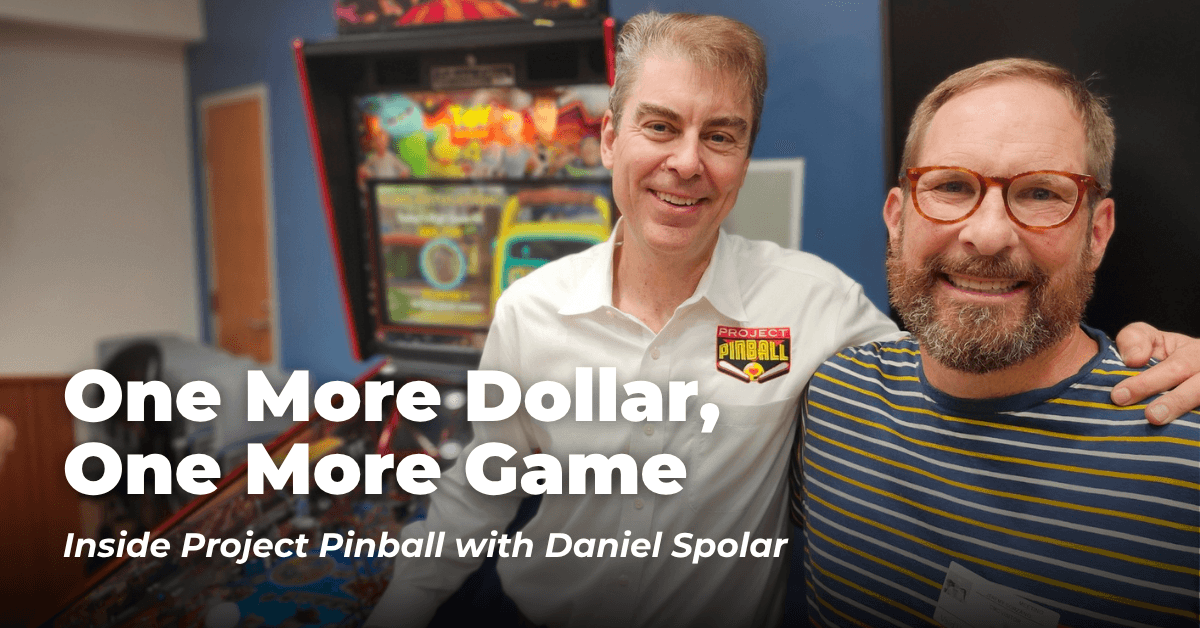
So I reached out to Daniel Spolar, founder and director of Project Pinball. Not because I thought there was a scandal to uncover, but because these questions deserve answers from the person who can actually give them. We talked on March 17 for nearly three hours on Zoom. He was in a hotel room in Phoenix, somewhere between a dedication in Denver and whatever came next on the 13th Love Across America tour. At one point he paused mid-sentence to ask housekeeping for towels. His bike was wedged against the bed.
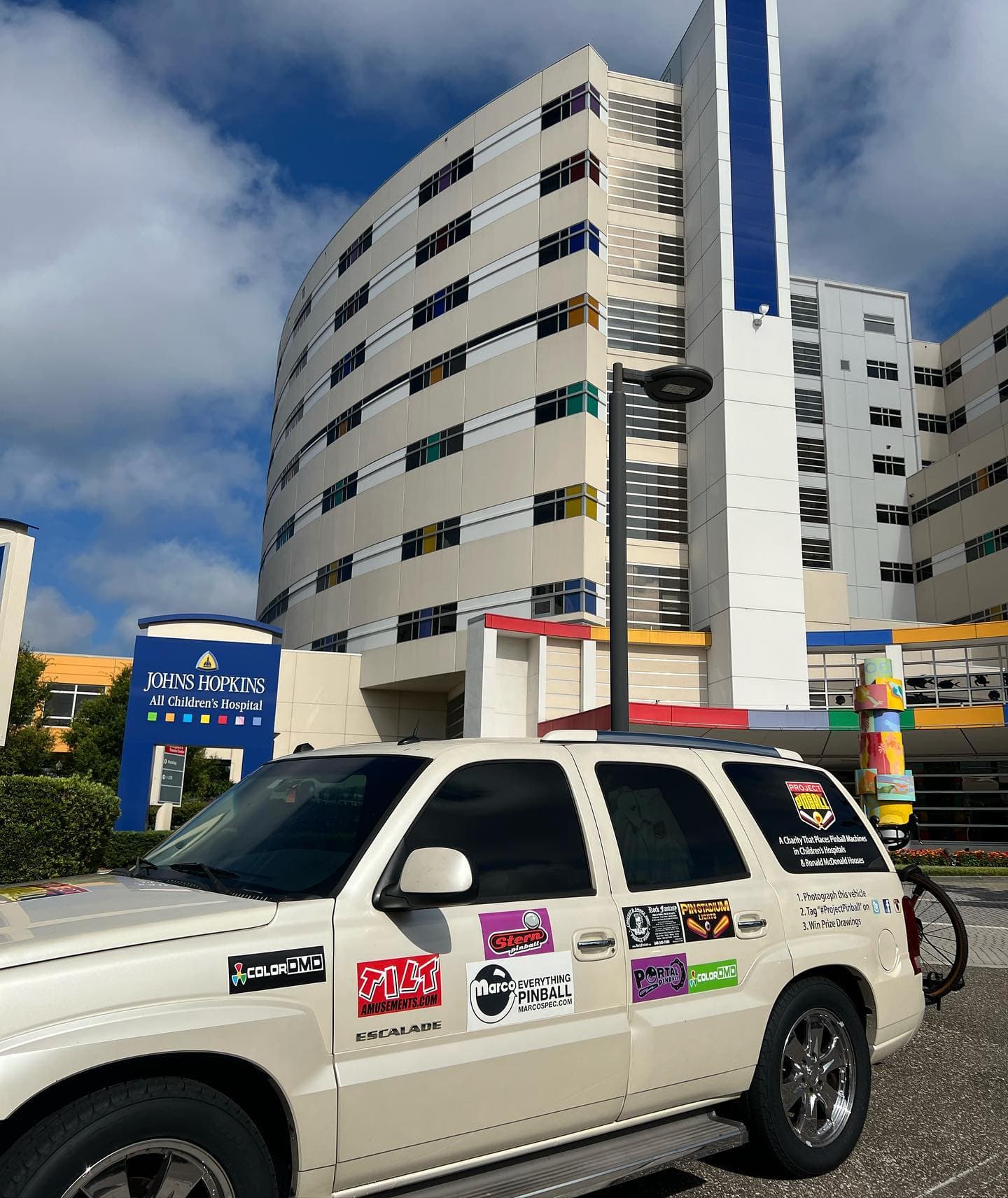
I'll be upfront: there were no bombshells. No red flags. No moments where the math didn't add up or the story shifted under pressure. I've been in rooms with a lot of different types of business people over the years, and I have a decent sense for when something's off. Daniel Spolar reads as a guy who is plugging along — methodically, stubbornly, out of a tired Escalade with 403,000 miles on it.
What follows is a mix of narrative and Q&A. The stories that most people haven't heard, and the business questions that keep coming up, answered in Daniel's own words. But after sitting with this for a while, what I keep coming back to is how routine it all was. It was dense and info-packed — nearly three hours of material — but it was also just a pretty normal conversation about a small, mission-driven organization and the person running it. Personally, the mechanics of how the business works are the more interesting part.
How It Started
The origin story has been told before. Here's the version Daniel told me.
Around 2011, Daniel Spolar was called in to look at an inoperable 2007 Stern Spider-Man machine in the Chrissy Brown Hematology and Oncology Unit at Golisano Children's Hospital of Southwest Florida. The hospital had been trying to find someone to fix it for over nine months. The machine had been donated around 2008 by the parents of Jimmy Schneeberger, who died of cancer as a child. They wanted to give something back to the hospital where their son received care. Their son loved superheroes. Spider-Man had just come out.
Nobody maintained it. For roughly two and a half years, kids, parents, siblings, and staff played it until it broke. The play counter read 21,332. Then it sat — filthy, dark, heading for a janitor's closet.
"You would touch it like this and your finger would be black as midnight."
Spolar, a general contractor by trade who had rediscovered pinball after his kids left home, rallied the local community to restore it. But it took convincing. The machine was hospital property. It had to go through a board.
21,332 plays on a single machine, in a hospital, with zero promotion and zero maintenance. The demand was real. The question was whether anyone would build something around it.
Spolar wasn't sure. He'd stepped away from pinball for 18 years while raising three kids, then dove back in hard. He worried he was too close to pinball to see clearly.
"I wasn't sure if this was a viable idea for a charity, which is a scary thought. We know that they're putting in consoles and PlayStations and all this stuff. Am I too close to pinball?"
He incorporated Project Pinball in Florida in August 2013, filed for 501(c)(3) status the same year, and started funding the whole thing out of pocket. The original plan was five machines in five Florida cities. Then he found out Florida had 11 major cities with children's hospitals. "All a sudden I found out there was 11. So I'm like, 'Oh, okay. We got to take this serious.'"
It wasn't until 2014, when the charity placed a Stern Star Trek machine in a St. Louis children's hospital through a local supporter named Brian Benway, that Spolar had his proof of concept. Two months after the placement, a parent emailed. Her son, who knew his outpatient treatments would make him violently sick for days afterward, had started fighting going to the hospital. Then one morning she couldn't find him. He was in the van, dressed, waiting.
"She asked, 'Do you know where we're going today?' And he said, 'Yeah, we're going to the hospital. I just want to play pinball.'"
The Stories Behind the Machines
Most of what Project Pinball does happens behind closed doors. HIPAA prevents sharing photos and videos from dedications without lengthy media releases the charity doesn't want to impose. Daniel says that's the whole point: "It's not about us. It's about placing a pinball machine that's going to be beneficial."
The result is a charity whose best evidence of impact is largely invisible to the public. Here are some of the stories Daniel told me that I found most interesting.
Dean Grover
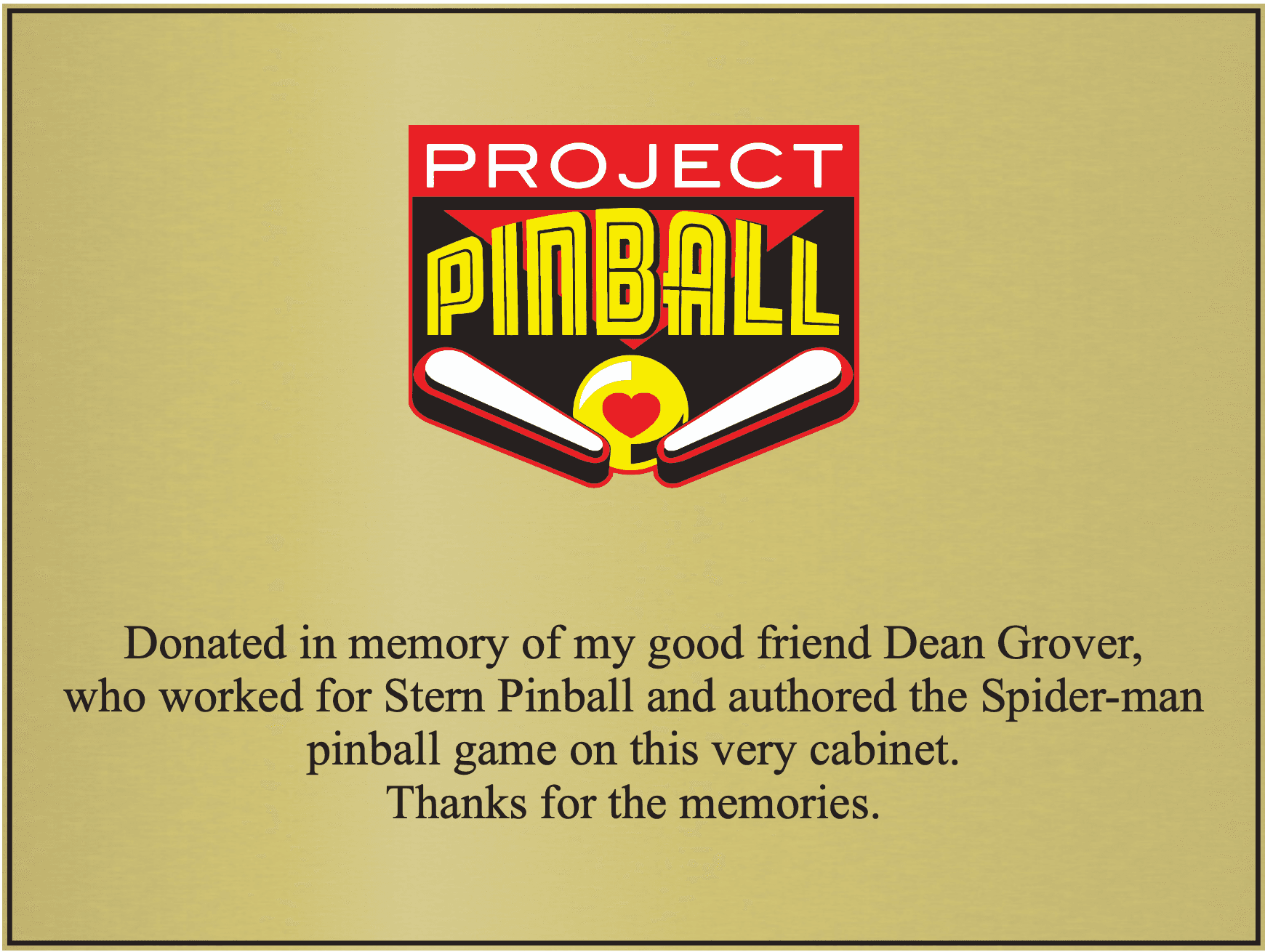
Dean Grover was a pinball programmer — he coded Spider-Man Home for Stern (and many others). But he rarely talked about it.
Daniel met him at PAPA outside Pittsburgh in 2011. A friend of Daniel's was going around with a camera, asking people what they thought of the idea of putting pinball machines in hospitals. Dean got on camera and shared, unprompted, that he'd suffered a serious illness when he was younger — treatment that caused lifelong health issues. Daniel didn't know any of this until he was editing the footage.
"Dean never said, 'Poor me' or anything like that. He was just happy to be there."
Later, Dean walked up to a Spider-Man Home at a PAPA event and started playing it, walking Daniel through the nuances of the game as he went. He never mentioned that he'd written the code. Daniel didn't find out until a later conversation with Stern designer George Gomez.
Dean eventually loaned his personal Iron Man machine to the charity for placement at Children's Hospital Colorado. When his health declined and he passed away, he and his wife donated the machine permanently. A plaque was placed on it.
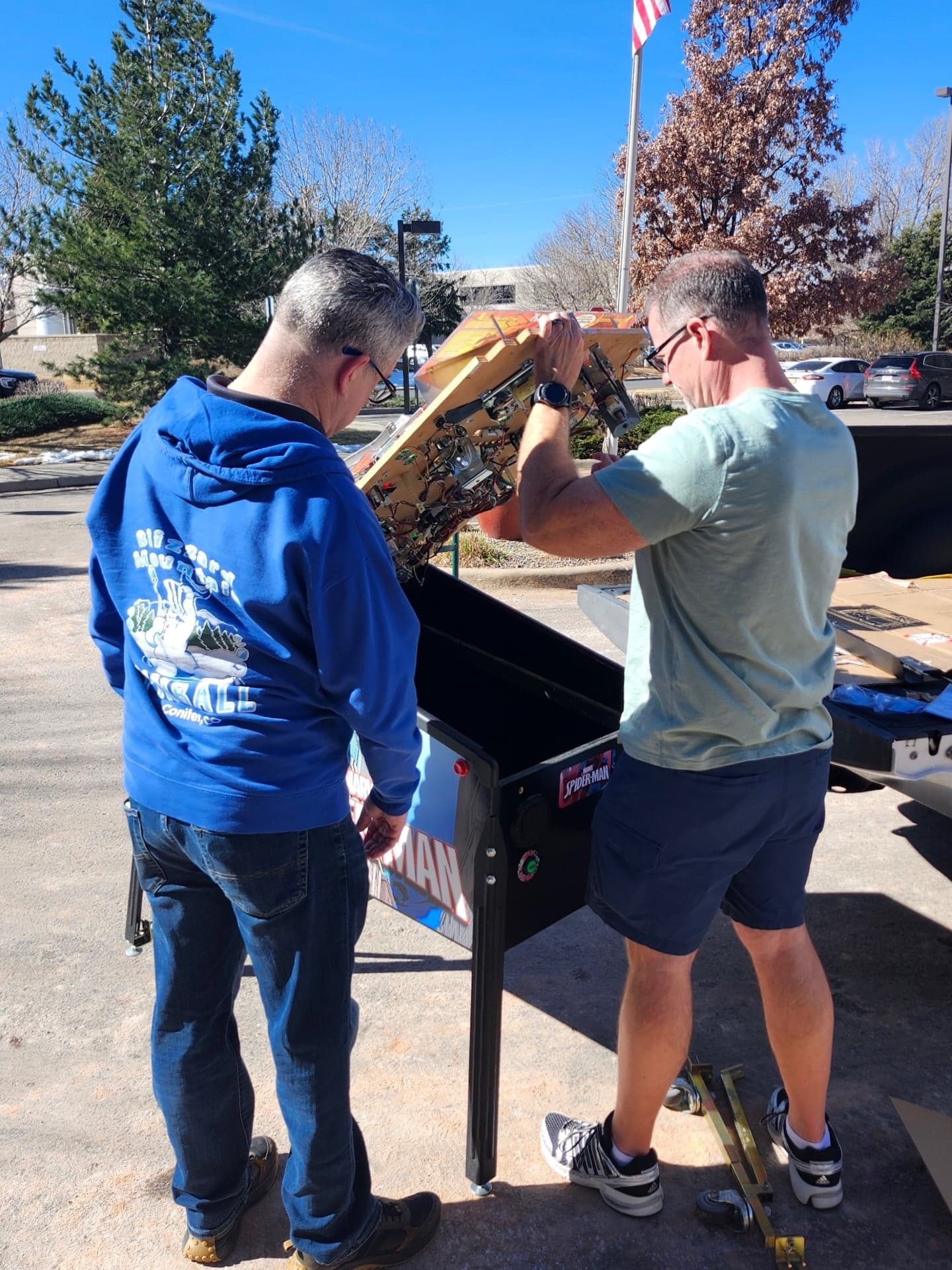
The community story doesn't end there. Dean had a one-of-a-kind Spider-Man Home prototype — no decals, missing boards, a front panel that was completely different from the production version. After his death, Lyons Classic Pinball in Colorado raffled it. A guy named Mike bought half the entries and won. He called the charity and said he wanted to restore it, but it was incomplete. Stern provided production decals at cost. Marco Specialties photoshopped and cut a custom front panel to fit the prototype's unique speaker and ball launch placement. That panel was completed about a week before my interview with Daniel. On March 10, the prototype was dedicated as machine #85 at the Ronald McDonald House in Denver — Dean's second machine in the charity's fleet.
Dan Coyle
Dan Coyle was a pinball player Daniel knew from the community. When Coyle was diagnosed with terminal cancer, he didn't withdraw. He showed up at a tournament days before entering hospice to say goodbye to his friends on his own terms. Daniel recalls him saying: "No one gets out alive and, you know, this is my time."
Every Project Pinball machine gets a plaque — something inspirational for the kids and families who play it. Daniel asked Coyle if he'd be willing to write one. He tried to downplay the ask. Coyle came back and said it was really hard to limit himself to one, so he'd written five.
"He ended up coming up with five of them. And he just was putting words out there. And the great touch that he put on it, it was pinballesque — 'Keep trying and you'll reach your super jackpot.'"
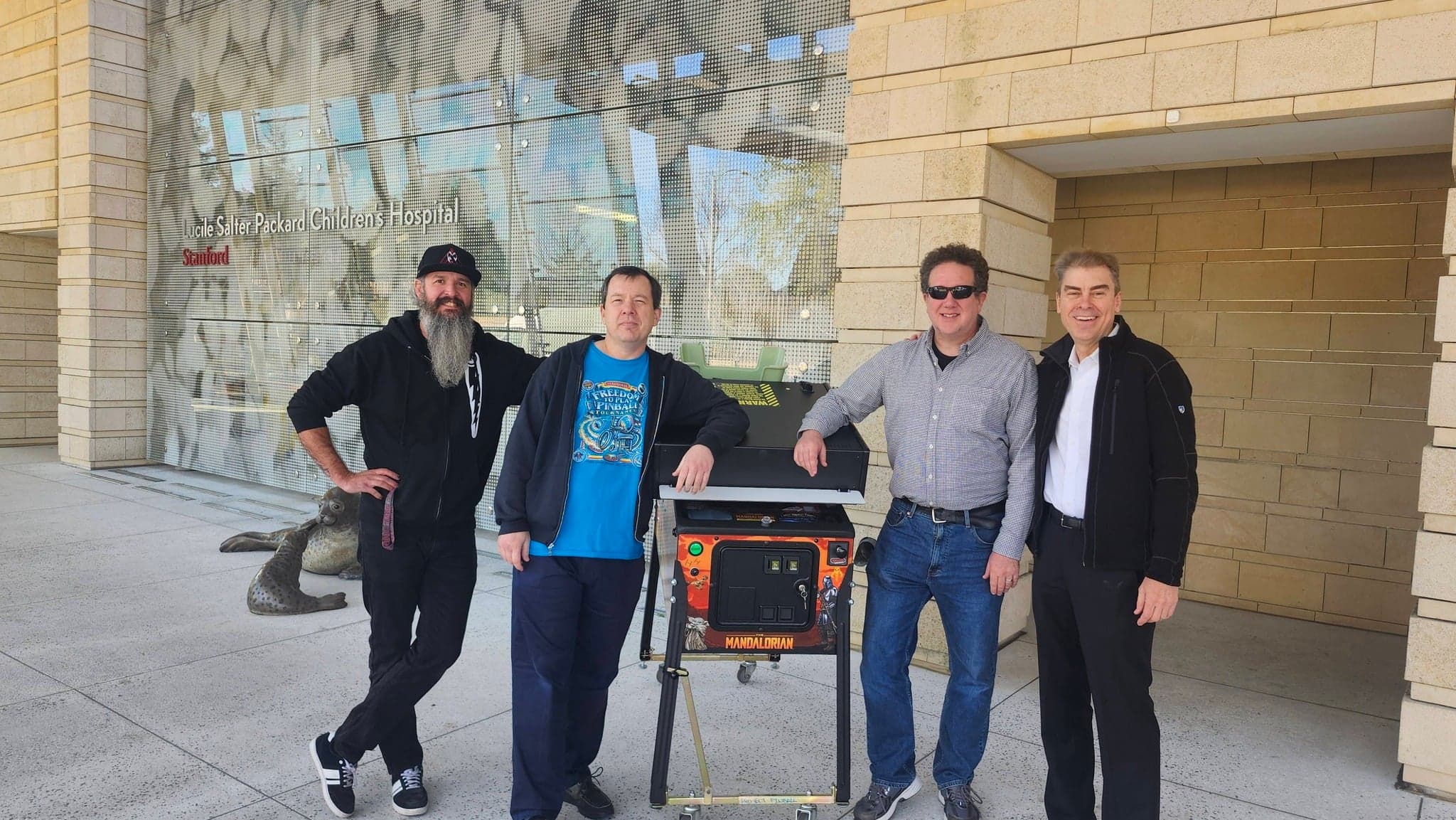
One of those five plaques ended up at Stanford Children's Hospital — a recent placement that took four years of relationship-building to secure. Andrei Massenkoff, a world champion pinball player who also works as a child life teacher, had donated his personal Mandalorian machine to the charity for that placement. Daniel asked him to pick one of the five.
The Pied Piper of Pinball
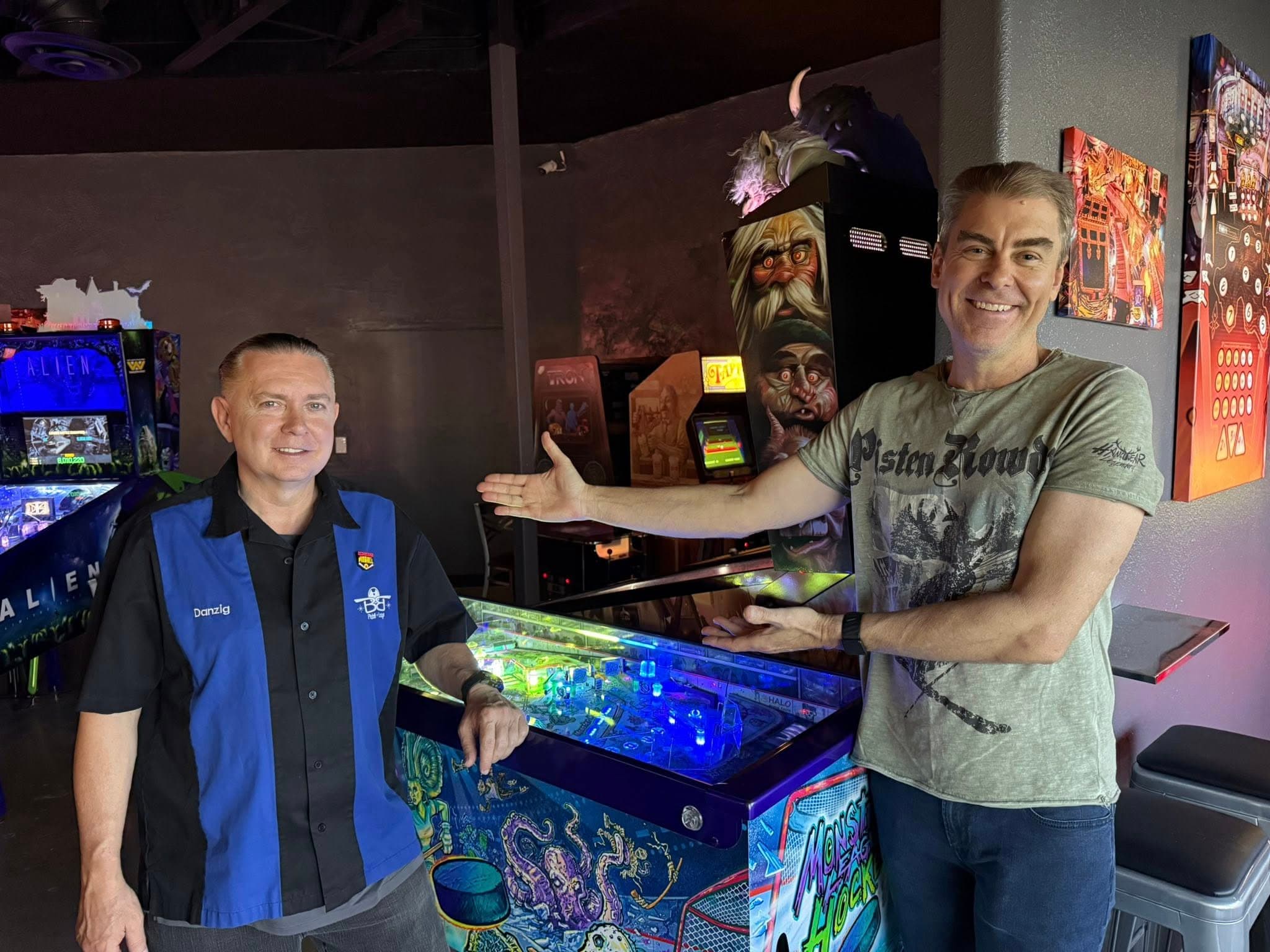
Not every placement is in a children's hospital. The charity has five focus areas, or phases as Daniel describes them: children's hospitals, Ronald McDonald Houses, rehabilitative services, retirement communities, and special needs schools. The older electromechanical machines go to retirement communities — they can't meet the UL and ANSI safety standards required for hospital environments, but they're perfect for an audience that remembers them.
One of Daniel's favorite dedications was in the Ozarks. A Surf Champ EM machine. As he wheeled it through the retirement community toward the cafeteria, residents started streaming out of their rooms and falling in behind him.
He described the scene to Sierra Vermillion, his Director of Operations, and she said: "Oh my god, you're the pied piper of pinball."
"That was one of the shortest dedications I ever did because they didn't want to hear me talk. They wanted to play."
The Business of Project Pinball
This is where the community's questions tend to focus. Rather than paraphrase, here's Daniel in his own words on the topics that come up most.
How do the raffles work?
"Easy math. So it's $130 because the machine is $13,000 plus we have shipping involved with that, and plus we have fees that no one sees — for the marketplace and for the platform service. The raffle platform is not something that we govern. It's done for us by a third party.
"Essentially, if you look at the quick math, all we did was we took 100 entries, made it 200 to make it 50/50. First hundred is break even and then the other part of it is something that we could use for our program."
The standard is 200 entries, scaled by machine cost: $130 per entry for a current Stern LE, $95 for a Premium, $70 for a Pro. They've resisted pressure to increase the cap, even for high-demand machines like Spooky Pinball's sold-out Beetlejuice. The one exception is show-associated raffles for older EM machines, where they'll expand the pool.
An important detail: Project Pinball buys its machines at full cost from manufacturers. No donations, no discounts. Daniel is firm on this:
"We have to buy them just like everybody else. I have a business background and I'm not going to put my friends out of business, so to speak. You can't go there with a hand out and say give me, give me, give me — because if they're generous to a fault, it's going to really put them in financial difficulties."
So the math on the raffles, honestly? Not that bad. At 200 entries and $130 a ticket on a $13,000 machine, the gross is $26,000. After the machine cost, shipping, platform fees (Fanthem.io), and marketplace costs, the margin funds the program. It's a 50/50 model borrowed from church fundraisers and volunteer fire stations — the same structure Daniel grew up watching.
What does it cost to place a machine?
"We say it's actually $9,782. That is on average. So we say 10,000 because it's a clean number."
That covers not just the machine but shipping, insurance, contracts, background checks for volunteers, Zoom meetings with hospital administrators, and the ongoing maintenance commitment. The hospital never receives a bill. If the hospital renovates and needs the machine moved, the charity moves it. If a machine needs restoration, the charity pulls it, places a loaner, and gives the location a choice of which to keep when the original is restored.
What about the $600,000 in net assets?
"I think just calling it cash is kind of crude. It makes me feel like I'm Uncle Scrooge riding in the vault counting my gold coins. For one, it's not my money. I'm simply a steward of the charity.
"We're not sitting on what you would call cash just sitting there, but we are holding reserves. As you build a company, you have to be flexible. I did businesses in the past and you have to make sure that you have working capital for a downturn."
When asked directly what the $600,000 is made of — how much is cash, how much is machine book value — Daniel pointed to functional reserves, heritage funds, and a financial advisor helping with growth, but didn't give a precise breakdown. The organization has $0 in liabilities, budgets two years out, and ran a deficit in 2023 — the reserves are what kept it going.
What about the salary?
Daniel took zero salary from 2013 until 2021, when his CPA finally convinced him to start. The first year he was paid $23,200. The current rate is $25/hour based on a 40-hour week, set by the board — not by Daniel.
"I never worked a 40-hour week in my whole entire life. It's always been more than that."
Total payroll for the organization is two people: Daniel at $52,000 and Sierra Vermillion, Director of Operations, at $52,438. Combined executive compensation is $104,438 on $853,000 in revenue.
What about the Charity Navigator rating?
Project Pinball has a 3-star (81%) rating on Charity Navigator and a Platinum rating on GuideStar/Candid. The two platforms measure different things. Charity Navigator uses an algorithmic assessment that includes governance standards; GuideStar Platinum is based on self-reported transparency.
Charity Navigator flags two issues: no independent audited financials and insufficient independent board members (2 of 5 members classified as independent, below their recommended 3). Daniel says the board includes himself and Sierra as non-independent, with the remaining three being independent community members. In a follow-up, he shared that the board is currently in transition — two members have departed since last fall and two new members are being vetted to replace them. The target is a functioning board of five.
On the audit question, Daniel is direct — and this is where I'd push back if I were advising him:
"We don't have to though. It's not a requirement. That's another expenditure. If we could put that in the program, I don't see a need for that. We're open book."
He's right that an audit isn't legally required at this revenue level, and I told him as much — spending $10,000-$20,000 on an audit when that money could place another machine is a real tradeoff. But "open book" and "independently verified" aren't the same thing, and an audit would probably make a lot of the recurring questions go away. Whether that's worth the cost is a judgment call. The questions are bound to continue till there's more on paper.
What about the succession plan?
This isn't a question the community is asking, but it's one I think about a lot with passion-driven pinball businesses — what happens when the person who is the operation steps away?
"I have a legacy plan in place for my departure. I have a two-year plan that's like a daily structure. That way, someone could pick up in my thought pattern. For the first two years you have a daily plan and then after the third year it goes to monthly and then for the fourth and fifth years it goes into quarterly."
When I asked who would actually execute it, Daniel confirmed: Sierra Vermillion. He's been grooming her for the role for over six years. She came to Project Pinball as a volunteer out of college, and Daniel hired her on the spot during a road trip after overhearing her talking with his assistant. She's been nicknamed "the mother" by people in the organization because, as Daniel puts it, she just takes care of everybody.
The Frustration
Daniel isn't plugged into social media. He's not following all the podcasts. "You'll see me disappear because I don't care to share what spaghetti dinner I had on Thursday." Someone else manages Project Pinball's accounts. He's on the road.
So when the noise reaches him, it comes filtered and delayed, which makes the frustration sharper when it lands.
"There's people out there that want to flick matches while we go by and they want to be disruptive. They have no idea how hard we're working to build a sustainable charity that could help these families because they never put themselves in this situation."
His response to critics is consistent and firm: come to a dedication. See what we do. Then ask your questions.
"I would invite all of these people that took information out of context or had bad behavior to join us in the moment of the dedication and see [it] from our standpoint."
He confirmed the board has sought legal counsel about the online criticism and is considering further action as needed. He framed it as a business decision, not a personal one — "the board considers it noise, their words not mine."
I asked him what accusations he found most laughable. He pointed to the salary criticism — people who found his $52,000 annual compensation on the 990 but didn't mention the eight years he ran the charity out of pocket without taking a dime.
The community response to the noise, for what it's worth, has been overwhelmingly in Daniel's favor. He noted this himself: "If you go to these noise generators, I think our public really had opinions about that, of staunch support."
One More Machine
In prior interviews and across Project Pinball's messaging, the same phrase keeps coming up: one more machine. That's the goal. Not a number, not a target — just one more than last time.
I pressed him on this. Why one more machine? Why not set a crazy audacious goal — 20 placements a year, 40 more machines in two years? He turned it around on me: "How many machines do you think that we should be doing?" I didn't have a number either. His point was simple — the constraint isn't ambition, it's capacity. Two salaried employees, a network of volunteers, 85 machines spread from Seattle to West Palm Beach, and he's personally attended every single dedication.
It's not a flashy philosophy. It wouldn't make for a great startup pitch deck. But after almost three hours with the guy who's driven the Escalade for hundreds of thousands of miles (and counting), I think it might be the only honest way to run a charity like this — small enough to still care about every dollar, stubborn enough to keep showing up in hotel rooms with bikes wedged against the bed, transparent enough to sit on a Zoom call for three hours with "pinball media" and answer whatever gets asked.
When people walk up to the Project Pinball booth at a show and hear the pitch, some of them reach for their wallets. They pull out a dollar and apologize for not having more. Daniel's answer, every time:
"Thank you very much. That's one more dollar than what we had a moment ago."
The questions will keep coming. They should. Any charity at this revenue level should expect them. But the next time you're building a narrative from a 990 filing, consider picking up the phone first. Daniel's number is on the website. He'll answer.