Interview with Courtney & Jeremy of Capital Pinball
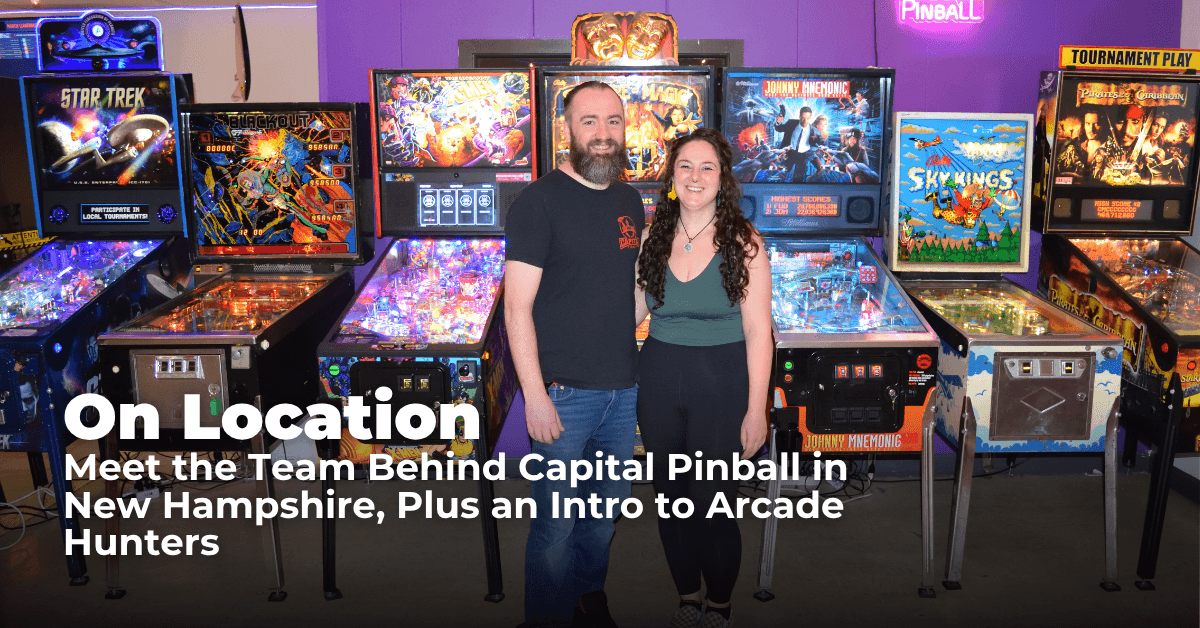
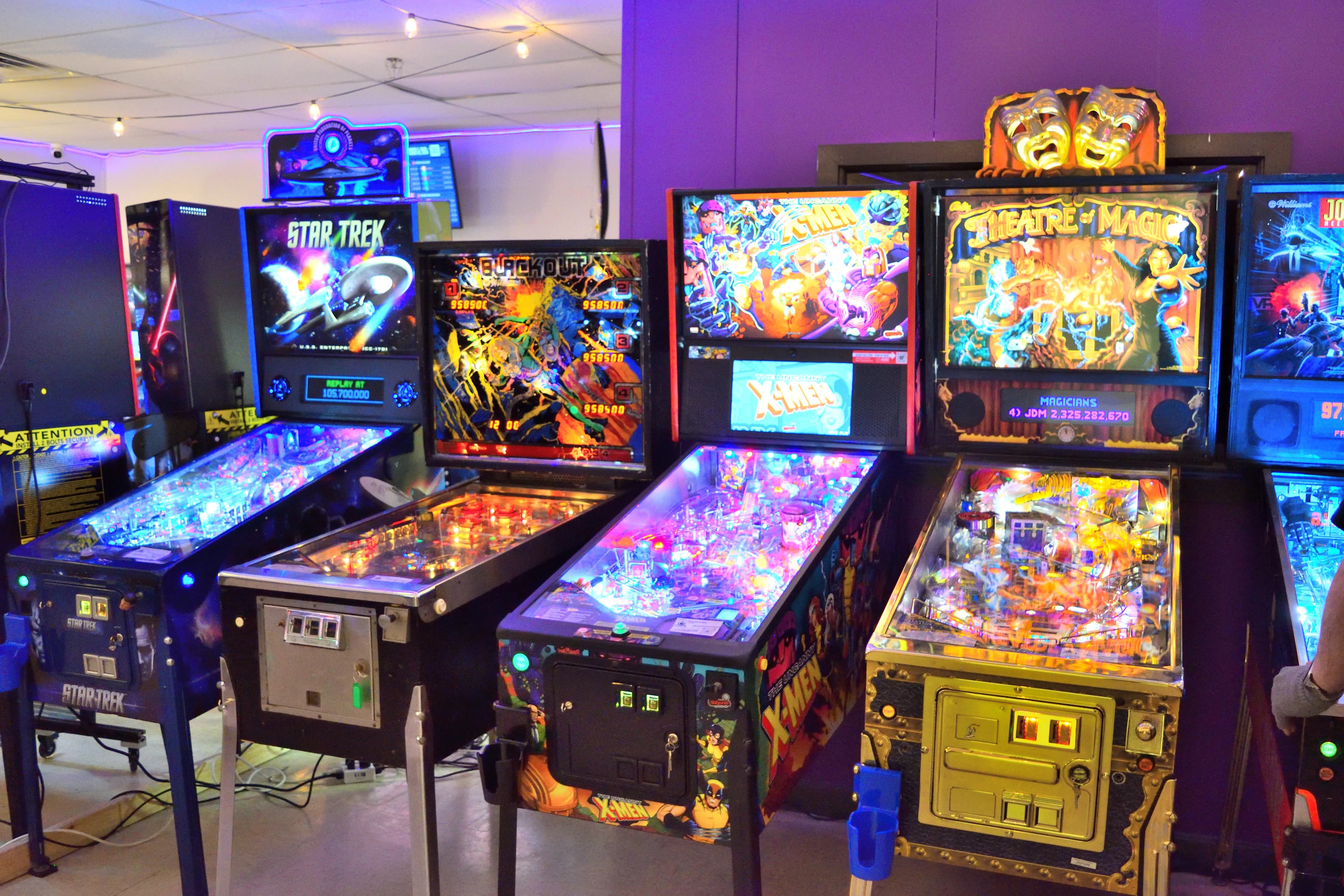
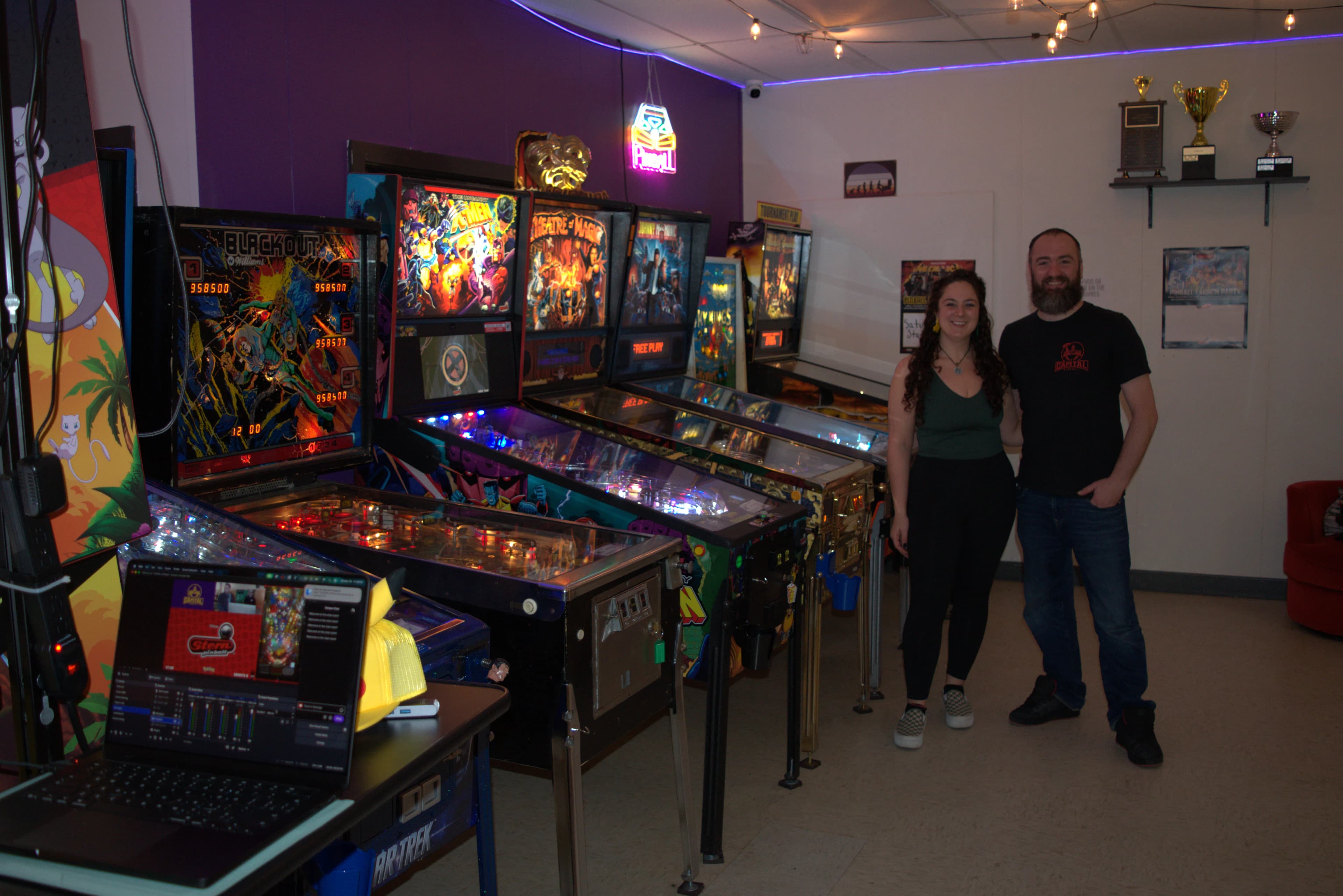
Tucked away in a warehouse in the middle of a residential area of Concord, NH, you will find Capital Pinball, a non-profit club founded by Courtney Bazarian and Jeremy Corson. Since first opening to members in 2024, Capital Pinball has grown from a single-room pinball club to two rooms housing a large board game collection, a video gaming area, electronic darts, and even a corner with fridges, coffee, snacks, and a popcorn maker. What sets Capital Pinball apart from other pinball clubs is its focus on the community and how they want to utilize the club space. While pinball is at the heart of the club, ideas and suggestions for hosting events are open for discussion. Whether it's hosting pinball tournaments, league nights, board game nights, or even a book club, there's always an event happening at Capital Pinball. We had the chance to sit down with Courtney Bazarian and Jeremy Corson to talk all about their club.
Arcade Hunters: First off, how did the club get started?
Jeremy: We were driving down to Tokens Taproom, constantly, at that time, and, you know, we're driving an hour out, an hour back twice a week, and I was kind of pitching the idea, this would be great to have in Concord. So we originally were going down the road, let's do a barcade here in Concord. So that's where it started.
But what that quickly became us looking at is, now we need a liquor license. We need a kitchen to be able to support that, and pricing all of that out came out to be half a million dollars to get up and open. And we're both working professionals.
So that also meant this needed to be our full-time gig, or we needed to hire people to run it all the time. So that kind of guided us into this whole club model, and we kind of have that hybrid approach now of kind of club, kind of public location, to balance the sheets out.
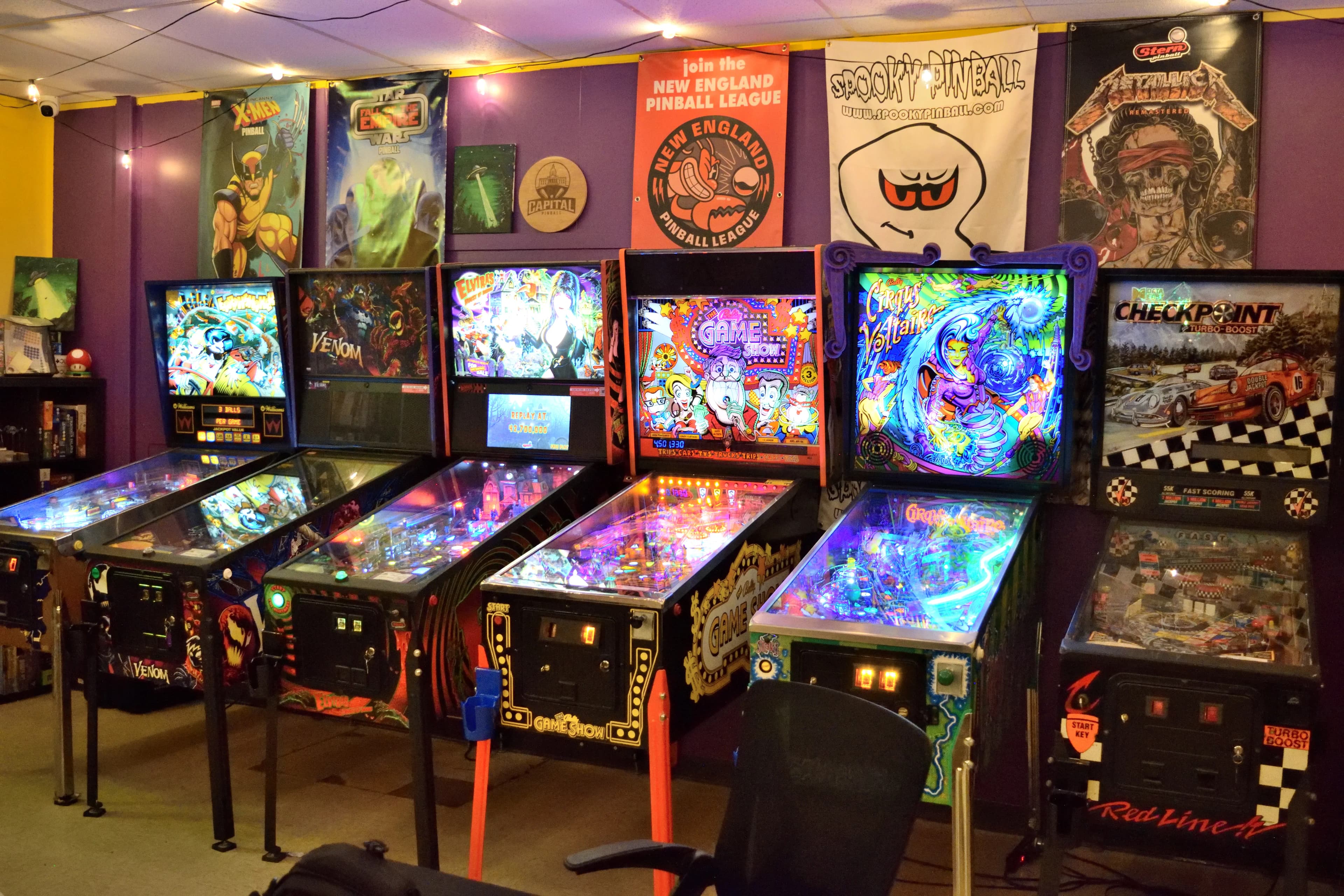
Courtney: I would have gone a totally different direction… because I feel like this started out as an idea so many years ago of wanting a community space. For many years, we went between the idea of, do we join the local maker space? But that didn't really fit what we were looking for. We have all these hobbies, and our friends have all these hobbies, and it'd be really cool if we just had a space that we could share with a bunch of people.
Then we found the world of pinball and kind of went down the...do we do the barcade, and we're trying to figure out ideas. We fell in love with this other hobby (pinball). We quickly found this community of pinballers, and that people have them in their houses, and we started reaching out to people in the area to see if they would want to get in on this, more of a community group versus a barcade, 'cause, yeah, those numbers did not make sense. So the barcade was not gonna work for us, but I feel like the idea of having this space has been something that we wanted for a long time in our lives. I feel like this actually fits us better than totally opening up an arcade, which has been nice.
Jeremy: I agree. There was always these themes of having a third space, a shared space with friends, family, and things like that. And that third space would have been doing things like board games, or video games, or pinball. But as adults, we stopped doing those things. We stop having people over ‘cause there's a lot that goes into having people over. We got to clean the house. It can feel like you're impeding on someone's time and space. You gotta leave by a certain time. This kind of fits all of those bills where you can meet up with people that you like to hang out with, do something fun, come and go as you please. It's not in your house, so you still can go back and have your own relaxed quiet time, so... third space has been a theme.
AH: What was the draw towards pinball originally for both of you?
Jeremy: I think it was a hobby we were diving into pretty hard at the time, so that was just... Wait, we can check all those boxes we were looking for and still have a spot for pinball.
We also didn’t have enough room in our house to do something like this. We live in a condo so we can travel and do other fun things without a huge amount of overhead, unlike other pinball locations that have a larger house and dedicate the whole basement or garage to hosting events like this. So this was a better match for what we were doing.
Courtney: We've always been gamers and enjoyed that type of community, and I think that this kind of hit a lot of the buttons of things that we like, so having that more community-focused thing in person, hanging out with people. So, pinball kind of fit all of those things, and then being able to find people that you can go and start that thing with was key because if it's just two people starting a community space, it doesn't really work.
AH: And what challenges did you face with starting up?
Jeremy: I think the very first challenge, once we got to the club aspect of it, was getting the first set of machines in the room. We went out and looked for, we just put a line in the sand, ten founders. We need ten people to bring the machines, and they need to agree to split the cost of the room with us. So, more of that, I get ten friends, we grab a room, we put our machines in, and then we'll start building from there. But we didn't reach ten (people), but we had the machines, and we dove in, we made that happen. Courtney and I, seeding a big chunk of those machines to get us started, because we knew that when we approached other machine owners, there had to be something here. There needed to be a draw. Otherwise, people were like, "Why would I bring my machine there?” So getting over that hump was the very first hurdle. Paying the bills and getting people to come. And then once those two came together, it got a lot easier.
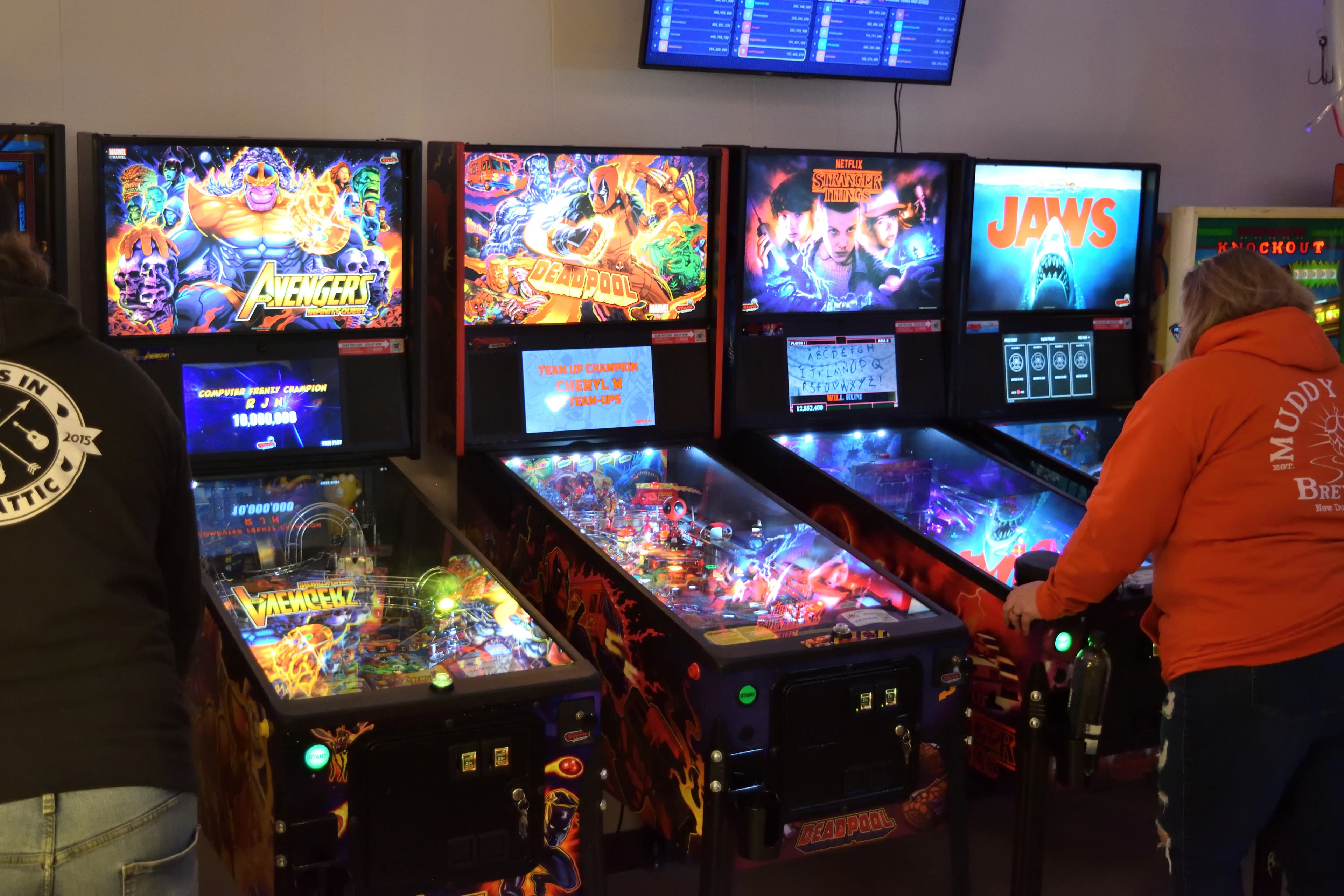
Courtney: And we wanted to find a space. I mean, obviously, we're in a warehouse, and it's not the most inviting space, but we want to find a place where, okay, if this fails, and it crashes and burns, what type of risk are we okay with? So we found something that fit that. Thankfully, it worked, and here we are today, and there's been a lot of challenges as we've grown as well. Just getting over the hurdle of getting people into this warehouse, making them see that they can also make it their own, that this is not our space. If there's something that you want to do, come and do it.
Jeremy: Then I think it opens up a whole other set of challenges… Now you’ve got the machines; three months down the line, you have to keep all those machines running. So, developing a community of people that are willing to work on machines is key. That's building our own skill set on learning to repair these things.
Unlike people that have a home setup where they're hosting these, you have a set number of nights where people are there, you have a certain number of plays. We're 24/7, things are getting played and broken all the time. So that repair thing was the next big hurdle to start tackling.
Courtney: And as we grow, those repairs become more and more. So, it's that fine line of figuring it out.
AH: What's the system that you use to keep track of repairs?
Jeremy: It's changing, but it's just evolving in the same way that we've already had.
So, starting off, we had a small number, that list is here in my head, and I'm just working through those. Over time, we developed QR codes that we went and put on each machine for people to submit those, and it just dropped into a Discord channel, and that became a to-do list with emojis to indicate if it was done or not. This eventually evolved into us writing some Python code to come through and actually parse that whole list of what was done, what's not done, and give us that. And now we've integrated it with our website, so it's a phone app. Everything that's scanned and reported is all on a nice, organized list, and now we're moving into more of a standard ticketing style system where they can get assigned out, and we can track the status. And that's just a representation of how the club has grown, the number of machines we have, the number of issues we see, the number of people willing to work on stuff… those systems just grew with all three aspects of that.
Courtney: And I think a key piece of that system is we started out doing a monthly maintenance day. So it starts out small; come learn how to take the glass off, clean the machine, do all of the basic needs that we do every month, just keep them up and running. And as people got more confident with that and would watch repairs happen, then we were able to develop people that are now able to help us with repairs, which is huge. So, us starting that in the beginning and creating that cadence was very important.
Jeremy: So there's a constant investment structure, as well. It starts off with that maintenance day. That's just something we all needed to do. But having people come in and help doesn't necessarily mean we're more efficient at it. Sometimes it really slows us down. But because it's a community-driven space, that's important. I want you to be able to take the glass off and free your own ball when no one else is around, and I want you to feel confident in that. Our goal is that you feel confident enough to come in and then clean a machine, and now we've spread that knowledge. So that initial investment up front ends up paying off later, hopefully. That's the bet, you know?
AH: Do you have tiered levels for people that are trained; some (levels) that you can rely on for larger or more challenging repairs?
Courtney: We're building so many things right now, and we actually just were working through what our different tiers will be. So, in our head, it's been the people who can take the glass off, clean the machine, that basic. They come in every month and do our maintenance. Then we have the, can you go in, diagnose an issue? I think I'm gonna flip this over to you on the next two tiers…
Jeremy: So yeah, we basically have people, any member by default, don't take the glass off until I know you and you're comfortable. Come to maintenance pinball. Once you're comfortable there, take the glass off for your own ball. Now, with the growth of these ticket systems, we're getting to multiple tiers where you can take the glass off, you can clean a machine on your own, and I can just delegate that. That's where that investment is starting to pay off. Then there's people that we know can do repairs, you know, soldering broken wires, flippers, and then that really top-tier person who can diagnose that a chip is bad on a board, bring it to the bench, pull the chip off, put a new chip in, that kind of stuff. So, right now, it's looking like a four-tier tech system that we're moving towards.
AH: Do the training up front, and then, in the end, it lightens the load.
Courtney: People are really interested in it, which is awesome. And we have such a great community here, and people that want to help, learn, and do those things. So without that, we wouldn't have ever gotten here either and been able to have people that have grown into those positions.
Jeremy: I think a big misconception people have is that this is a for-profit business, and that's not true. Being community-driven, it's pretty much all volunteer. And that's volunteering your machine to be here. It's volunteering to work on those machines, repair those machines.
Courtney: Host events.
Jeremy: These are all things that people contribute their own time and energy to, with only the reward of the satisfaction of providing that.
AH: When you go on your website, there's a whole bunch of different events hosted every month. How about talking about some of the different and diverse events that you host and how that ties into the community?
Courtney: When we started out, it was mostly small, we had a smaller room. We wanted to get into board games, video games, things like that, but we quickly figured out that loud pinball was not a very conducive environment for that. So, we filled that room with pinball machines. We were hoping to make it work through the first year. Our next-door neighbors were moving out, and we saw an opportunity to expand into a new space. But right from the beginning, we were hosting pinball leagues, tournaments, but we wanted to bring other people in, so I started hosting queer pinball. So we do that on the first Sunday of every single month.
In the beginning, I was trying out a few different days to see what would work best. But we always wanted to have a very inclusive environment. So that comes with that third space, that safe space for everyone.
And that's front and center in this place. So that is where we started. We wanted to grow into more. We grew into this space, and we started doing board games and video games, but before we expanded into the space, we actually had to reach out to our community and say, hey, we want to grow, but we're going to need other hosts. We don't have any more time. We can't host four and five nights a week. So before we grow into this space, is there anyone that would be willing to host events, take on this work? And we had some really key people that stepped up, and that was why we were able to expand. So without that, Capital Pinball would still just be Capital Pinball. Pinball-focused and nothing else, we wanted people to feel like this could be their own space, too. So being able to do video game nights, board game nights; we have a Digimon group that comes every Sunday. We wanted people to feel like they could host their own things here, that this wasn't just our thing, because it's not.
Jeremy: I think that was a key piece coming into this room. There is a transition to... really doubling down on the community aspect. As I said, it's not for profit, but it's got to pay for itself. And filling the second room with pinball machines doesn't create more pinball players. Bringing people that are interested in board games, it's a similar community, [but] then they get interested, and it grows pinball. And that's what this room is about.
We weren't doing this room without the community supporting it themselves. And that's been a big ask. So Tuesday nights are board game nights. Wednesday nights are video game nights, and they are community-hosted. And that allows us to publish those as public events.
And that really does drive this. The topic of opening a third room is already on the plate. People are already asking. We would love to do that, but we have to find a way of monetizing it. And I tell Courtney this all the time. I'm willing to put in time and energy, but someone's got to match my time and energy and then take it over. So, you want to run a streaming thing, which we just started? I will help you build it. I'll help you build that technology. We will support it on the website. We'll do social media posts, but that's to build you up and let you do the thing that you want to do. You want to be a board game host, I'll get you four hundred board games, tables, I'll put it on the website, you take it over and run with it.
That pattern seems to work really well for us. People are welcome to bring new events, new ideas. Maybe it's darts. Maybe it's pool. Maybe it's a golf simulator. We've had all sorts of crazy ideas.
Courtney: And I think from the beginning with the space, we always wanted it to feel very beginner-focused, and so I think creating an atmosphere of, there is, obviously, competition. We have some really good players here, but I think that community focus, but also beginner friendly, created a collaborativeness among the members to make this thrive the way that it has.
AH: Are there any pinball games that you wish you had in the club?
Jeremy: Oh, man, I think every pinball player wants every machine that they don't have.
Courtney: I know what yours is. Yeah. Well, we know which one's coming, so you're getting one of them.
Jeremy: Yeah, we'll say Evil Dead is the game that I would like, but that's cost-prohibitive in every aspect right now, but I think all Spooky [Pinball] games have been growing on me pretty rapidly as a pinball player.
Courtney: For myself, I have my dream games right now, so that feels nice. There are some I would swap out, though, for other ones. If Multimorphic keeps growing the way that it did with Portal, I'm very interested in that system. I really like the new developments there, so... I think that would be a cool add.
AH: I found Portal very impressive.
Jeremy: Portal is the first game that really has a hook in me for that platform. As a technologist, I'm a software engineer, the platform is extremely intriguing. I'd love to do some homebrew that makes it even more intriguing. The games haven't grabbed me yet until Portal came up. I think they're fully making use of the technology that they have there, and…
Courtney: The playfield space.
Jeremy: If you're a Portal fan, you know that everything's a test chamber, they're generated by Artificial Intelligence, and the first time that ball got stuck behind that ramp, and the screen dissolves into panels and lifts it up, perfect. They know where the ball is, they know how to solve it. They feed a flipper really well, checks the pinball mark, and it checks the theme. So if they do that again on their next one.
Courtney: And they actually brought it down to the lower area of the playfield. I really like Princess Bride, but it was just so far back, and everything’s been so far back that, to me, it just hasn't ever felt complete. For Portal, even though I don't know the theme as well, I think their play on it was very cool. And I've enjoyed the screen on it and how it works. I just haven't had a game that felt right yet.
AH: Is there anything else you'd like to share?
Courtney: We're just trying to grow for game nights, video game nights and get those programs up and running, and the stream is just kicking off so that's probably the new thing that's going on at the club. We do have a program that we've been starting, so it's the Re-Pin Program.
A lot of our members were going to other places to play the newest Stern machines. It's cumbersome to drive forty minutes when you have this club that you’re already paying for, but we didn't know how to make up the money to be able to get the new machine every time. So we thought about it for a while and came up with the program that we're calling the Re-Pin Program. What it is is we will get the newest cornerstone pro machine from Stern [Pinball] and then we will put that on coin drop until the next cornerstone game comes out.
We will then sell it back to our members for a discounted rate of five thousand five hundred dollars. Thankfully, the first two were hot titles, and people wanted them, so Star Wars [Fall of the Empire] sold before Pokémon was announced, and Pokémon was sold way before that. That definitely is the hot title right now, so that program's been going really well. It's been awesome to actually have the newest Stern [Pinball] machines and a way we can support that.
Jeremy: Yeah, that's the best way to support having the newest, latest game in the club without increasing membership rates. It's just paying for the depreciation. And it gives us that opportunity to have that machine here. Also gives our members an opportunity to have new, fresh material. The concern with the club is that the machines come in, they never change, and you get bored.
It also gives machine owners the opportunity to start swapping titles at a reasonable rate. So if there's a machine that you are looking to get rid of, you see this new one coming in, you get a good price on it, it takes the pressure off of selling your other machine. And that just benefits the community as a whole. So, kind of checked all the boxes for us.
AH: It's a genius idea for bringing more games into a club, sharing, swapping, and sharing the cost.
Courtney: Yeah. And members are allowed, once the game is purchased, to bring it home, but they have to leave it at the club for at least three months on free play. So the people that did not opt in to pay the dollar a play, they can actually get to play that game. So we wanted to make sure that people had the opportunity, should the price point be out of their reach.
Jeremy: That introduced a whole new challenge for the club. We're 24/7. We don't have employees. How do you do quarters? Right? And that led us down this road of developing the app that we talked about, that we're managing our issues on, that actually allowed us to digitally coin up the machines with a homegrown piece of hardware that we've put in there and then keep track of that, and you basically have a tab that you can pay off at the end of it. Eliminating the need for the quarters and exchanging one dollar for four quarters. It kind of just makes the whole management process a little bit easier and self-service.
AH: How do club members access the app?
Jeremy: If you're a member here, you're in there automatically. You basically just set up a password, and you go. It's also a platform where you can see your membership information and a few other things. We run competitions on these systems. On the new Pokémon machine, everybody in the app is automatically assigned a team; may it be fire, water, poison, electric, you know, all Pokémon themes. The app will track your highest score because we know your Stern Insider Connected. So you contribute to your team's overall score, and it's basically a strikes tournament, and we'll go all the way down to grand championship for that machine, which is pretty cool. So the app's unlocking a lot of cool, interactive things for the community to do. So if you're not available to compete on a Saturday, like we are right now, you can come in at 2:00 in the morning, put your score in, and still be able to compete with people. I think that's pretty innovative.
Courtney: And it creates a lot of banter on our Discord, which is fun.
Thank you to both Courtney and Jeremy for the interview. For more information about Capital Pinball, you can check out the website at https://capitalpinballclub.com/. Information about guest passes and membership fees are listed on the Capital Pinball website.
Meet Your Authors: Gerard & Nick of Arcade Hunters
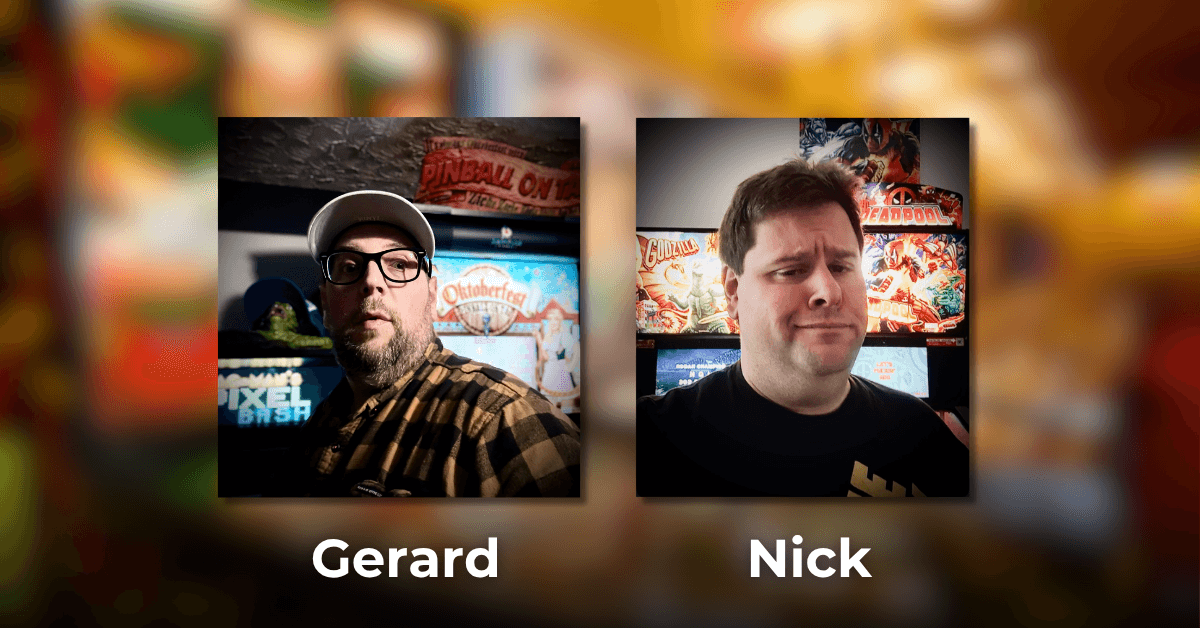
It all started with a little underground webcomic, Press Start, that we, along with our good friends Craig and Yusuf, created back in 2005. What started as a small webcomic grew to include video game reviews, a podcast/streaming media show (8 Bit Bytes), event coverage, and uploading video game videos. With a punk rock aesthetic (and matching tracksuit jackets with our Press Start logo), we managed to persuade our way into conventions along the East Coast, speaking to the occasional full house about video games and even signing a Gameboy or two.
It was around this time Nick realized there were hardly any videos related to arcade gaming on the internet. We were obsessed with the show Ghost Hunters and loved the chemistry the cast had along with the formatting of the show. Between long drives to conventions, checking out arcades, comic brainstorming sessions, and talking about the latest Ghost Hunters episode, Nick stumbled across an article in the British magazine Retro Gamer Magazine about a classic arcade that they were claiming is the best arcade out there. When we saw that the arcade, Funspot, was located in New Hampshire, we freaked! We made it our next destination.
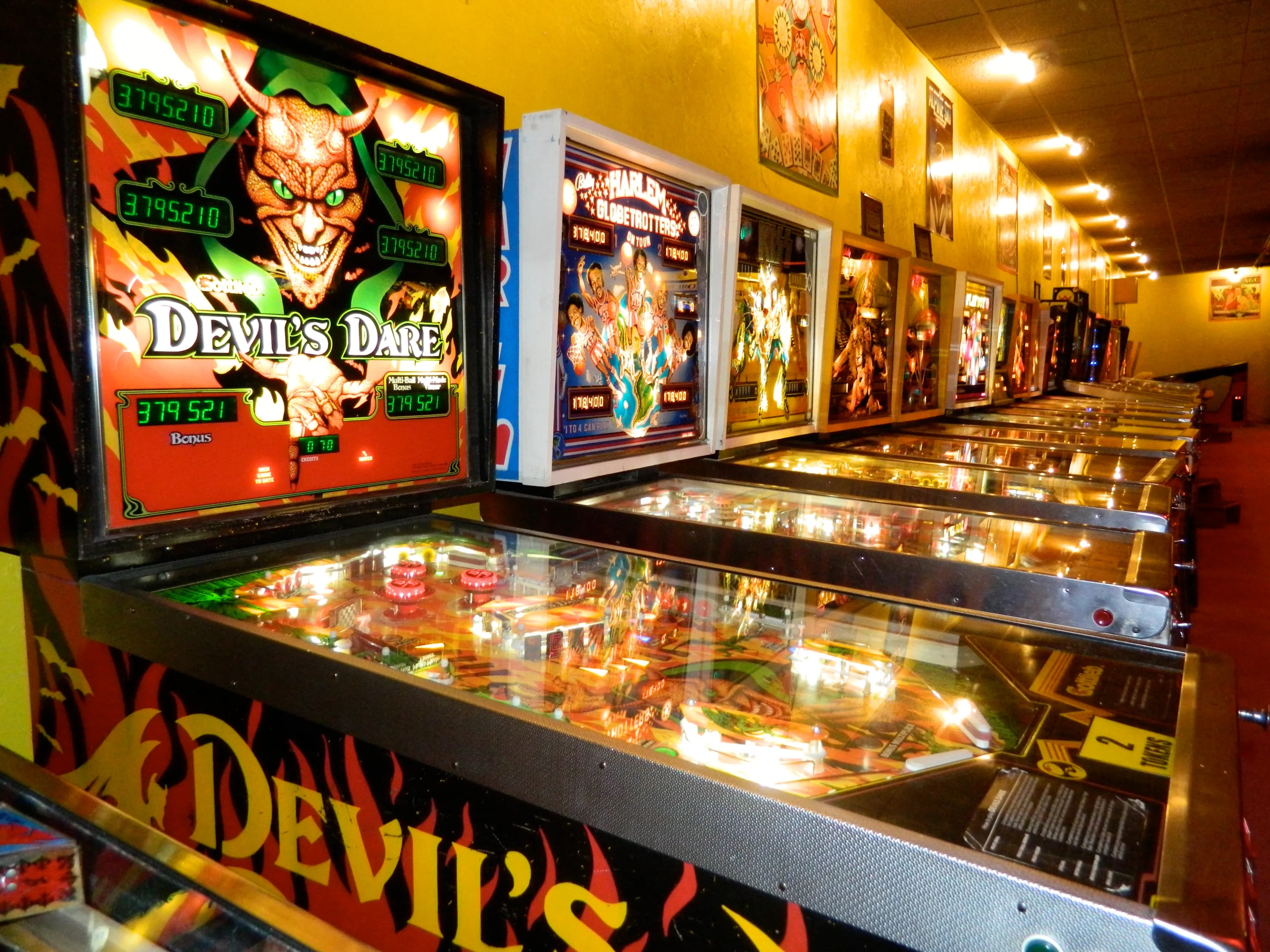
After a long weekend of arcade and pinball gaming (and seeing an awful video making the rounds with a bunch of talking heads claiming that arcades are dead), I brought up the idea to Nick about writing a travel book about arcades. With a “print is dead” quip, Nick proposed expanding our videos. A few Jolt Colas later, and we mashed up our love of the Ghost Hunters approach with arcades.
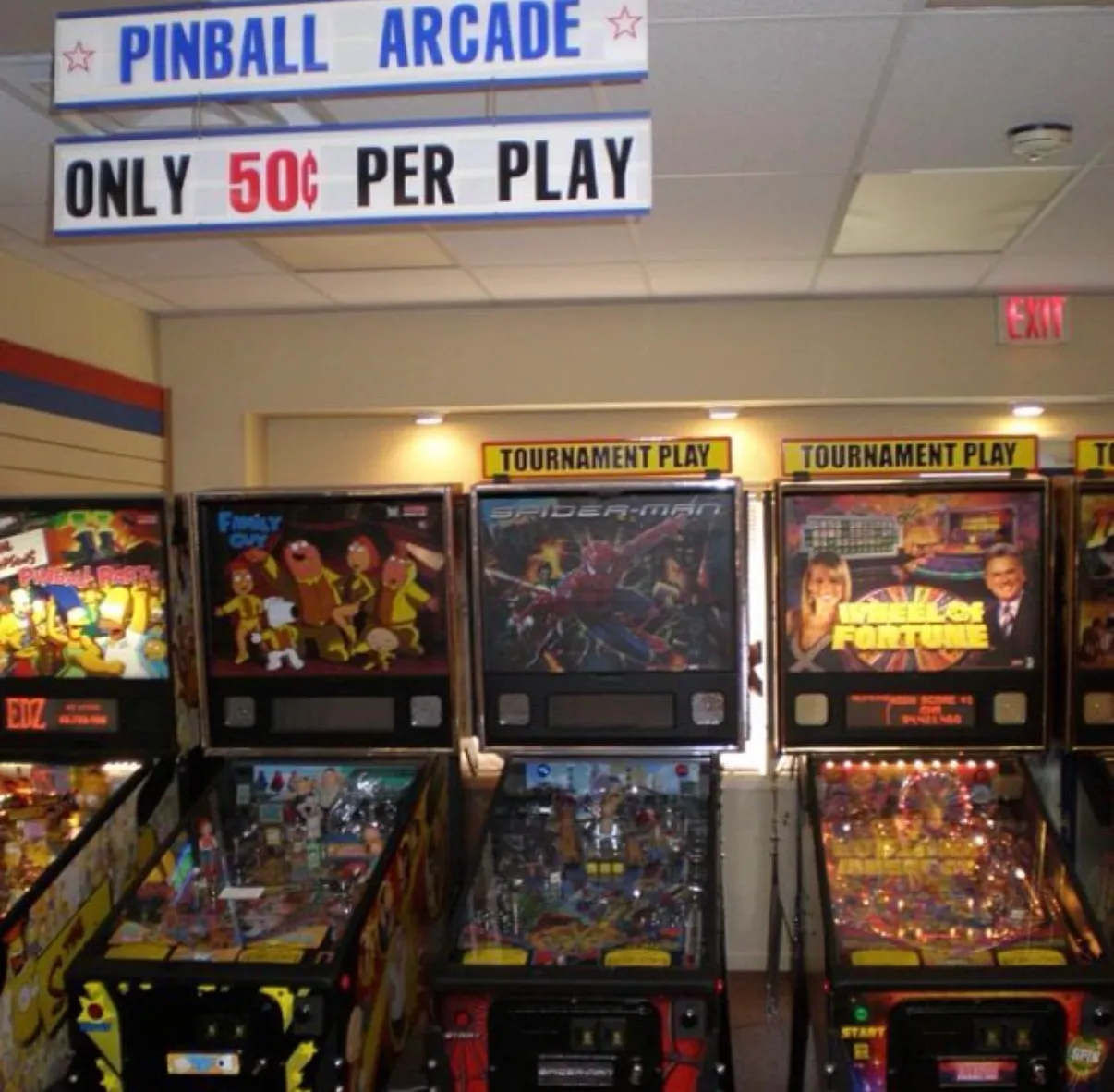
Arcade Hunters came to be official almost two decades ago with a singular mission to disprove that arcades are dead. At the time, every gaming media outlet was tripping over itself to be the first to report any negative news about the arcade industry while completely ignoring the positives. While some arcades were unfortunately closing, new arcade models were popping up; pinball was at the beginning stages of making a triumphant return, and creativity and technology were being pushed further (and still are), yet the gaming media felt this was not clickworthy. With paper maps in one hand and cameras in the other, we headed out and haven’t stopped.
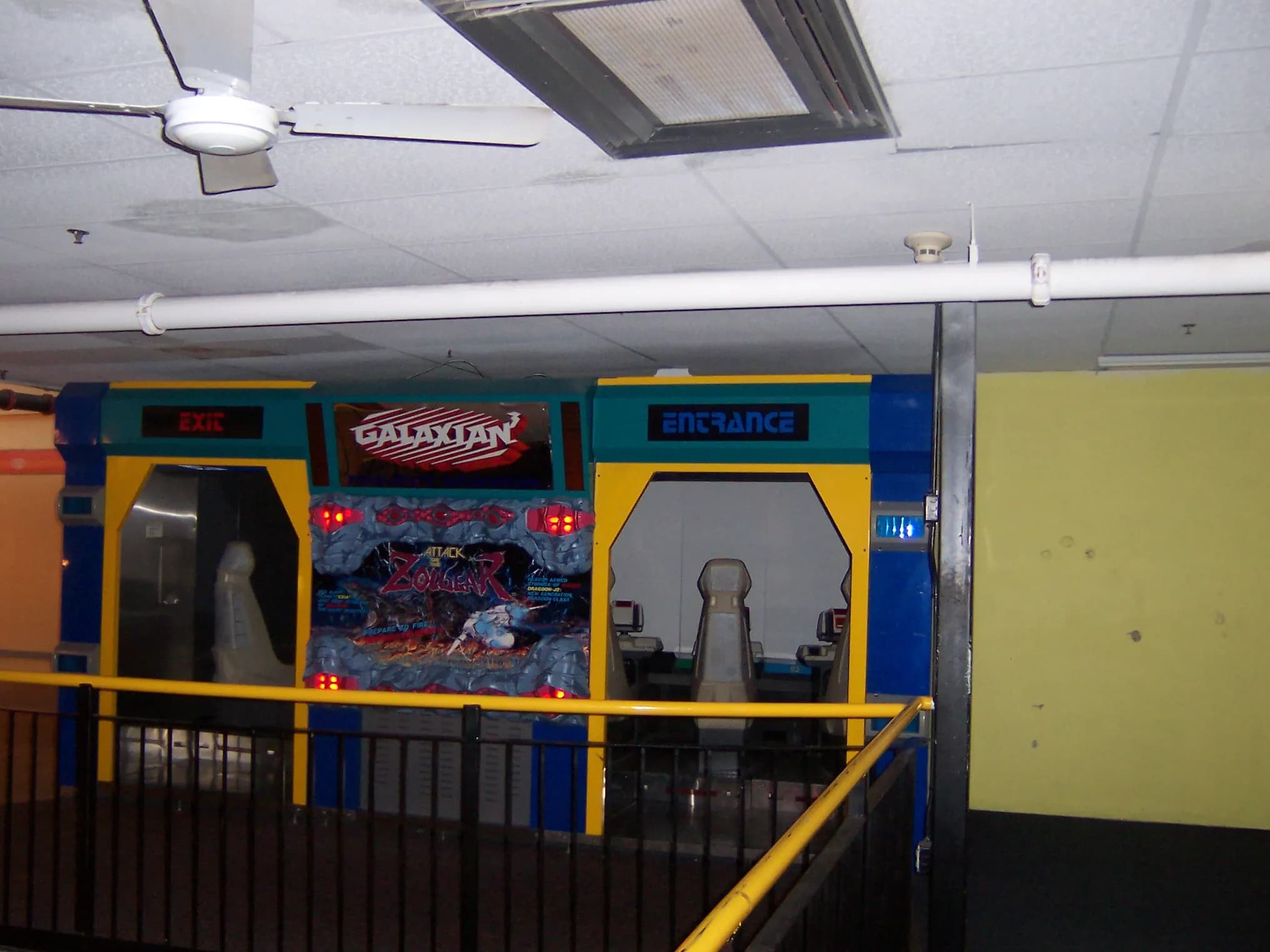
Galaxian 3 at Funworld in Nashua, New Hampshire, Circa 2003
While we’ve seen many areas of the arcade industry grow as subcultures, pinball has been one that we have always felt connected to. Many years before Nick and I knew each other as grade school kids, we were frequenting some of the same arcades and Family Entertainment Centers on Long Island, New York playing games like Black Knight 2000 and Elvira and the Party Monsters (probably waiting in line or playing other games side by side). Our history with pinball runs deep. Pinball is something you cannot replicate at home on a screen. It’s tactile. It’s kinetic. It’s a lightshow in a box. When a pinball machine is going, it draws a crowd. Pinball brings people together.
When we saw Colin’s help-wanted ad, we jumped on it. We are proponents of bringing positivity to the pinball subculture that, unfortunately, can be tainted by negativity. Too many people are looking for that shock value to get the clicks. The world already has enough negativity out there. Through our recurring series, we will be highlighting arcades that provide a positive pinball experience. We will be interviewing those who are responsible for providing, promoting, and cultivating these experiences. We will be documenting some of our travels and will include some of the hole-in-the-wall places off the beaten path. In our experience of doing this for almost twenty years, you never know where and when you might come across a pinball game.
We hope that with these articles, we can shed light on some amazing places and the passion the people have for keeping the subculture of pinball alive.
Until the next time!