
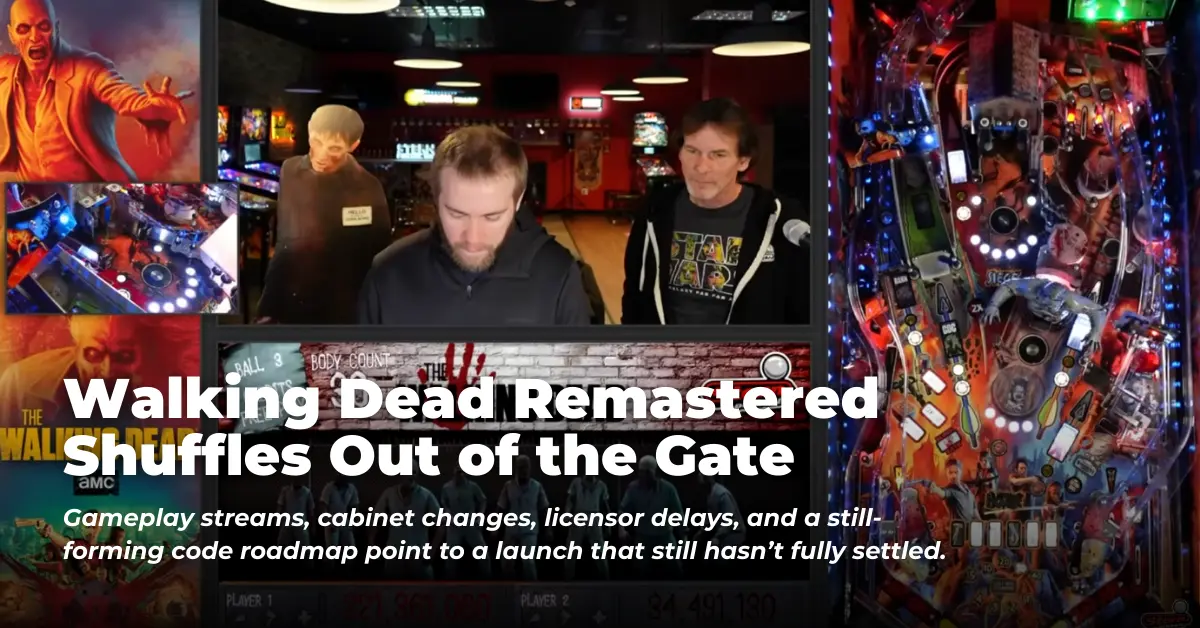
Gameplay streams, cabinet changes, licensor delays, and a still-forming code roadmap point to a launch that still hasn’t fully settled.
The Walking Dead Remastered Gameplay Premiere
Stern’s extended rollout of The Walking Dead Remastered keeps stretching, and the past week added another round of scattered updates: the long-awaited official gameplay stream finally landed on December 8, designer John Borg appeared on LoserKids, and early units have been spotted both on location and in collectors’ homes. Enough pieces are now floating around to get a sense of how this release is landing, or maybe limping, into the world.
A Sloppy, Start-Stop Launch
There’s usually something with a Stern launch—sometimes the drama comes from the community (the “no guns” dust-up on John Wick), other times it’s Stern tripping over its own shoelaces (Uncanny X-Men’s tech issues come to mind). With The Walking Dead Remastered, the problems skew toward self-inflicted.
The first wave of feedback zeroed in on art direction—specifically, the hyper-bright palette that many felt clashed with the game’s grim tone—and the mini-controversy around the Woodbury sign after it surfaced that the design appeared borrowed from a third-party modder. That alone would be enough turbulence for a launch week, but then came another oddity: games shown publicly and now shipping with “Pending Licensor Approval” watermarks still sitting on the display assets.
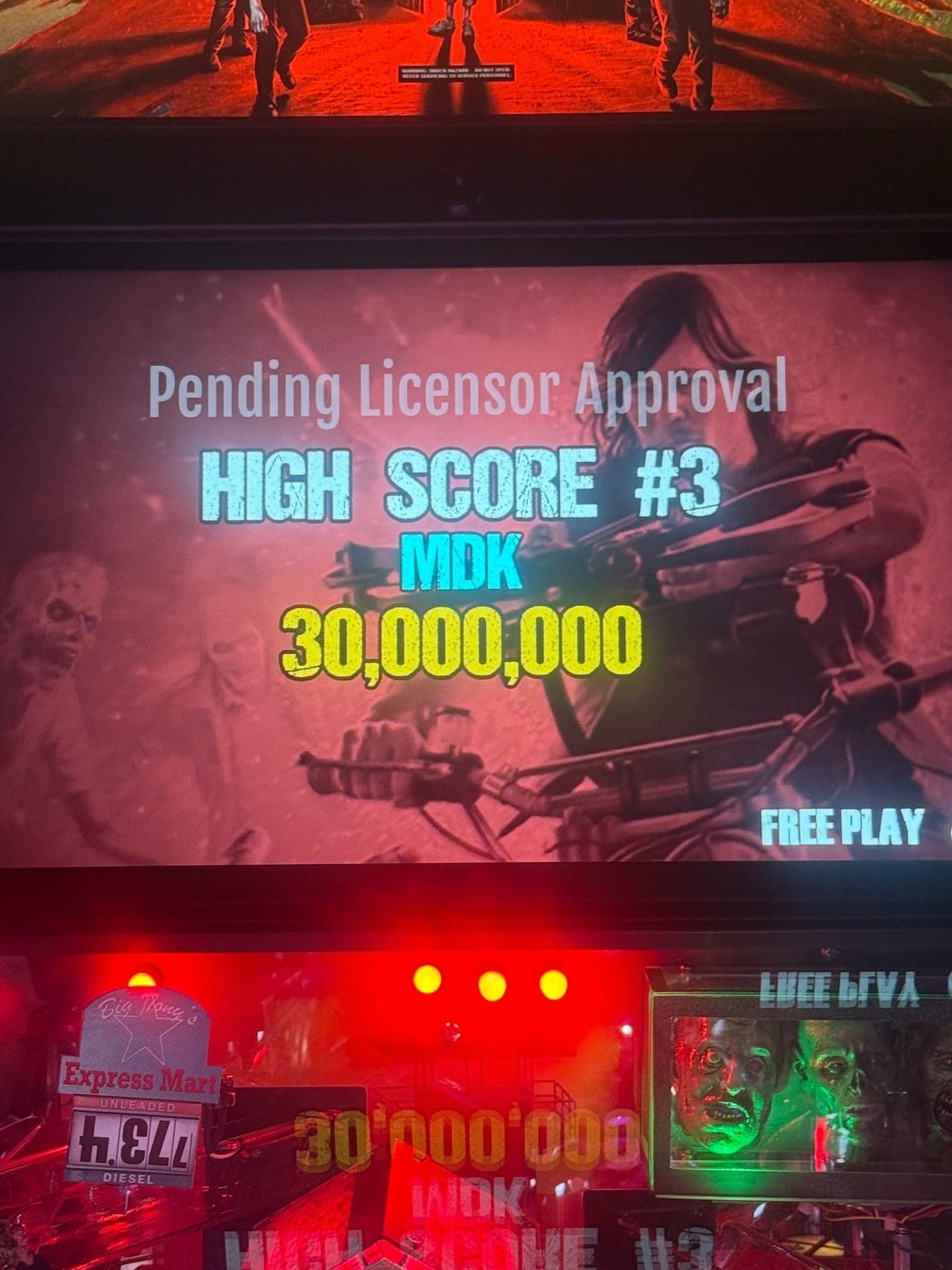
Meanwhile, the promised gameplay reveal slipped from a rumored mid-November window to a stream arriving nearly a full month later. For a remaster of one of Stern’s most beloved modern titles, the debut has felt strangely disjointed.
Spike 3 Cabinet Changes Sneaking In
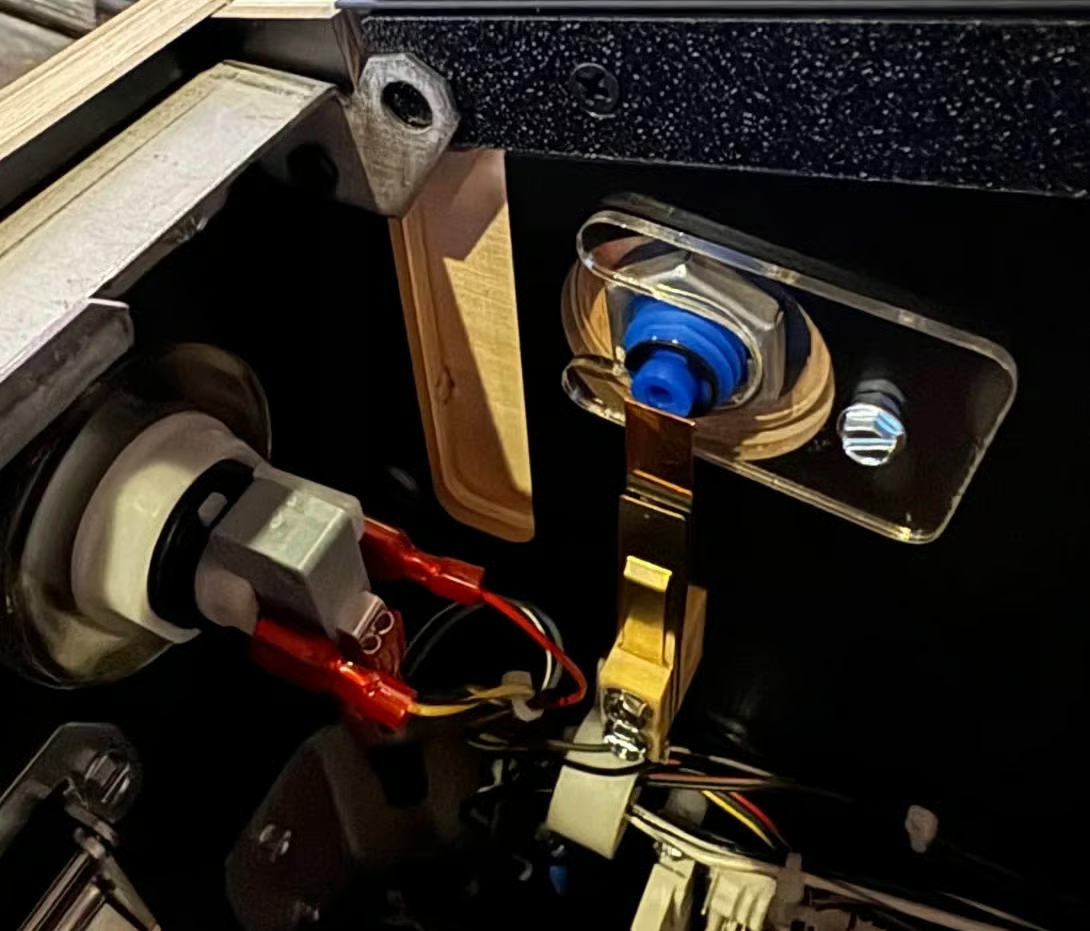
One subplot in this rollout is the quiet introduction of Stern’s next wave of Spike 3 cabinet changes. As mentioned in This Week in Pinball last week, TWDr appears to be the first real testbed for these updates, and eagle-eyed players have already spotted the tweaks.
The service manual references new cabinet parts “coming soon,” and interior photos show expanded cutouts—particularly a widened front groove and an oversized flipper-button section with a reconfigured mech. The wider groove strongly hints at support for new expression-lighting hardware, potentially the version with exterior rail lighting that debuted with the Limited Edition trim. But the flipper cutout remains unexplained, at least publicly.
If Stern is prototyping something like button-integrated expression lighting, TWDr may be the first breadcrumb.
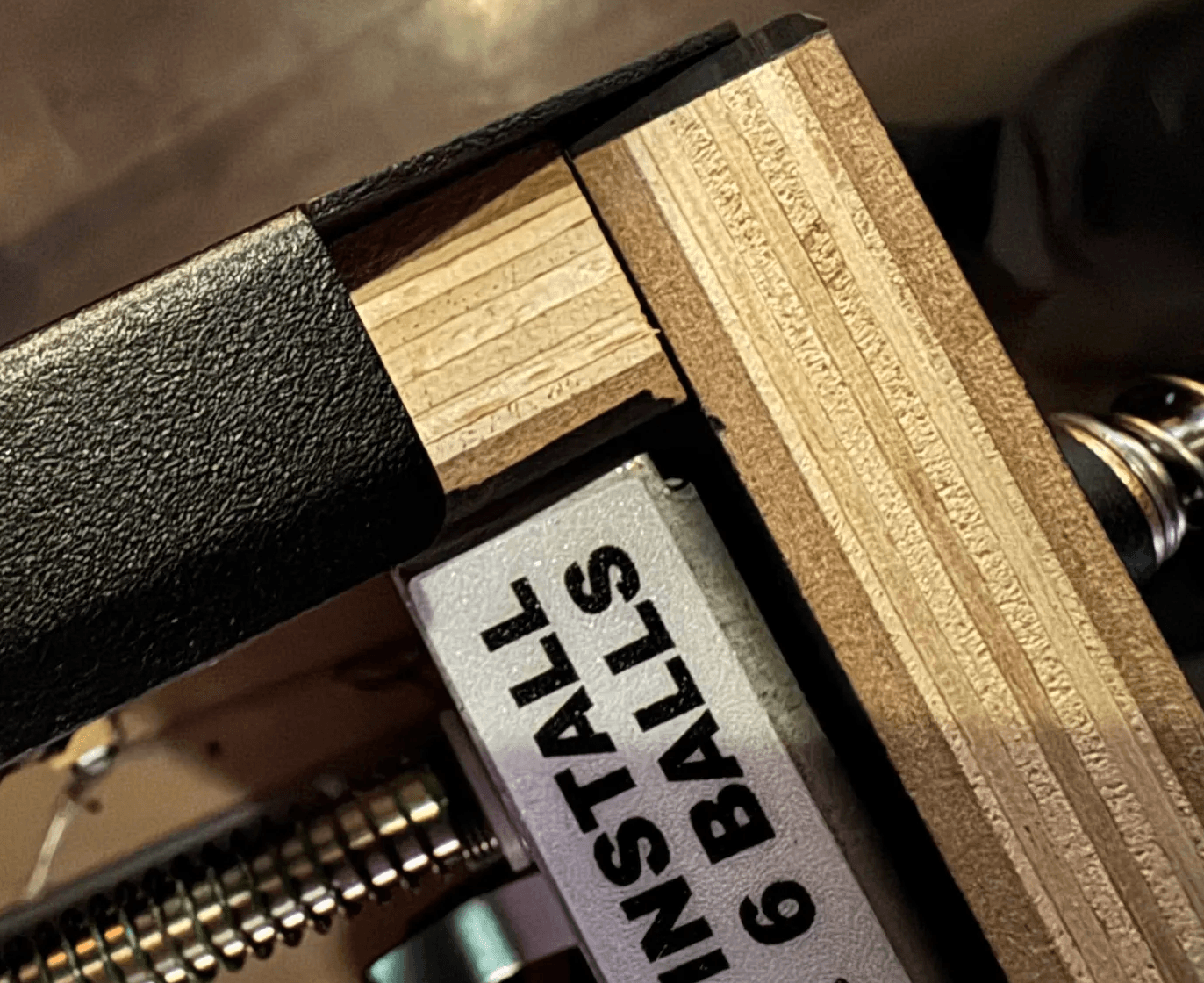
Beyond those visible changes, community members are also flagging what look like refinements to cabinet materials (MDF-coated plywood), construction methods (butt joints instead of more elaborate joins), and general layout choices, including a redesigned coin box area and the placement of holes in the cabinet panels. In isolation, they might be considered routine platform shifts; bundled together and shipped without comment, they add another layer of “not quite ready for primetime.”
What’s Coming in Code
The gameplay stream at least brought clarity—and optimism—on the software front. Buried between shots and side chatter were a pile of forward-looking reveals from Jack Danger, Raymond Davidson, and John Borg:
- Lead coder Mark Guidarelli is actively collaborating with Davidson and Keith Elwin on new rules and refinements.
- Two new mini-wizard modes are planned.
- Expect more traditional modes and new challenge modes.
- The crossbow is getting a serious upgrade, including a new encoder system that gives it positional awareness for auto-aimed “smart shots.”
- Supplies logic may be reworked—one idea floated was earning perks for repeat pickups, like outlane healers for First Aid.
- A selectable “2014 mode” will restore the original rule set for purists.
- Team play and full co-op are coming.
Notably, though not referenced during the gameplay session itself, I did not notice any “Pending Licensor Approval” watermarks on the display, suggesting that element may now be resolved.
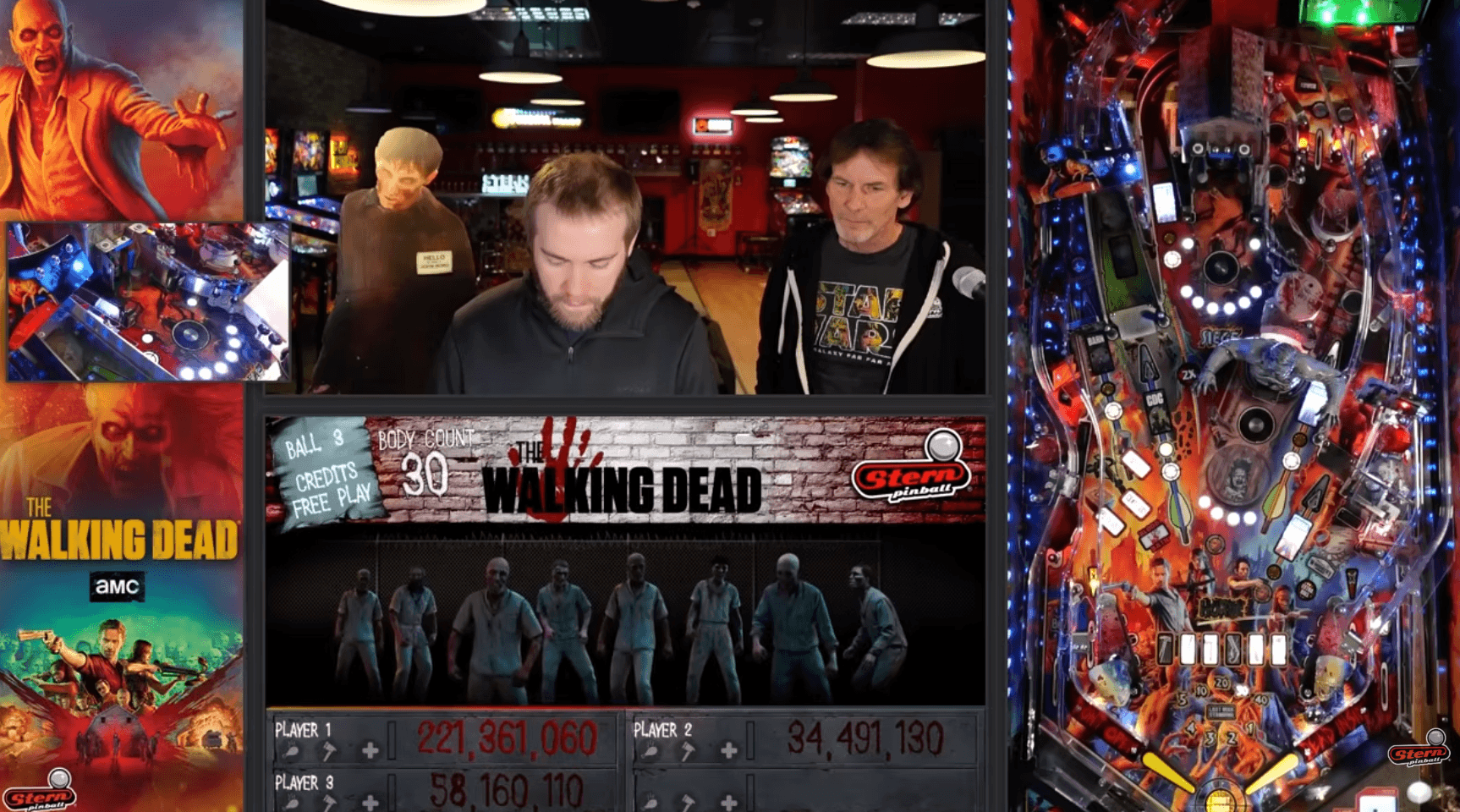
It’s a surprisingly ambitious roadmap for a remaster that launched with fairly light code changes. The enthusiasm is there; it just seems like the work is only beginning.
So… Was This Rushed?
Taking all of this together—the late gameplay stream, the missing licensor approvals, the Woodbury sign incident, the minimal code at launch, the quiet Spike 3 cabinet shifts—it’s hard not to ask the obvious question: how far along was Stern when it greenit this rollout?
John Borg has been on a brutal three-game sprint across the last 18 months or so (Metallica Remastered, Star Wars FoTE, The Walking Dead Remastered). The studio’s production calendar is notoriously packed. And TWDr hit the market feeling not entirely produced, leaving an impression—accurate or not—of a release pushed forward before every element had fully settled into place.
The updates now rolling in could suggest Stern is still smoothing out the edges—code arriving in phases, communication lagging, cabinet changes appearing before they’re documented publicly. It might simply be the turbulence of moving an older design onto a new platform while the platform itself is still evolving. But the sequencing has been noticeable.
The game itself seems likely to land on its feet; the original is too strong and the talent involved too seasoned.
Whether the uneven rollout stems from tight production windows, the complexity of introducing Spike 3 changes, or simple bad timing isn’t something we can see from the outside. What we can see is a gap between the polish players expect from a remaster of a modern classic and the way this one arrived in the world—especially when placed next to last year’s smoother Metallica Remastered launch.
The encouraging side is that the team sounds energized about what’s coming—new modes, revamped features, thoughtful rule updates, even full co-op and team play. If anything, there’s a sense that the real shape of TWDr will emerge over the next few months, not in its launch-week form. For now, the rollout feels less like a finished statement and more like the opening phase of something still settling into itself.



Comments