“I Had Started Writing the Book I Wanted to Read” — Tasker Smith on Pinball: A Quest for Mastery
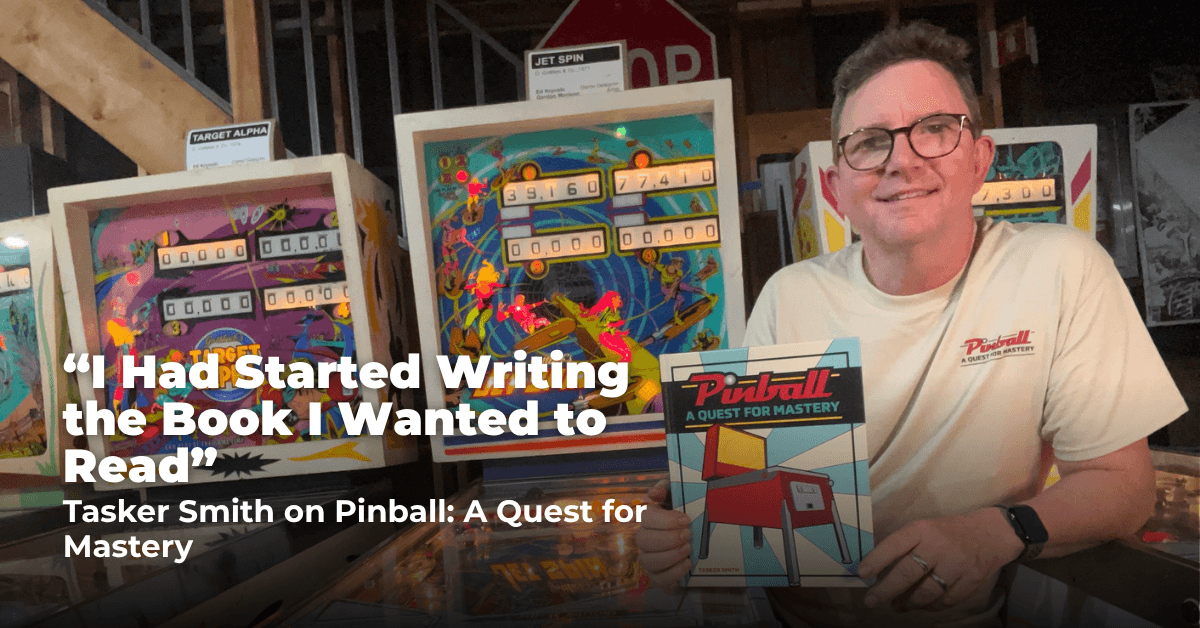
Pinball: A Quest for Mastery is out now from Schiffer Books. It runs 256 pages with 237 illustrations, and unlike most of what's on the pinball shelf, it isn't a history of the game (although there's some of that, too) or a guide to fixing one. It's about how to play — playfield layout, ball control, strategy, competition, and a long stretch on the mental side of it. The last part drops the improvement angle entirely for pub pinball, cabinet oddities, Easter eggs and flipper codes.
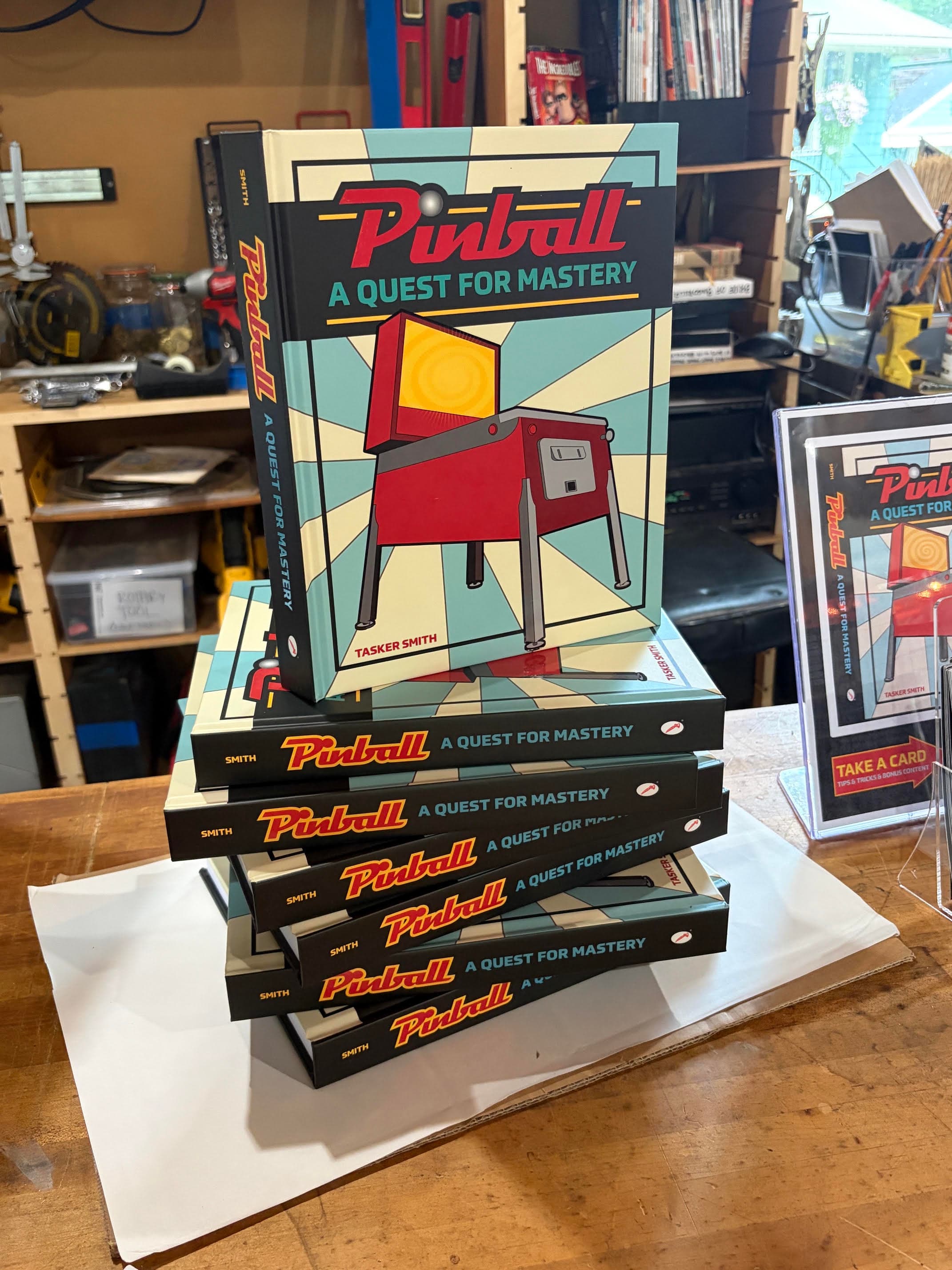
I've known Tasker Smith for a few years through the New England pinball scene. He's a friend, and a supporter of what we do here. I read a few iterations of the book while it was in development and sent some notes back, which was fun. It may also be the first time my name and Kineticist have been mentioned in a printed book. So I've watched this take shape over a long stretch, and watched him will himself through a big creative effort in a place like pinball. I've read and flipped through a lot of pinball books over the years, and I think this one really adds a new dynamic to the corpus.
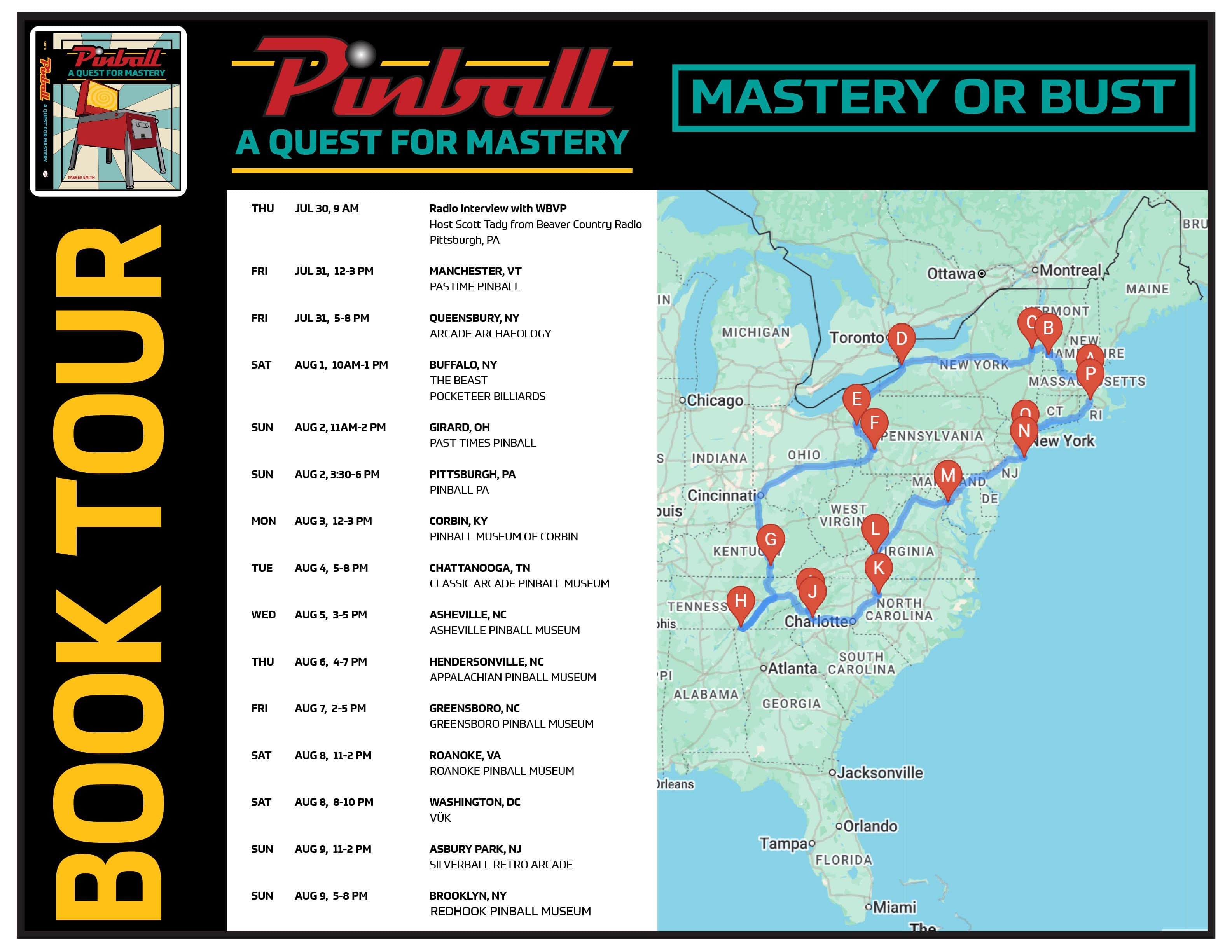
The book got its official launch Tuesday night at TCAN, The Center for the Arts in Natick, Massachusetts, and Tasker is on the road with it now, a ten-day run through pinball museums and destinations that wraps August 9. He answered these questions in the days before the launch. We asked him about the book, the decade it took, and what he learned making it.
Interview with Tasker Smith
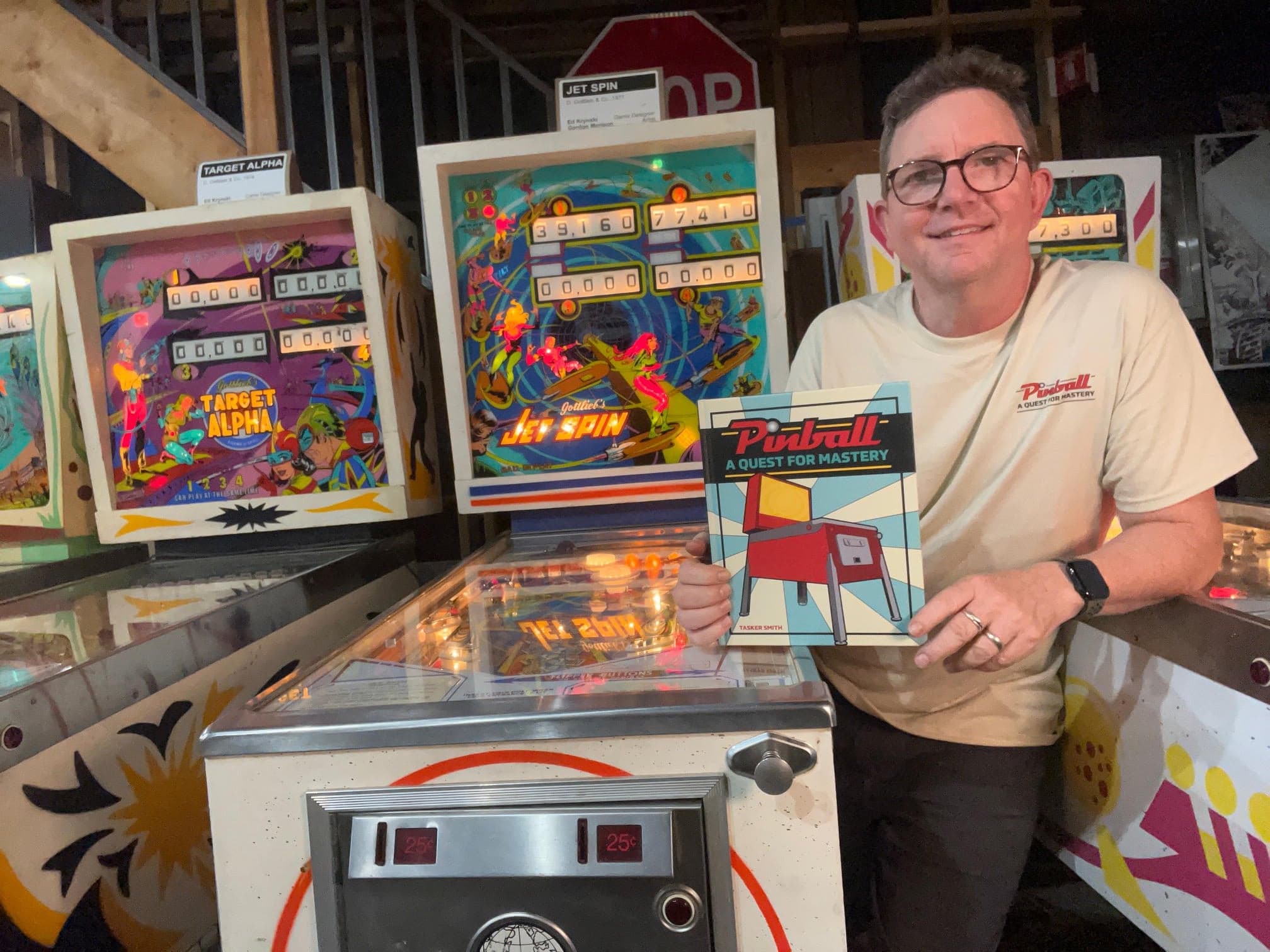
Colin Alsheimer: So off the bat, tell us a little about yourself. Who is Tasker Smith, and why did you decide to write a book about pinball?
Tasker Smith: I would describe myself as a lifelong pinball super-fan. Years ago I started pulling together all the resources I could find to help develop my skills as a player, and was surprised to discover that the pinball community had largely abandoned writing books on the topic of playing pinball in the mid-late 1970s. Pinball has changed a lot since that time in every aspect - including game mechanics, rule sets and competition formats - and I wanted to capture all of that in writing. I didn't realize it when the project first began, but I had started writing the book I wanted to read.
Colin: Tell us about the book. Who is it written for?
Tasker: I like to think of this book as a resource for anyone with an interest in playing pinball. It begins with a broad and general introduction for those new to the game, and methodically charts a path through playfield layout, rules, ball control techniques, game strategy and competition. I also explored more exotic topics like flow states, emotional regulation, powering through point scoring slumps and the psychology of rebounding from emotionally frustrating ball drains. Hopefully this encompasses a little of something for everyone, but those earlier in their pinball journeys are likely to find it most engaging.
Colin: You run the EPIC lab at BU now, and you taught prototyping at MIT before that. In a way this book is just you teaching again, only about pinball. Did having that educator's background change how you wrote it?
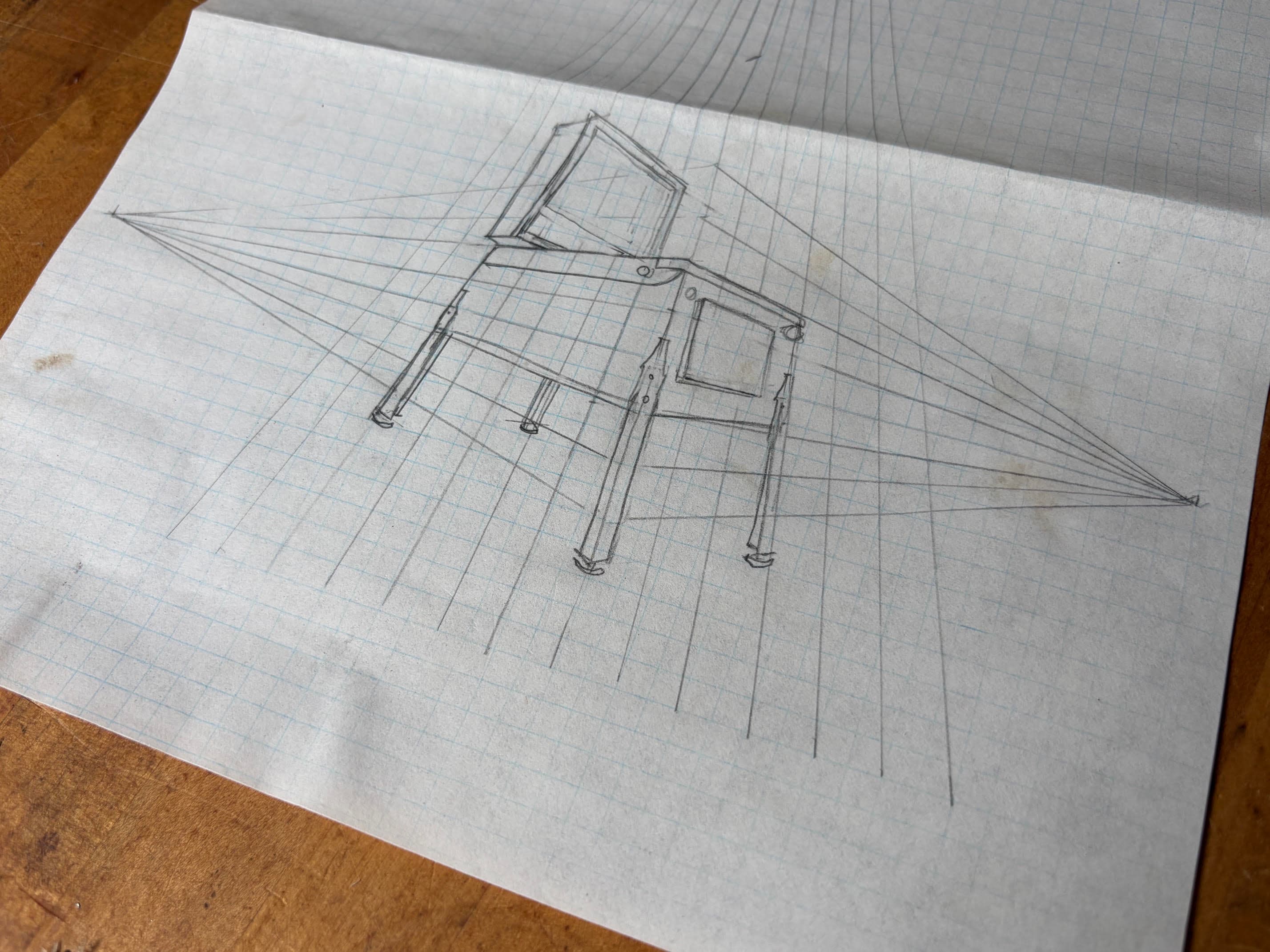
Tasker: My day job requires me to translate complex technical topics into easy to understand graphics and illustrations - so in many ways this has been the perfect pairing of my work and my love of pinball.
Colin: How long have you been working on this project?
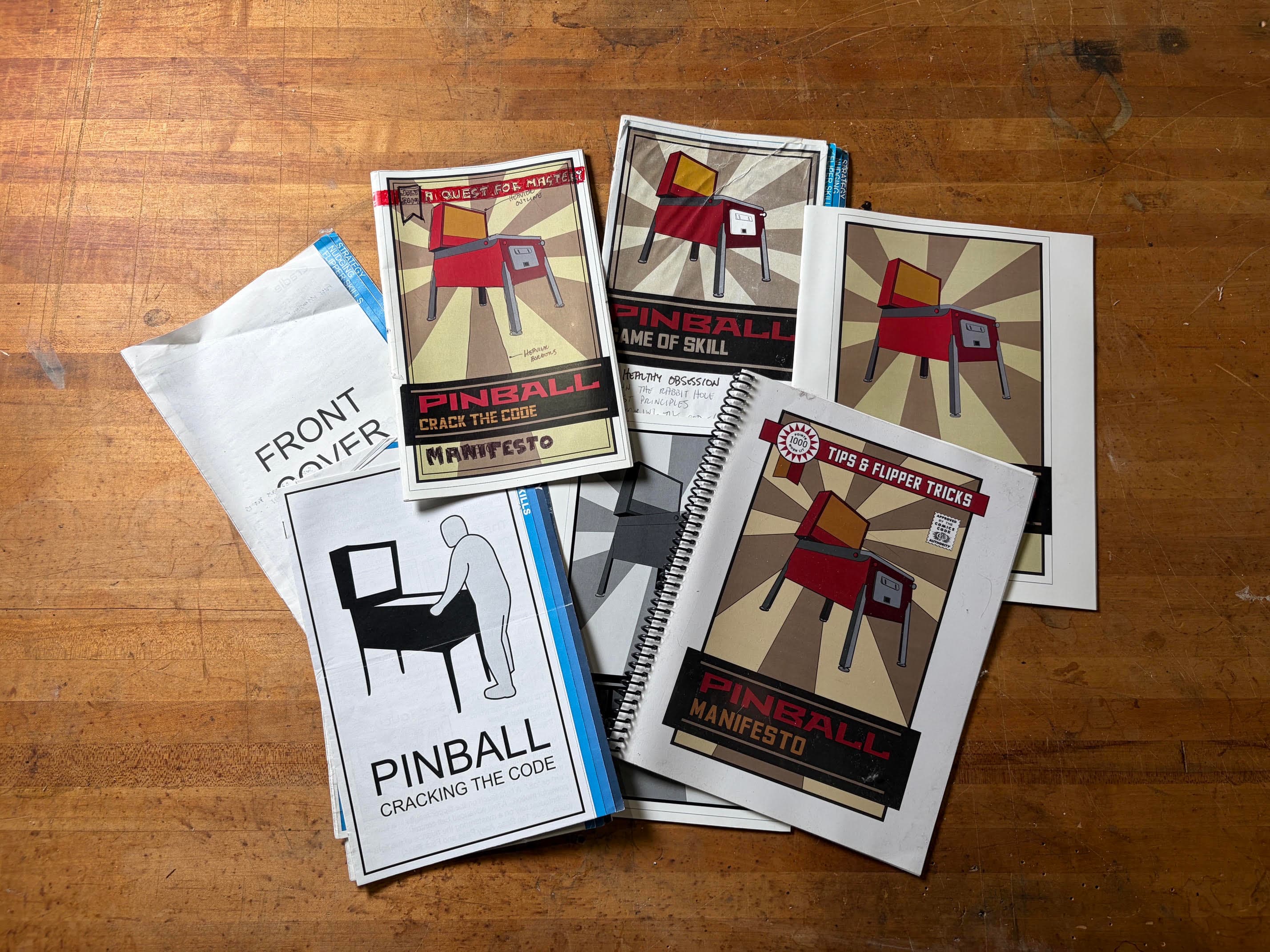
Tasker: This project started as an idea about 8 or 10 years ago, but my days spent at home during the Covid era were when I found the time clarity of mind to start assembling sketches and developing an outline. For fun I reached out to Schiffer Books (famous for a wonderful collection of books on the topic of pinball history by authors like Michael Shalhoub and Marco Rossignoli) to see what they thought. To my surprise and delight, they found the idea compelling, and in January of 2021 we signed a contract to move forward with the book.
Colin: I remember reading an early transcript a few years ago and it's been fun seeing you plug away at it. What has changed the most in the finished product from where it started?
Tasker: In the beginning I had a ton of fun devoting time and research to exploring exotic topics that didn't make it into the final manuscript. The thought experiment was to look at pinball through the lens of professional athletes to see what practices might apply. Many athletes use science to give them an edge, and I started scouring the universe to explore topics like hypnosis, massage therapy, ice baths, TCDS (transcranial direct stimulation), strobe glasses and the like. I remember my brother reading an early chapter and questioning whether sensory deprivation tanks belonged in a book about pinball. I would argue, maybe (!!!) but in the end, I had to pare it down and focus exclusively on the experience of playing pinball, supplemented with of tons of resources like books, maps, websites and creators that serve to lead pinball players along the path to mastery.
Colin: What has that journey been like? Anything surprise you along the way? Was anything more difficult than you expected?
Tasker: It was a cloudy journey with lots of starts and stops. I've always found a challenge in life of balancing the time required to be a decent father, a loving husband and an awesome contributor at work. Add to that time required to manage a fixer-upper of a house and the constant distraction of trying to squeeze in games of pinball and you quickly discover its hard to find time and focus to work on a large writing project.
Colin: You worked with Schiffer Books for this project, a publisher who has actually put out a number of pinball books in the past. What was it like trying to find a publisher, and then what was it like working with Schiffer specifically?
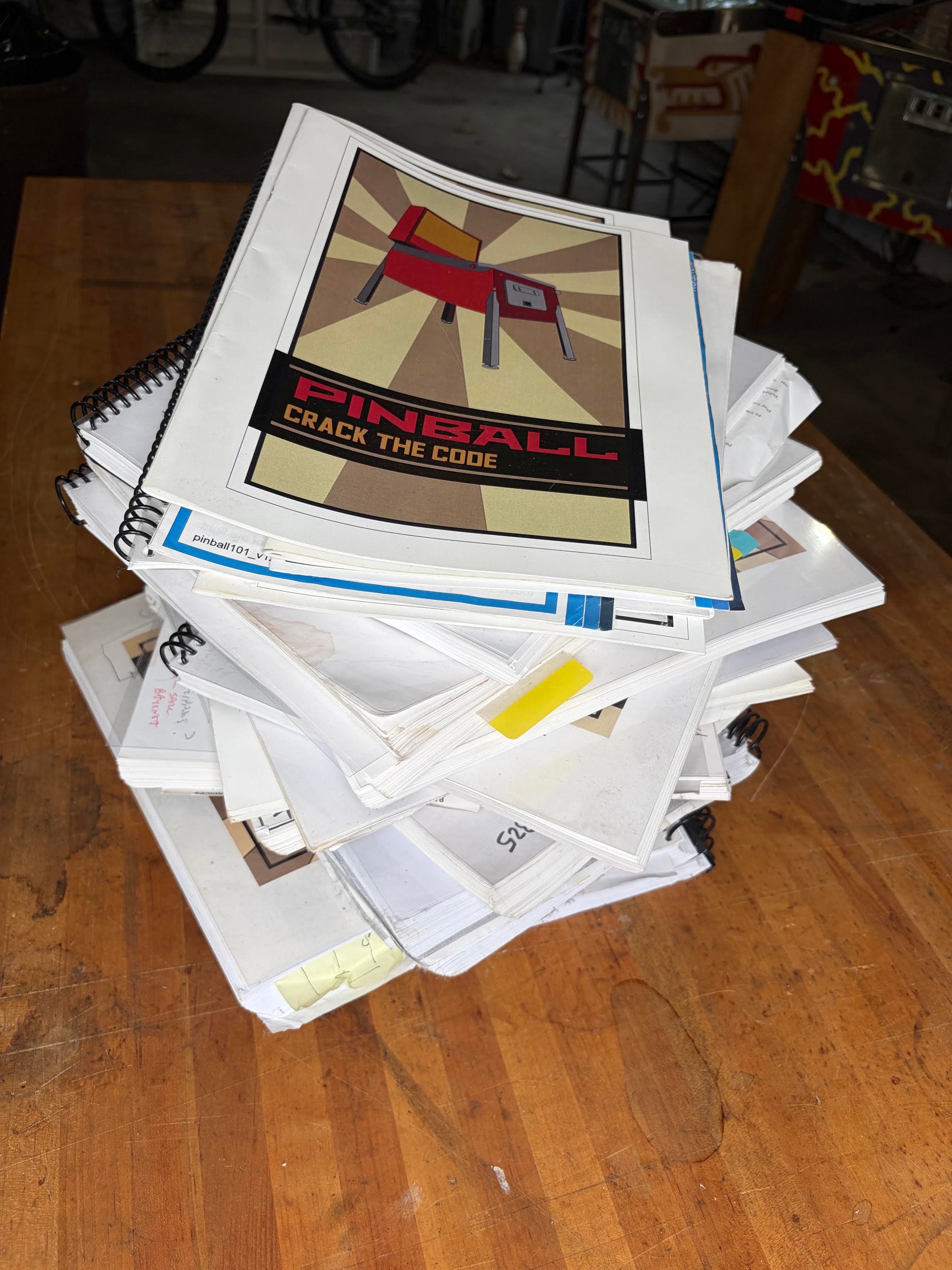
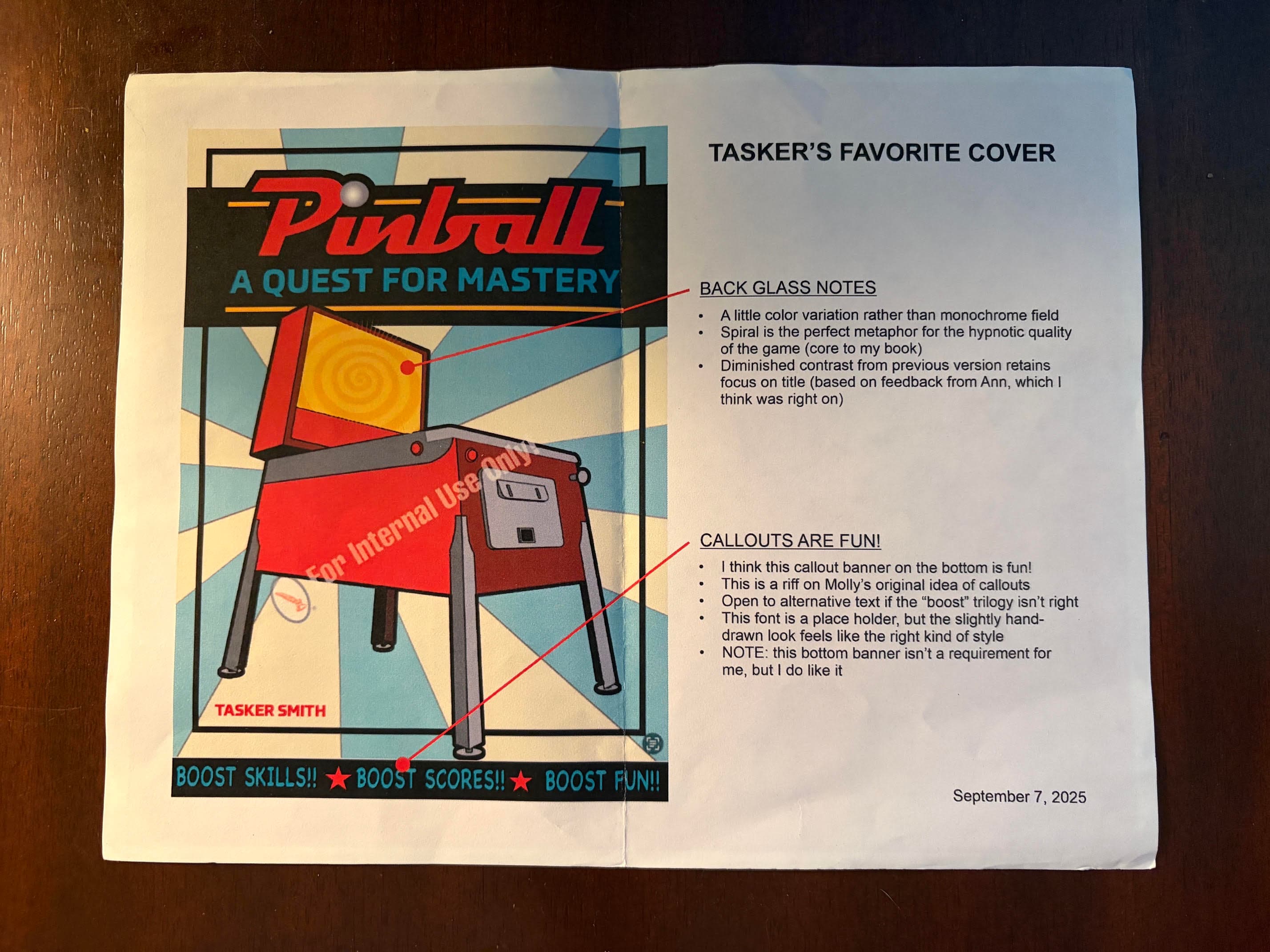
Tasker: Frankly, I think I lucked out when connecting with Schiffer Books. I had the right project at the right time, and my passion for pinball was reflected in sample writing and artwork I presented to Schiffer's development team. After signing a contract, Schiffer paired me with a wonderful editor, Ann Charles, who served as a sounding board and accountability buddy. It helped that Ann hadn't yet discovered pinball because it forced me to clarify topics that might otherwise seem obvious to those who are familiar with the game. Ann helped me with structure and encouraged me to forge ahead to make continual progress. As the project approached completion she weeded through the language to review topics that were not clearly articulated. When the manuscript and artwork were both complete, we brought in Molly Shields from their design team to assemble the art and text into a layout that would ultimately become the final book for printing.
Colin: While the book is comprehensive, it feels like it really is geared towards people who want to play competitively or just broadly learn how to get better at playing pinball. What would you say about that?
Tasker: My hope is that this book will serve 2 purposes: to help players improve their game play and to help them deepen their love of the game. If it succeeds in either of those goals, it will have been a book worth writing.
Colin: In particular, I thought Part 3: Mastering Self really shined, and is must-read material for anyone looking to take competitive pinball seriously. What gave you the inspiration for that section?
Tasker: Some players think that pinball is about playing against other players. Others think that pinball is about playing against the machine. For me, playing pinball always comes down to playing against myself. By that, I mean that the process of developing skills, managing focus and the emotional roller coaster of great and terrible balls has everything to do with playing a great game. If we can tap into the process of self-awareness and discovery, it can't help but improve our games.
Colin: In your research, do you see a lot of serious pinball players using these tactics? Have you ever seen anyone stretch out before a tournament?
Tasker: Most of the preparation I've observed from serious players relates to mental focus. Some use tools like headphones or hoodies to filter out the audio and visual distractions. Others clearly have a mental game that involves self-talk and a mental run through of the shots required to achieve assorted objectives. Everyone is different, and the idea of sharing a collection of strategies was to reveal fresh ideas to anyone who hasn't yet discovered them.
Colin: I'm curious if you've ever tried any of the clearing-the-mind activities and, if so, did they work?
Tasker: I have tried every practice I describe in the book, and had varying results with different practices at different times. This is the nature of being human, and playing such a dynamic game. For me personally, mental focus and emotional regulation are inseparable. The anxiety of approaching the 3rd ball of an important game after the 2nd ball was a stinker can be paralyzing. Add to that the distractions of competing for money or glory while your game is being streamed to the internet... and you're managing a lot of distraction from the objectives on the playfield. Most valuable to me have been topics related to finding my way to a state of focussed relaxation, which is often easier said than done.
Colin: Now that it's finally shipping out to readers, are you excited? Relieved? What does it feel like to be at the (almost) end of a big creative journey like this?
Tasker: I am relieved, extremely excited, and experiencing deep gratitude to my family and pinball friends that supported this audacious project. I almost can't believe it finally came together.. and have been having a blast redirecting my creative energy towards a successful launch.
Colin: What's next for your release plans?
Tasker: We are launching Tuesday July 28 at TCAN, The Center for the Arts in Natick, Massachusetts. Marc Patenaude, former New England Pinball League champion and host of Backhand Pinball will be guiding a Q&A to tease out topics from the book. There will be door prizes, crunchy snacks, a cash bar and amazing people. Following the launch, I'm heading off on a 10 day book tour that will take me to pinball museums and destinations from my pinball bucket list in Vermont, New York, Ohio, Pennsylvania, Kentucky, North Carolina, South Carolina, Virginia, DC, New Jersey and Rhode Island.
Colin: What's next for you personally? Any plans for a sequel, or is this a one-and-done project?
Tasker: I don't have current plans for a future project, but one of my goals from this project is to serve as a magnet for ideas to improve my game at pinball. I'm sure I missed some great ideas and insights, and if I am able to aggregate enough of them to merit a second edition of this book I'd be happy to make it better and more useful to all my friends in pinball. So anyone reading this reflection: if I missed something, please share your insights!
Colin: What are the top 3 takeaways you hope people get from this book?
Tasker: The top 3 takeaways I hope people get from the book relate to words of encouragement from the introduction describing to how to improve and deepen your love of the game: Stay curious, practice with intention, and keep it fun. Your fortunes in pinball (and in life) are sure to improve.
Colin: Where can people connect with you, or order a copy for themselves?
Tasker: You can find me through social channels or through email: pinballmastery@gmail.com. I'm grateful for any feedback readers want to share: the good, the bad and the ugly! For sourcing books, my first choice is always to support local arcades and book stores. Ten Trees Books in Natick, Massachusetts is partnering with us for the book launch - and would be an excellent place to buy a copy! At the time of writing, I know that some local New England arcades like Tycoon Arcade and Hometown Arcade will also be stocking books - and buying books through pinball venues supports local pinball. If your favorite arcade isn't stocking it, you can also buy it directly through Schiffer Books, Barnes & Noble, Amazon and other online outlets I have listed on my website: www.pinballmastery.org.

Colin is the chief pixel pusher at Kineticist. He's a lifetime gamer who became enamored with pinball after taking in a family copy of the 1979 classic Joker Poker (the EM version). Since then he's bought, sold and repaired many machines, competed in all kinds of tournaments, and contributes to This Week in Pinball, the New England Pinball League, and Pin-Masters of New England. Previously, Colin spent over a decade working in marketing for agencies and tech startups. He also started and ran a music blog, happy hour website, and wrote a regular craft beer review column for Central Track in Dallas. Once aspired to be an artsy film director.
Like what you're reading?
Get pinball news, analysis, and deep dives delivered to your inbox.
Related Posts
More in Interviews or browse all topics.