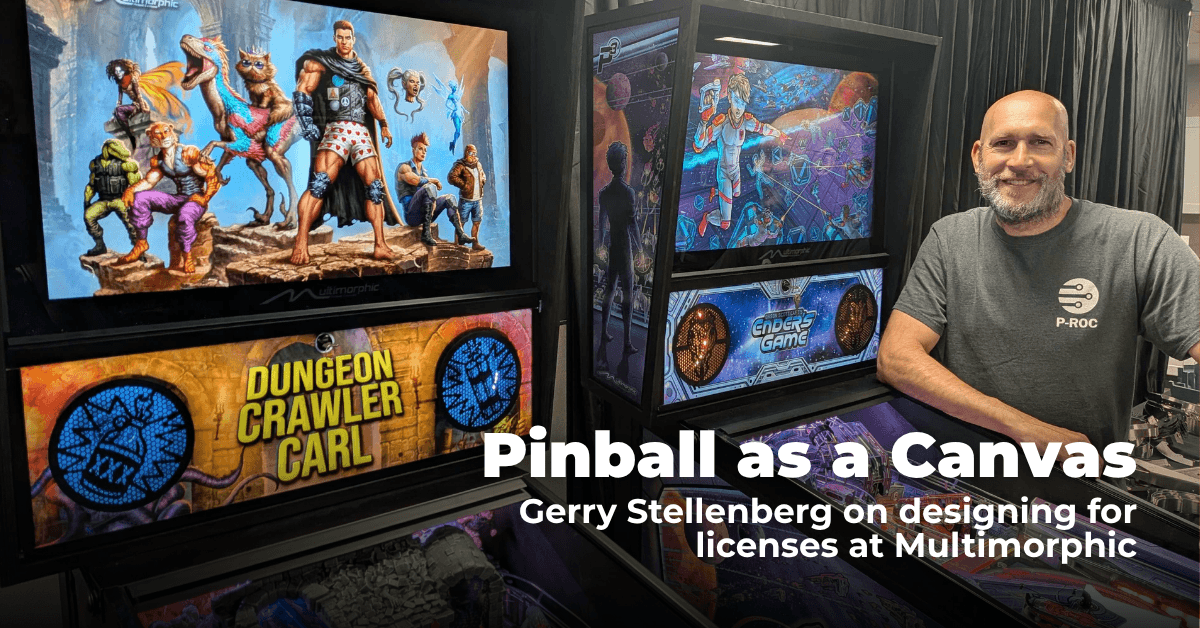
Seventeen years ago, Multimorphic founder Gerry Stellenberg was building the P-ROC in his spare time, a circuit board that let hobbyists rewrite the rules on the pins they owned. I asked him if there was a theme in his mind back then. There was. And in July his company finally announced Ender's Game, with Dungeon Crawler Carl right alongside it. As Multimorphic ventures into its fifth licensed title, I wanted to know what direction the company is going in.
Paul Melio: To say the least, no one can predict the next license in your catalog, but they keep landing with very specific fanbases. Between Portal, Princess Bride, and now Dungeon Crawler Carl and Ender's Game, how do you find IPs that resonate when they aren't the obvious choices?
Gerry Stellenberg: Picking titles based on how you think the community might react is tough. We've all seen huge titles fall flat, and we've seen surprising titles succeed, and there are a lot of reasons why. Our philosophy is to design games based on IP that we love. We're personally invested in creating the best pinball version of the theme we can, and the end result is always something we're incredibly proud to deliver. The obvious hope is that it will resonate well with pinball fans who love the theme, as well as people unfamiliar with the theme that are looking for fun-playing games designed around a really great story.
Paul: So your P³ has a display screen on the lower playfield. Does this technology ever change the licenses you pursue?
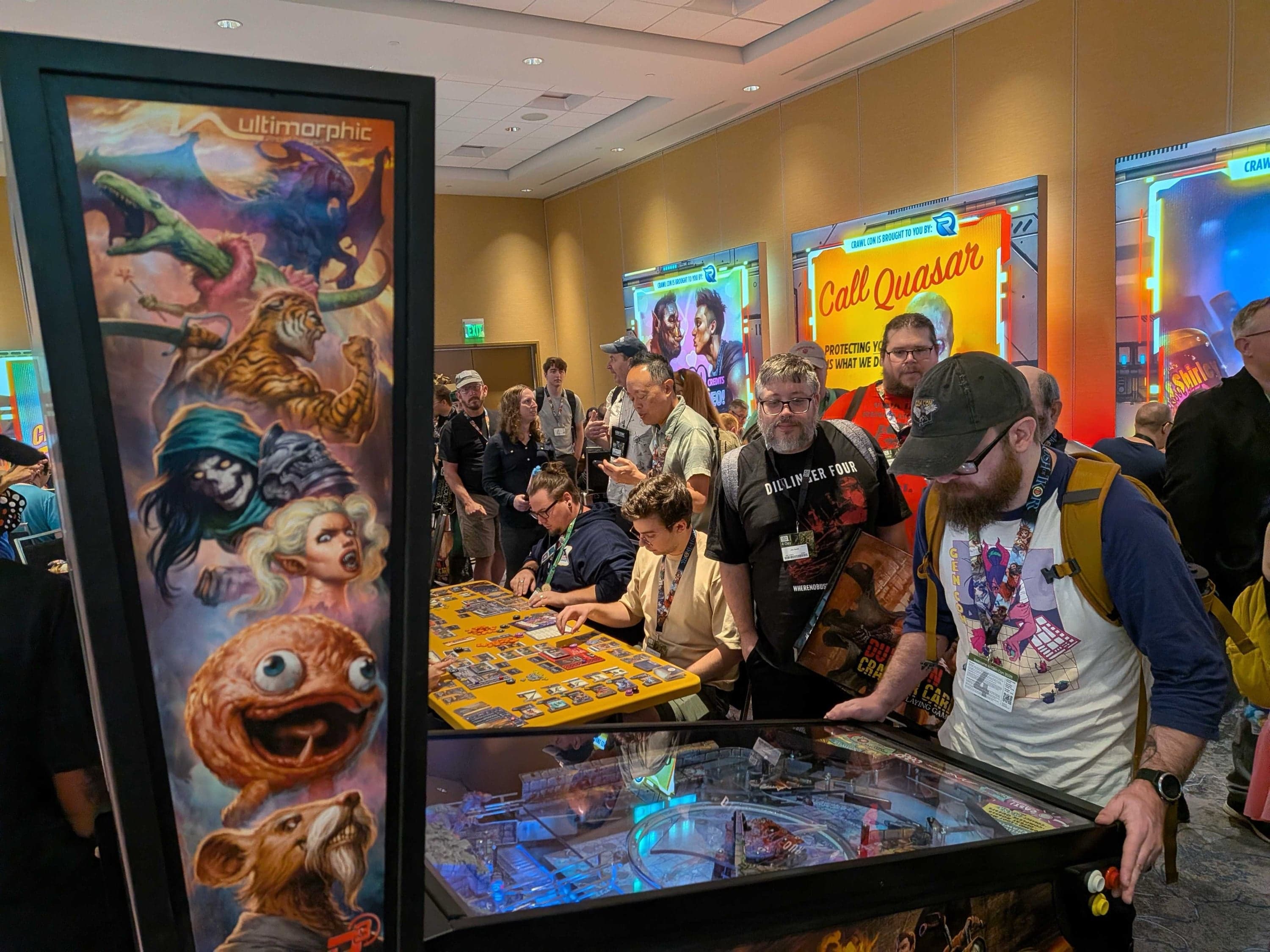
Gerry: The screen is a canvas just as any undecorated pinball playfield is a canvas. We can 100% deliver a game with static playfield artwork and with lightable "inserts" like all other manufacturers do. We did almost exactly that with Final Resistance and with the Hub mode in Portal (ignoring the informational and reactionary popups and animations that we occasionally overlay). The beauty of the screen, though, is that we can choose to add more dynamic content to immerse the player into the story of the game. Traditional pinball with static artwork asks you to "shoot the flashing shot," but the P³'s display can ask you to "shoot the staircase that just appeared in front of the ramp", or "follow that character around the loop", or "shoot the crate to see it explode and reveal an award." We can change the meaning of each shot dynamically as the story progresses, label it with instructional text or graphics to explain that meaning, and even have the imagery change in response to hitting (or missing) each shot. How we leverage the screen depends on our creative process for each title.
Since we can deliver fully traditional/static experiences and also highly dynamic ones, the screen only helps us deliver each theme, and since we want a variety of experiences in our game catalogue, we pursue a wide variety of licenses.
Paul: Have you ever walked away from a license because the license holder's restrictions would have made a worse game?
Gerry: Yes, many times. As big fans of the properties we pursue, we talk a lot about how we'd feel (and therefore how we think other fans would feel) if the game didn't include certain characters, music, iconic video sequences, etc. I'll honestly never understand why some people list pinball themes that they'd buy sight unseen. If my dream theme was missing elements central to the story or implemented in a way that doesn't feel right, it would ruin the experience for me. So we only get licenses that allow us to deliver an amazing game that does the theme the justice it deserves.
Paul: Ender's Game and Dungeon Crawler Carl released on the same day, which meant two rights holders signing off on games that share a design. Did either side know about the other, and did that change anything?
Gerry: There was no requirement to do so since the implementations are completely independent. That said, since the P³ is a platform, we're open with all of our licensors about other titles, at least as much as confidentiality agreements allow.
Paul: How familiar did the team get with the books during development?
Gerry: It varies based on each developer's role, but the core creative teams are intimately familiar with the respective books. We then discuss even the smallest details for probably way too long in our design meetings to make sure we're making the best choices possible.
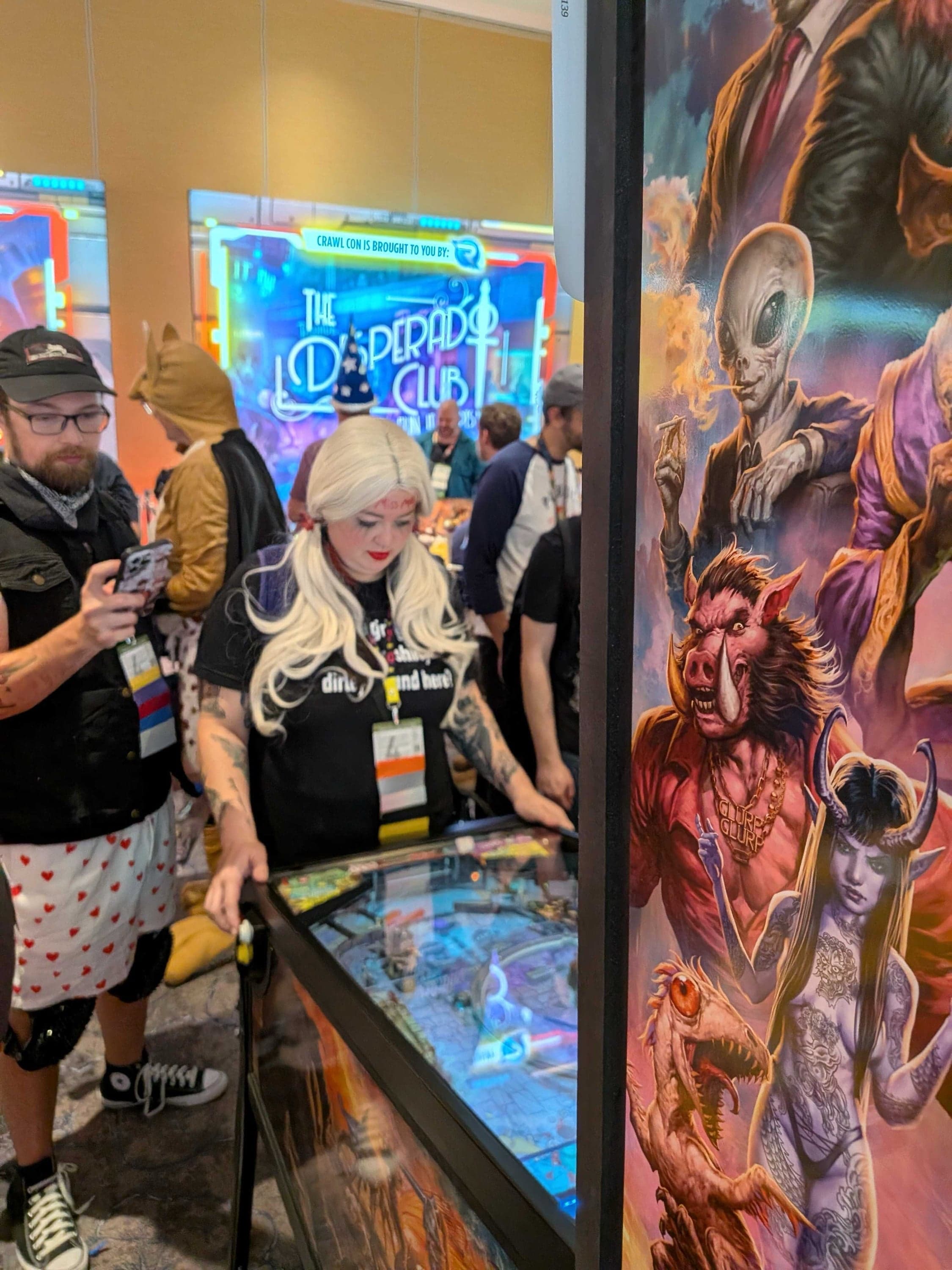
Paul: Matt Dinniman announced Dungeon Crawler Carl himself at Comic-Con. How involved is an author in a project like this?
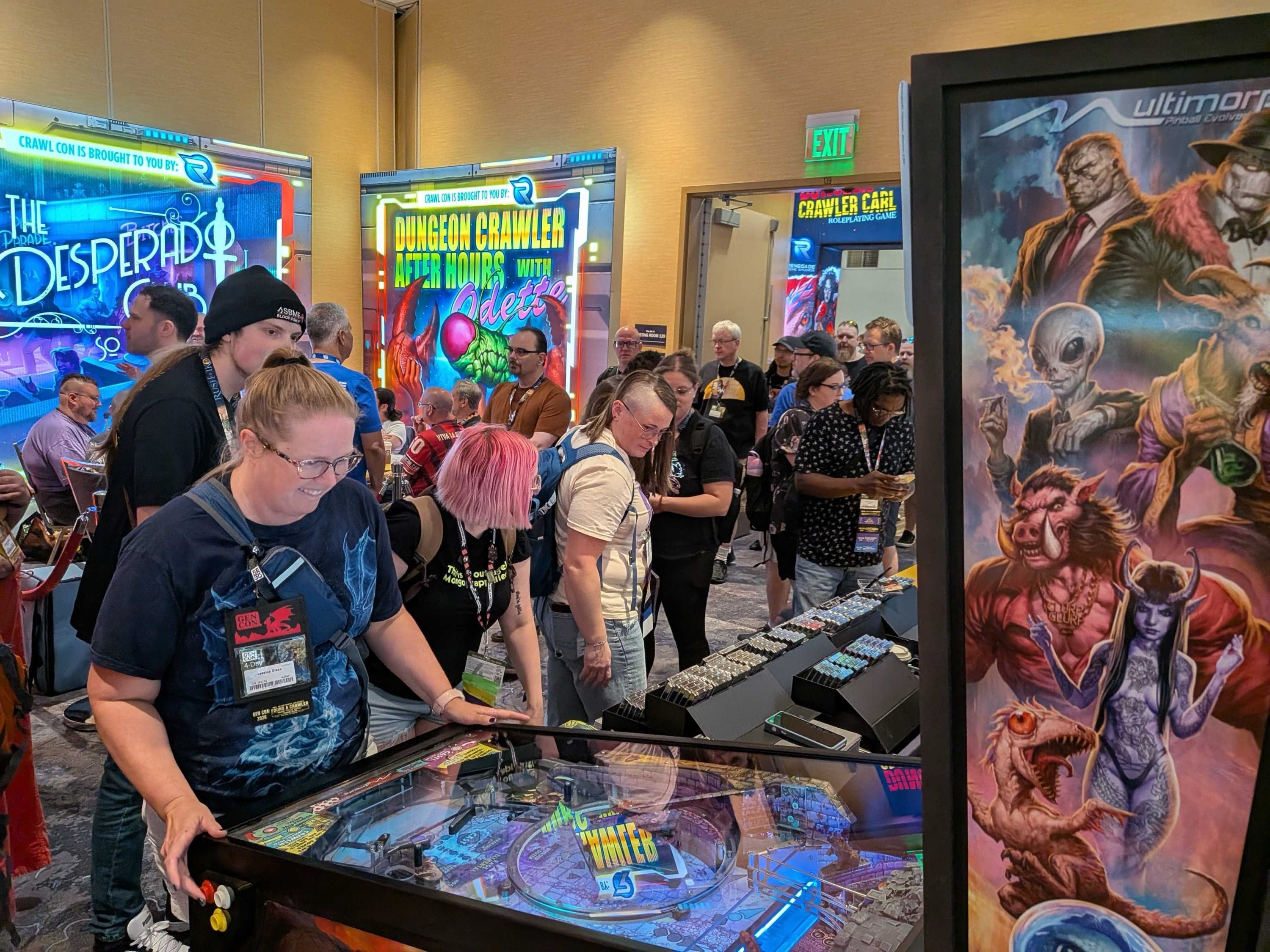
Gerry: Every project is different. Every licensor is different. Matt's been incredibly excited about the pinball game for a long time, and having him, Jeff Hays, and the Audible team show our launch video to thousands of Dungeon Crawler Carl fans at Comic-Con was amazing!
Paul: Weird Al was your first licensed game back in 2022. Four IPs later, how has your approach changed?
Gerry: It really hasn't. We still go after themes that we love and that we think would make great pinball games. The way we craft gameplay around the theme is different each time, and we continue learning and using new tools and techniques along the way.
Paul: Back when you were building the first P-ROC, was there a theme in the back of your mind you would've loved to make?
Gerry: Yes, I've long had a personal list of themes that I'd love to make. Ender's Game was one, and we had a lot of buy-in from the team for it. Everybody on the team has their own lists too. We talk about them often.
Paul: One last thing. Compared to other manufacturers, your upcoming titles almost never leak or get discussed until close to release, even as the IPs get bigger. Dungeon Crawler Carl held right up until Matt announced it himself. Why do you think that is?
Gerry: Everybody on the team works tirelessly on each new title and takes extra care in protecting our plans. Nobody with respect for the people and business involved would knowingly spoil a company's plans for an upcoming launch, or at least I'd like to believe that. That said, as the scope of knowledge necessarily increases during development, an accidental slip becomes more likely. The risk increases even more leading up to release, as more people are brought into the fray. Striking a balance between keeping a title secret and giving everyone the necessary information to develop and launch the game is tough, and the team discusses that risk at every step.
To be clear, Matt's interview answer that a Dungeon Crawler Carl pinball game was coming wasn't a "leak". The awareness it brought to DCC within the pinball community cannot be understated, and that was important for a reasonably new book series. Most forthcoming titles are already pretty well known. It's less commonly known which manufacturer is making which title, as confidentiality agreements typically prohibit sharing that information. We all know the pinball community loves trying to figure it out though! It's really fun to watch people try to connect the dots from really obscure facts and oftentimes miss some details that would make the connection obvious.
Paul Melio's licensing series began with Stern CCO George Gomez on designing around licensor limitations, and continued with American Pinball owner J Bryan Vincent on taking AP into licensed games.
Comments