
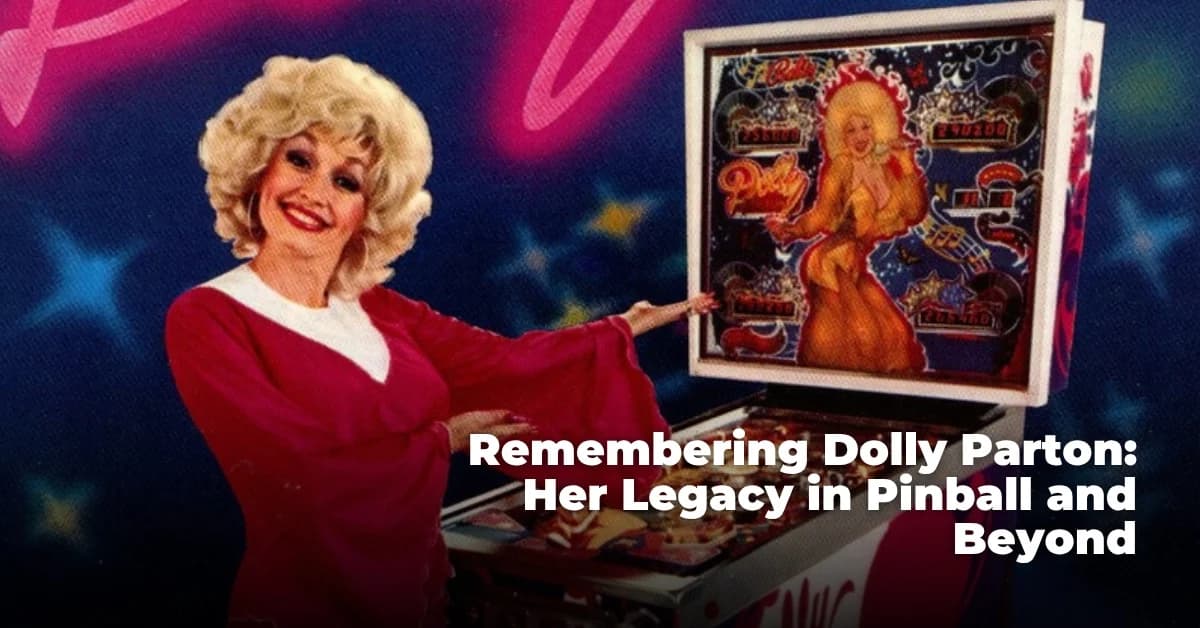
Dolly Parton was born on January 19, 1946, in Pittman Center, Tennessee, on the east side of the state near Gatlinburg. She was the fourth of twelve children in a family frequently experiencing poverty, so she began performing at a very young age; she sang for radio at the age of 6, appeared on local television in Knoxville, Tennessee at the age of 10, and recorded her first single and debuted at the Grand Ole Opry in Nashville at just 13. Throughout much of the 1960s, though, she was primarily a songwriter, rather than a singer.
Parton’s first full-length album, titled Hello, I’m Dolly, was released in the fall of 1967. It was not until the early 1970s, though, that her own solo career began to build traction. She skyrocketed to popularity in the first half of the 1970s thanks to such hits as “Joshua”, “Coat of Many Colors”, “Jolene”, and “I Will Always Love You”. By the mid-70s, Dolly Parton was averaging more than one album per year, and regularly found herself near or at the top of the country music charts.
In 1974, Bally employee Tom Nieman suggested that Bally obtain licensing for popular contemporary properties to use as the basis of pinball machines, starting with the album and related movie Tommy and its music from The Who. In the ensuing years, Nieman was promoted to vice president, and reprised the idea in late 1977 to make an official table about Dolly Parton, who was then one of the brightest stars in country music. A license was obtained in mid-1978.
Longtime Bally artist Dave Christensen was assigned to bring Dolly to life on a pinball playfield and backglass. Owing to her popularity as a country singer, Christensen drew Parton in a more country light, with an original backglass showing her wearing denim with a large guitar in the background and roses adorning each player’s score. Her playfield depiction shows her in a tied-back button-up shirt, short denim shorts, and barefoot. Dolly herself approved the artwork in late 1978.
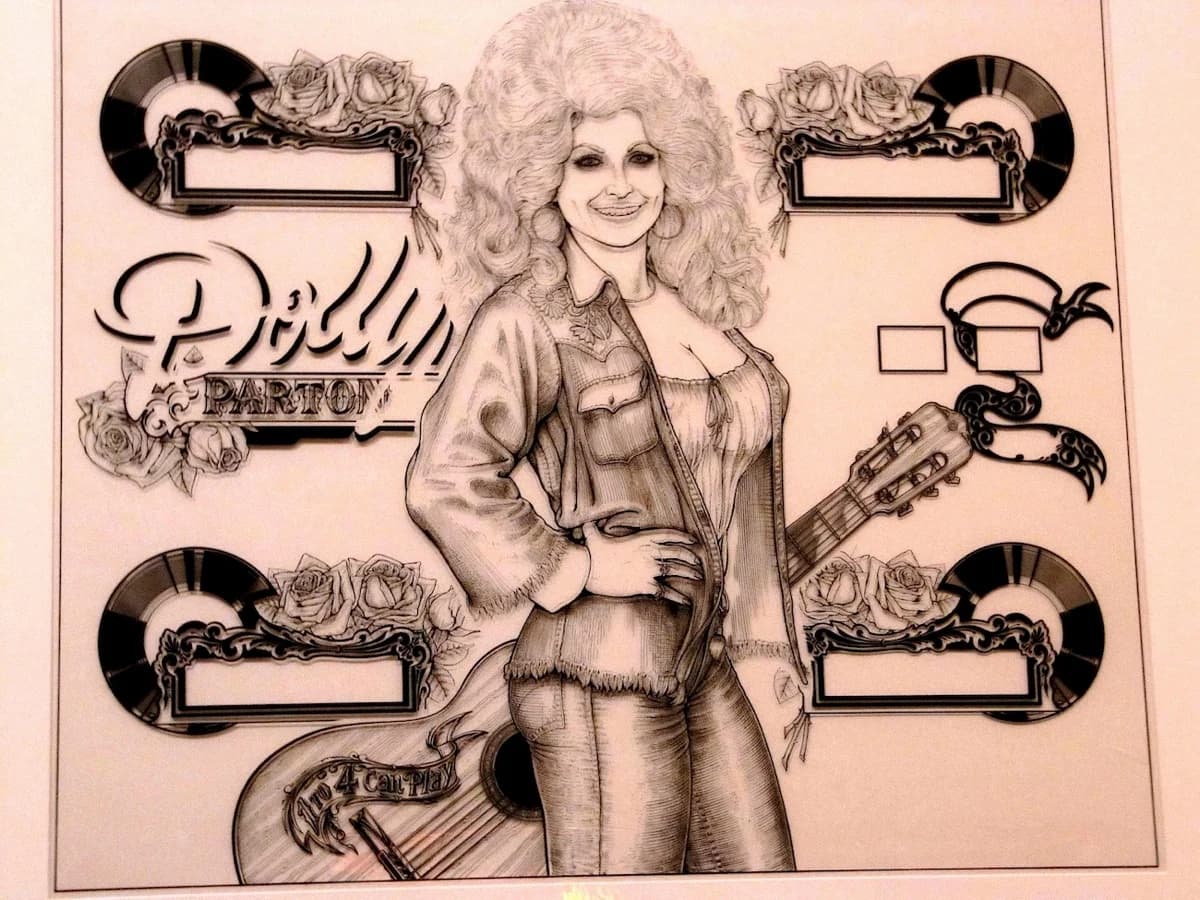
Parton won the Country Music Association’s most prestigious honor—Entertainer of the Year—in 1978. At the time, though, her style was evolving, with outfits including more glitz and glamour and music geared more toward pop charts than country. Parton’s publicists rejected the pinball artwork in late 1978 despite the approval from Parton herself, saying “that’s not who Dolly is” and requesting a more Las Vegas-inspired portrayal. This delayed the project deep into 1979, and threatened to scrap the theme altogether; as a compromise intended to show the two sides of Parton as a performer, the country theme was left untouched on the playfield, with an all-new backglass with a flowing yellow dress, sparkling stars, and butterflies in the place of the denim, guitars, and roses.
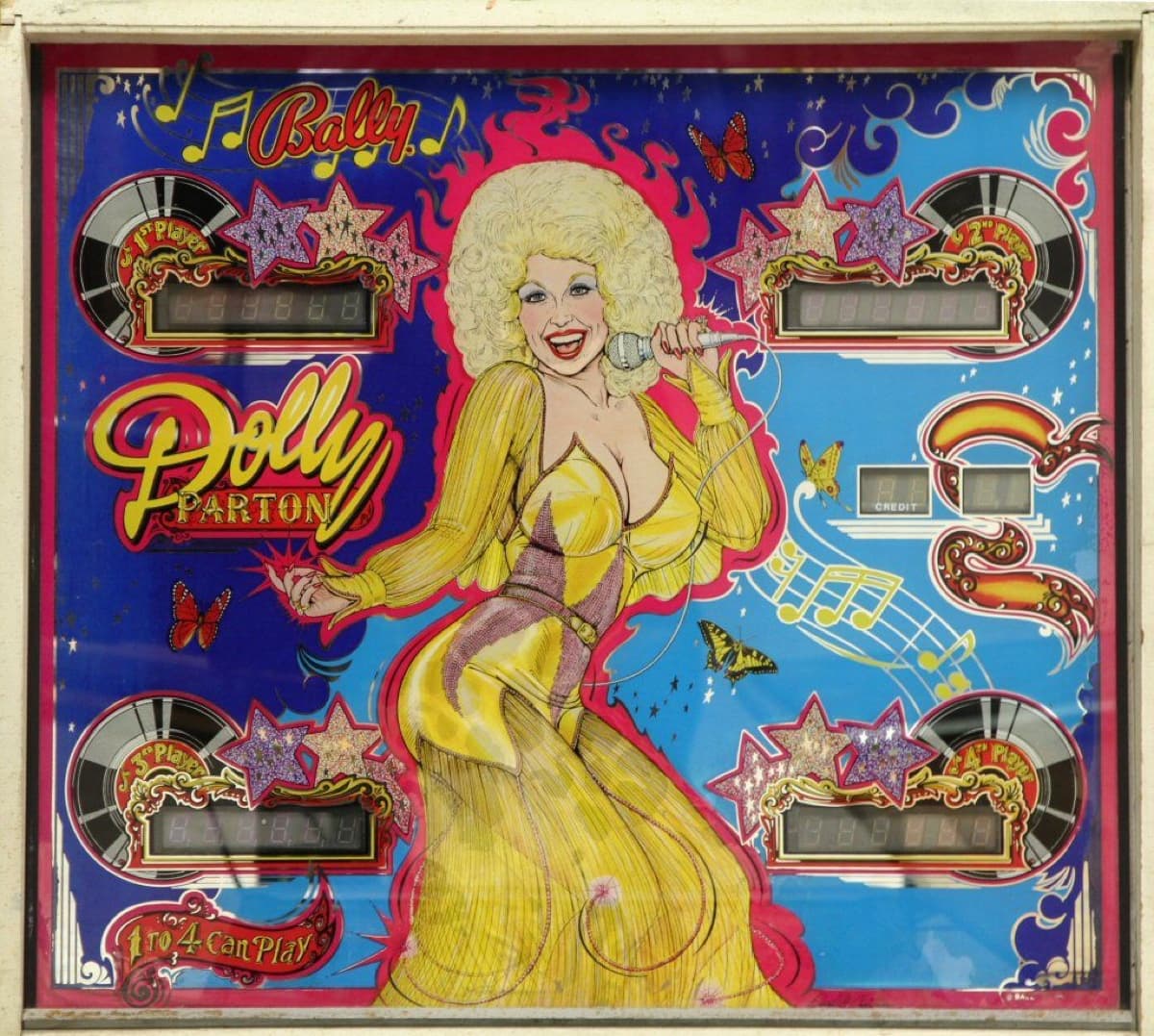
Dolly Parton pinball was first manufactured in November, 1979. Christensen and other Bally employees decried the backglass redesign, thinking that the move away from the country/western theme would make the game less appealing to younger male demographics, hurting sales. To some extent, they were right. Dolly Parton sold 7,350 copies, a number that is looked at today quite positively, but paled in comparison to games like Kiss and Harlem Globetrotters before it or Silverball Mania and Space Invaders after it, which reached well past 10,000 units with their runs.
While Dolly Parton’s association with pinball ended after the production of this Bally game in 1980, Parton continued to make the world a better place not only through her music, but through her philanthropy and legacy. Parton was known for championing education through her Imagination Library, public health through donations to the American Red Cross and COVID-19 vaccine research, wildfire relief, LGBTQ advocacy, and more. Dolly Parton passed away on August 25, 2026 at the age of 80, and we thank her for all she has done for entertainment and society.
An Overview of the Game
Dolly Parton pinball holds up in its own right, but is often seen as somewhat mediocre compared to other smash hits from Bally, Williams, and Stern Electronics from 1979 and 1980. The playfield itself bears quite a few similarities to Harlem Globetrotters, which appears in tournaments quite a bit more often than Dolly does.
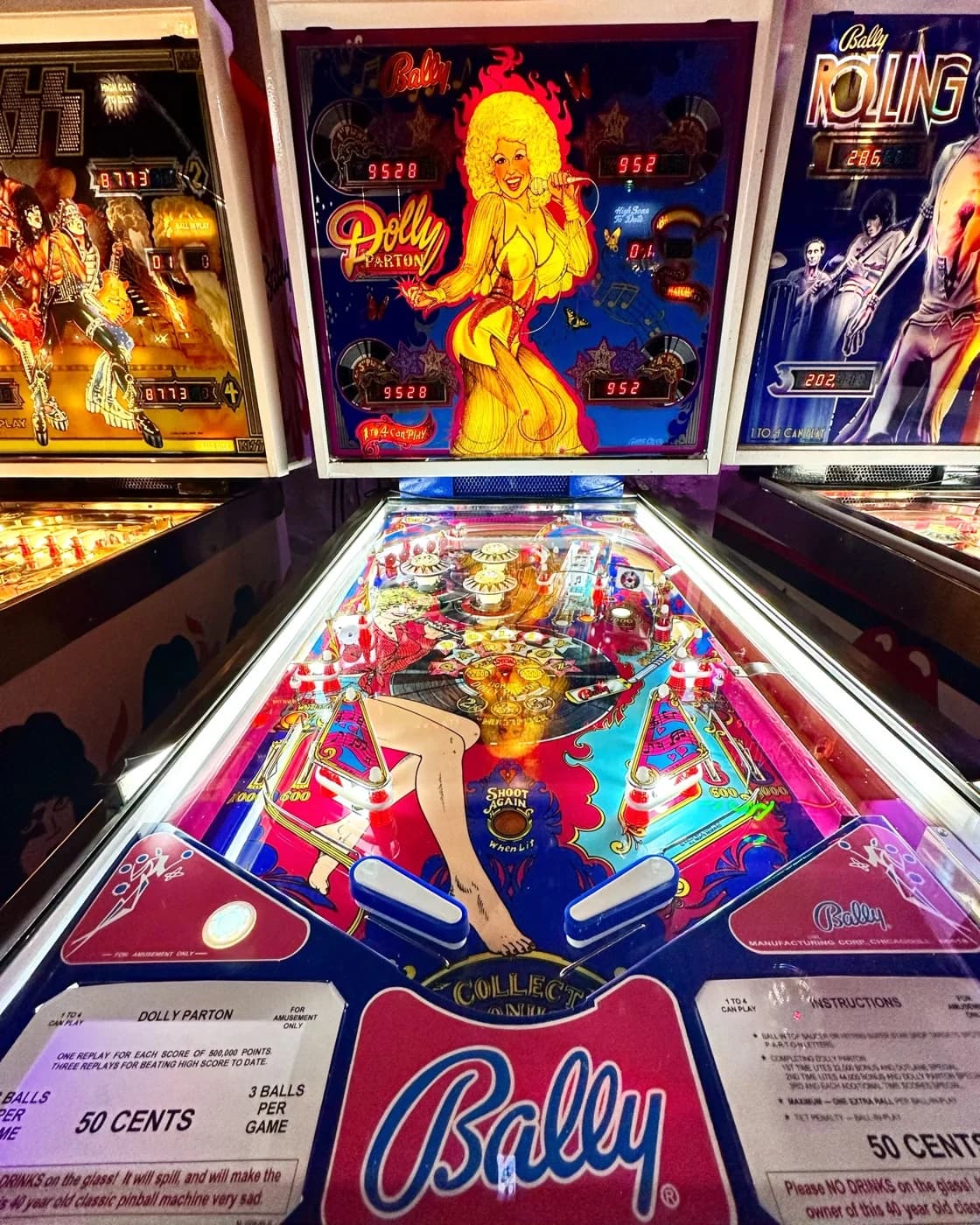
The main goal of Dolly Parton is to spell Dolly Parton. Unlike many games of the era, the ways to do this are surprisingly limited. Letters in Dolly can only be earned from the upper left standup targets, which cannot be shot directly; you have to rely on ricochets off of walls or the pop bumpers to collect them. These targets score 400 points each, or 1,000 each if Dolly has been completed at least once. Letters in Parton can always be earned from the top saucer one at a time; this saucer scores 500 points, or 5,000 if Parton has been completed at least once. A game setting allows Parton letters to be spotted by the inline drop targets, similar to Globe or Paragon letters on Harlem Globetrotters or Paragon.
The first target in the set of inline drop targets on the right lights the spinner on the right orbit for 1,000 points per spin instead of 100, which is by far the most lucrative scoring piece outside of the end-of-ball bonus. The other three drop targets award 2x, 3x, and 5x bonus. The target behind the inline drops scores an extra ball the first time it is hit on a ball, Special the second time, and 20,000 points thereafter. These are tempting awards, but the angle of the inline drops lane means the return feed of any shot here often has a high risk of a center drain. In competition/novelty play, extra ball scores 25,000 points and all Specials score 50,000.
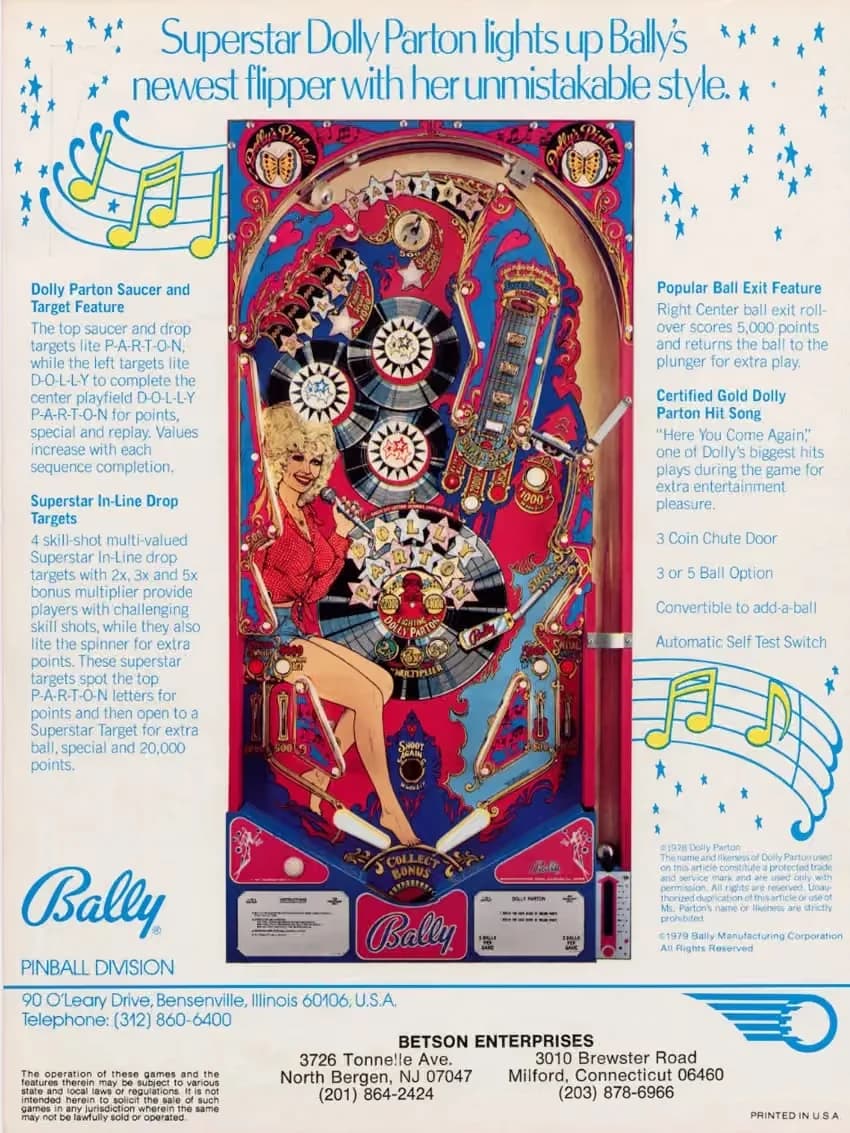
Earned letters in Dolly Parton each award 2,000 points in base bonus at the end of the ball. Completing Dolly Parton once lights a 22,000-point super bonus and lights one in lane to score 5,000 points instead of 600, alternating based on bumpers and slingshots. Completing Dolly Parton a second time upgrades the super bonus to be worth 44,000 points and lights one out lane for Special, alternating the same way. Each completion of Dolly Parton starting with the 3rd scores an instant Special. All Dolly Parton letters and the awards associated with completing Dolly Parton carry from ball to ball, but bonus multipliers never do.
Pop bumpers always score 100. There is a free ball lane on the right that scores 5,000 points and puts the ball back into the shooter lane for a replunge.
Basic strategy on Dolly Parton is to light the spinner immediately, then keep finding a way to get the ball under control on the left flipper to shoot the spinner, getting the ball back to the top of the table for more Dolly and Parton letters. Use nudging or hope for good luck to get lots of Dolly letters from the bumpers or land in the top saucer more than once during a single trip to the top of the table. Get as many bonus multipliers from the inline drops as you are comfortable with along the way given how safe or dangerous the return feed is, but make Dolly Parton a light spinner-rip spinner game first and foremost, as it’s the safest way to build big points.
Sources: the Loyal Jones Appalachian Center at Berea College’s exhibit on the Dolly Parton pinball artwork; and the Internet Pinball Database.

Comments