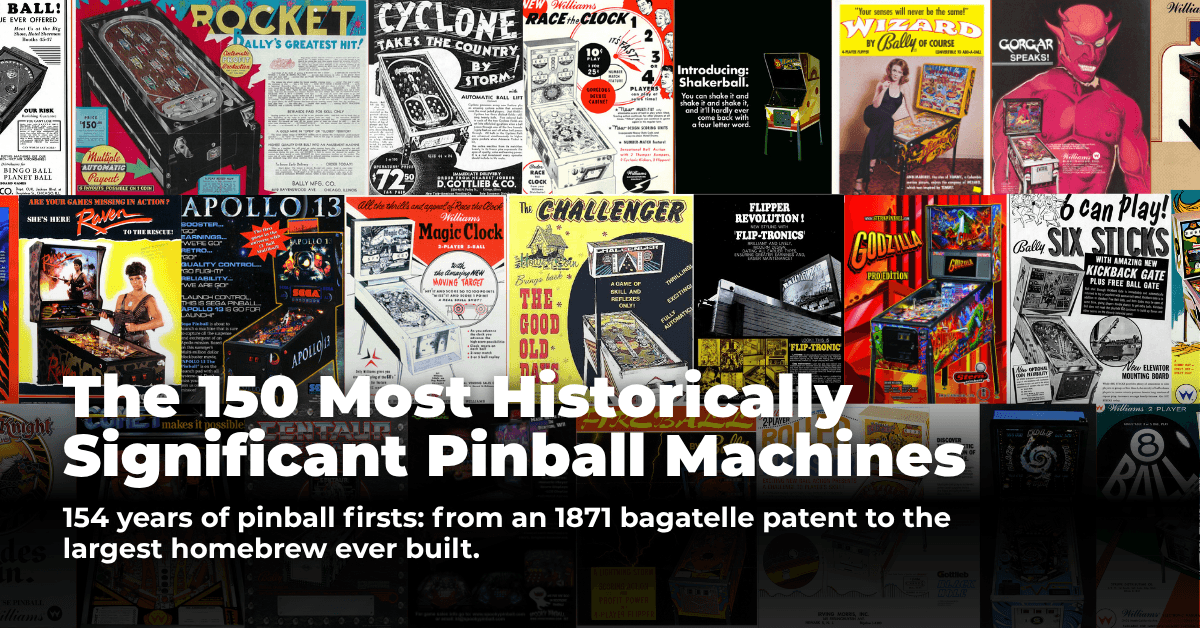
For over a hundred years the game of pinball has been delighting and fascinating generations of pinball players, enthusiasts and collectors. Being an intrinsically physical form of entertainment, it has undergone many technological innovations. From the first simple analog tabletop game to an extraordinarily complicated hybrid of circuitry and mechanical engineering, pinball has evolved leaps and bounds whilst still maintaining its nostalgic charm. I have carefully researched and compiled the following list of the 150 most historically significant pinball machines throughout the ever-developing saga of this wonderful game that captures our attention and brings us together in the spirit of social competition.
Pure Mechanical
Parlour Bagatelle Table (1871)
Redgrave & Wilson — Montague Redgrave
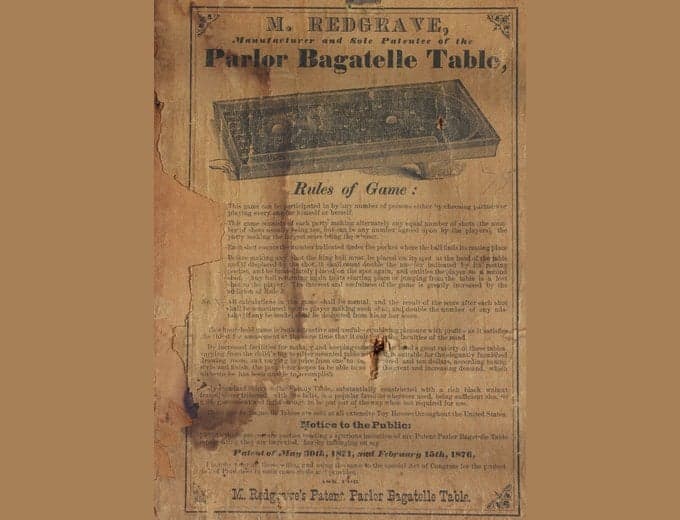
First patent for a spring plunger and an inclined playfield.
Baffle Ball (1931)
D. Gottlieb & Company — David Gottlieb
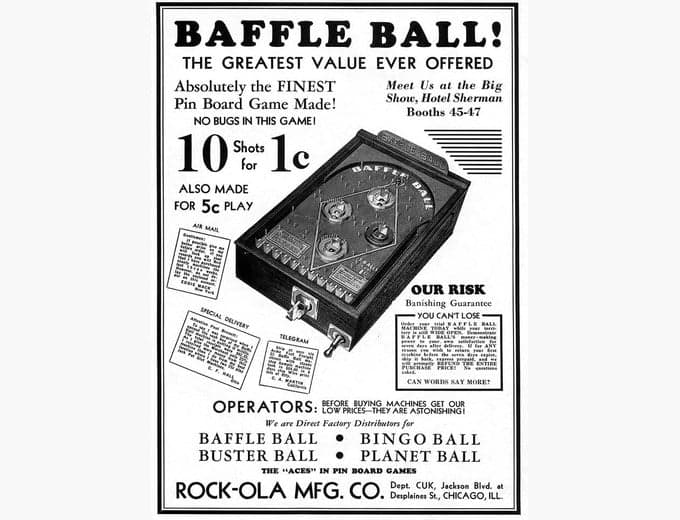
First mass-produced coin-operated pinball. First game to sell over 50,000 units.
Whiffle (1931)
Automatic Industries, Incorporated — Arthur L. Paulin and Earl W. Froom
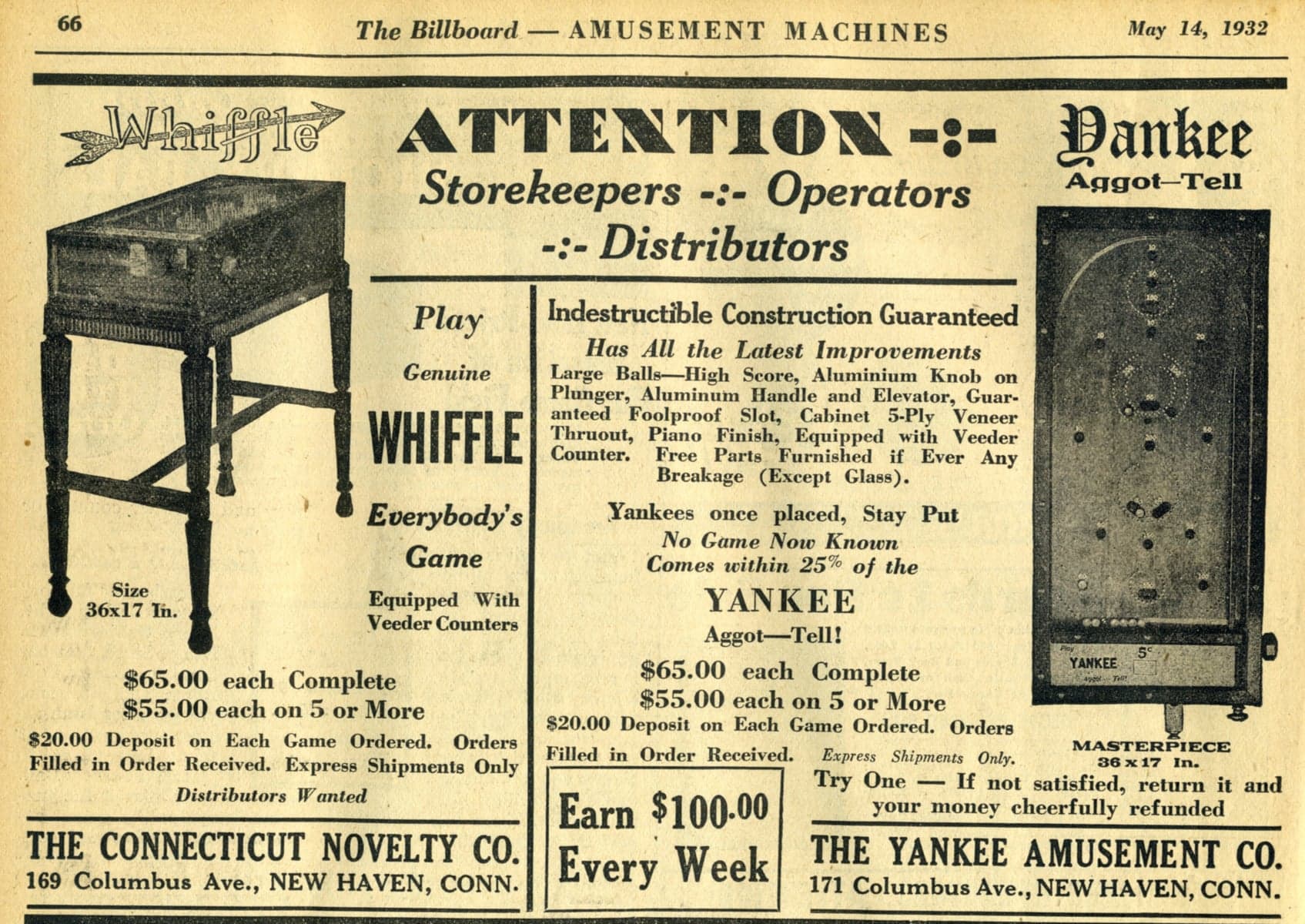
First commercial pinball machine with a coin slot.
Ballyhoo (1932)
Bally Manufacturing Corporation — Oliver Van Tuyl and Oscar Bloom
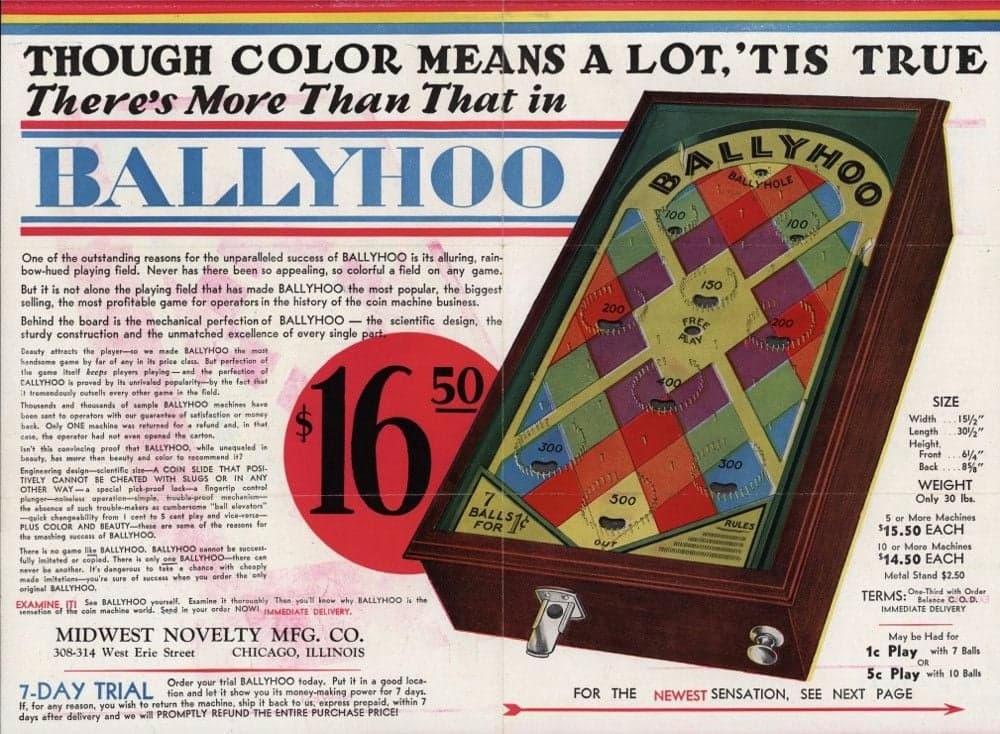
First game by Bally Manufacturing. sold 50,000 units. Design incorrectly attributed to Bally's owner, Raymond Maloney.
Double Shuffle (1932)
Ad-Lee Company — Charles Gravatt
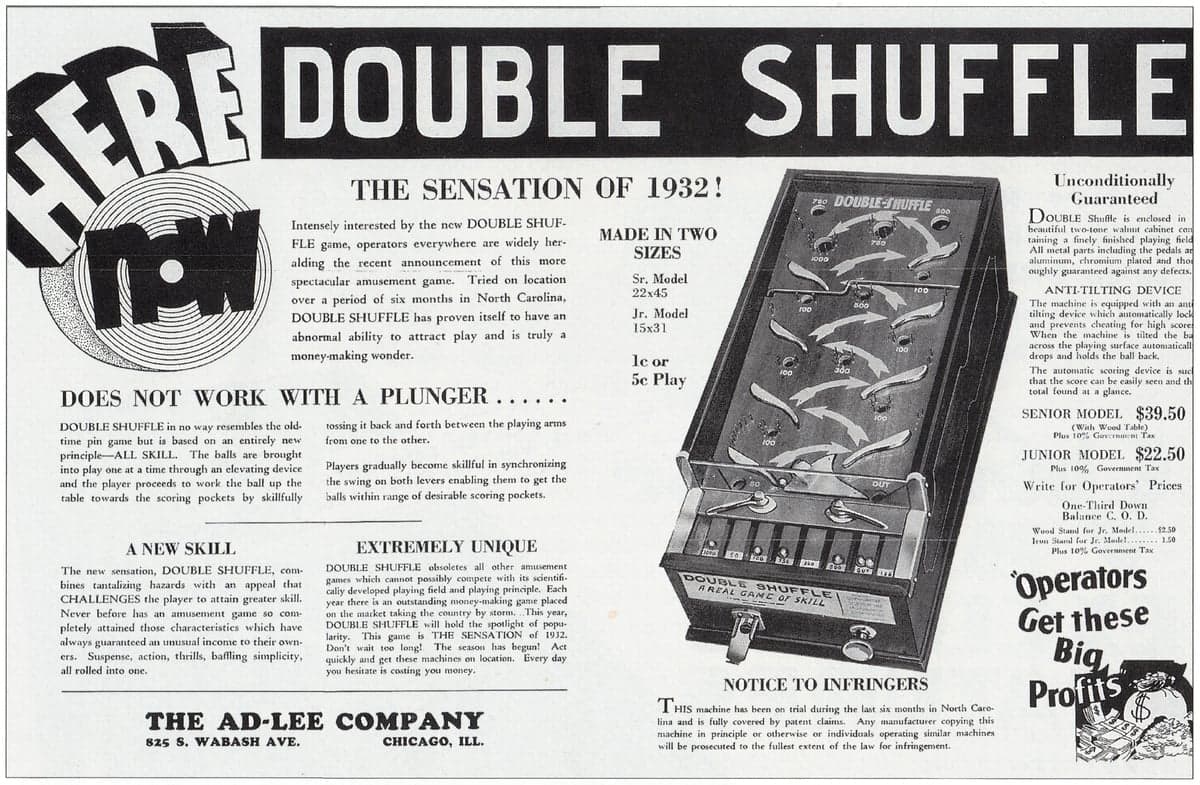
First game to feature manually activated playing arms that were used as "flippers".
Jig-alo Electro-Ball (1932)
Electro-Ball Company, Incorporated
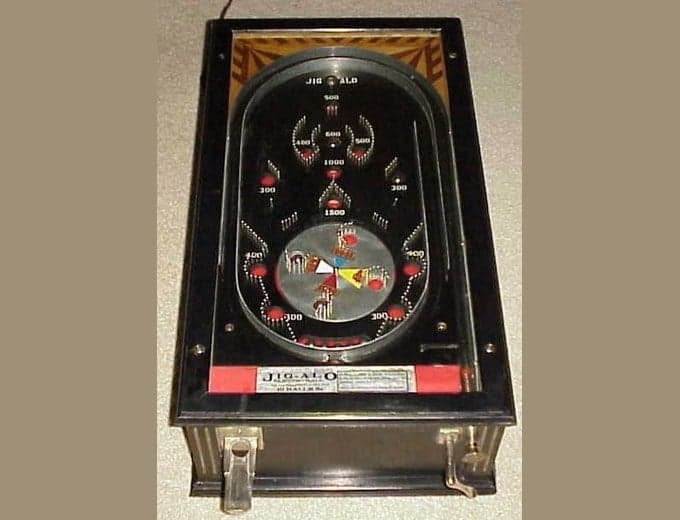
First pinball machine to feature a spinning disc.
Official (1932)
Mills Novelty Company
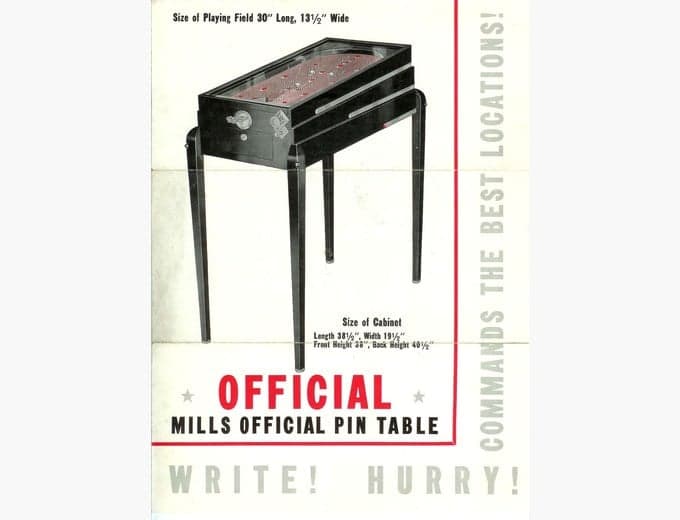
First pinball machine to be advertised as a "Pin Ball" or "Pin Table".
Whirls Fair (1933)
K & F Specialty Company
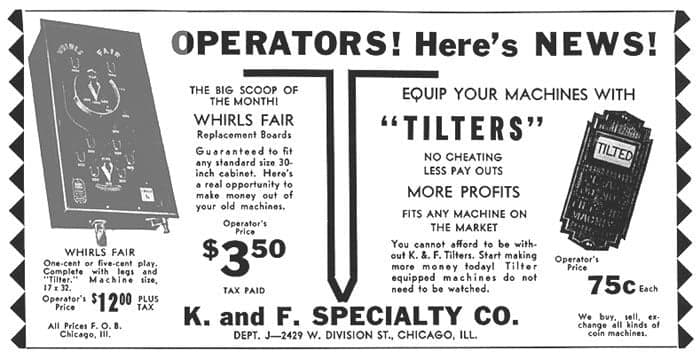
The K. & F. Tilt Indicator was the first patented Anti-Tilting device.
Advance (1933)
Automatic Amusements Company — Harry Williams
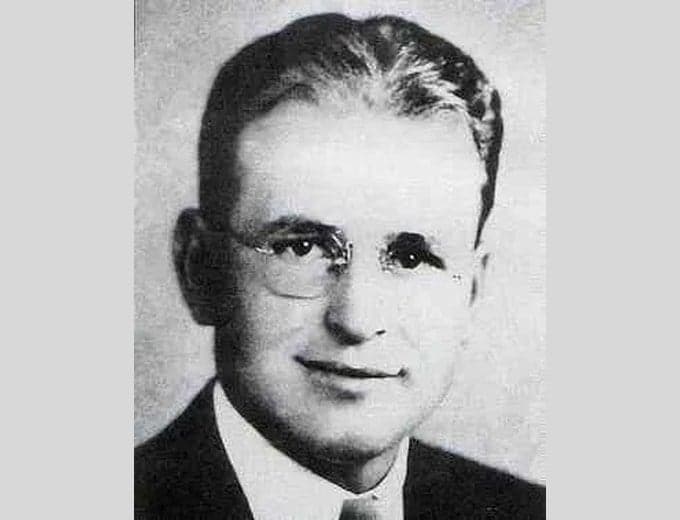
First complete game Harry Williams designed and the first to feature his now-famous "stool pigeon" tilt mechanism which featured a ball resting on top of a post, inside a metal cup, mounted within the player's view. If the game was moved forcefully enough to knock the ball off the post during play, then the score was considered invalid.
Airway (1933)
Bally Manufacturing Corporation — Herbert G. Breitenstein
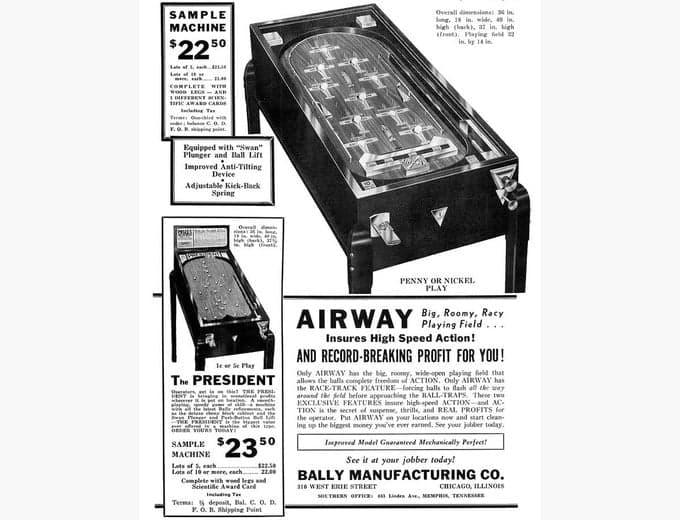
First pin game with a (non-electric) score totalizer.
The World's Fair Jigsaw (1933)
Rock-ola Manufacturing Corporation — David Rockola
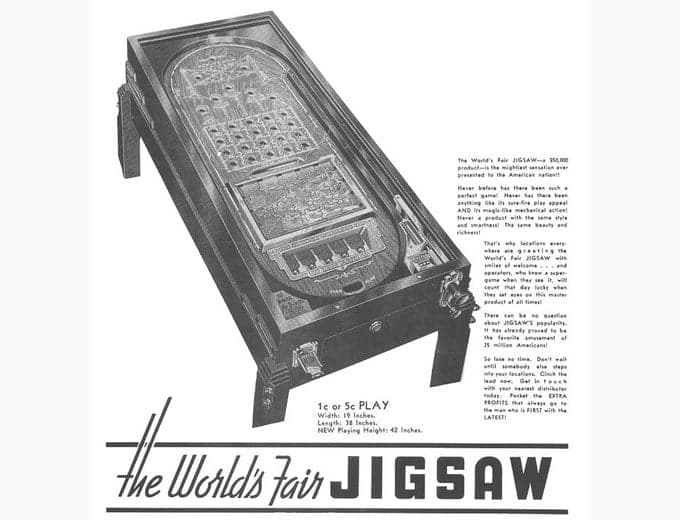
Record holder for the highest production pinball machine of all time. Approximately 70,000 units produced.
Electro-Mechanical
Contact (1933)
Pacific Amusement Manufacturing Company — Harry Williams
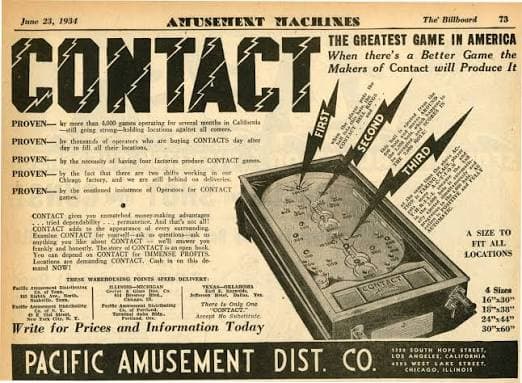
First electro-mechanical pinball machine. This game used a dry cell battery-powered solenoid to kick the ball back out of the scoring holes, along with a buzzer for scoring features.
Jack and Jill (1933)
Bally Manufacturing Corporation
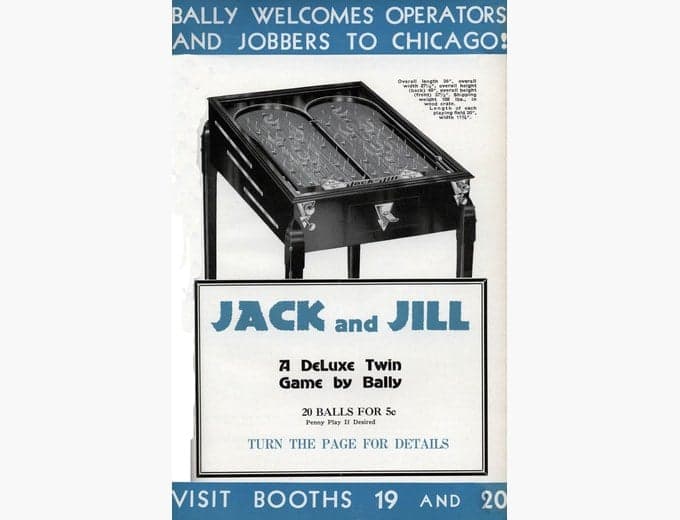
First dual-playfield setup encouraged head-to-head competition on the same machine.
Rocket (1933)
Bally Manufacturing Corporation — Herbert G. Breitenstein
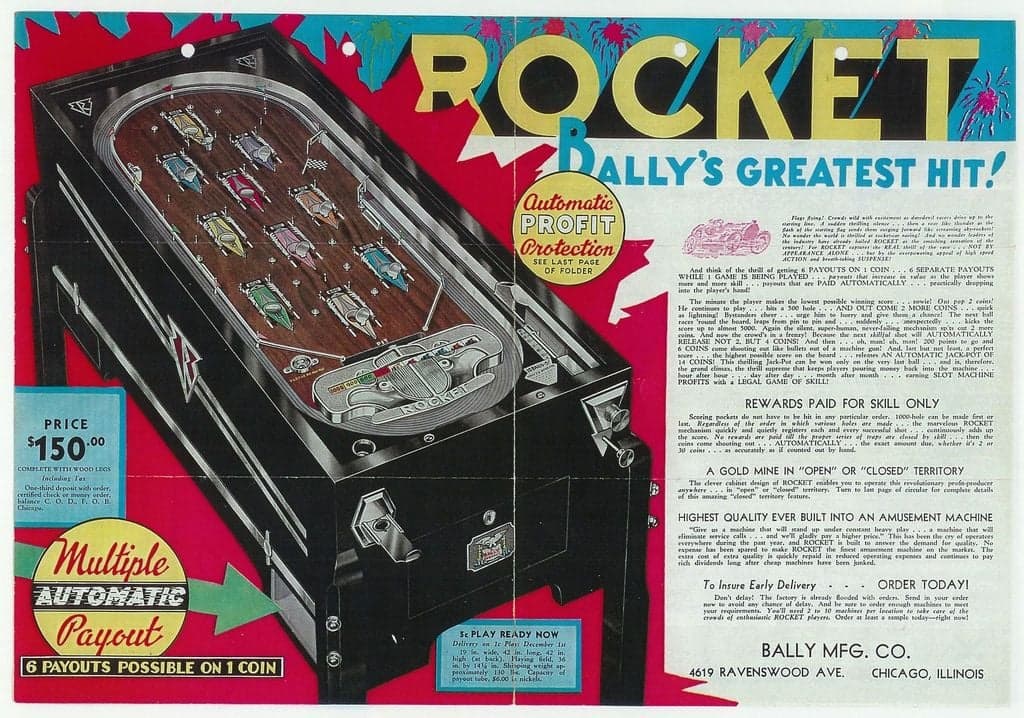
First automatic payout machine. First electronic score totalizer.
American Beauty (1934)
Daval Manufacturing Company — Ralph Fletcher
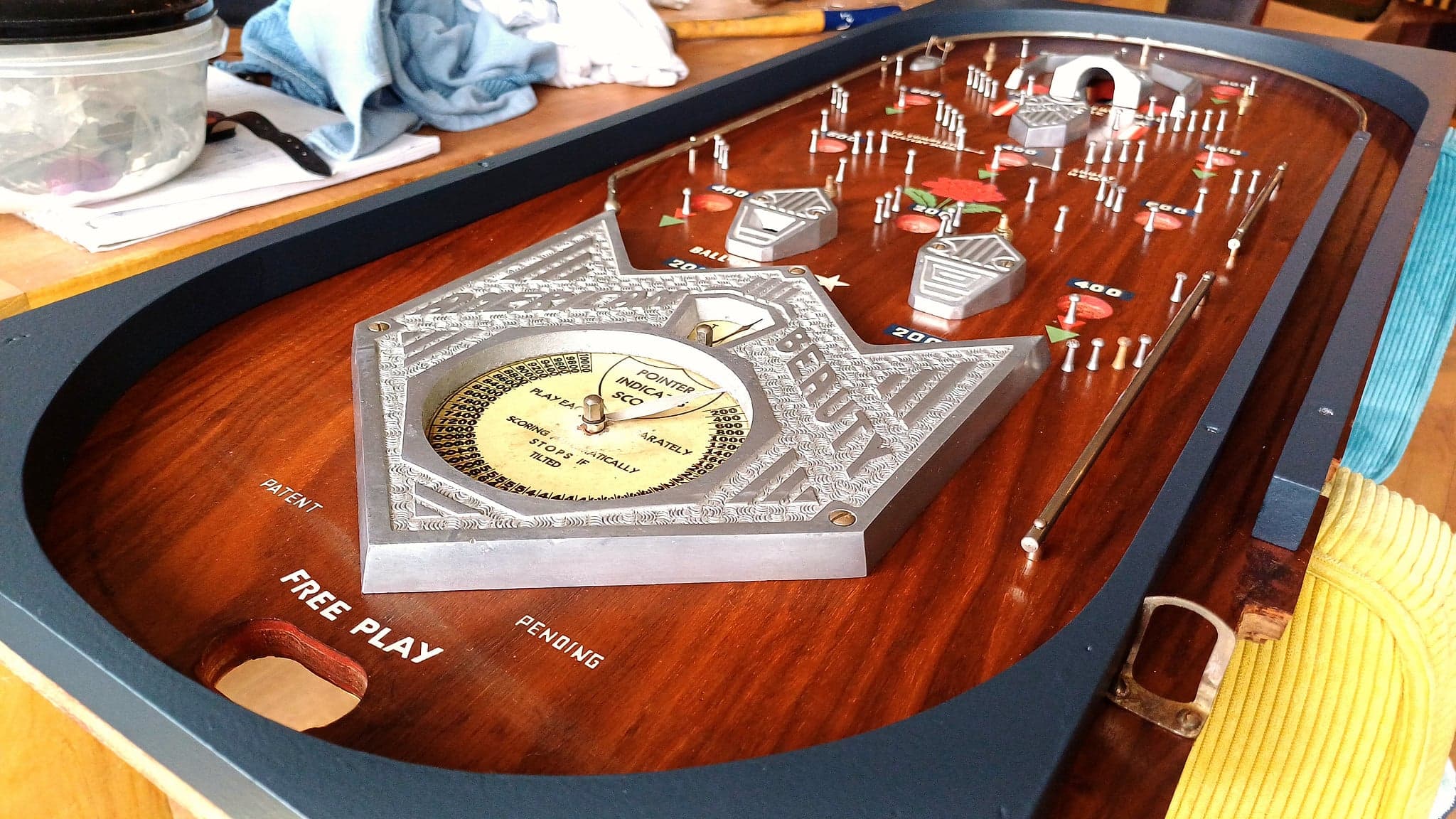
First pinball machine with a "catapult" mech that would launch the ball up the playfield. First game to feature a plumb bob tilt mechanism within the cabinet. One of the earliest games to count how many balls had been played.
Live Power (1934)
Dudley-Clark Company
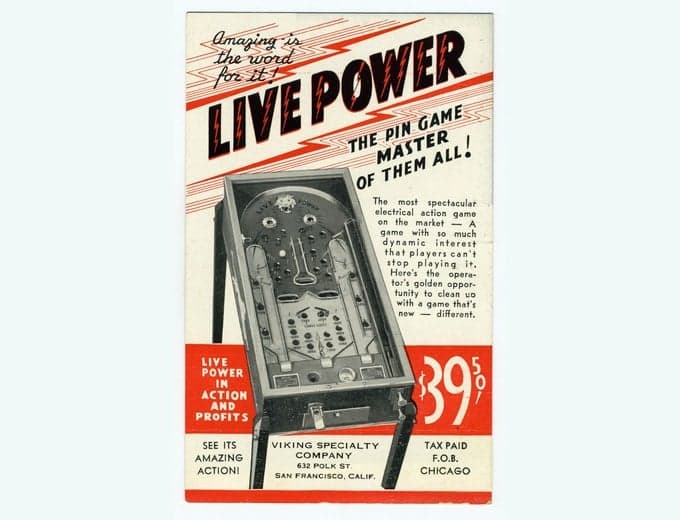
First flipperless electro-mechanical game with multiball featuring "Accumulator Balls".
Register (1934)
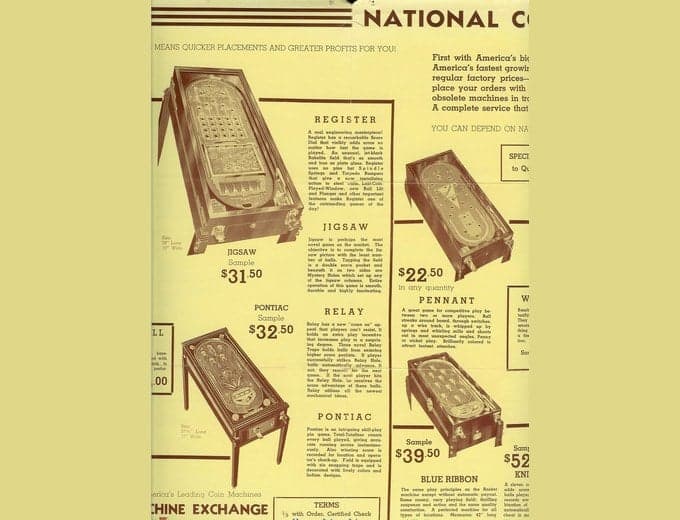
First pinball with a progressive score counter that automatically tallied up a player's total score.
Subway (1934)
Genco Manufacturing Company — Harvey Heiss
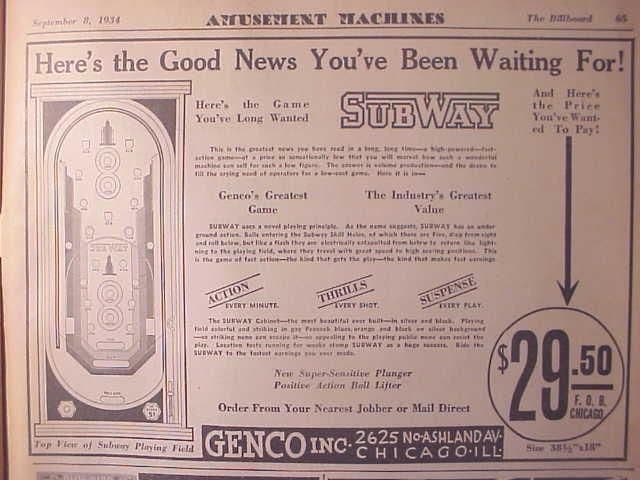
First game to feature a subway for the ball to travel below the playfield from one side of the game to the other.
Big Game (1935)
Rock-ola Manufacturing Corporation
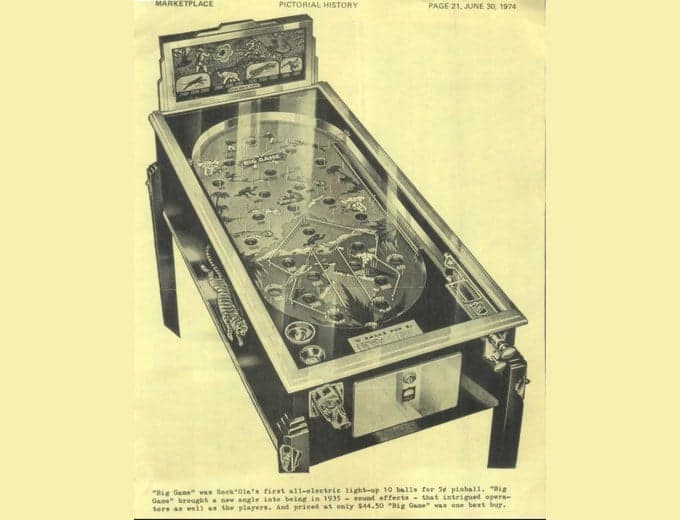
First game with "synthesized" sound. First game with a solenoid actuated "knocker".
Criss Cross 'A' Lite (1935)
Genco Manufacturing Company — Harvey Heiss
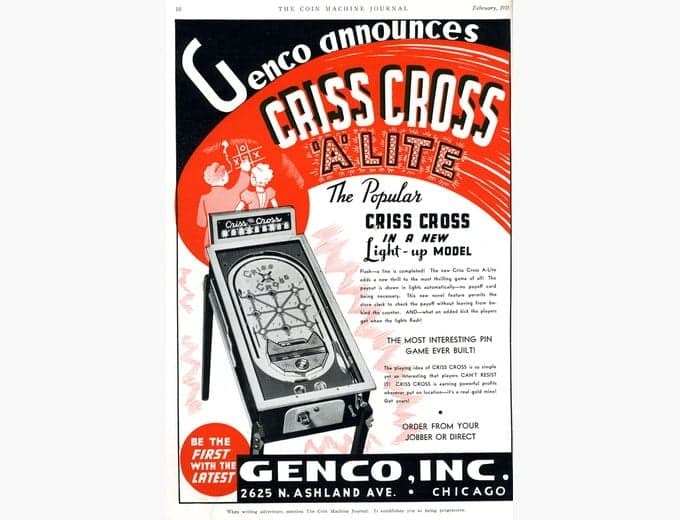
First illuminated backglass known in the early days as a "Marquee".
Cyclone (1935)
D. Gottlieb & Company — Jack Firestone
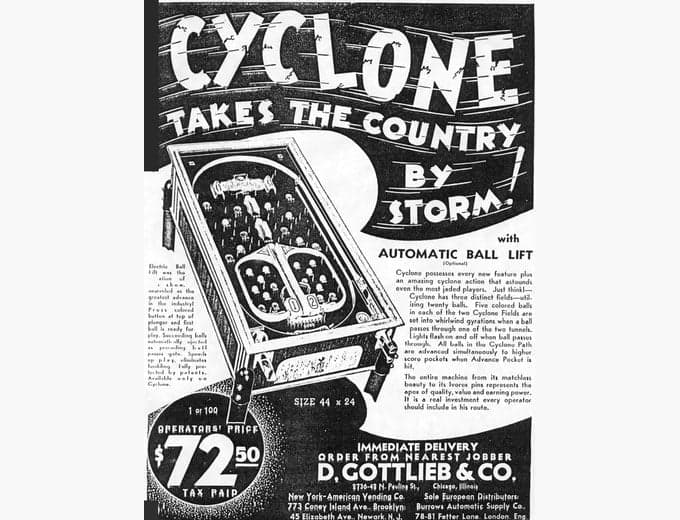
First game with an automatic electric ball lift that served the next ball to the shooter lane. This was an optional feature which came with an additional cost. First game with flashing playfield lights.
Neontact (1935)
Pacific Amusement Manufacturing Company
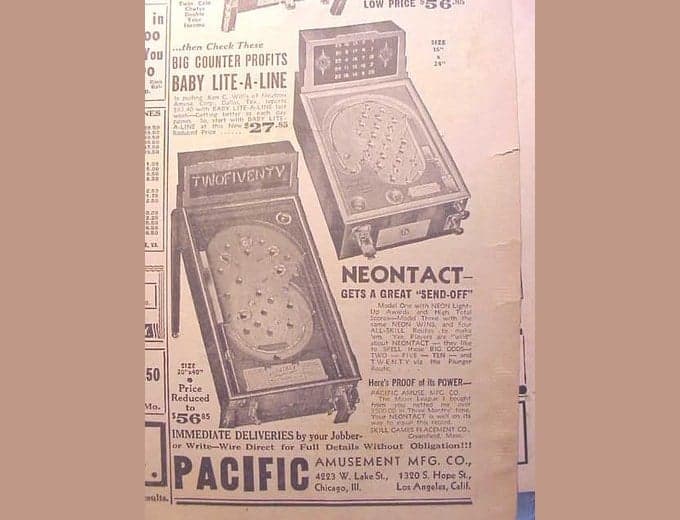
First backglass illuminated with neon light.
Spit Fire (1935)
Genco Manufacturing Company — Harvey Heiss
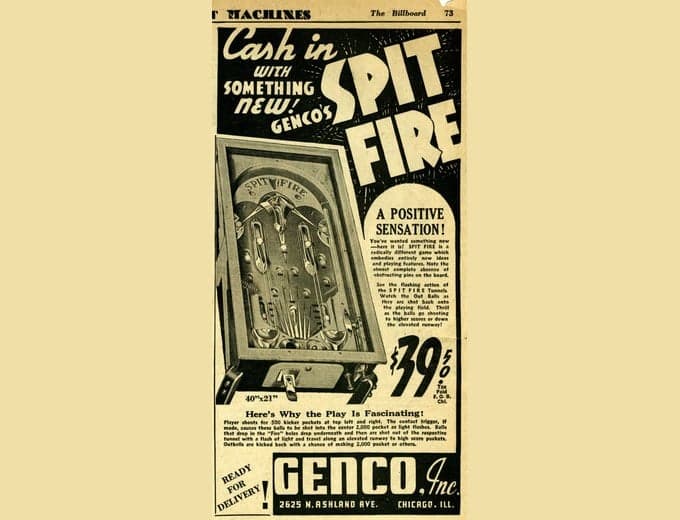
First example of an "elevated runway" which was a wireform track that guided the ball similar to a modern habitrail.
Zoom (1935)
Stoner Manufacturing Corporation
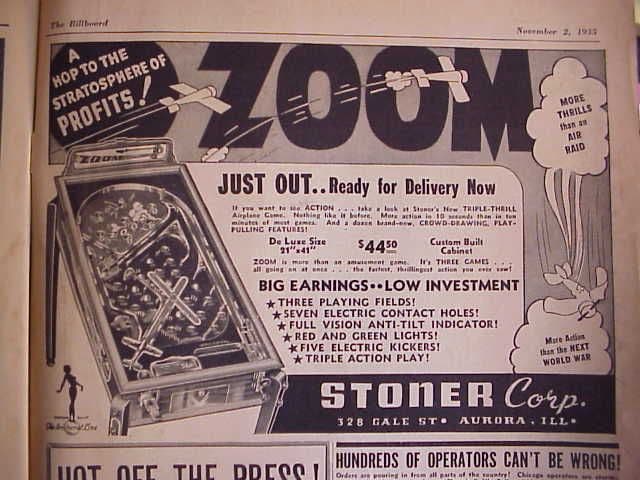
First sculpted 3D toy on the playfield.
Bolo (1936)
Pacent Novelty Manufacturing Company — W. Van Stoeser
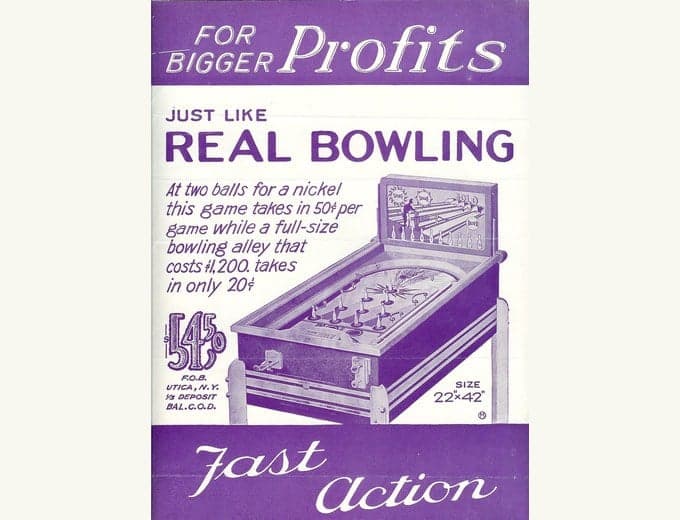
First game to feature bumper targets to electronically register score. (contrary to popular belief that Bally's Bumper was the first).
Bumper (1936)
Bally Manufacturing Corporation — Donald Hooker
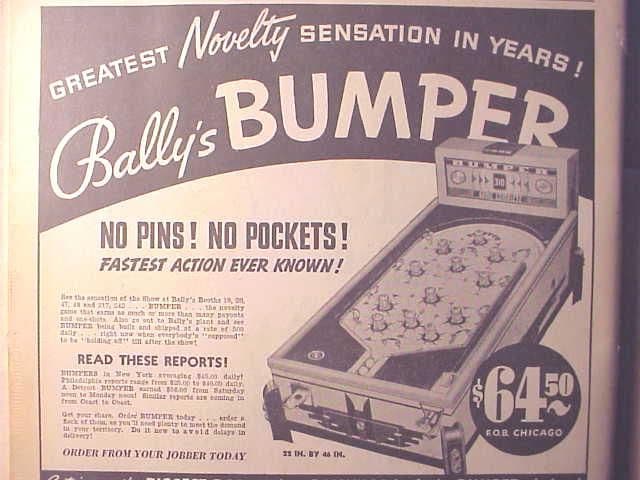
First electric spiral-wire/spring bumpers.
Archer (1937)
Genco Manufacturing Company — Harvey Heiss
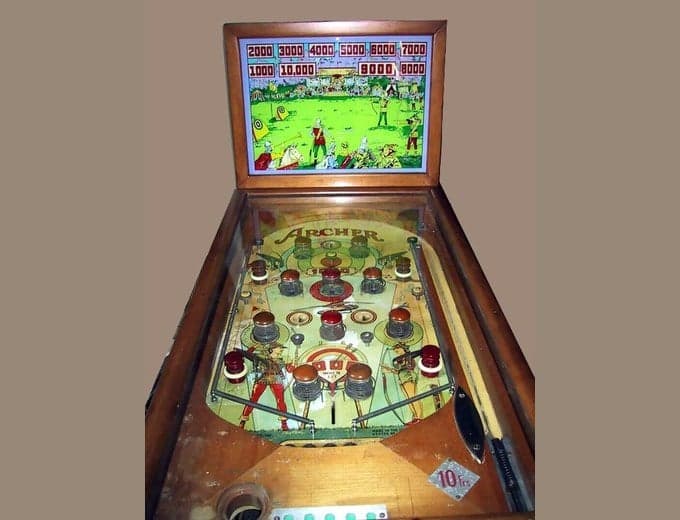
First game to prominently feature a woman on the playfield and backglass.
Confucius Say (1937)
Rotor Table Games Co, Incorporated
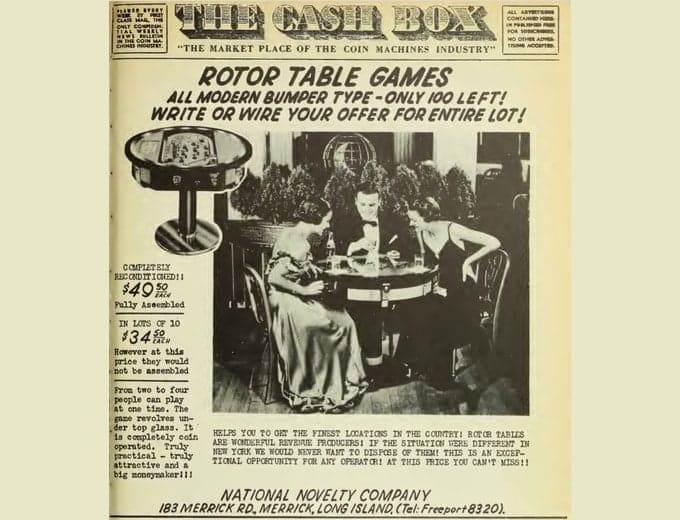
First cocktail table style pinball machine cabinet design with rotating playfield under the glass.
Dux (1937)
Chicago Coin Machine Manufacturing Company — Jerry Koci
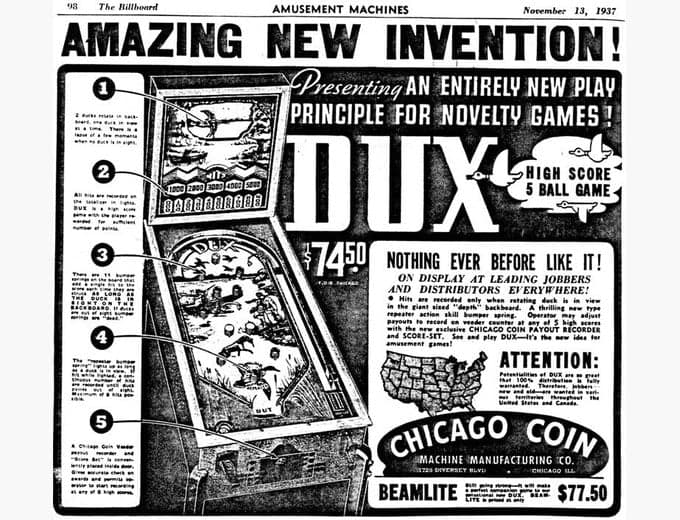
First game with a physically animated backbox element (AKA a "Backboard").
Lightning (1938)
Exhibit Supply Company — Harry Williams
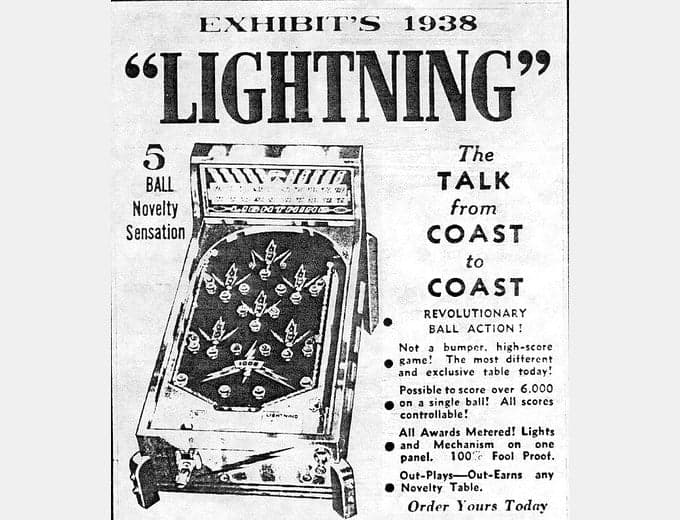
First game with electromagnets under the playfield that influence the path of the ball. Seven electromagnets were placed just beneath the playfield give action to the ball as it travels down the playfield. The electromagnets stayed on continuously and never pulsed off.
Nippy (1939)
Chicago Coin Machine Manufacturing Company
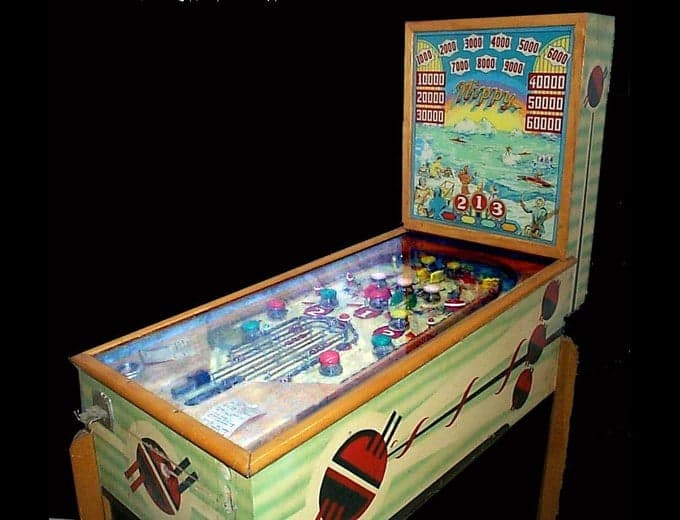
First game with end-of-ball bonus ladder scoring.
Humpty Dumpty (1947)
D. Gottlieb & Company — Harry Mabs
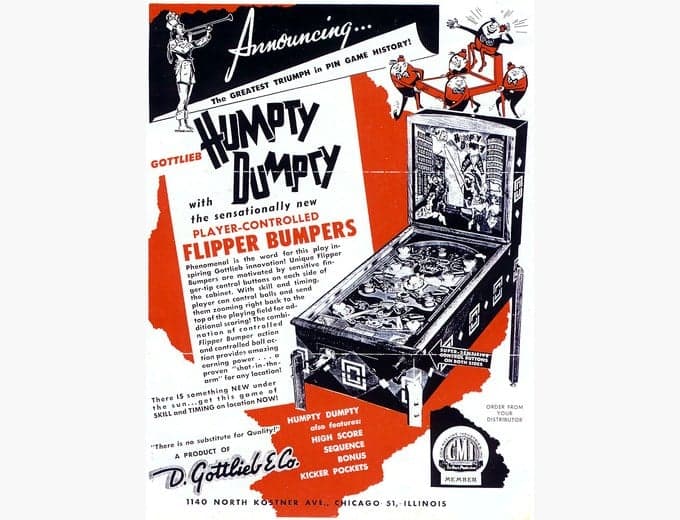
First game to feature electro-mechanical flippers called "Flipper Bumpers".
Saratoga (1948)
Williams Manufacturing Company — Harry Williams
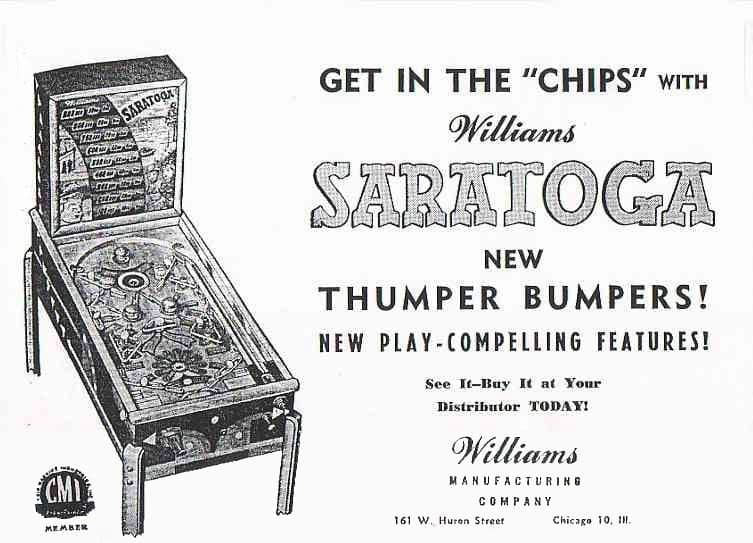
First pinball machine to feature an active bumper which used a metal ring to repel the ball, identified in the manufacturer's flyer as a “Thumper Bumpers”.
Triple Action (1948)
Genco Manufacturing Company — Steve Kordek
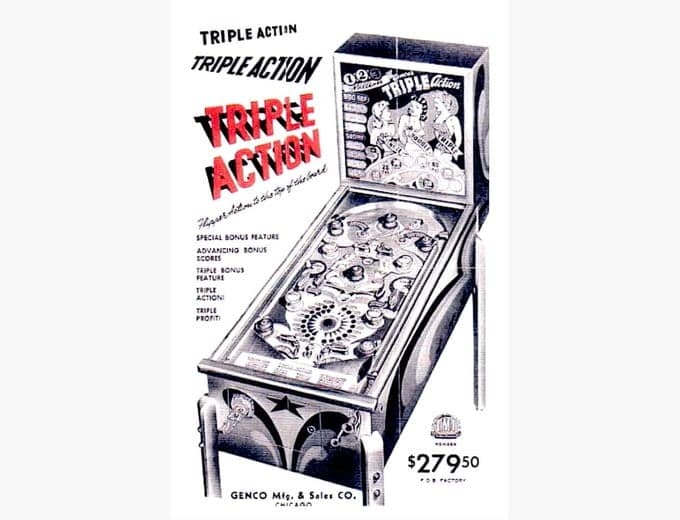
First game to have 2 flippers at the bottom of the playfield on either side of the centre drain (flipping outwards).
St. Louis (1949)
Williams Manufacturing Company — Harry Williams
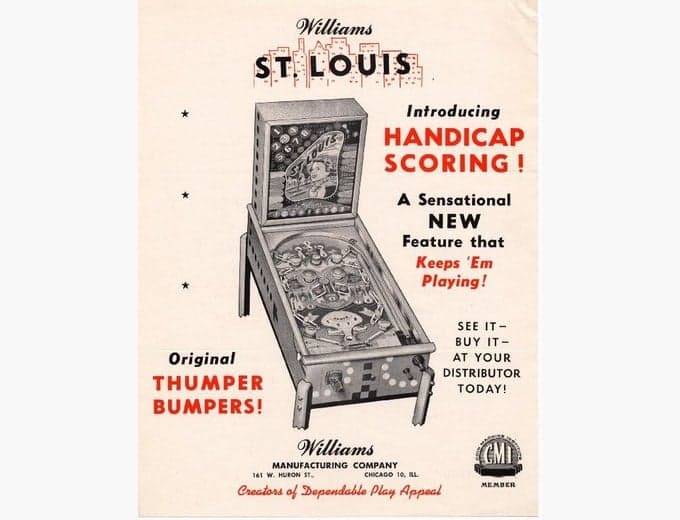
Replay adjustment system marketed as "Handicap Scoring" which is an operator adjustment to progressively increase or decrease the score threshold for a replay based on previous game scores. What later would be known as "auto-percentaging" in the solid state era.
Miss Annabelle (1950)
D. Gottlieb & Company — Wayne Neyens
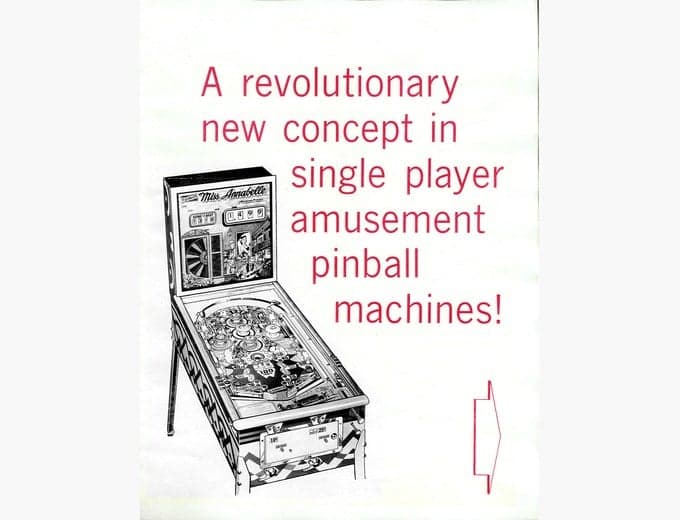
First game with a grand champion "Score To Beat" window allowing the operator to place a card behind the backglass showing a suggested high score visible to the player.
Spot Bowler (1950)
D. Gottlieb & Company — Wayne Neyens
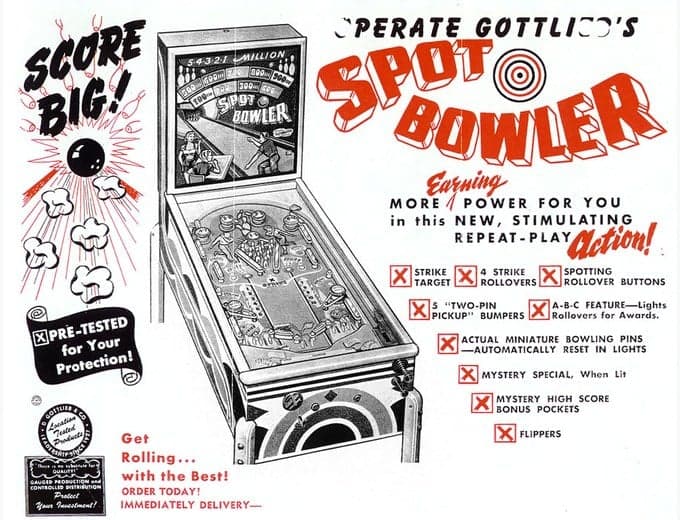
First pinball game to have two flippers facing inward towards each other in the modern orientation at the bottom of the playfield.
The 4 Horsemen (1950)
D. Gottlieb & Company — Wayne Neyens
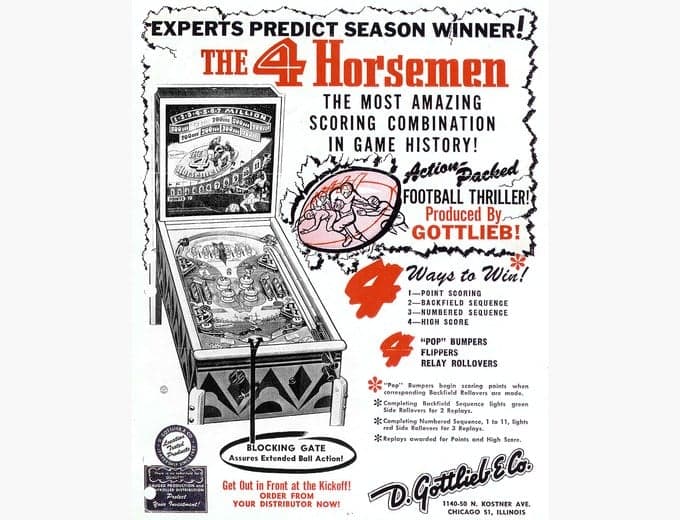
First Blocking Gate/Safety Gate that allowed the player to have a minimum score before they drained. Earliest example of a ball saving device in pinball.
A-B-C (1951)
United Manufacturing — Lyn Durant
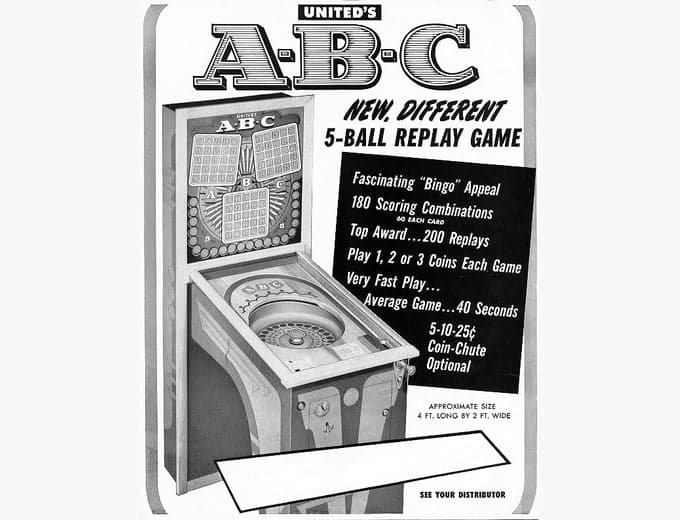
First BINGO style pinball machine.
Bright Lights (1951)
Bally Manufacturing Corporation — Don Hooker
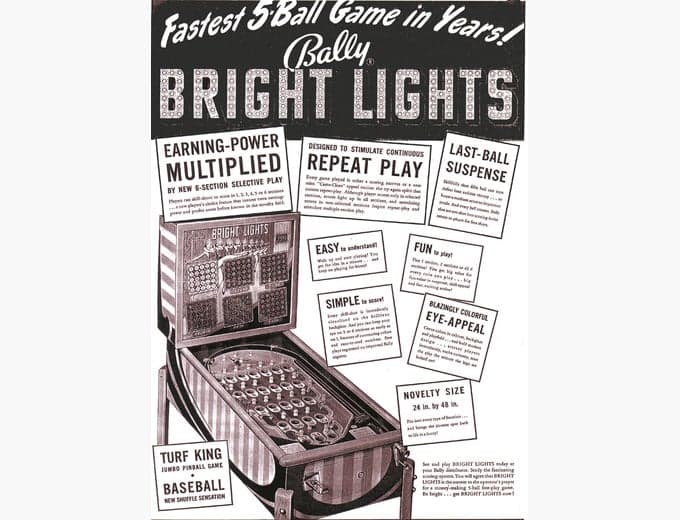
First successful BINGO standard style pinball machine by Bally.
Double Action (1951)
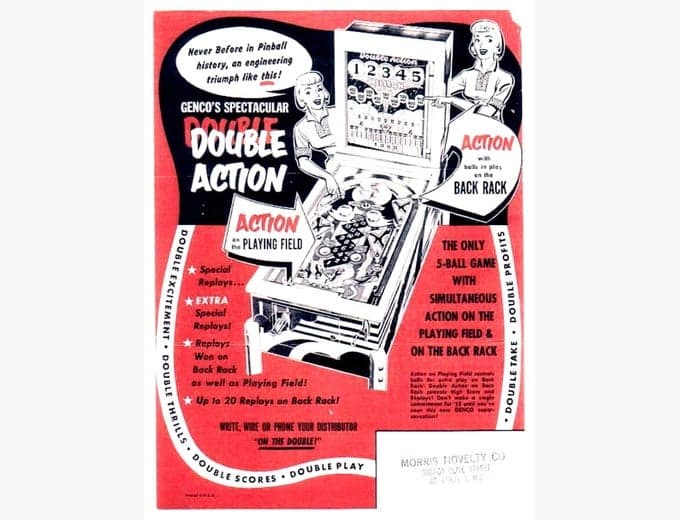
First pinball machine with a playable, interactive backbox AKA "Back Rack".
Horsefeathers (1952)
Williams Manufacturing Company — Harry Williams
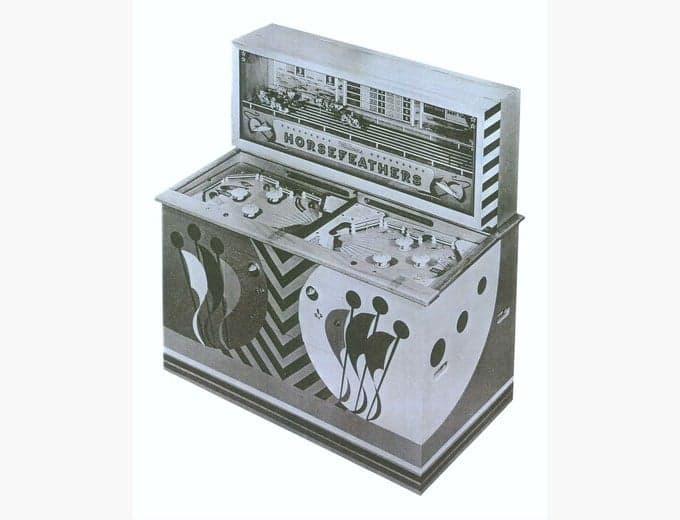
First dedicated 2-player pinball machine by Williams.
Army Navy (1953)
Williams Manufacturing Company — Harry Williams
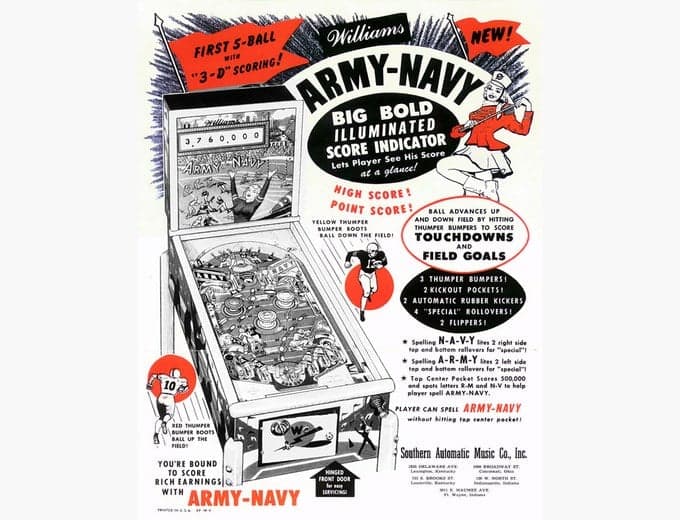
First game from Williams to use score reel totalizers, making it the industry standard.
Nine Sisters (1953)
Williams Manufacturing Company — Harry Williams
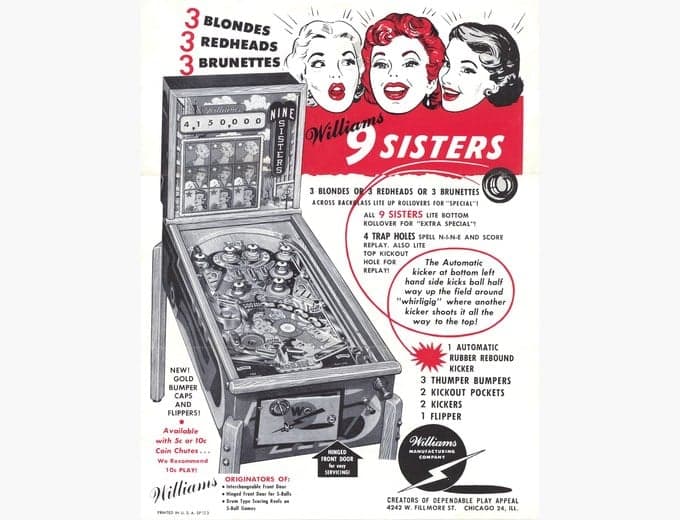
First pinball game to have a ramp, advertised as a "Whirligig".
Silver Skates (1953)
Williams Manufacturing Company — Harry Williams
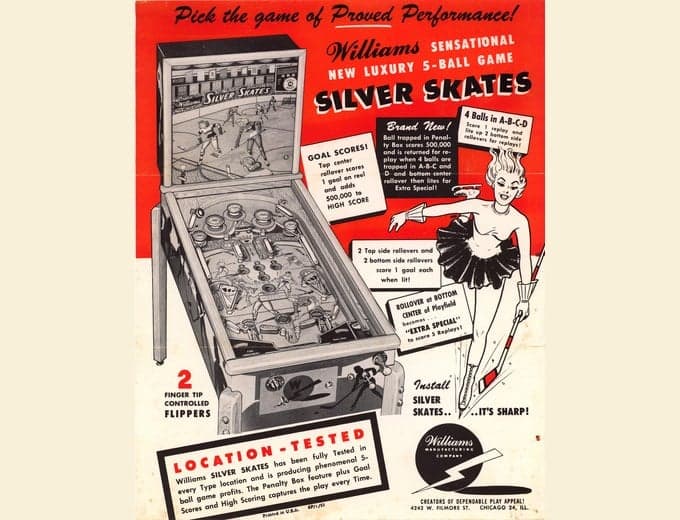
First automatic flippers called "Automatic Rebound Flippers".
Super Jumbo (1954)
D. Gottlieb & Company — Wayne Neyens
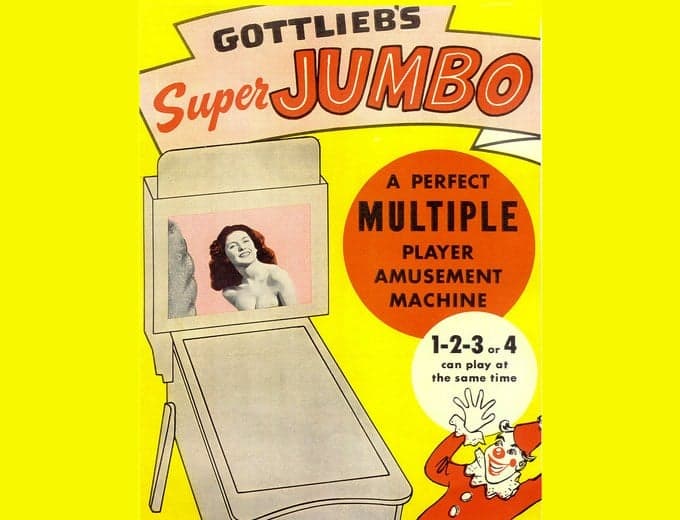
The industry's first true 4-player game and the first Gottlieb game to use rotating scoring drums rather than bulb lighted scoring on the backglass. First instance of the famous Gottlieb marketing slogan "It's More Fun to Compete!"
Duette (1955)
D. Gottlieb & Company — Wayne Neyens
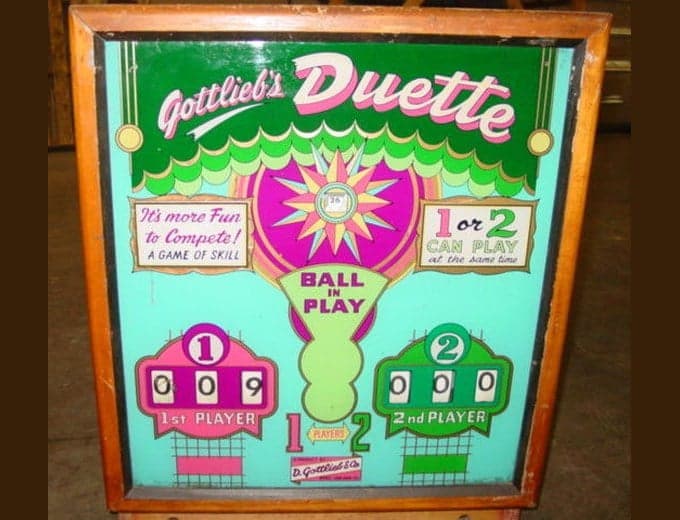
First dedicated 2-player pinball machine by Gottlieb.
Race the Clock (1955)
Williams Manufacturing Company — Harry Williams
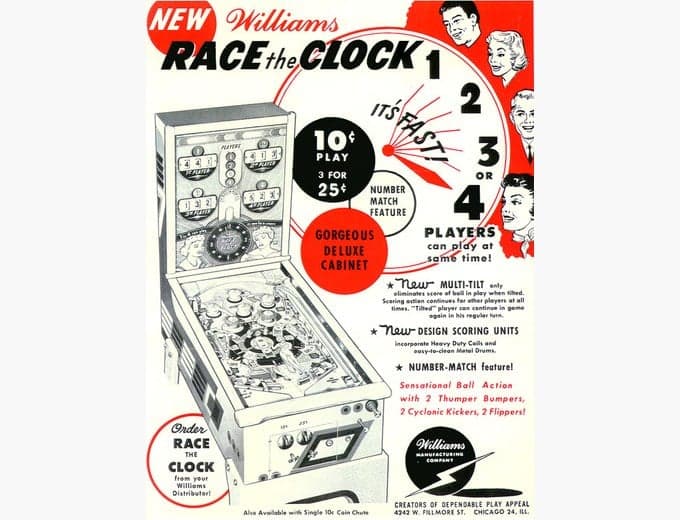
First example of "Multi-Tilt" feature in which the player only loses the current ball in play during a tilt and does not end the entire game.
Balls-A-Poppin (1956)
Bally Manufacturing Corporation
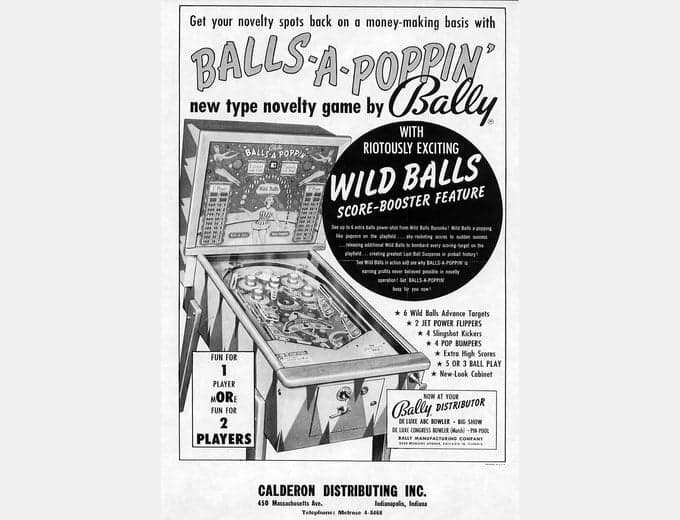
First flipper electro-mechanical game multiball "Wild Balls" (supporting up to 9 balls in play).
Arrow Head (1957)
Williams Manufacturing Company — Harry Williams
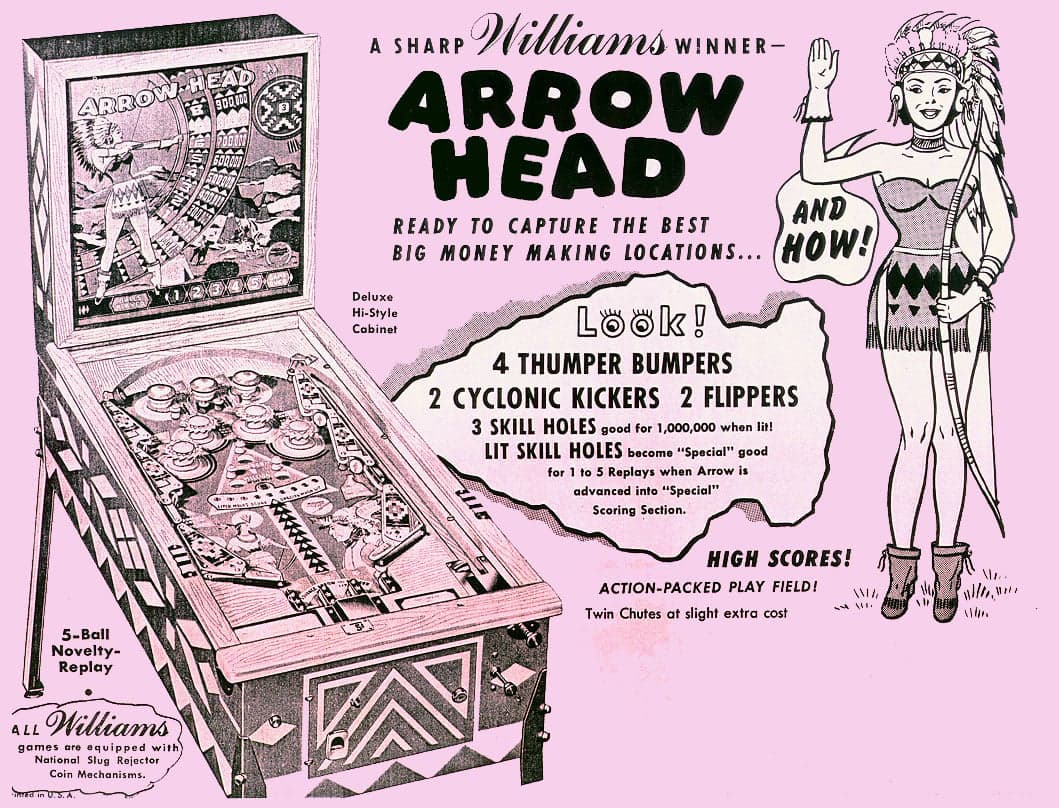
First million point shot in pinball (before Comet in 1985).
Majestic (1957)
D. Gottlieb & Company — Wayne Neyens
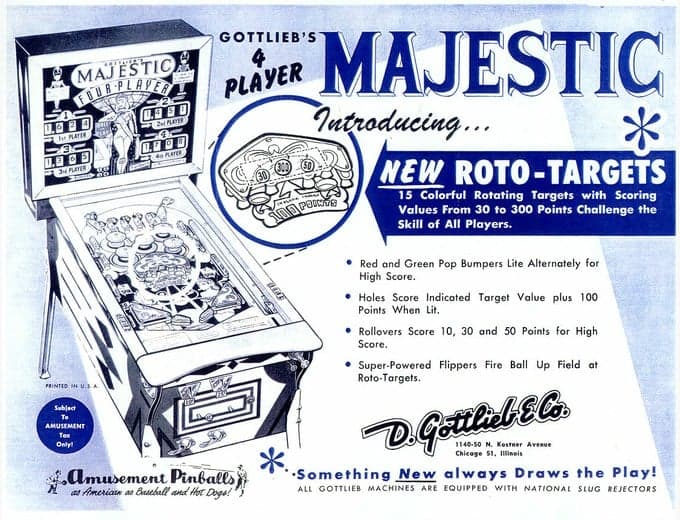
First pinball machine to have a match feature. First game to feature Roto-Targets.
Gusher (1958)
Williams Manufacturing Company — Harry Williams
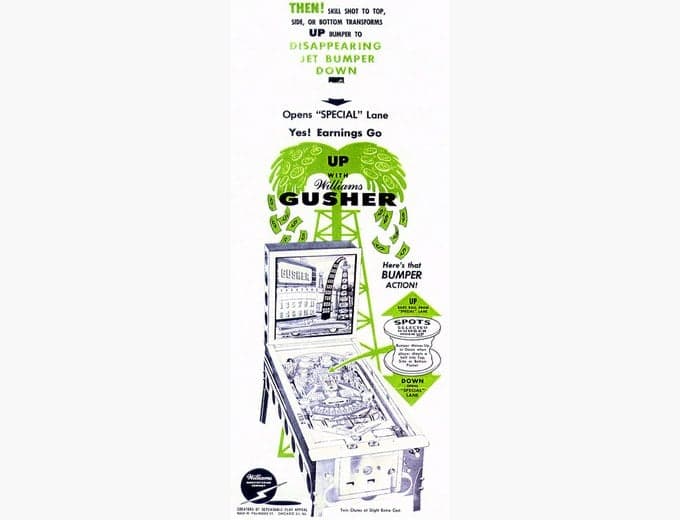
First machine to have a disappearing jet bumper.
Darts (1960)
Williams Electronic Manufacturing Company — Steve Kordek
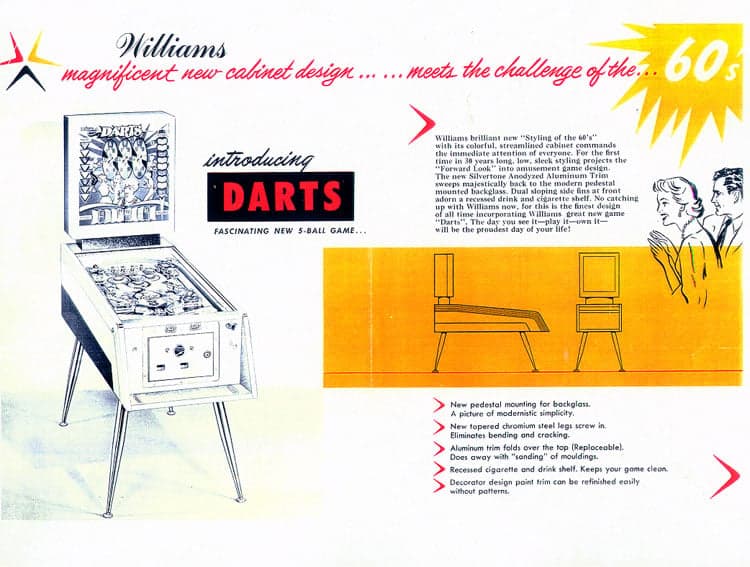
First pinball cabinet design with anodized aluminum trim and tapered tubular chromium steel legs. A shelf with cigarette holder in front of the coin door allowed for placement of drinks and increased the length by six inches. The plywood bottom was increased from 1/4-inch to 3/4 inch in thickness.
Flipper (1960)
D. Gottlieb & Company — Wayne Neyens
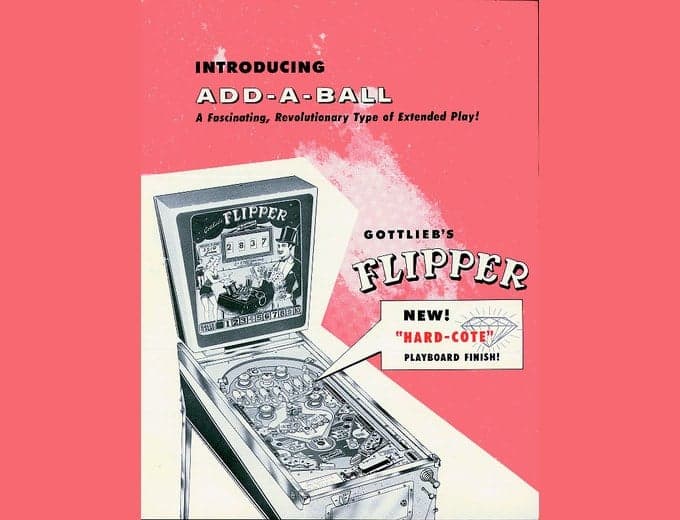
First "Wedgehead" backbox design and first Add-A-Ball feature in pinball.
Magic Clock (1960)
Williams Electronic Manufacturing Company — Harry Mabs
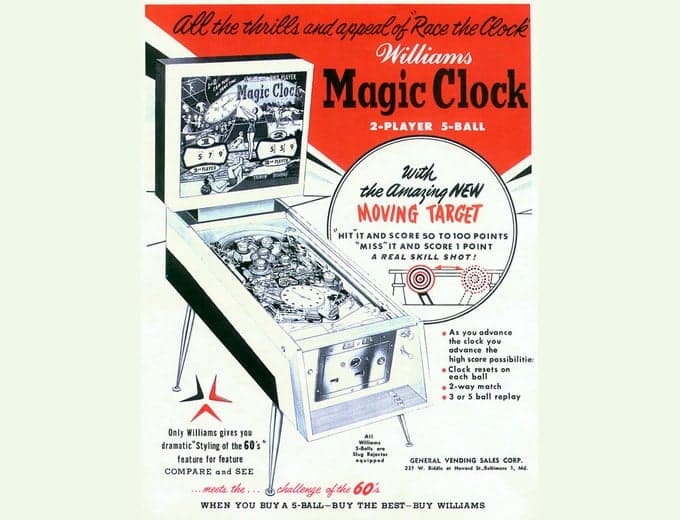
First game with a moving target. The last game designed by Harry Mabs.
Vagabond (1962)
Williams Electronic Manufacturing Company — Steve Kordek
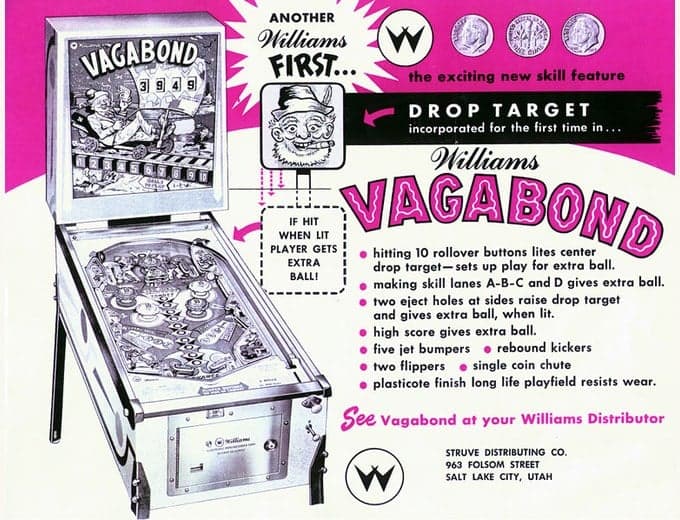
First pinball machine to have a drop target.
Gigi (1963)
D. Gottlieb & Company — Wayne Neyens
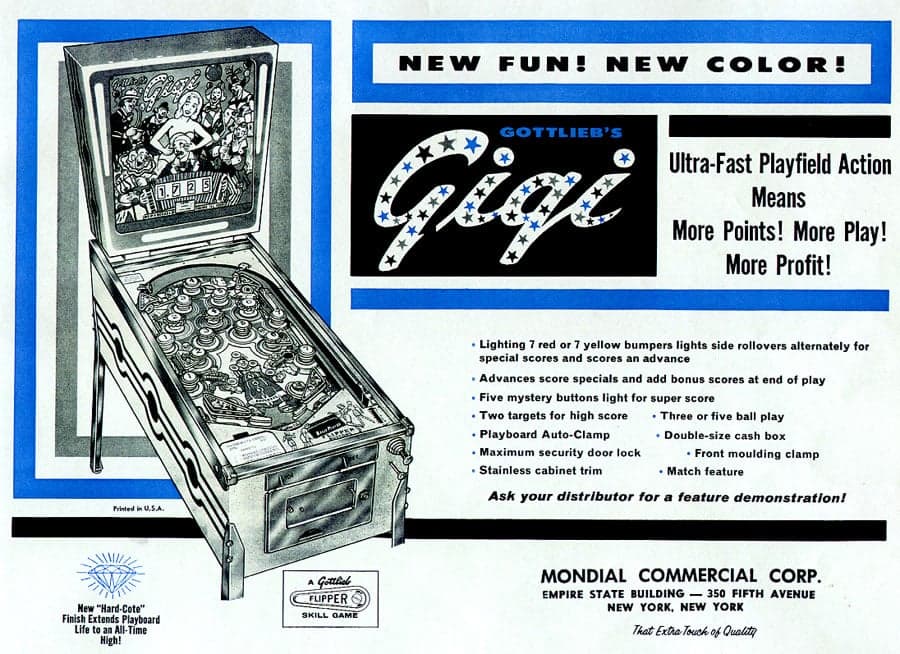
First pinball machine to end of game bonus feature.
Swing-Along (1963)
D. Gottlieb & Company — Wayne Neyens
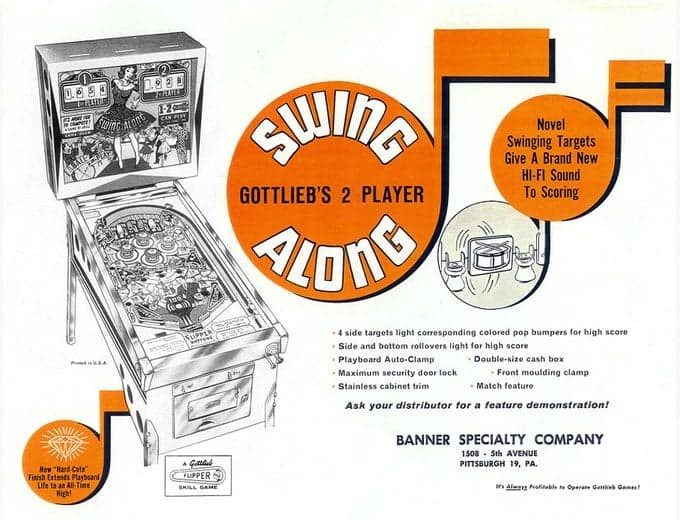
First pinball to feature a vertical spinner target marketed as a "Swinging Target".
Bank-A-Ball (1965)
D. Gottlieb & Company — Ed Krynski
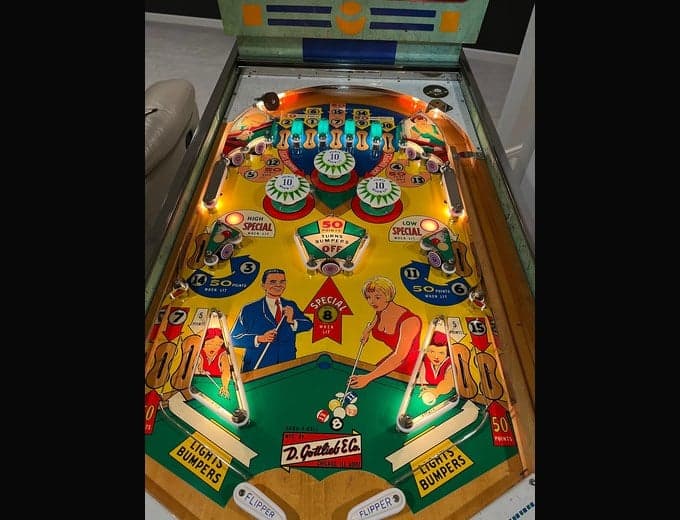
First game with return lanes that guide the ball back to the flippers via a wireform.
Dodge City (1965)
D. Gottlieb & Company — Ed Krynski
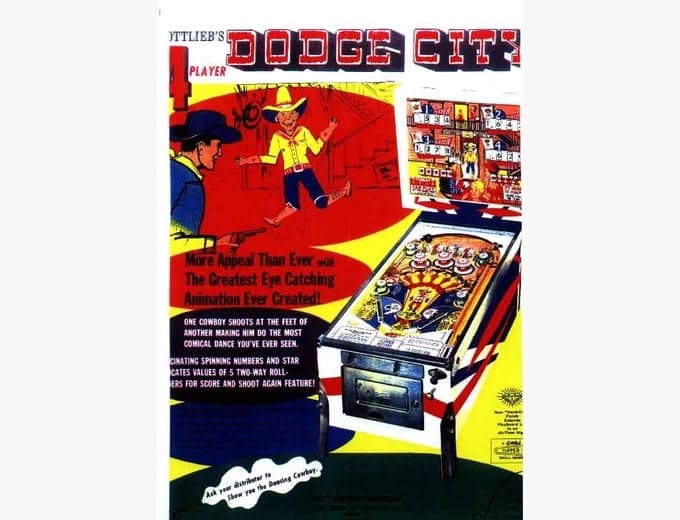
First electro-mechanical game with a proto-wizard mode sequence that rewarded the player with escalated scoring features.
8 Ball (1966)
Williams Electronic Manufacturing Company — Norm Clark
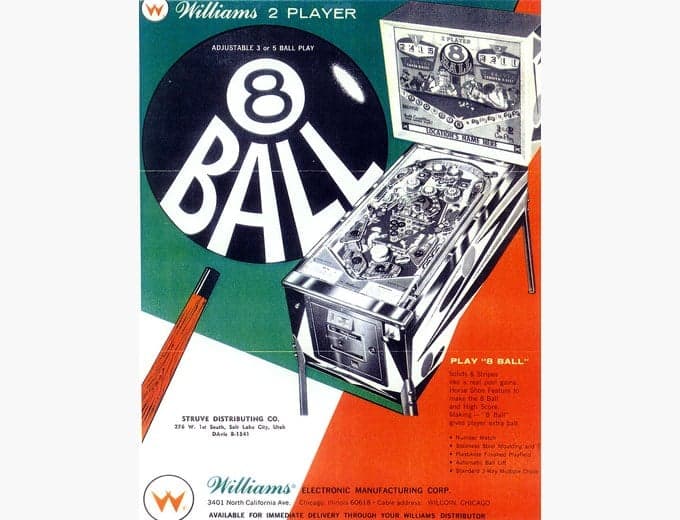
First electro-mechanical pinball game to have "Memory" during multiplayer games featuring the so-called "SPLIT-BANK" split relay bank.
Bazaar (1966)
Bally Manufacturing Corporation — Ted Zale
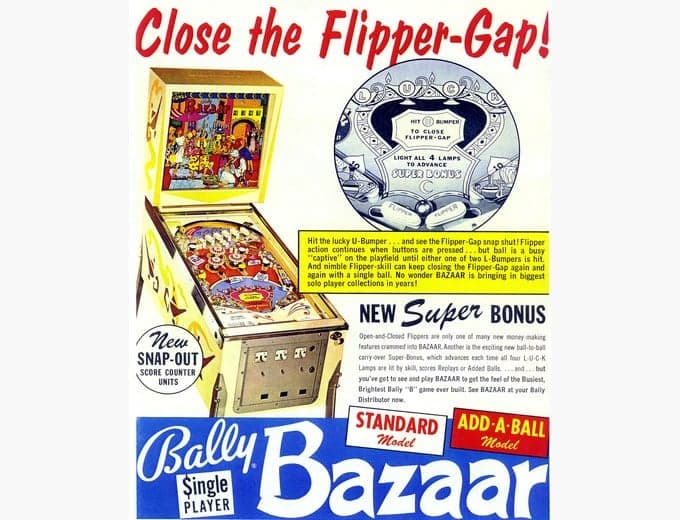
First pinball to feature "Zipper Flippers"
Rally Girl (1966)
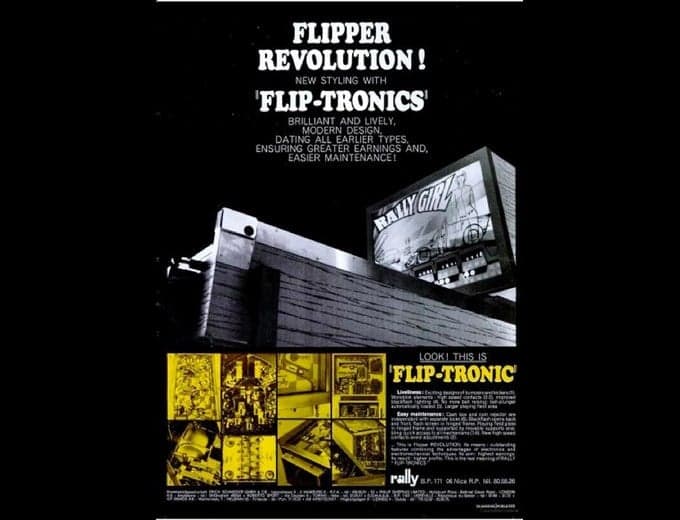
First machine to utilize digital scoring using Nixie tube display elements.
Six Sticks (1966)
Bally Manufacturing Corporation — Ted Zale
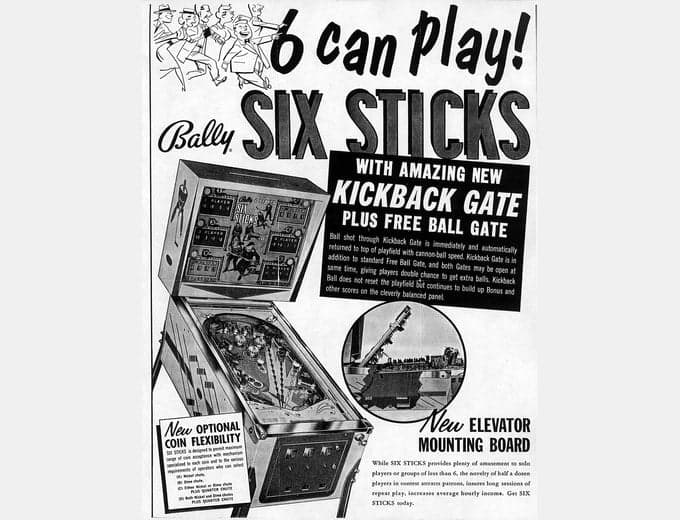
First game to feature a "Kickback Gate" outlane ball save and first game to feature a six-player game.
Play boy (1967)
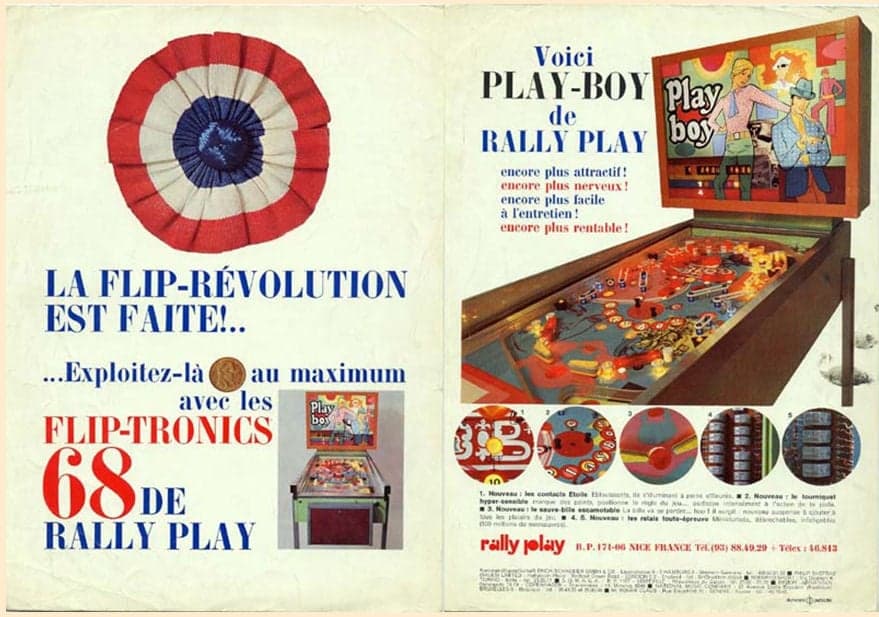
First game to have a rounded up-post between the flippers. First game to have electronically generated sounds instead of chimes, but no electronic logic in-game features.
Hayburners II (1968)
Williams Electronics, Incorporated — Steve Kordek
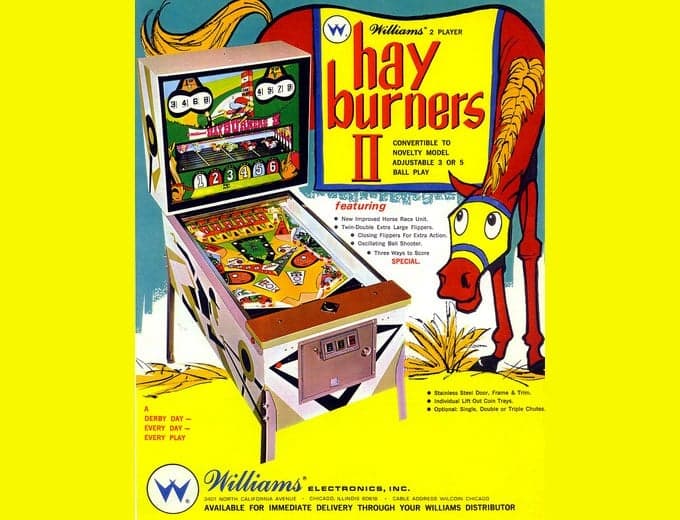
First game to introduce 3-inch flippers.
Airport (1969)
D. Gottlieb & Company — Ed Krynski
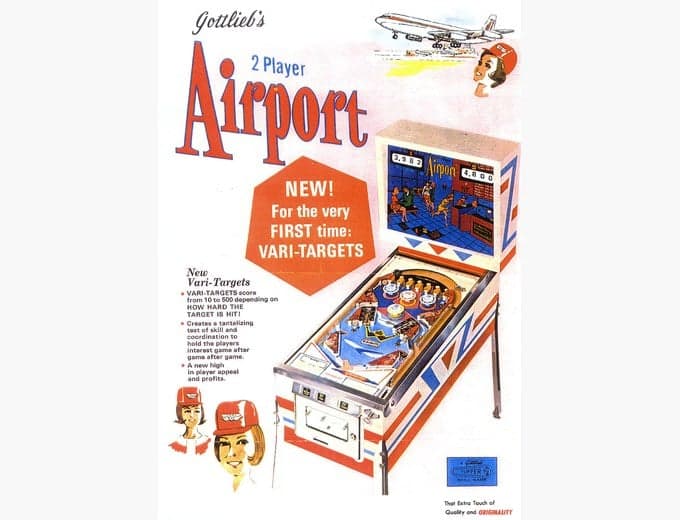
First Vari-Target.
Skipper (1969)
D. Gottlieb & Company — Ed Krynski
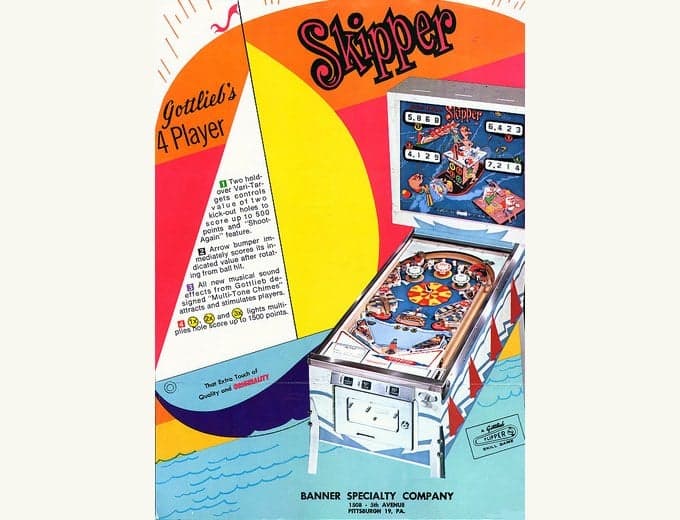
First game using the classic three chime box assembly instead of ringing bells.
Snow Queen (1970)
D. Gottlieb & Company — Ed Krynski
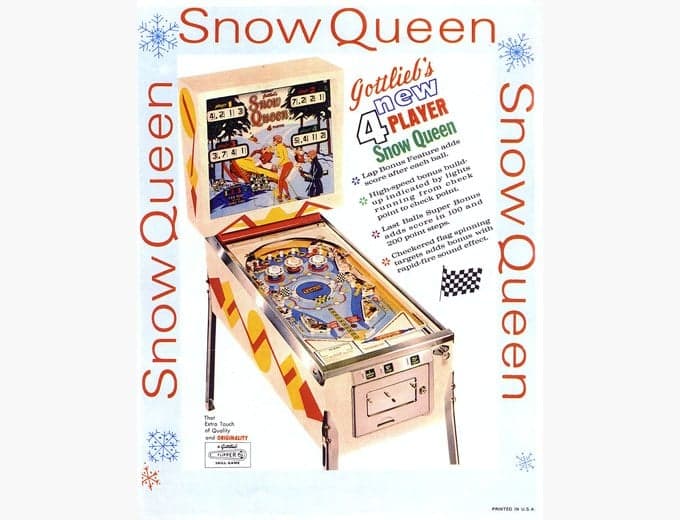
First Gottlieb game with an end-of-ball bonus ladder and super bonus feature.
Challenger (1971)
D. Gottlieb & Company — Wayne Neyens
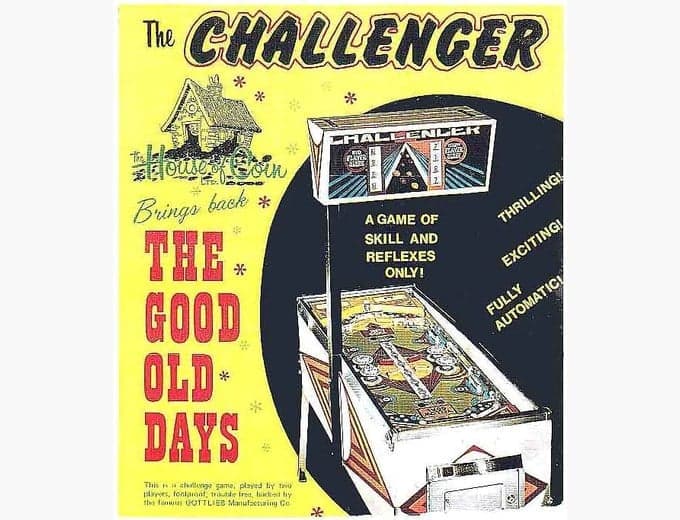
First head-to-head style 2 player electro-mechanical pinball machine.
Four Million B.C. (1971)
Bally Manufacturing Corporation — Ted Zale
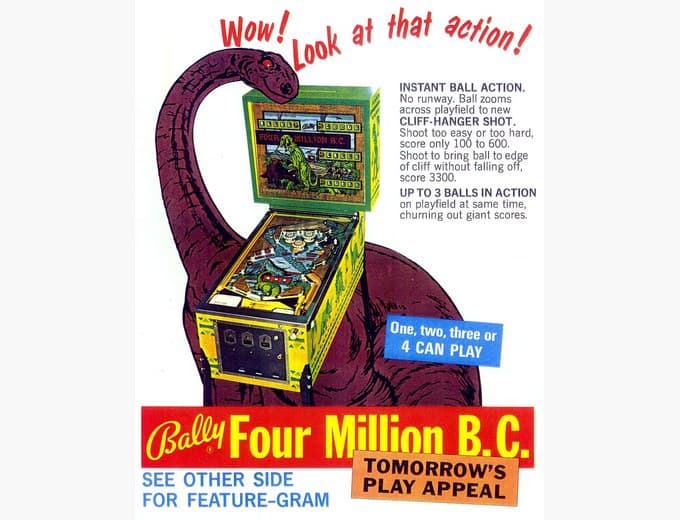
First uphill ramp skill shot.
Roller Coaster (1971)
D. Gottlieb & Company — Ed Krynski
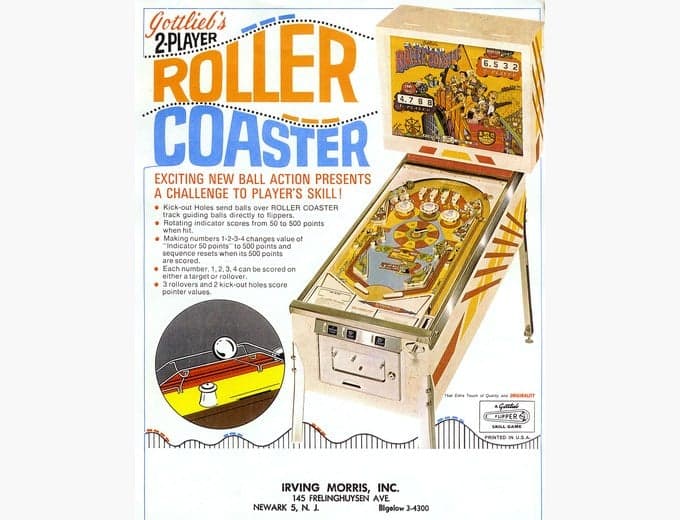
First electro-mechanical game the have wireform habitrails on the playfield that guided the ball back to the flippers.
Sea Hunt (1972)
Allied Leisure Industries, Incorporated — Ron Halliburton
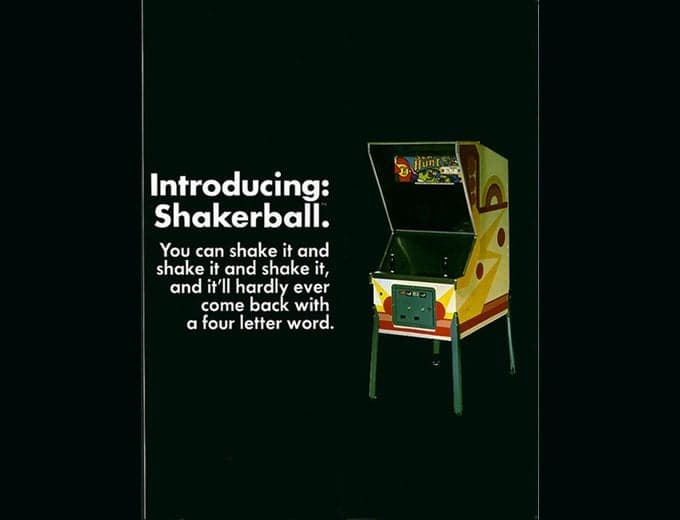
First vertical "Shakerball" style pinball cabinet. Handles let you nudge the playfield back and forth and thumb buttons trigger the flippers.
Travel Time (1972)
Williams Electronics, Incorporated — Norm Clark
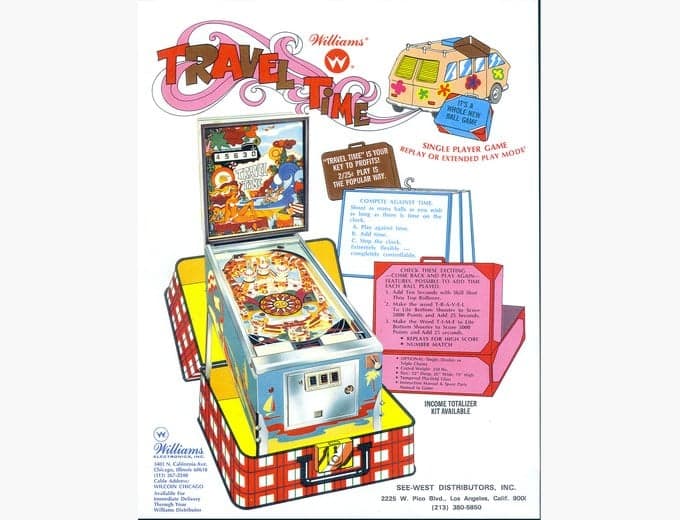
First timer based playing pinball. Gameplay ends when timer runs out.
Wizard! (1975)
Bally Manufacturing Corporation — Greg Kmiec
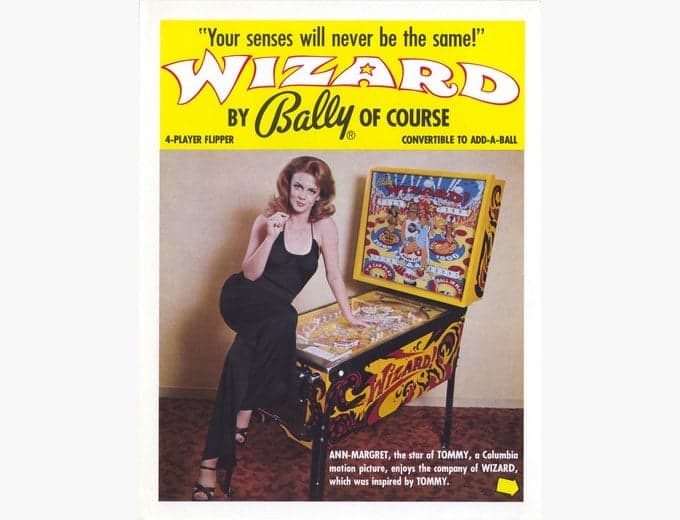
First game to feature an officially licensed theme (Tommy the movie) also first pinball machine to use "Flip Flags".
Bank Shot (1976)
D. Gottlieb & Company — Ed Krynski
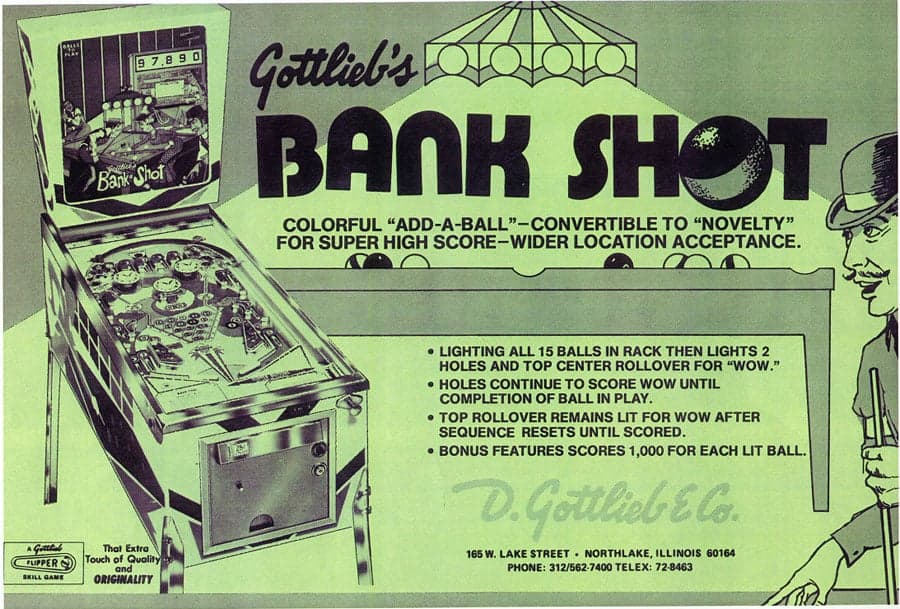
The pinball machine used by Roger Sharpe to demonstrate to the New York City Council that pinball is a game of skill.
Capt. Fantastic and the Brown Dirt Cowboy (1976)
Bally Manufacturing Corporation — Greg Kmiec
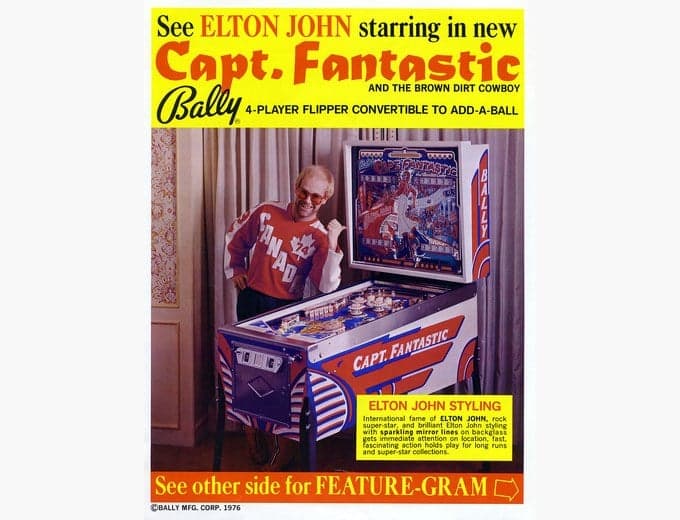
Best selling electro-mechanical pinball machine of all time 16,155 units produced.
Solid State
Dyn O' Mite (1975)
Allied Leisure Industries, Incorporated — Jack Pearson
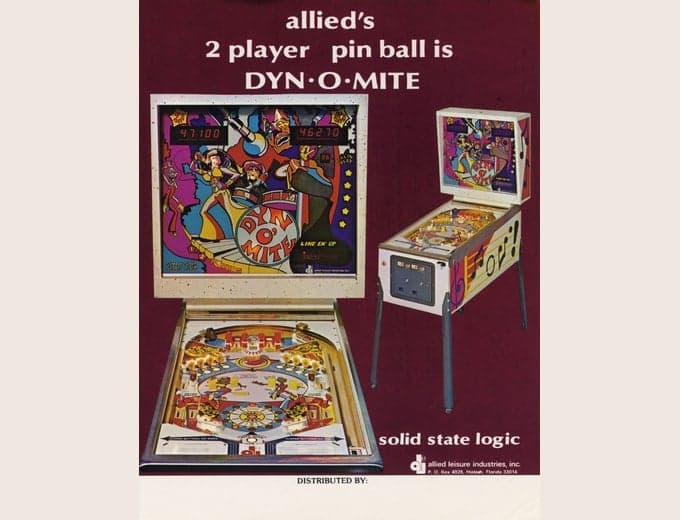
First pinball machine released to the market that featured solid state circuitry and LED score display.
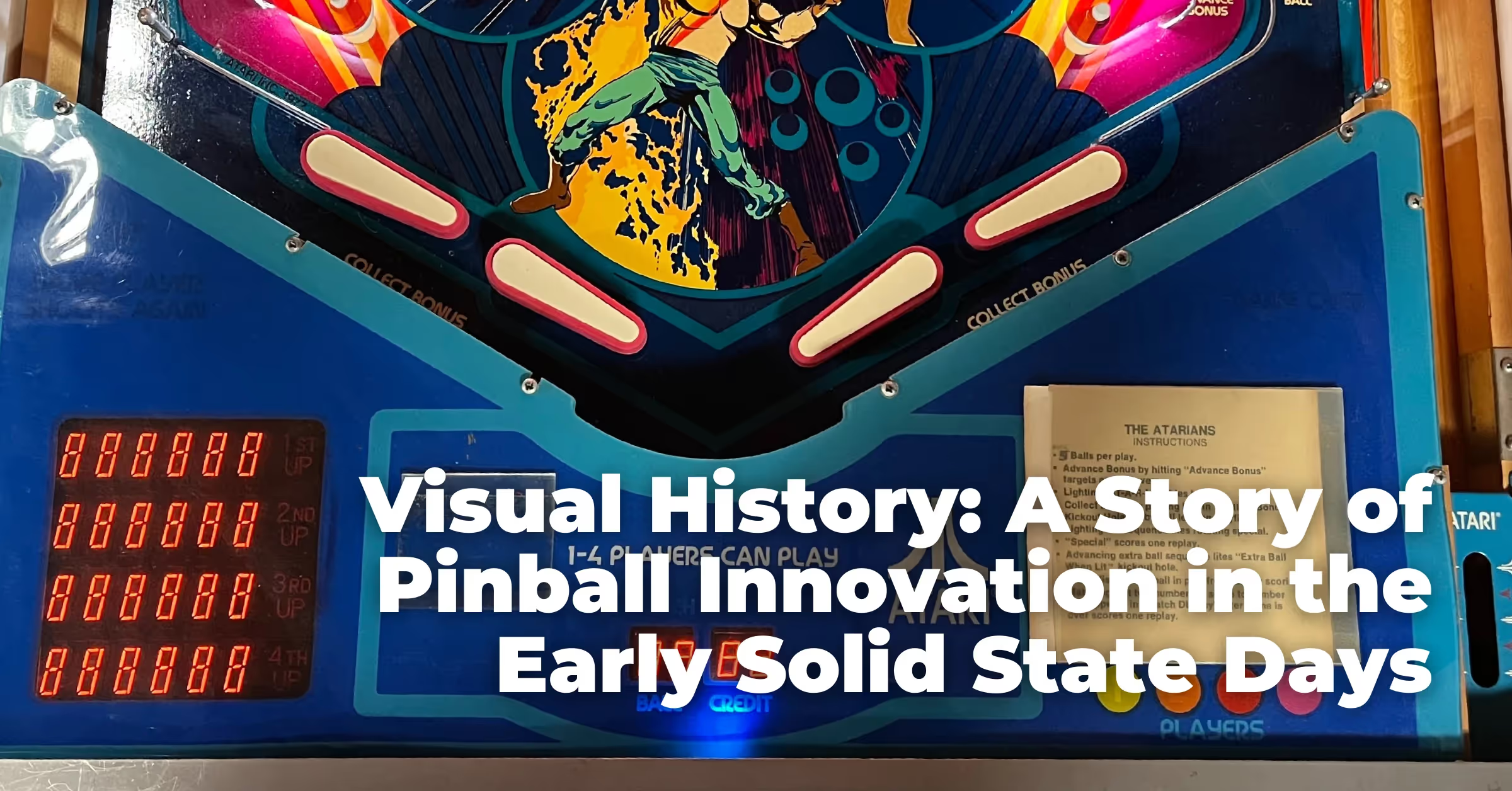
Atarians (1976)
Atari Incorporated — Bob Jonesi
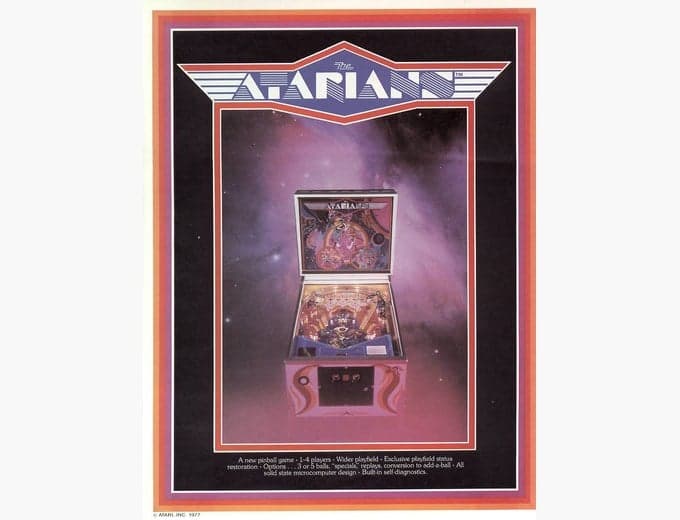
First solid state widebody pinball machine. First pinball machine to ever use magnetic inductive rollover sensors that replaced wireform rollover switches. First to use rotary solenoids for flipper mechs.
Airborne Avenger (1977)
Atari Incorporated — Steve Ritchie
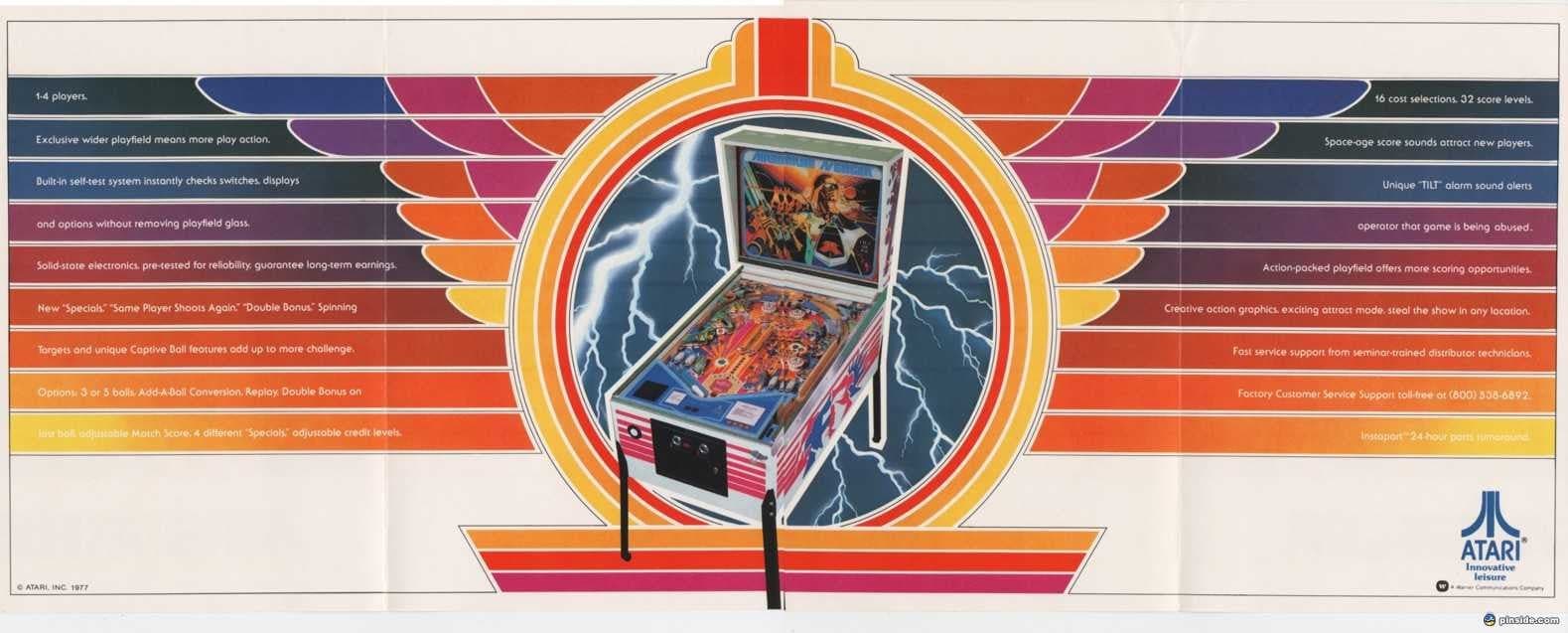
First game to feature a traditional captive ball/Newton Ball. Steve Ritchie's first pinball design.
Eight Ball (1977)
Bally Manufacturing Corporation — George Christian
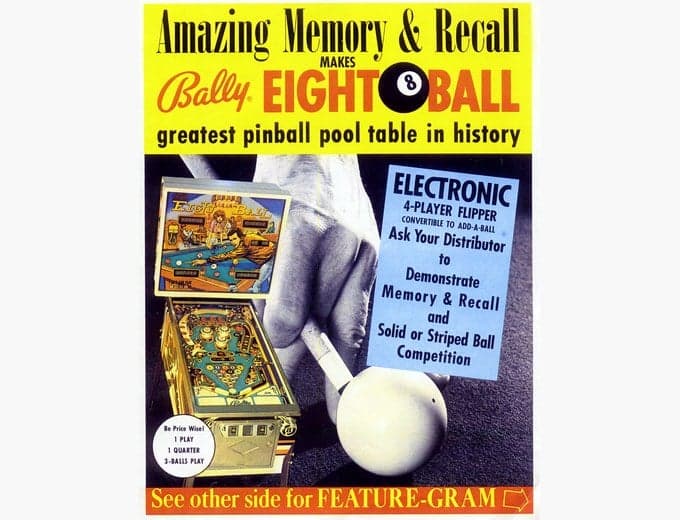
First game to feature Memory & Recall so the playfield state was re-set independently between each ball of a multi-player game. The first solid state game to sell over 20,000 units. First game to feature a modern "attract mode" light show.
Roy Clark 'The' Entertainer (1977)
Fascination International, Incorporated — Jack Pearson and Bob Betor
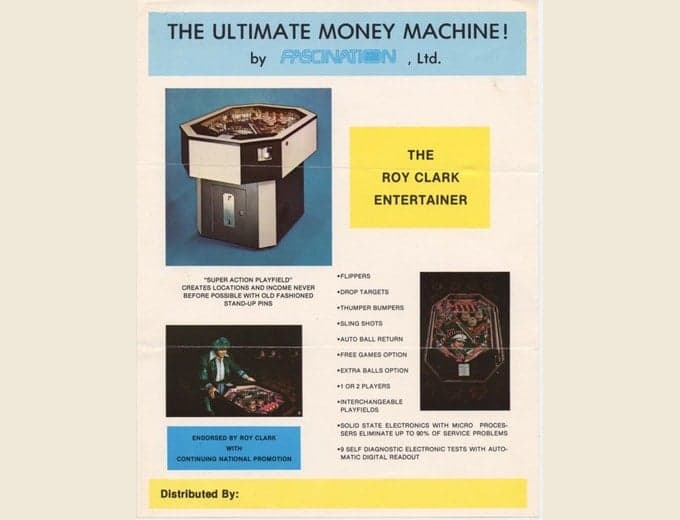
First solid state cocktail table cabinet design.
Disco Fever (1978)
Williams Electronics, Incorporated — Tony Kraemer
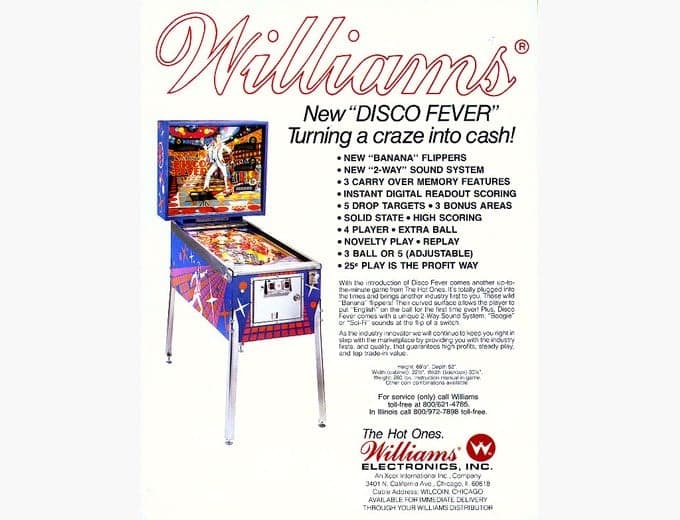
First pinball game with "Banana Flippers" the first game to be designed with digital speech.
Flash (1978)
Williams Electronics, Incorporated — Steve Ritchie
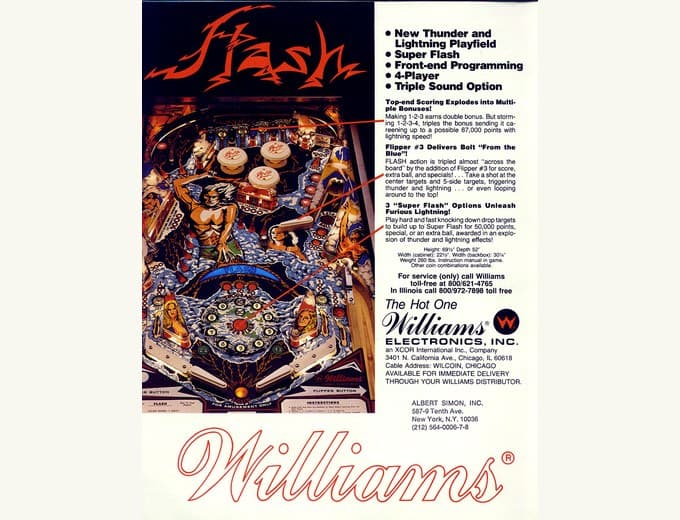
First game from any manufacturer to have a dynamic background sound during gameplay. It is also the first game from any manufacturer to use Flash Lamps.
Lost World (1978)
Bally Manufacturing Corporation — Gary Gayton
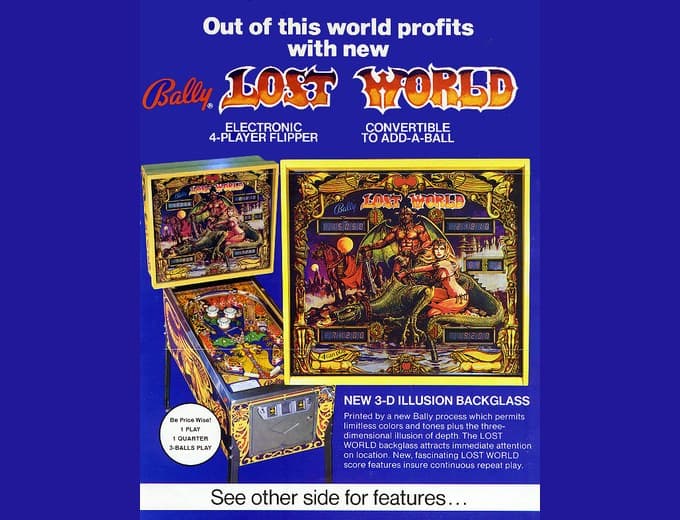
First machine to use a photographic backglass (artist Paul Farris and his wife depicted on backglass).
Cosmic Princess (1979)
Leisure & Allied Industries
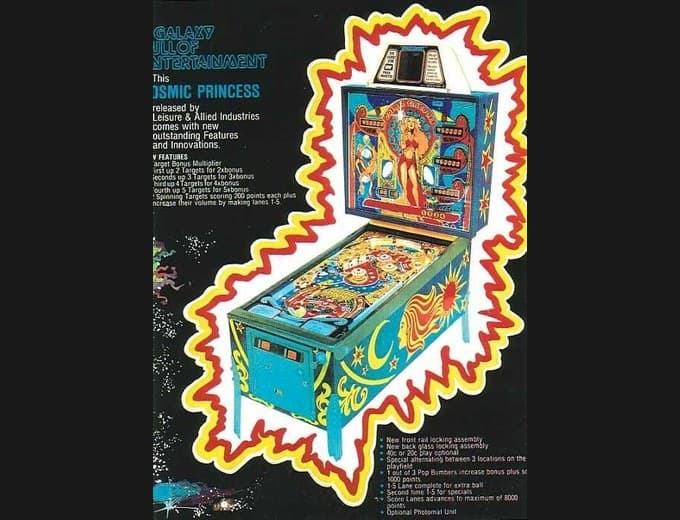
First game to feature a "Photomat" instant camera that would take a photo of the player if they achieved the new high score.
Gorgar (1979)
Williams Electronics, Incorporated — Barry Oursler
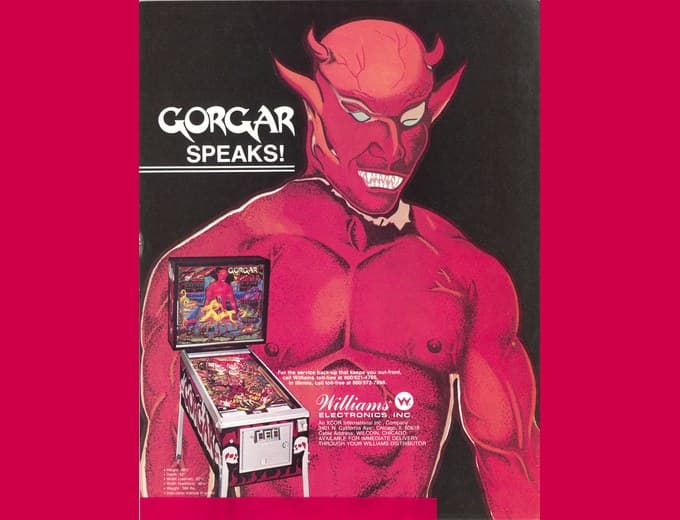
First game with electronic speech synthesis.
Harem Cat (1979)
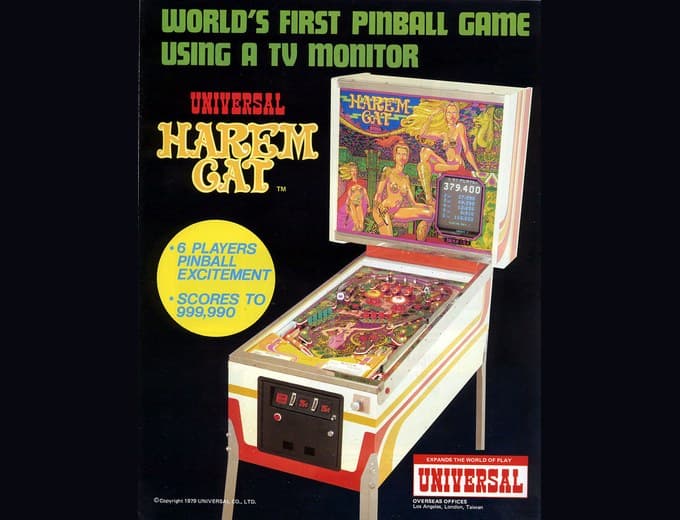
First to pinball machine to utilize a video monitor for scoring display in the backglass. Featured up to 6-players and scores to 999,990.
Hercules (1979)
Atari Incorporated — Steve Bicker
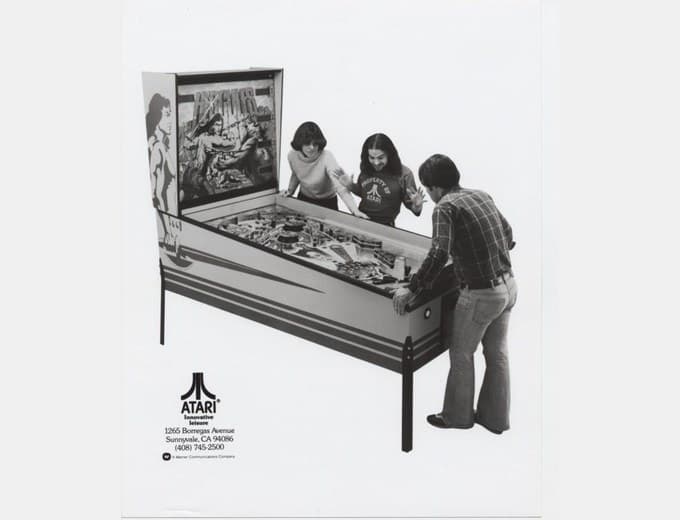
Largest commercially produced pinball machine ever made.
Big Game (1980)
Stern Electronics, Incorporated — Harry Williams
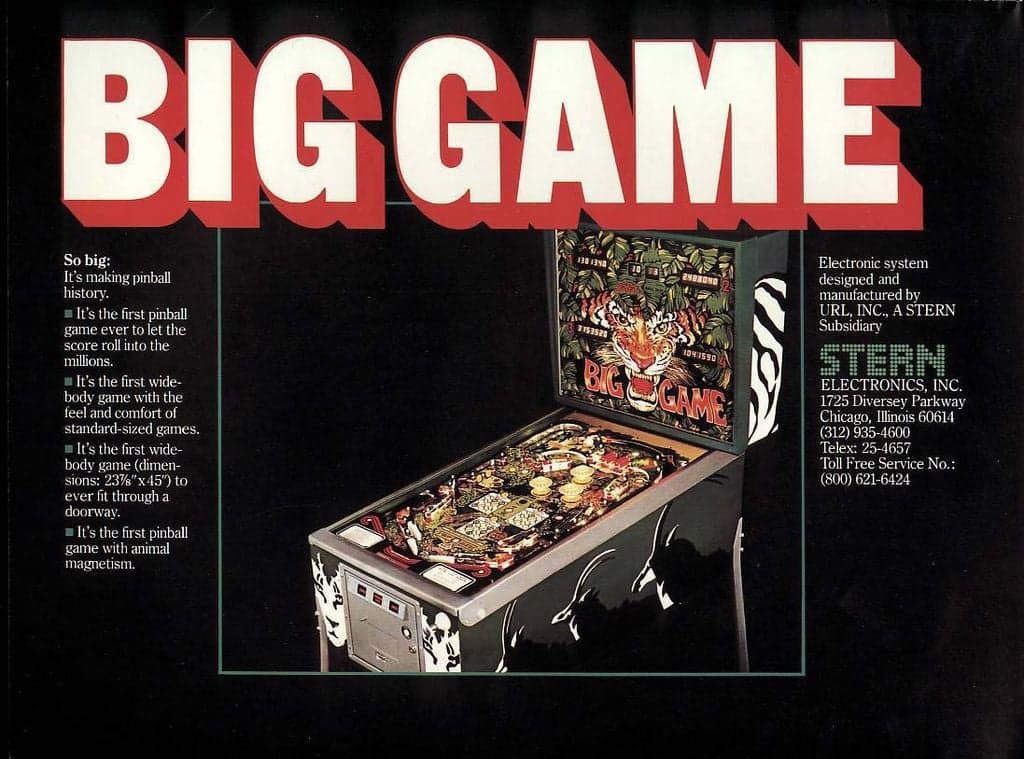
First electronic game to use 7-digit score displays.
Black Knight (1980)
Williams Electronics, Incorporated — Steve Ritchie
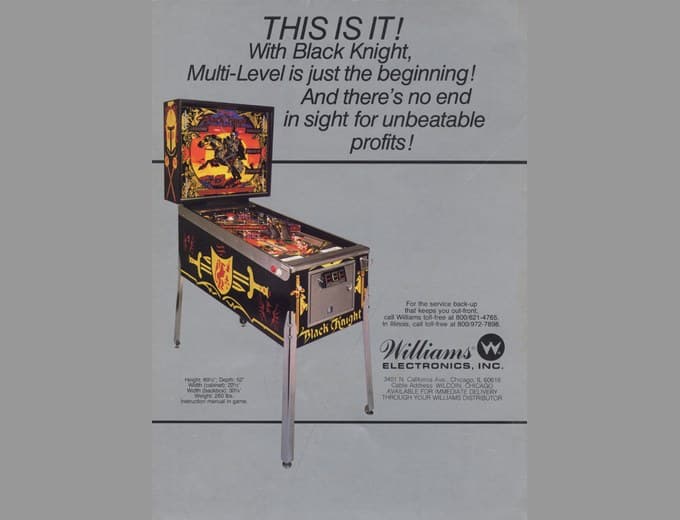
First multi-level playfield. First "Magna-Save". First game to feature an end of game timed bonus ball. First game to feature jeweled playfield inserts.
Firepower (1980)
Williams Electronics, Incorporated — Steve Ritchie
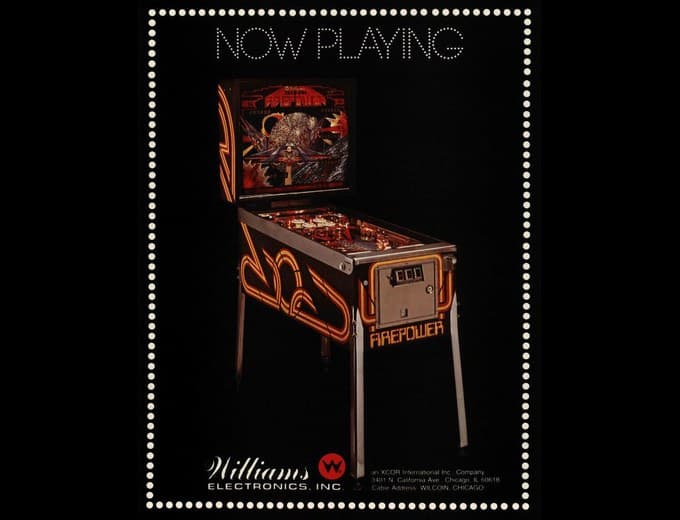
First solid state electronic "Multi-Ball". First game to feature lane change. First solid state with a playfield lighting animation sequence "countdown to Multi-Ball".
Space Invaders (1980)
Bally Manufacturing Corporation — Jim Patla
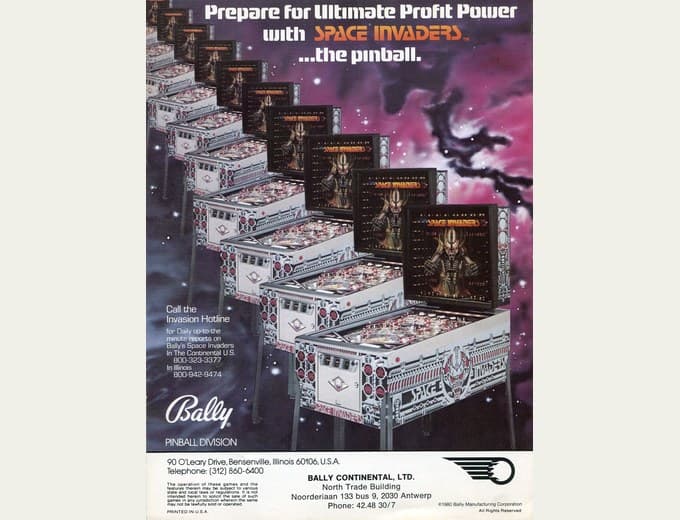
First pinball machine with a theme based on a video game. Swiss artist, H.R. Giger successfully sued Bally over copyright infringement for the depiction of the alien on the backglass and cabinet art.
Xenon (1980)
Bally Manufacturing Corporation — Greg Kmiec
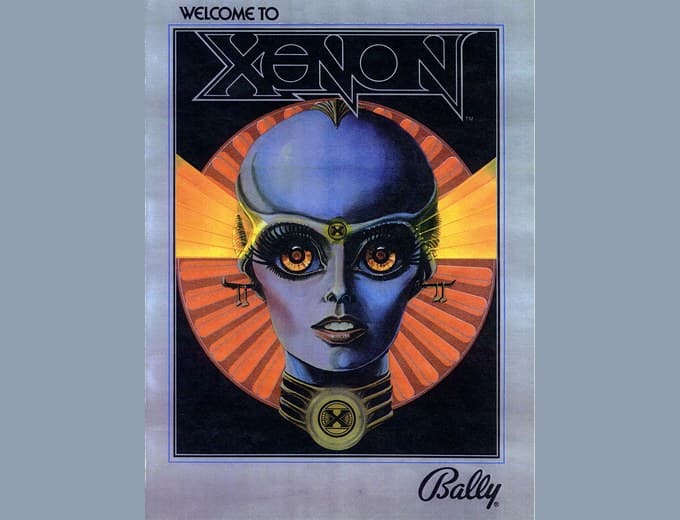
First female voice in a pinball machine, Suzanne Ciani.
Black Hole (1981)
D. Gottlieb & Company — John Buras and Shing Lam
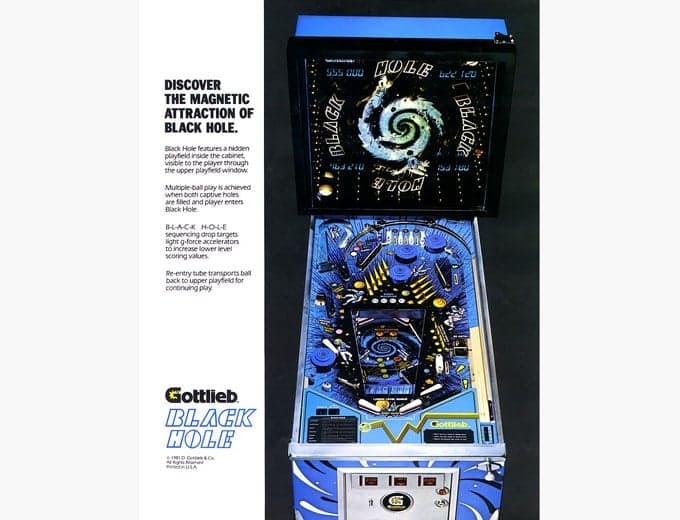
First machine with a lower playfield sloped away from the player with the flippers at the backbox end. First pinball machine to cost 50 cents per play.
Centaur (1981)
Bally Manufacturing Corporation — Jim Patla
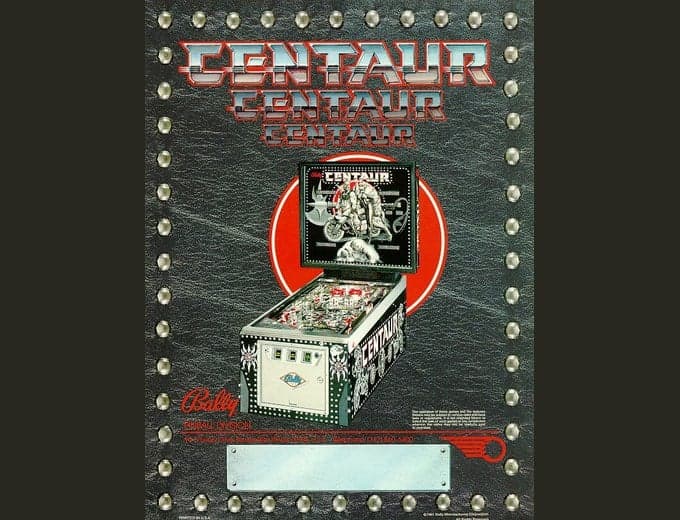
First solid state pinball game to feature a 4-ball and 5-ball multiball.
Elektra (1981)
Bally Manufacturing Corporation — Claude Fernandez
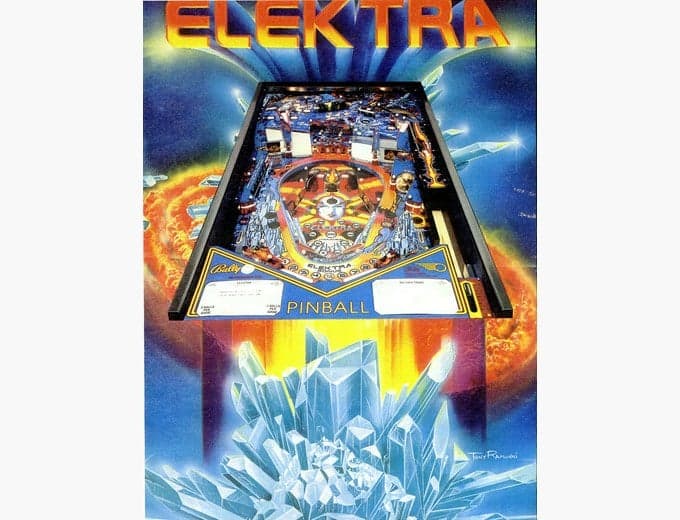
First solid-state game with a three-level playfield.
Caveman (1982)
D. Gottlieb & Company — John Buras
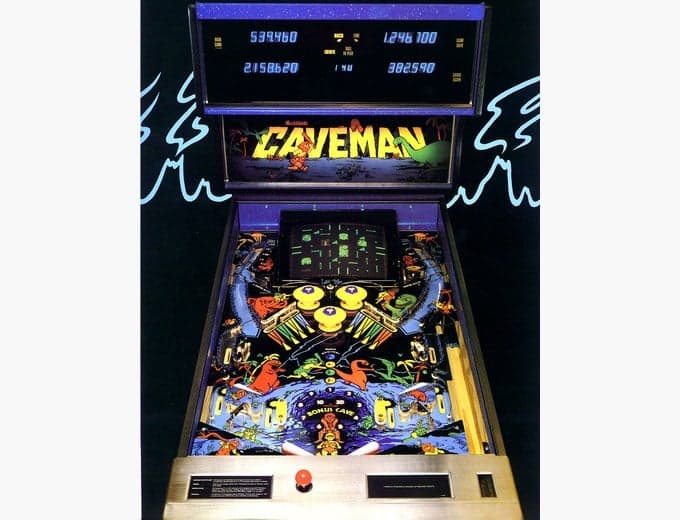
First pinball & video game hybrid.
Devil's Dare (1982)
D. Gottlieb & Company — Tom Szafransky
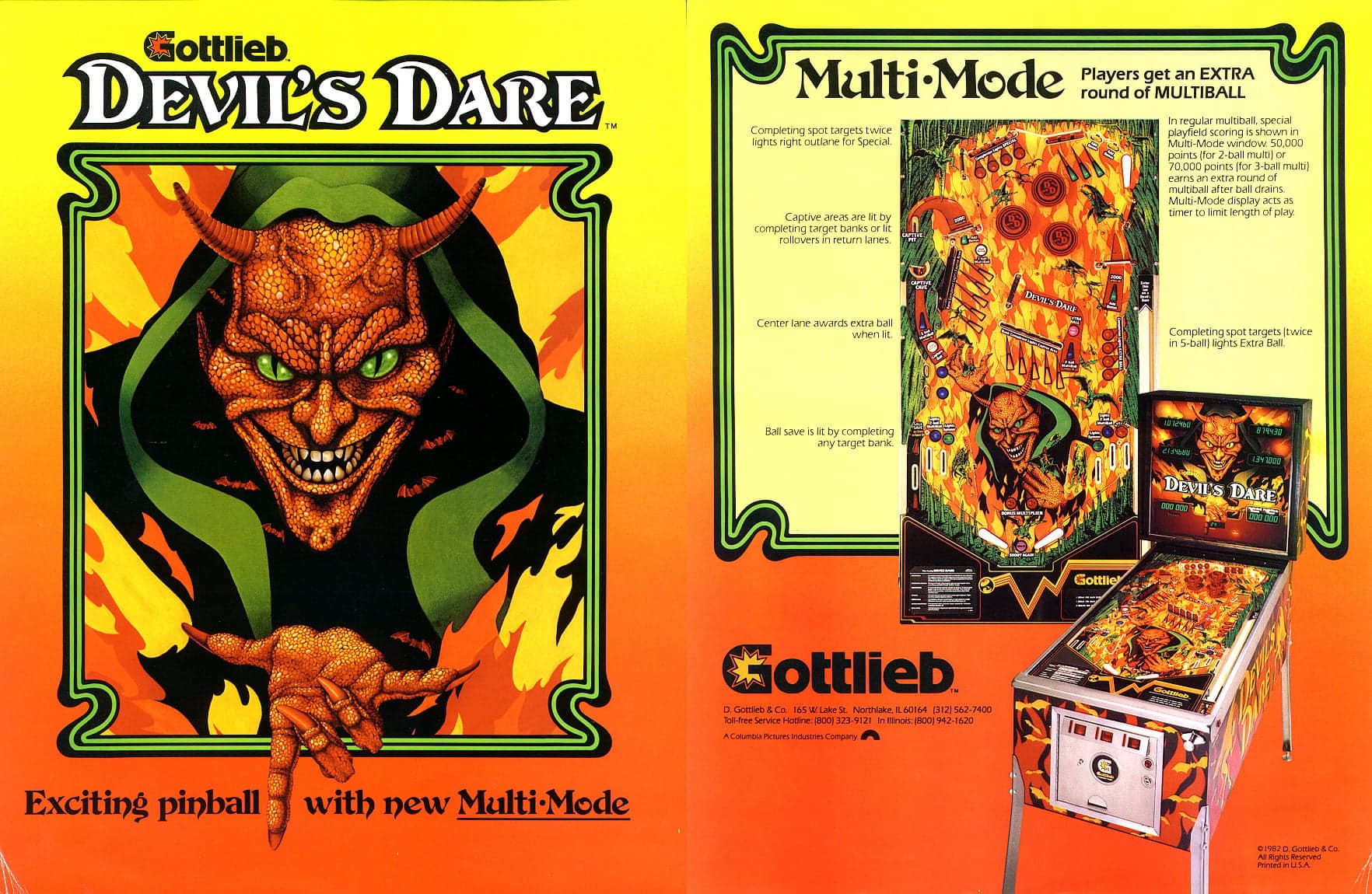
First System 80A. First multiball restart feature, first 4 color process on glass printing.
Haunted House (1982)
D. Gottlieb & Company — John Osborne
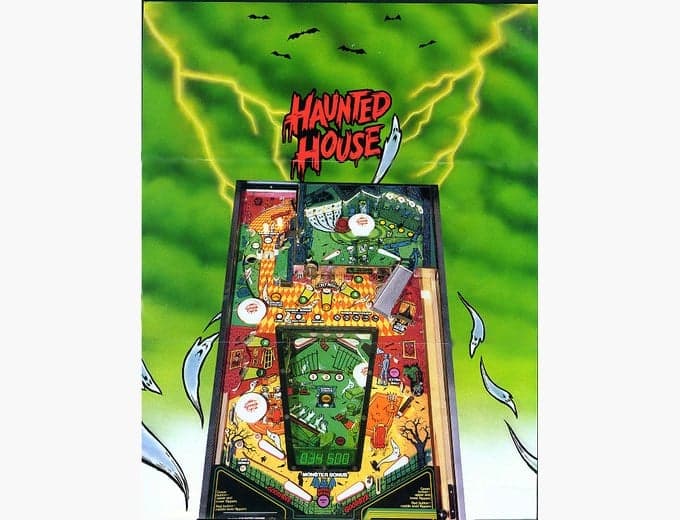
First game to feature 8 flippers.
Orbitor 1 (1982)
Stern Electronics, Incorporated — Joe Joos Jr.
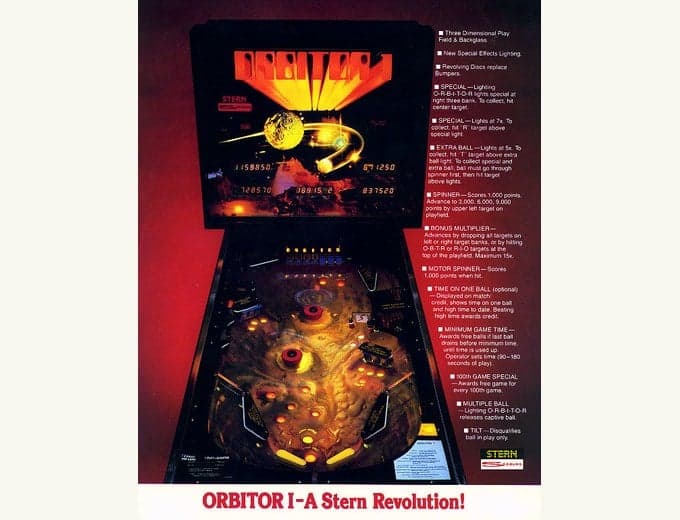
First pinball machine with a clear, contoured 3D plastic playfield while also featuring a minimum non-adjustable play time function.
Varkon (1982)
Williams Electronics, Incorporated — Tony Kraemer
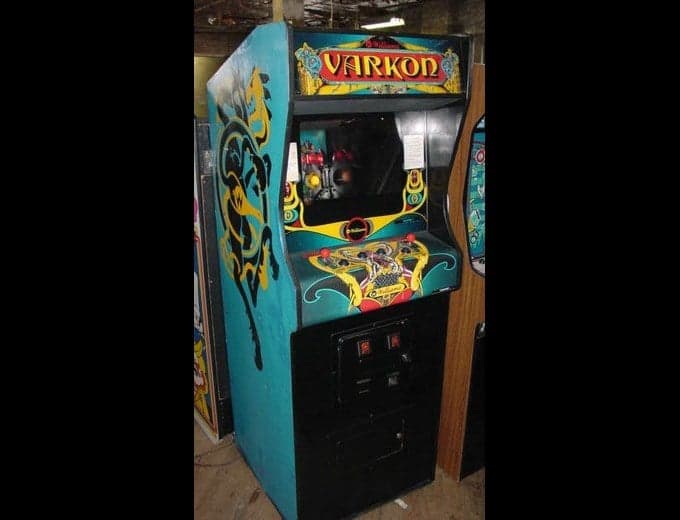
First upright solid state pinball machine built into a video game cabinet using mirrors for its two vertical playfields.
Joust (1983)
Williams Electronics, Incorporated — Barry Oursler
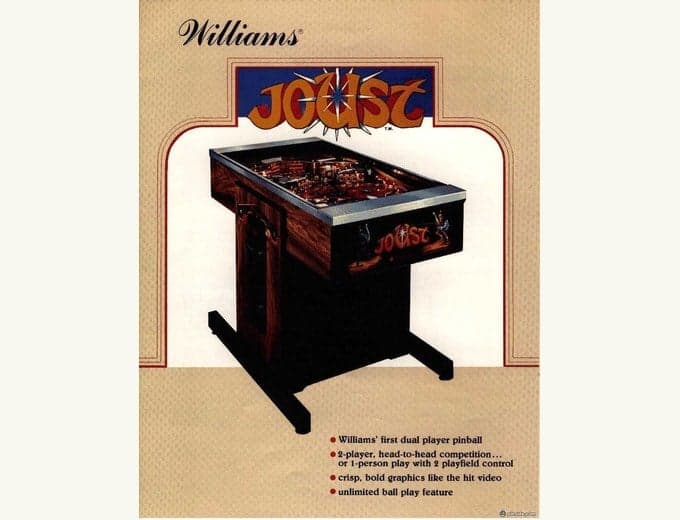
The first head-to-head style 2 player solid state pinball machine.
Time Machine (1983)
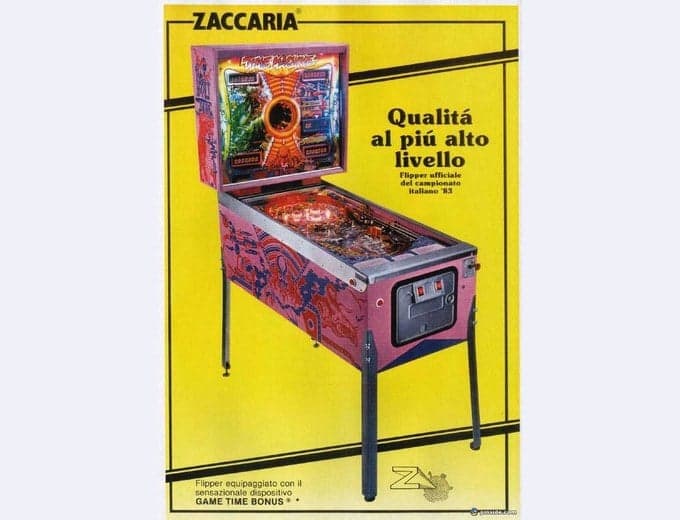
First game to feature a section of the playfield that raised and lowered.
El Dorado City of Gold (1984)
Mylstar Electronics/Premier Technology — Ed Krynski
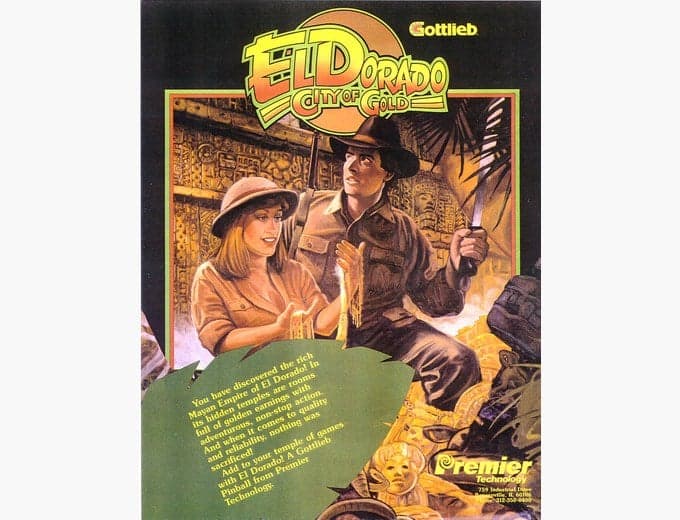
The last production game designed by Ed Krynski who designed over 200 pinball machines; the most of any pinball designer in history! Based on the playfield layout of the original game titled El Dorado (1975) which was re-used for versions titled Gold Strike, Lucky Strike, Target Alpha, Canada Dry and Solar City. This was the last pin produced by Mylstar (Ratslym spelled backwards!)
Space Shuttle (1984)
Williams Electronics, Incorporated — Barry Oursler
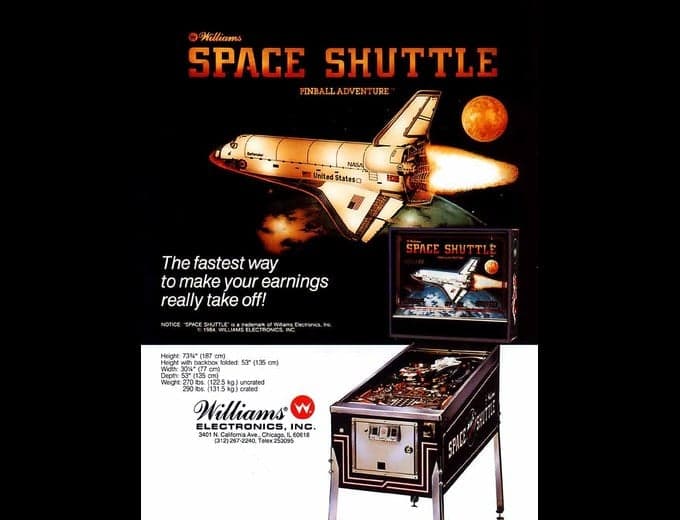
Widely credited with saving Williams from bankruptcy during the 1980s with 7,000 units produced. The first machine to feature a vacuum-formed 3D plastic toy (a highly detailed replica of the NASA Space Shuttle) as a central playfield element.
Alphanumeric
Af-Tor (1984)
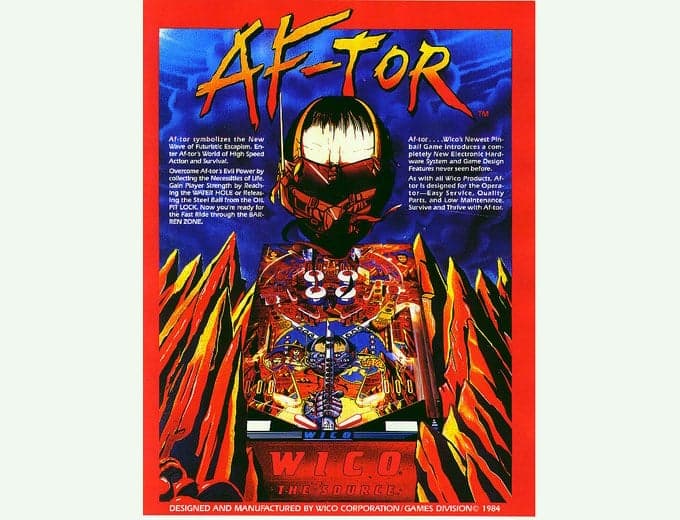
First pinball machine from any manufacturer to be produced with an alphanumeric display (Hyperball doesn't count!).
Comet (1985)
Williams Electronics Games, Incorporated — Barry Oursler
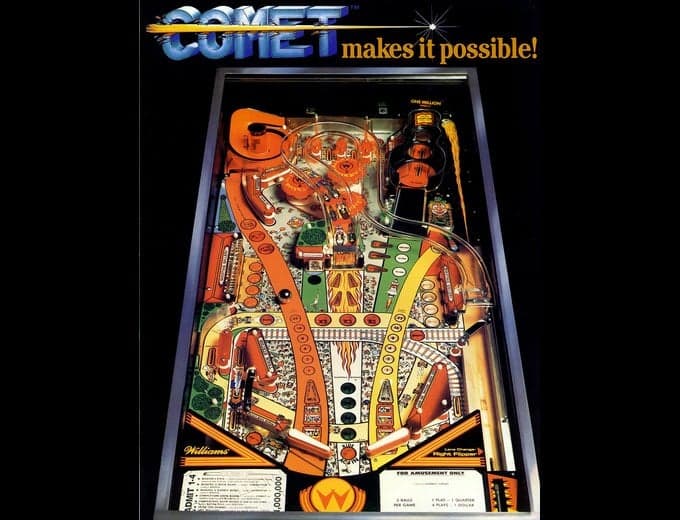
First solid state game to feature a million point shot.
High Speed (1986)
Williams Electronics Games, Incorporated — Steve Ritchie
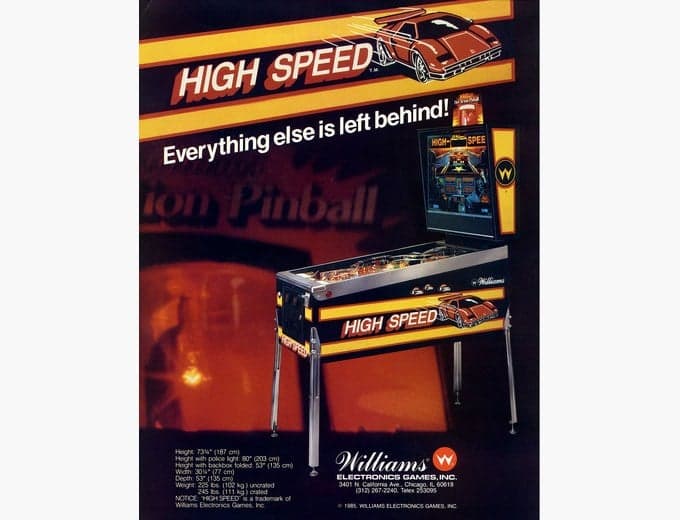
First game to use automatic replay percentage calculation AKA "Auto-percentaging" or "Replay Boost". First SS game with operator report. First game to feature a narrative for the player. First Williams pin game to use alpha-numeric displays. First Jackpot available only during multiball. First progressive Jackpot carry over from game to game. First game to play a complete song. First game to feature a modern, illuminated topper. First use of broken switch compensation programming. First System 11.
PIN·BOT (1986)
Williams Electronics Games, Incorporated — Barry Oursler and Python Anghelo
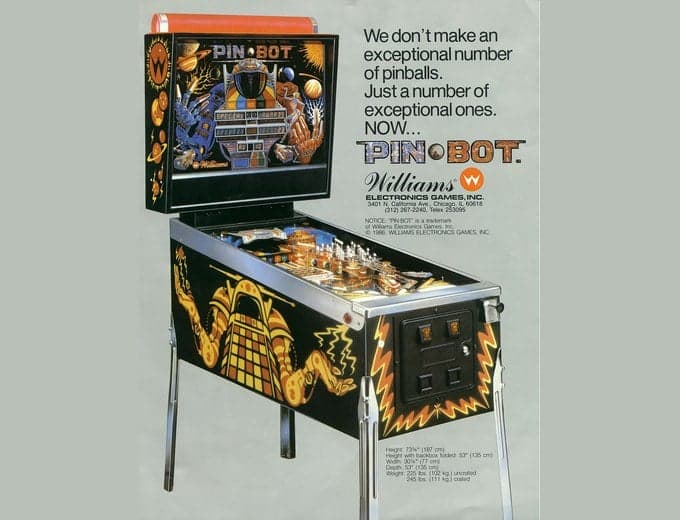
First modern pinball game to credit the lead design team members names on the playfield.
Raven (1986)
Premier Technology — John Trudeau
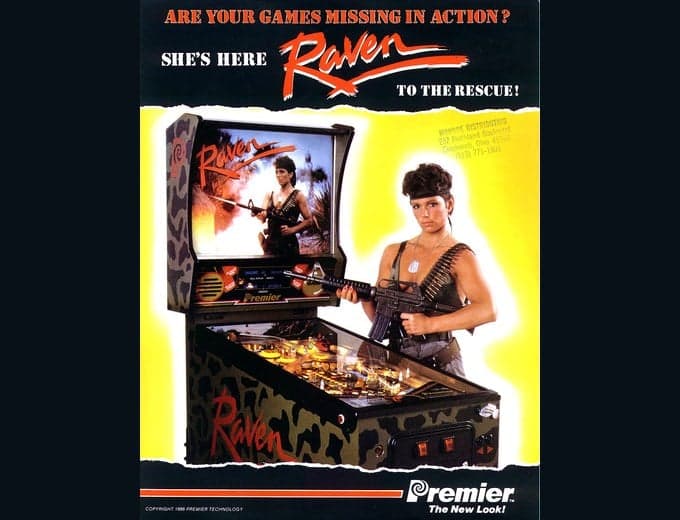
The first pinball machine to use a high-contrast photographic image rather than traditional hand-drawn art for its backglass.
F-14 Tomcat (1987)
Williams Electronics Games, Incorporated — Steve Ritchie
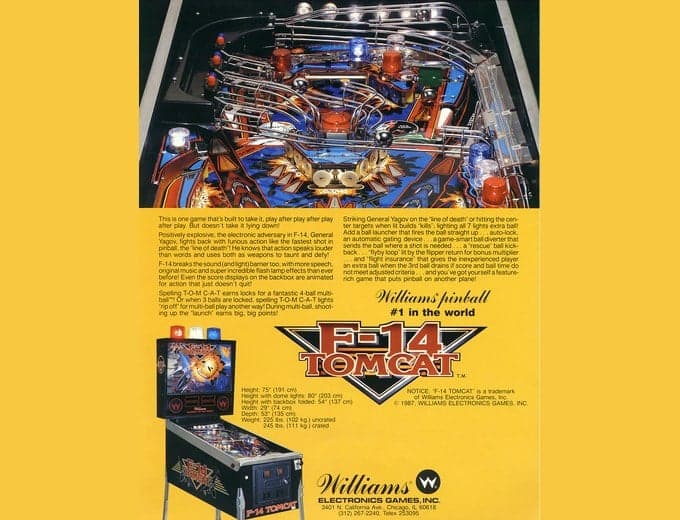
First ever kickback device that fired the ball straight back at the flippers. First modern ball save "Flight Insurance".
Laser War (1987)
Data East Pinball, Incorporated — Joe Kaminkow
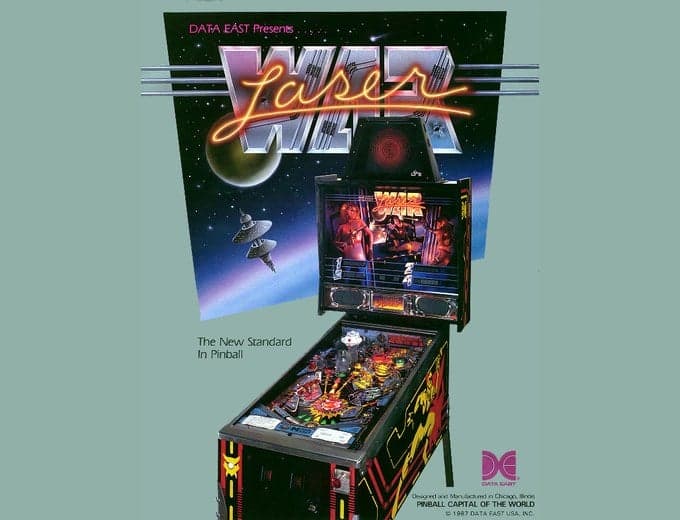
First pinball machine to feature digital stereo sound. First pinball game released by Data East.
Victory (1987)
Premier Technology — John Trudeau
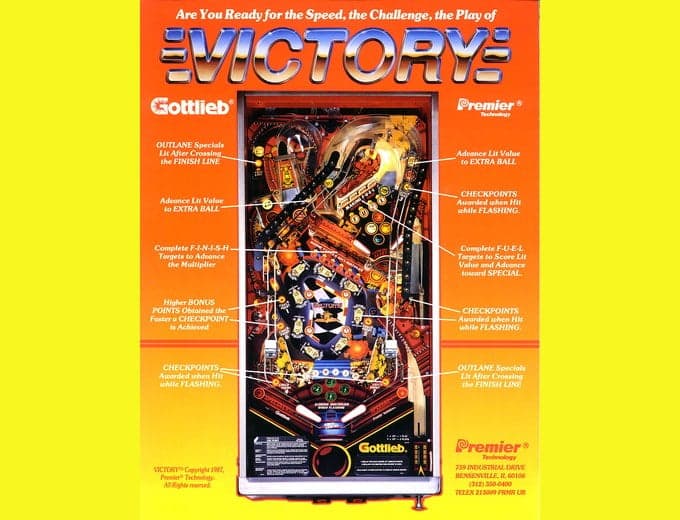
First game to use a fully screened photo realistic "Vitrigraph" mylar overlay for it's playfield rather than the industry standard silkscreen on the wood itself.
Banzai Run (1988)
Williams Electronics Games, Incorporated — Pat Lawlor
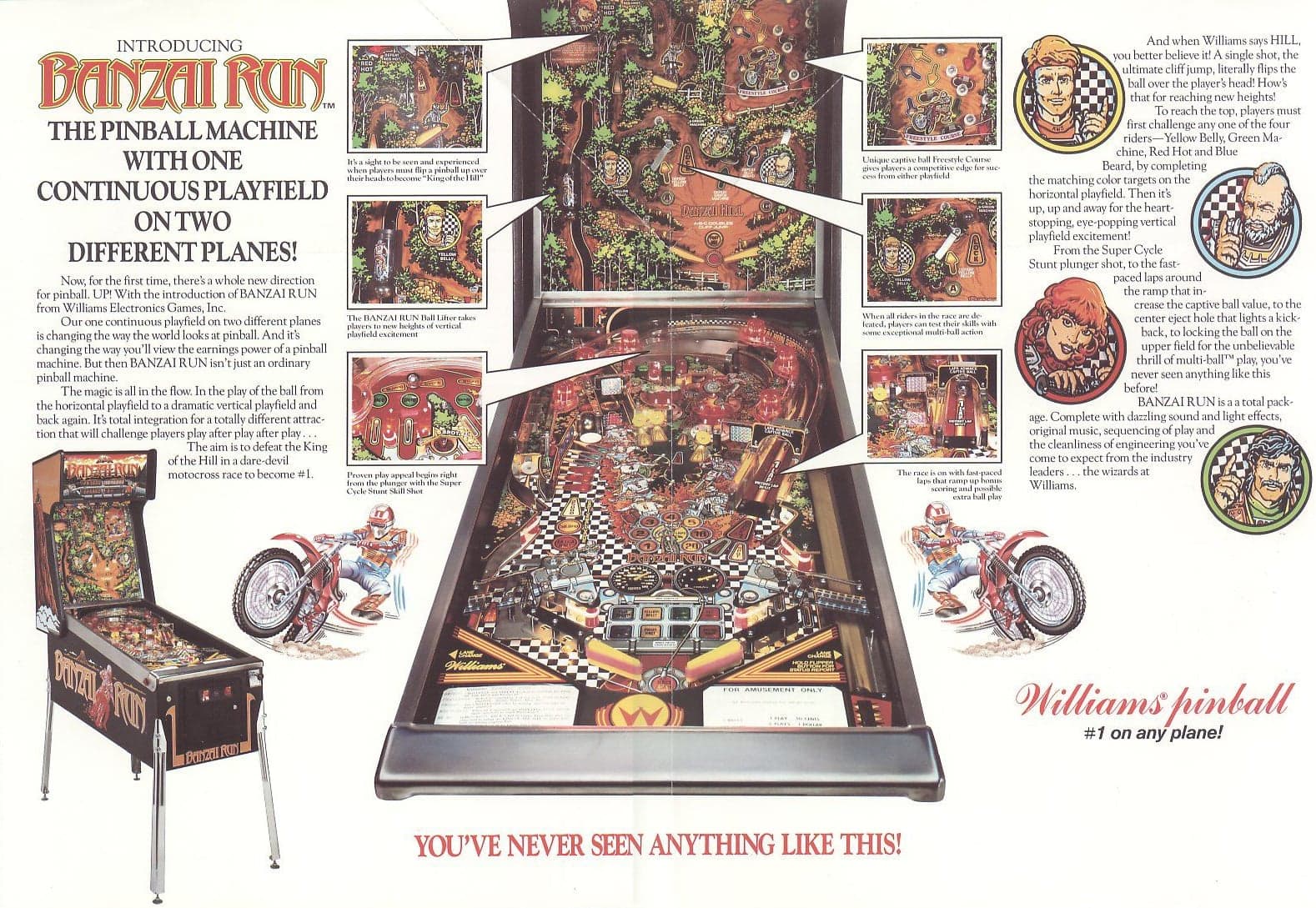
First true vertical playfield pinball game with flippers in the backbox. Pat Lawlor's first pinball design.
Black Knight 2000 (1989)
Williams Electronics Games, Incorporated — Steve Ritchie
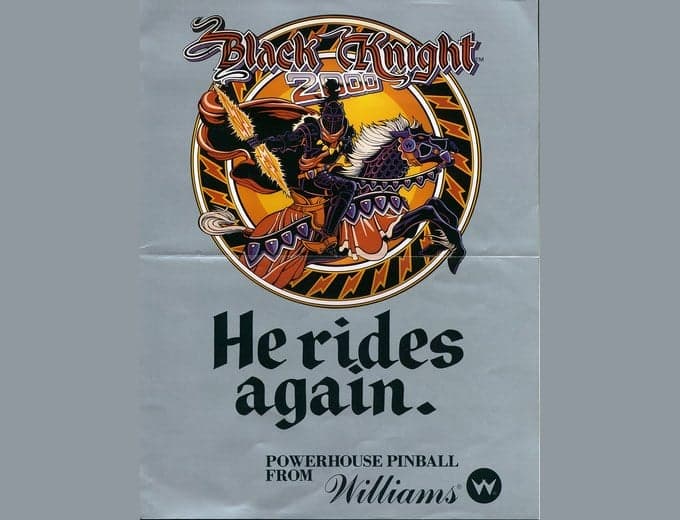
First modern game to feature a Wizard Mode "King's Ransom".
Earthshaker (1989)
Williams Electronics Games, Incorporated — Pat Lawlor
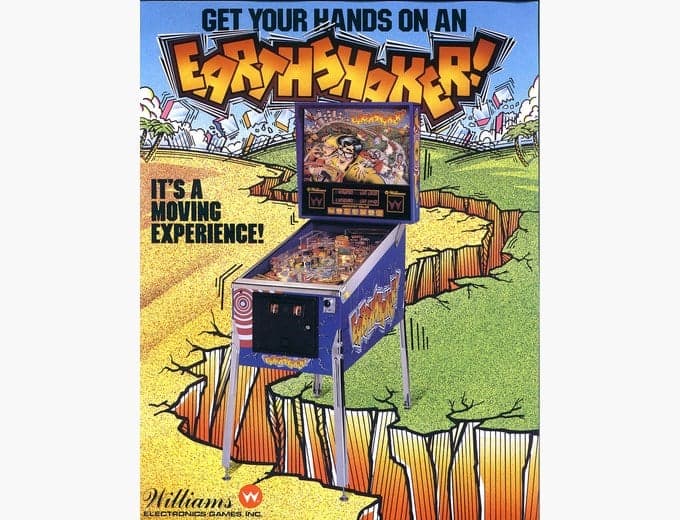
First pinball machine to feature a shaker motor in the cabinet.
Elvira and the Party Monsters (1989)
Midway Manufacturing Company — Dennis Nordman and Jim Patla and Steve Ritchie
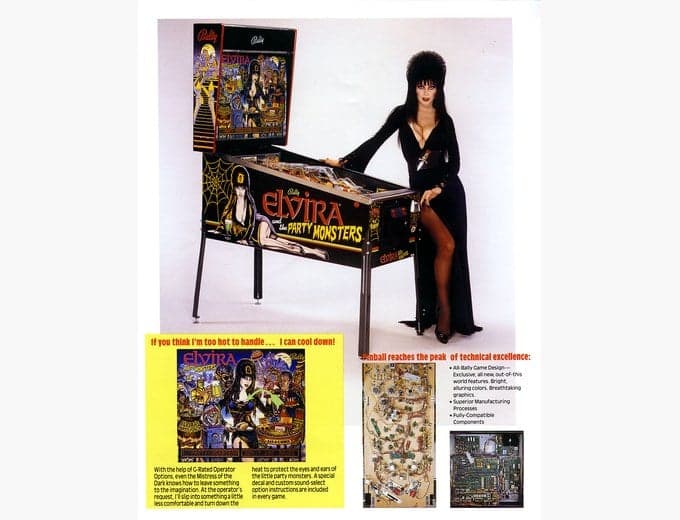
First pinball machine to feature a known celebrity voice to record call-outs specifically for the game.
Lights...Camera...Action! (1989)
Premier Technology — Jon Norris
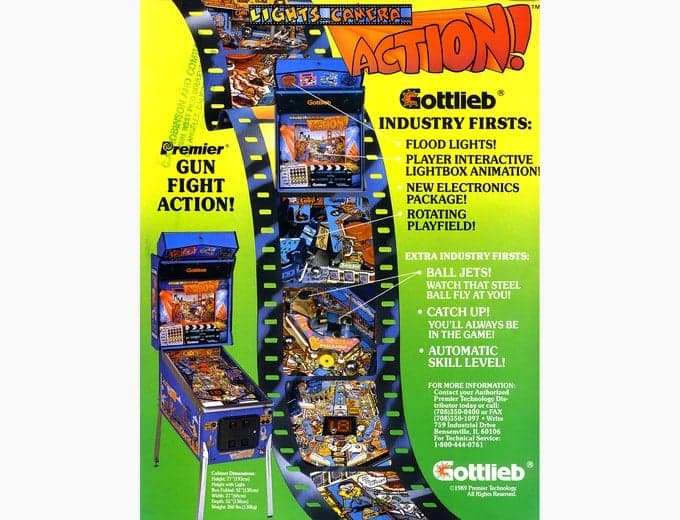
First pinball machine to feature various timed modes programmed in the ruleset.
RoboCop (1989)
Data East Pinball, Incorporated — Joe Kaminkow and Ed Cebula
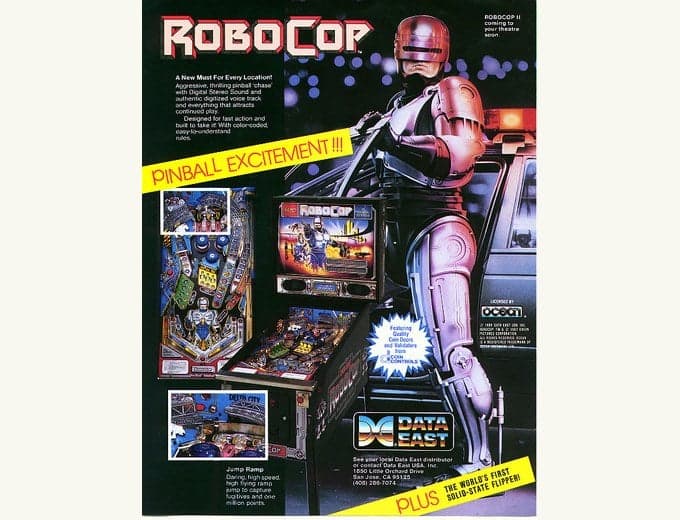
First solid state flipper assembly designated TY-FFASI, which apparently was an acronym meaning: "Take Your Fucking Flippers And Shove It".
Vegas (1990)
Premier Technology — Jon Norris
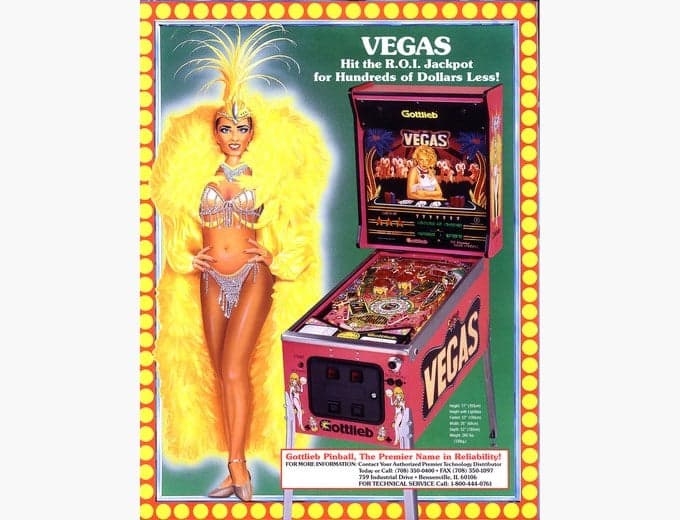
First game to use visible LEDs on the playfield (utilizing 7-segment LED displays for a slot machine toy feature).
DMD
Checkpoint (1991)
Data East Pinball, Incorporated — Joe Kaminkow and Ed Cebula
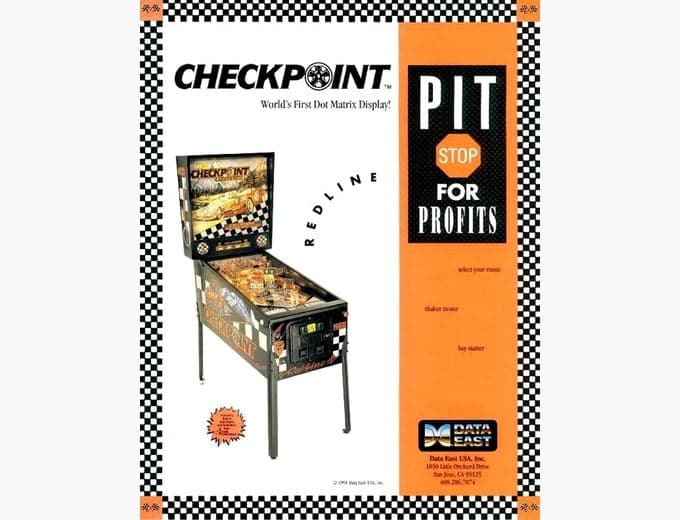
First game to be released with a dot matrix display (DMD) and featured "Lasermatic Speed Detection" that would inform the player how fast the ball was travelling. First game to have a combination automatic ball shooter and spring plunger, patented by Data East. First multiple music tracks selectible by player.
Star Trek (1991)
Data East Pinball, Incorporated — Ed Cebula
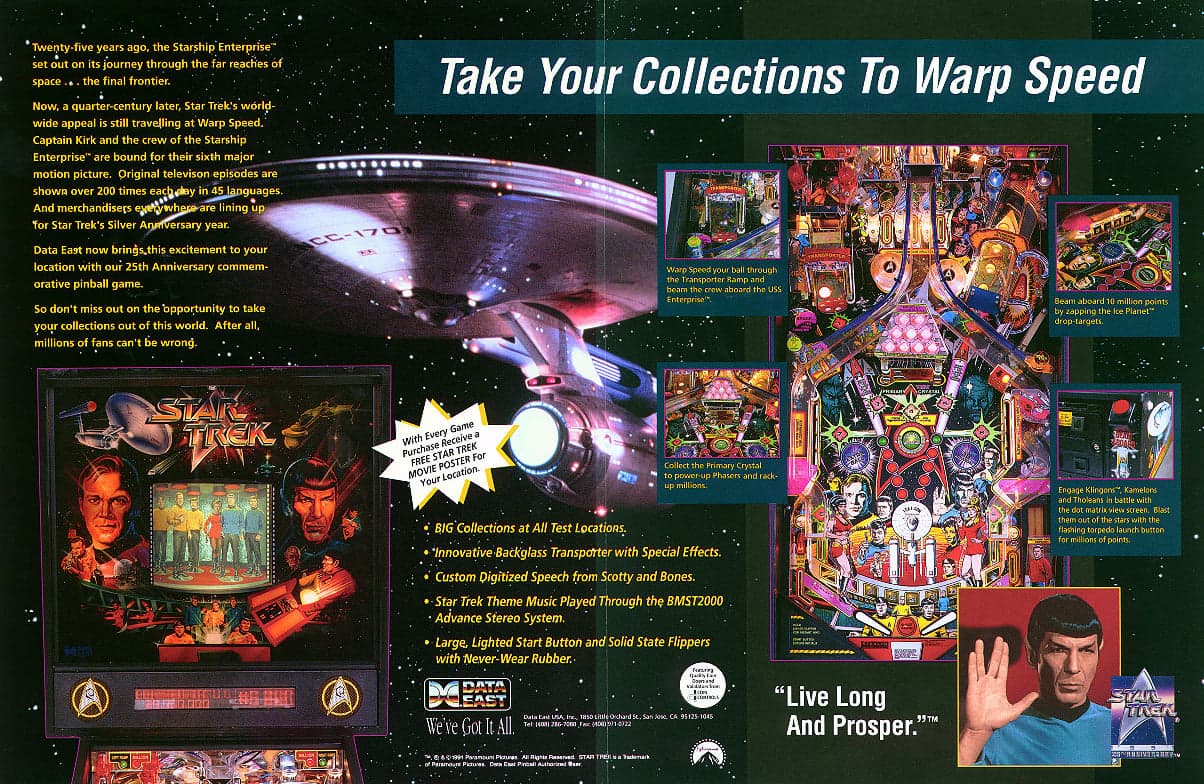
First commercial pinball machine to have a female lead software developer, Kristina Donofrio.
Terminator 2: Judgment Day (1991)
Williams Electronics Games, Incorporated — Steve Ritchie
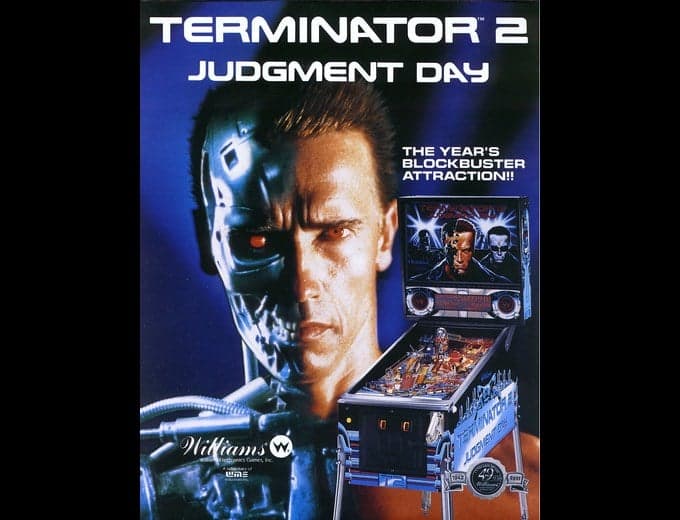
First game to game designed to use a "standard" Dot Matrix Display (DMD). First pinball to feature a "Video Mode". First game with a swing-out cannon, activated by the player.
The Machine: Bride of Pin·Bot (1991)
Williams Electronics Games, Incorporated — John Trudeau and Python Anghelo
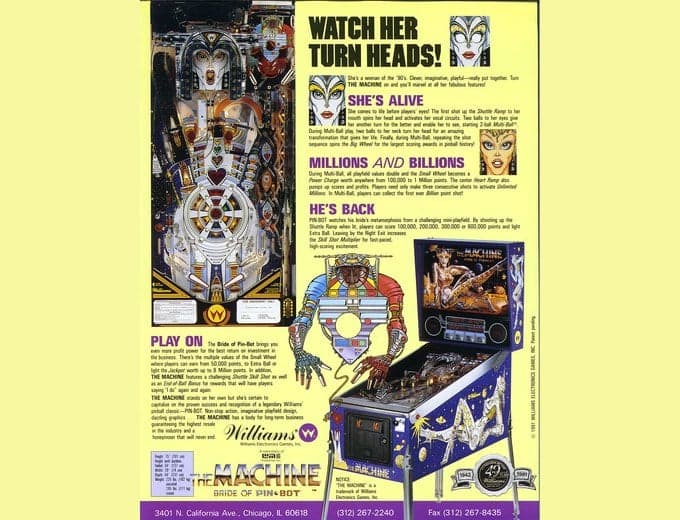
First solid state game to feature a billion point shot. Gottlieb accused Williams that the rotating playfield mechanism of the Bride's face was patent infringement. Gottlieb won the lawsuit and in lieu of monetary compensation, Williams was forced to share their patented automatic percentaging and auditing software with Gottlieb.
The Addams Family (1992)
Midway Manufacturing Company — Pat Lawlor
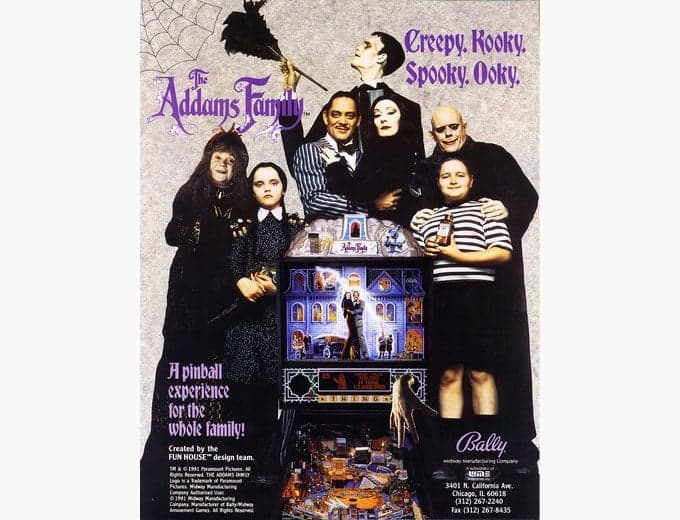
Most units of any modern pinball machine ever sold (21,270) including Special Collectors Edition "Gold" Edition. First "Fliptronics" (solid state control) flippers.
Indiana Jones: The Pinball Adventure (1993)
Williams Electronics Games, Incorporated — Mark Ritchie
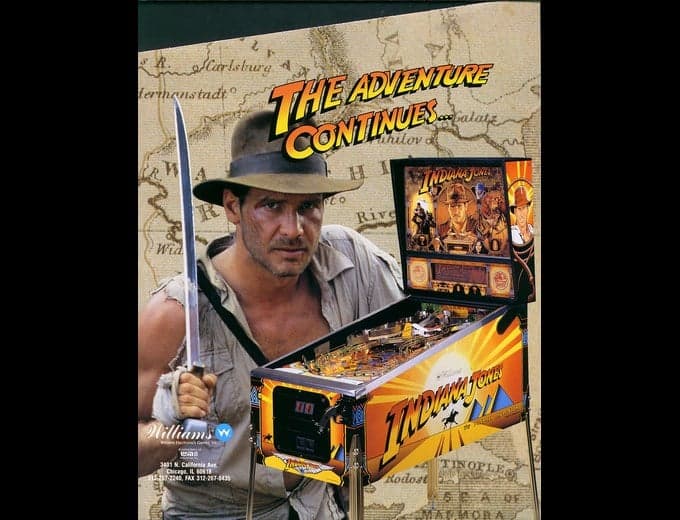
First pinball game to use Williams' DCS sound system.
Twilight Zone (1993)
Midway Manufacturing Company — Pat Lawlor
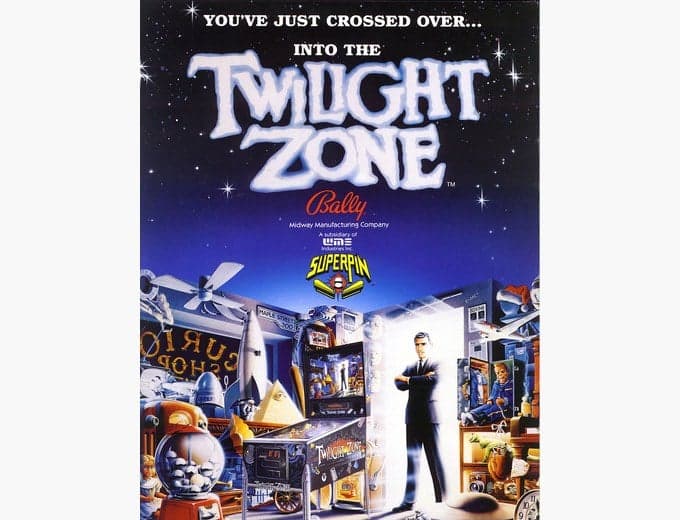
First 6-ball multiball (Lost In the Zone). First use of a ceramic pinball "Powerball". The most design patents filed for a single pinball machine ever. First "SuperPin" widebody cabinet.
Apollo 13 (1995)
Sega Pinball, Incorporated — Joe Kaminkow and Joe Balcer
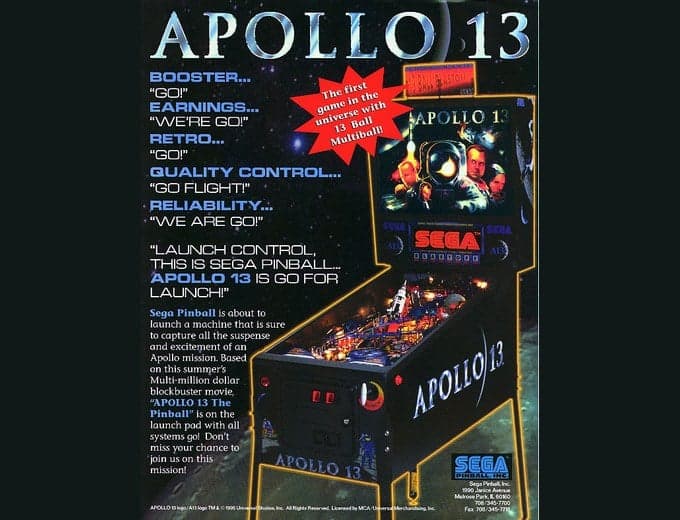
First 13-ball multiball.
Dirty Harry (1995)
Williams Electronics Games, Incorporated — Barry Oursler
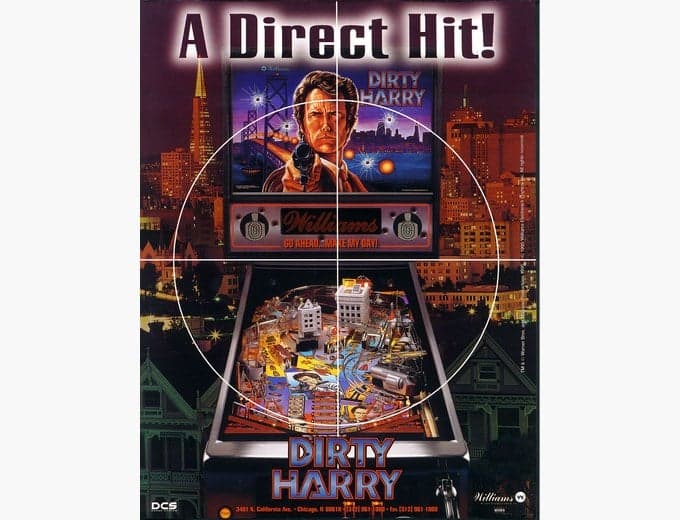
First game programmed with a "Midnight Madness" mode.
KingPin (1996)
Capcom Coin-Op, Incorporated — Mark Ritchie
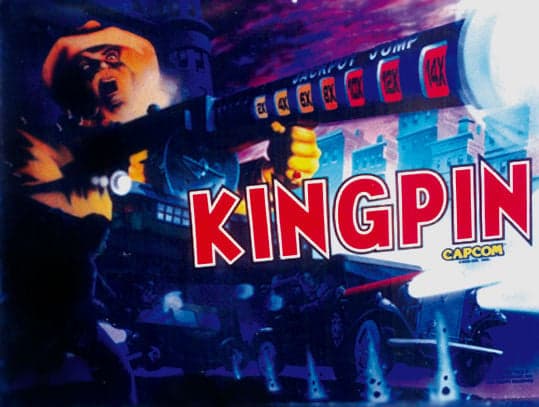
First game to feature a "Sudden Death" mode at the end of the game to save your ball.
Viper Night Drivin' (1998)
Sega Pinball, Incorporated — Rob Hurtado
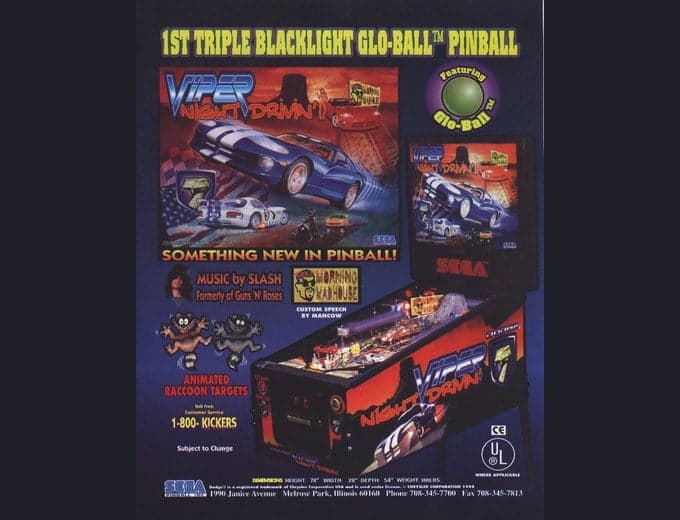
First game to feature blacklight (UV) effects and "Glo-Balls"
Revenge From Mars (1999)
Midway Manufacturing Company — George Gomez
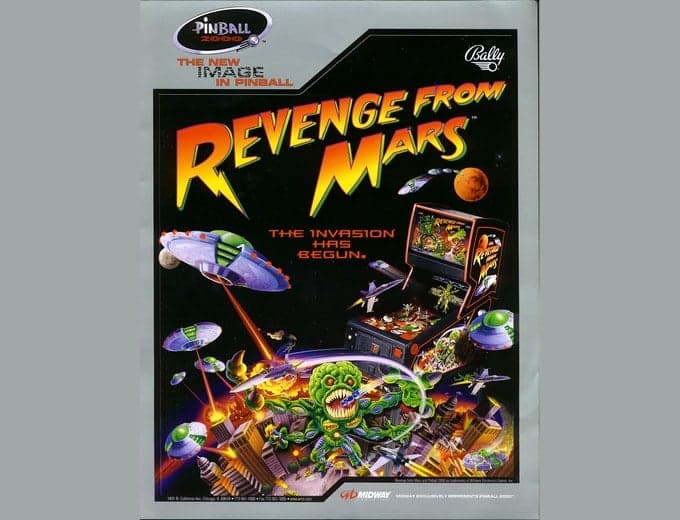
First game to feature Williams Pinball 2000 cabinet design featuring interactive holographic playfield elements, swappable playfields, the first pinball machine to include a true subwoofer for high-fidelity bass and first to present On-Screen Diagnostics display, first platform designed with network support, allowing machines to be linked for local tournaments or could be played remotely over the internet via the Telnet protocol and a webcam.
Monopoly (2001)
Stern Pinball, Incorporated — Pat Lawlor
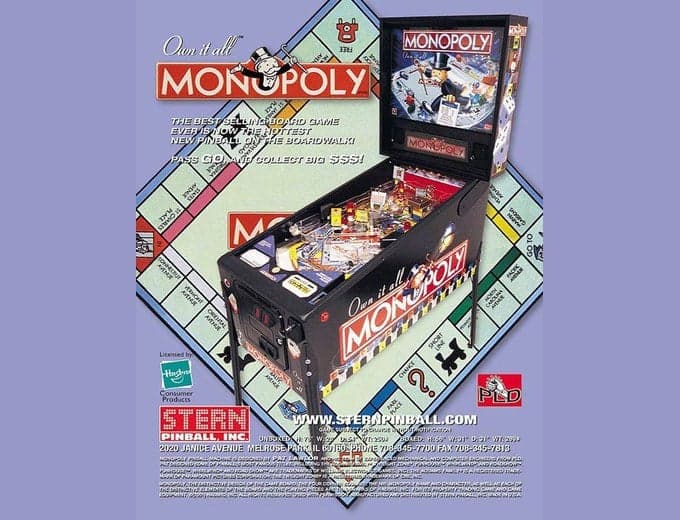
This game saved Stern Pinball from bankruptcy which sold 3,600 units. First game to be manufactured by Stern with an additional 40 "Platinum Edition" units. First Pat Lawlor design for Stern also marked the first time Gary Stern utilized an external design studio (Pat Lawlor Design) to build a production-line game which fully engineered the layout, code, mechanics, and art, and then licensed the completed project back to Stern to physically manufacture it.
Disney TRON Legacy (Limited Edition) (2011)
Stern Pinball, Incorporated — John Borg
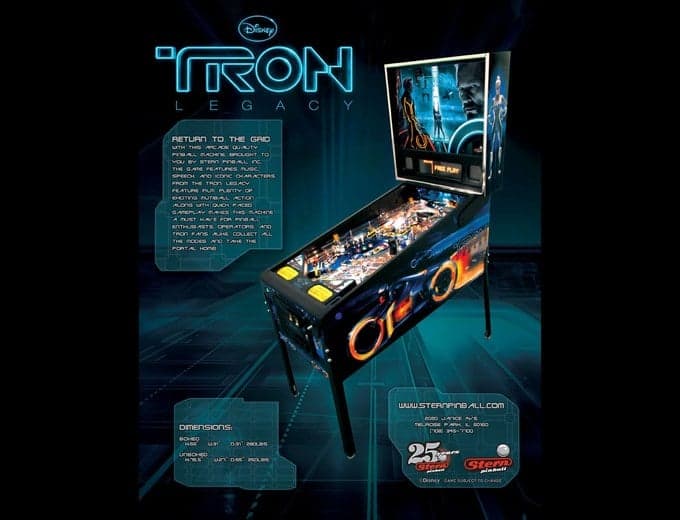
First game to have colour-changing RGB LED lights on the playfield.
AC/DC (2012)
Stern Pinball, Incorporated — Steve Ritchie
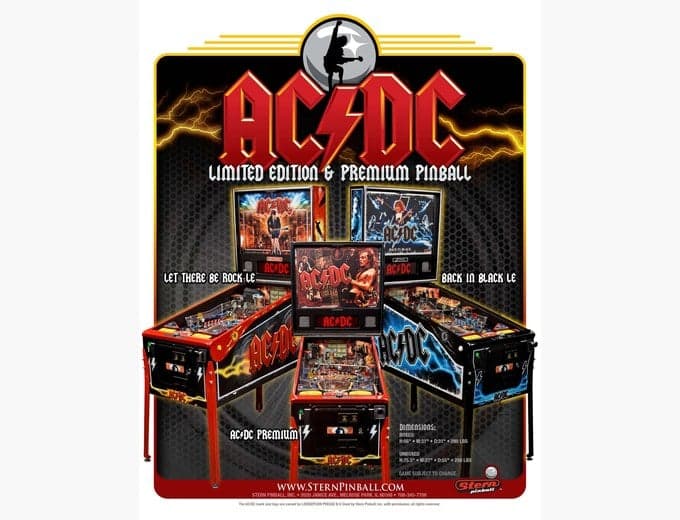
First Stern Pinball game to feature Pro, Premium and Limited Edition trim levels for a single cornerstone game.
Metallica (2013)
Stern Pinball, Incorporated — John Borg
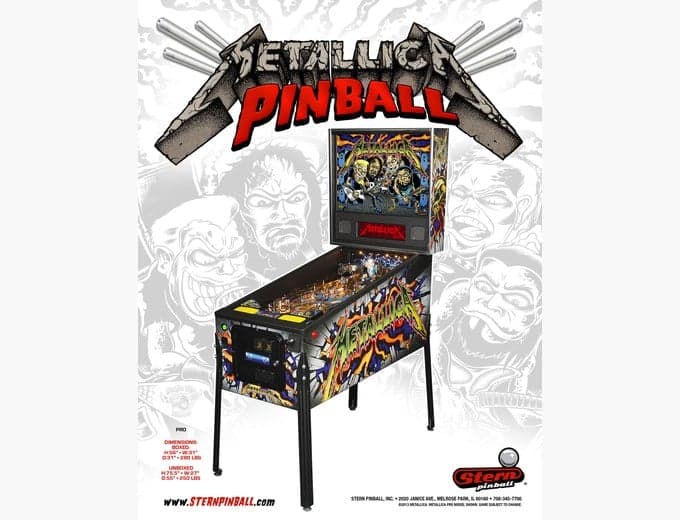
Longest production run in Stern Pinball history.
LCD
Virtual Pinball (2002)
TAB Australia
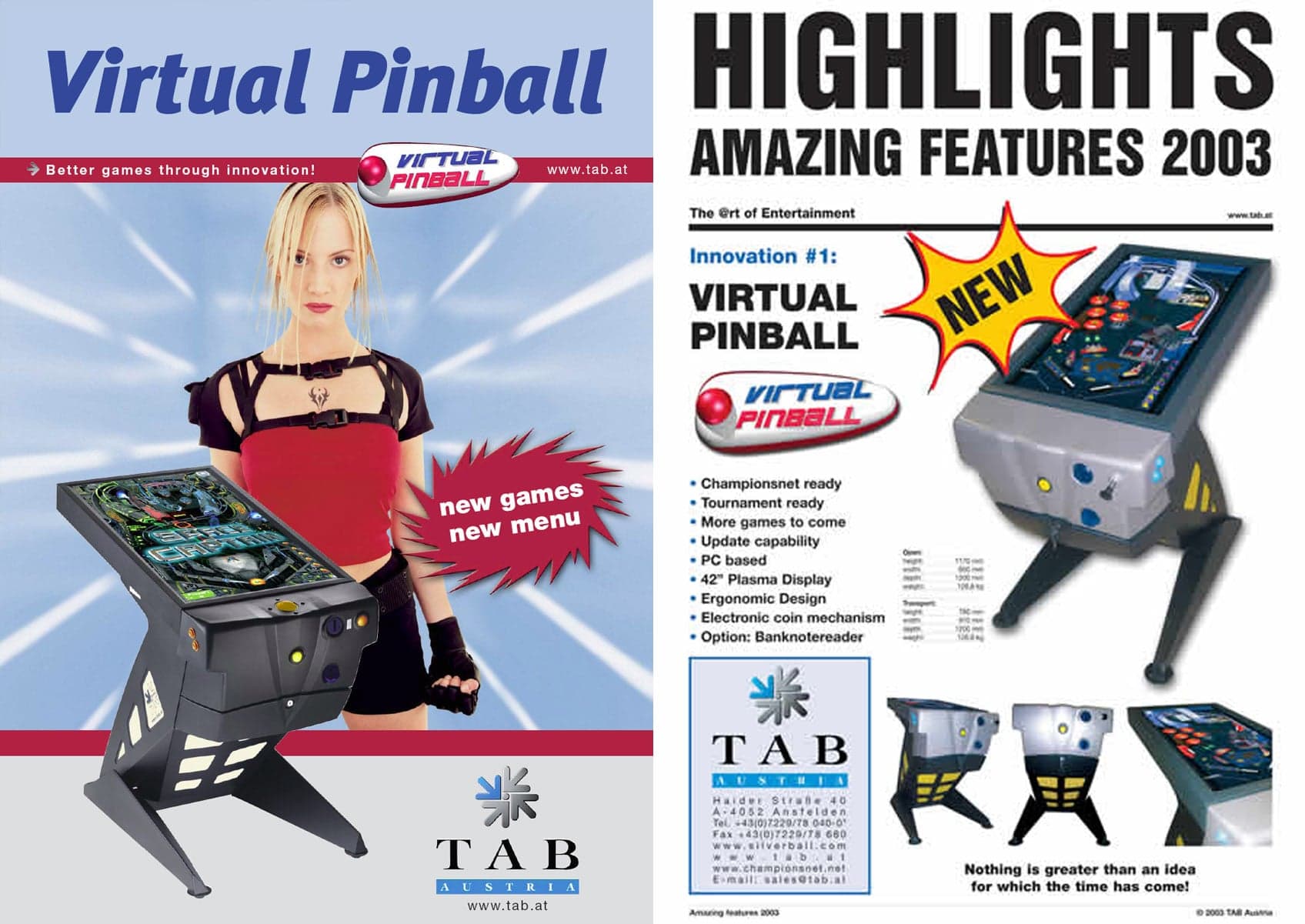
First pinball cabinet to feature a totally digital playfield consisting of a 42" plasma screen.
New Canasta (2010)
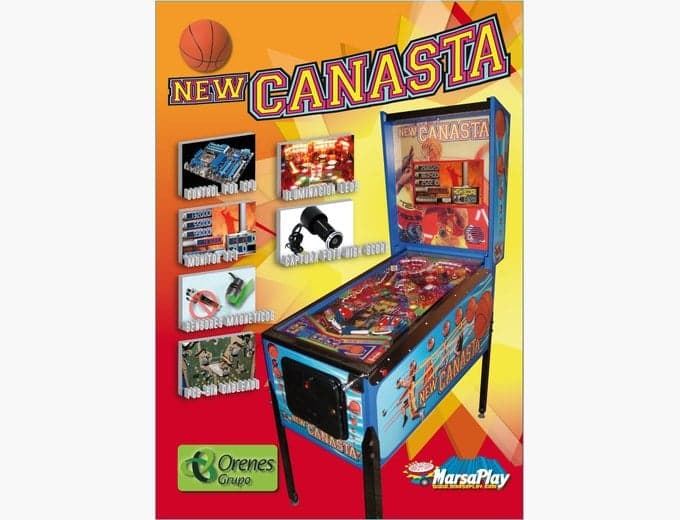
First game to feature a colour TFT-LCD screen and first game to integrate a digital camera.
Wizard of Oz (2013)
Jersey Jack Pinball, Incorporated — Joe Balcer
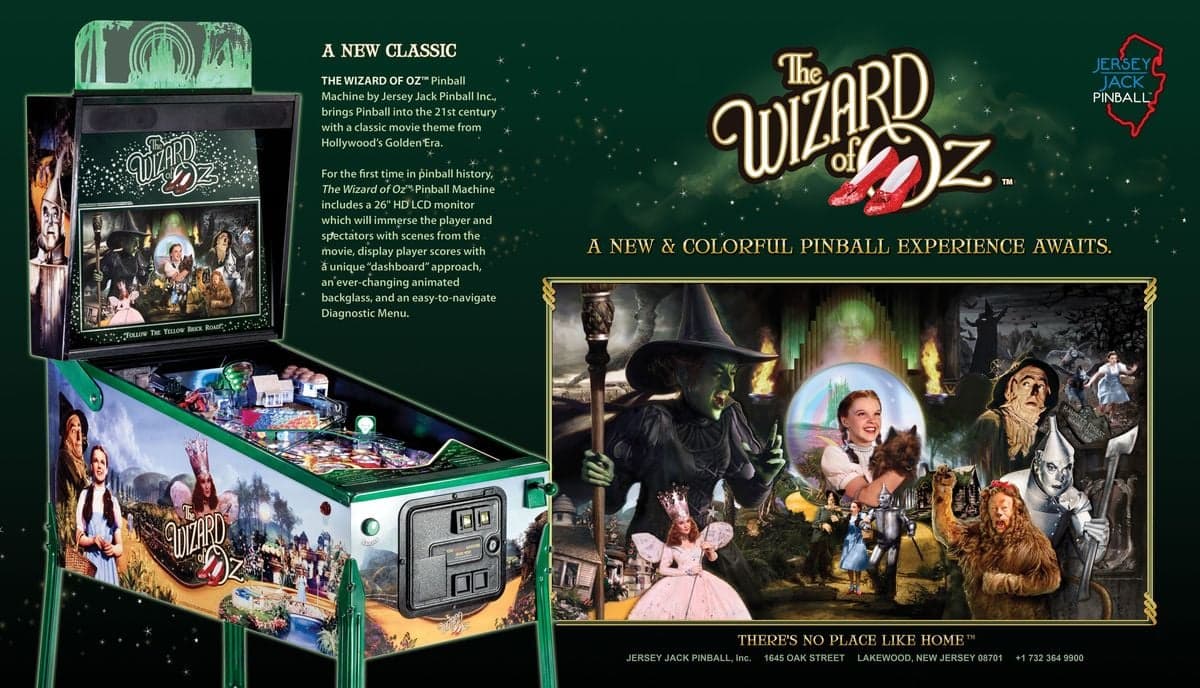
First pinball to feature a full colour, 26" HD LCD screen in the backbox. First game manufactured by Jersey Jack Pinball.
Full Throttle (2015)
Heighway Pinball, Limited — Dave Sanders
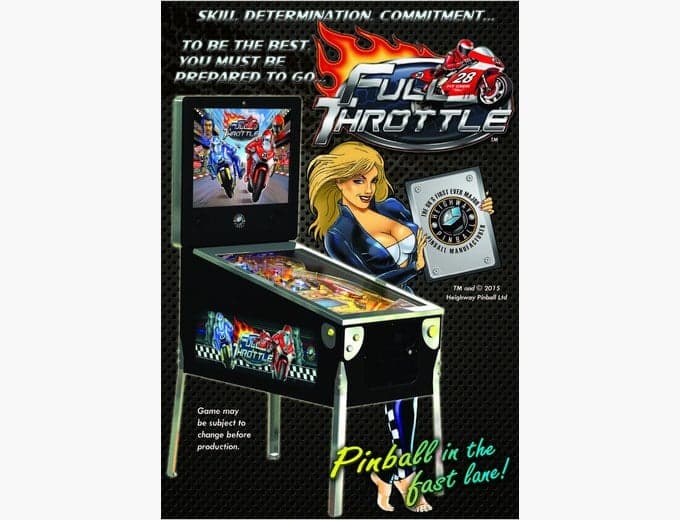
First pinball machine to embed an LCD screen directly into the playfield surface at the player’s eye view.
Dialed In! (2017)
Jersey Jack Pinball, Incorporated — Pat Lawlor
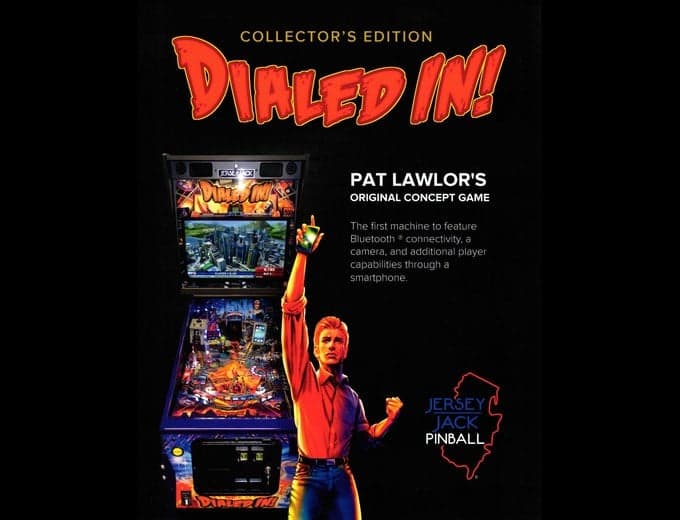
First machine to feature Bluetooth connectivity, allowing players to control flippers via a smartphone app and interact with the game remotely.
Lexy Lightspeed: Escape From Earth (2017)
Multimorphic, Incorporated — Dennis Nordman
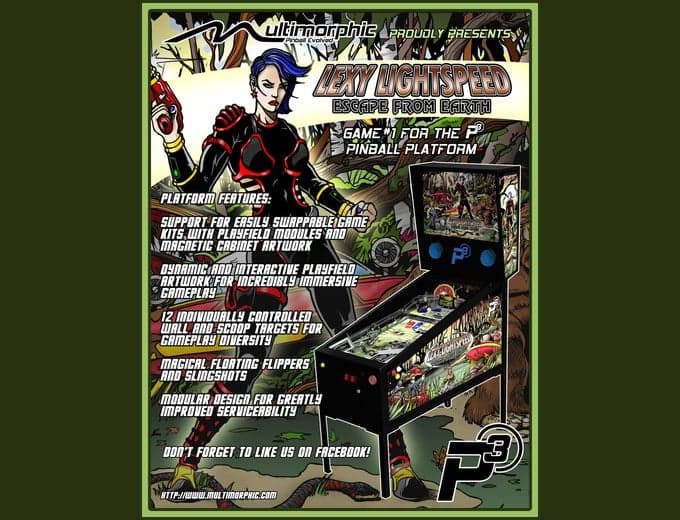
First game with a hybrid playfield featuring an LCD screen with interactive ball-tracking technology and swappable modular upper playfield sections. First platform to feature Wi-Fi connectivity. User programmable P-ROC circuit board.
Total Nuclear Annihilation (2017)
Spooky Pinball, LLC — Scott Danesi
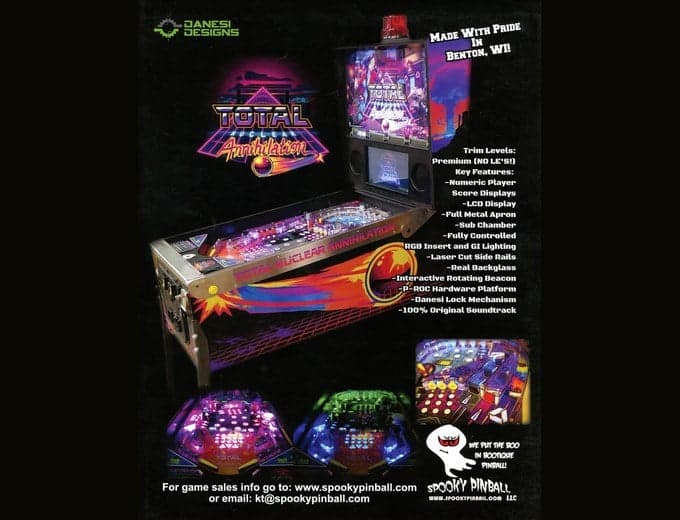
Originally a homebrew game developed by Spooky Pinball. First game to feature the "Danesi Lock" mechanism. First to feature 4 player co-op play mode, dynamic difficulty scaling. A narrative driven ending to finishing the game.
Godzilla (2021)
Stern Pinball, Incorporated — Keith Elwin
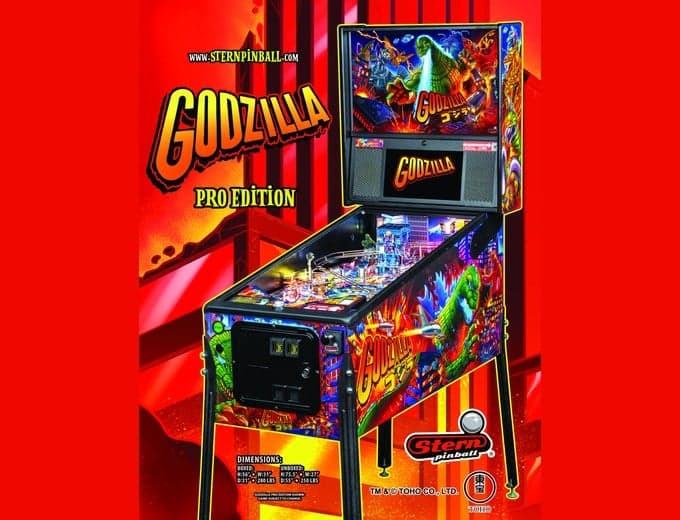
First game to feature factory-installed Insider Connected feature. Biggest seller in Stern Pinball's company history (possibly breaking Addams Family record in near future!)
Venom (2023)
Stern Pinball, Incorporated — Brian Eddy
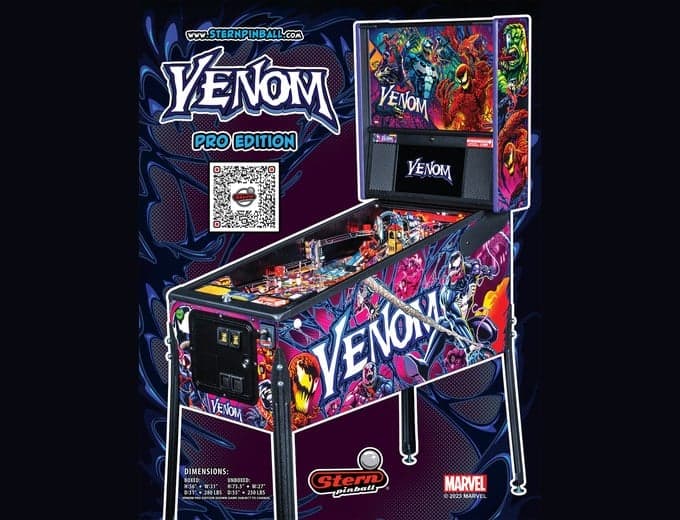
First game with "connectivity persistence" allowing players to save progress on their IC profile over multiple games.
Dungeons & Dragons: The Tyrant's Eye (2025)
Stern Pinball, Incorporated — Brian Eddy
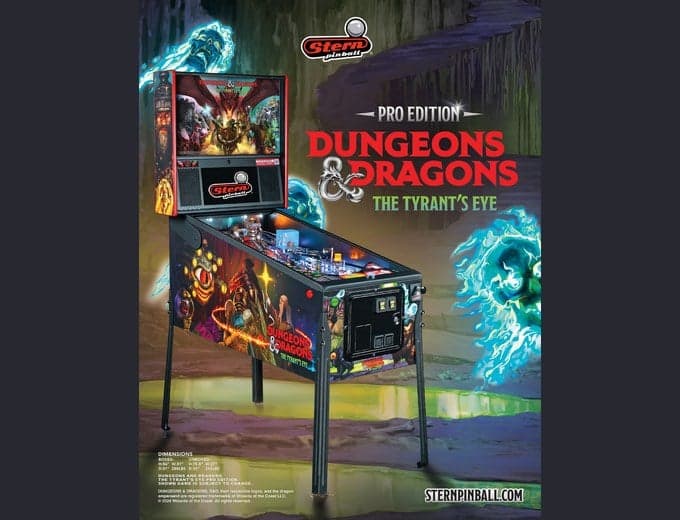
The Red Dragon mech is the most advanced animatronic mech ever designed in a pinball machine.
Mothership (2025)
homebrew project — Tanner Petch
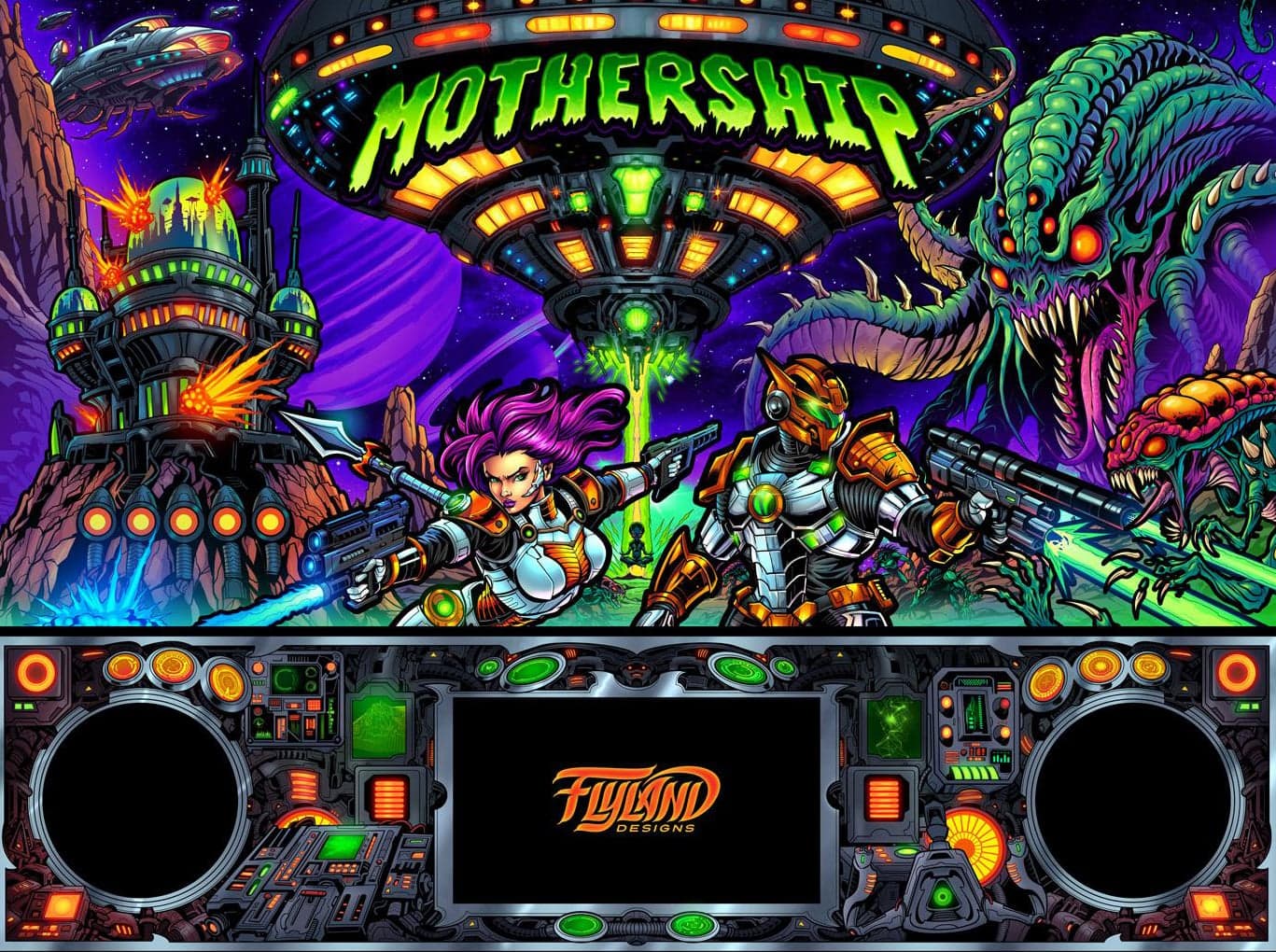
The largest homebrew pinball machine ever made.
Other
3D Pinball for Windows – Space Cadet (1995)
Maxis — Kevin Gliner
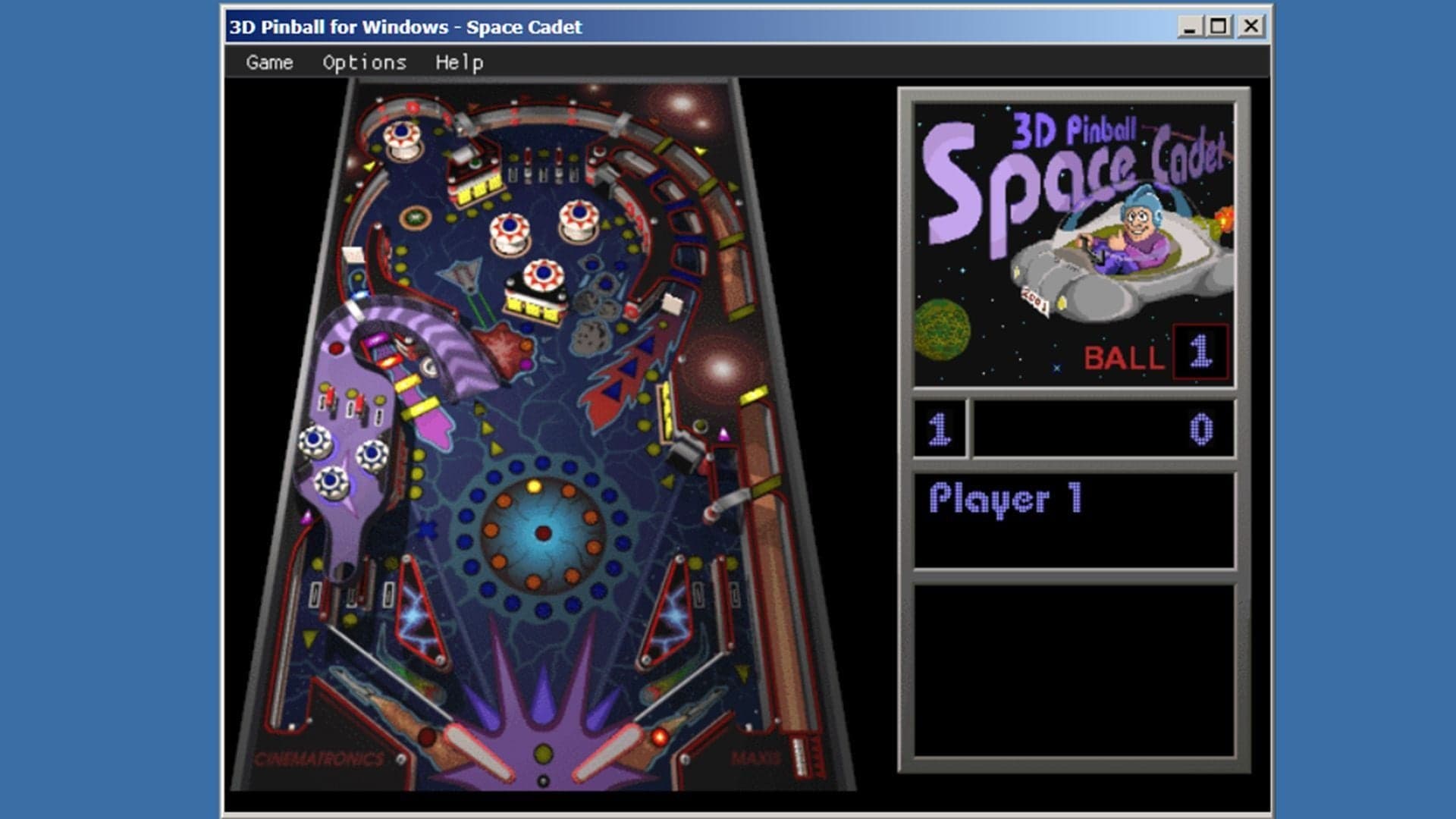
An estimated 1 billion PCs with various Windows operating platforms included this free demo from the Full Tilt! Pinball computer game.
The Pinball Arcade (2012)
FarSight Studios — Bobby King
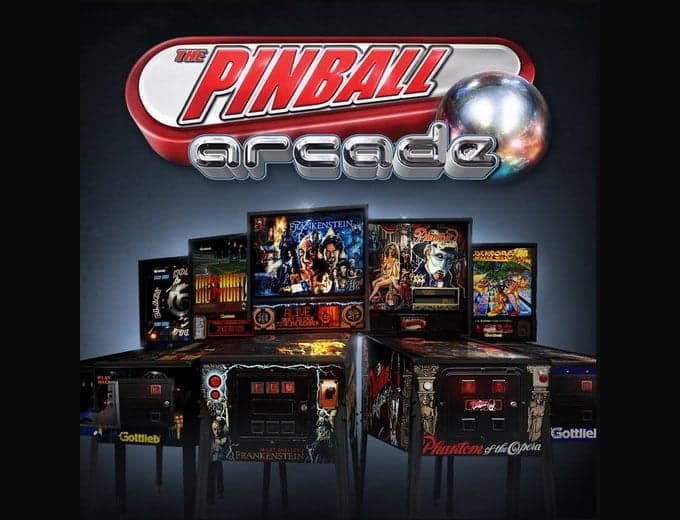
Multi-platform video game with nearly 100 digital reproductions of real pinball machines produced by Williams, Bally, Gottlieb, Alvin G. and Co., Data East, Sega Pinball and Stern Pinball. Over 7 million downloads.
Special Thanks
Special thanks to Rob Berk, Roger Sharpe, Jay Stafford of IPDB.org, and to Michael Shalhoub, author of the Pinball Compendium series.
Note, an earlier version of this list credited Royal Flush with the first match feature and the first Roto-Targets; both belong to Majestic, which predates it. It also credited Lost World with the first electronically generated sounds, which belong to Play boy, eleven years earlier, and Fireball with the first uphill ramp skill shot, which belongs to Four Million B.C., a year earlier. The entries have been updated.