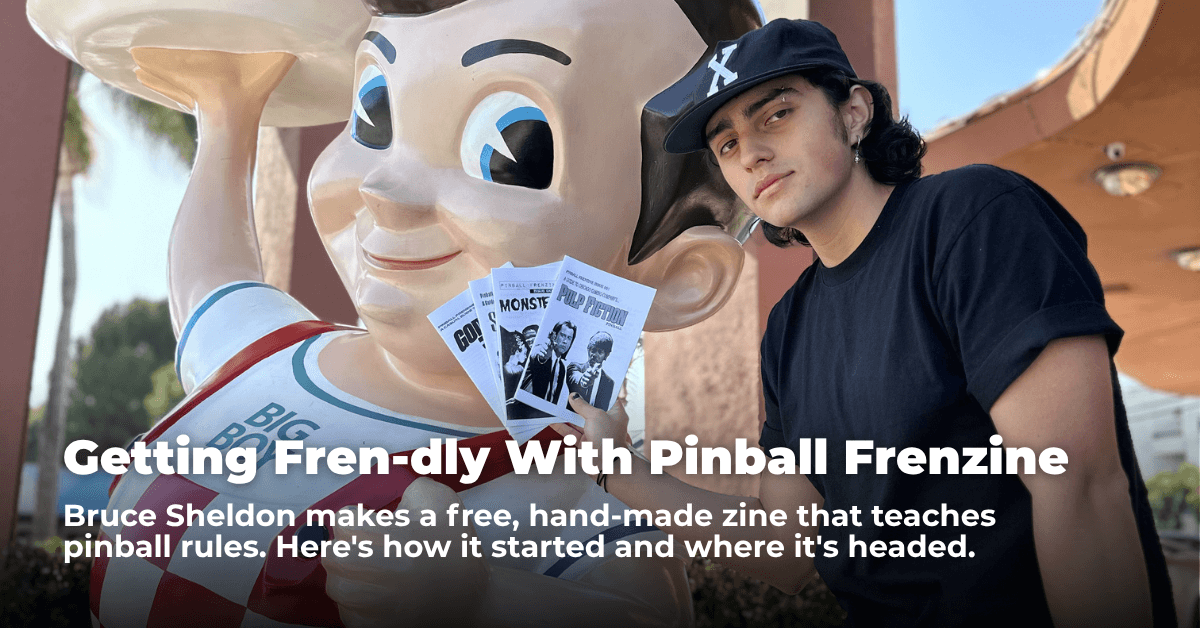
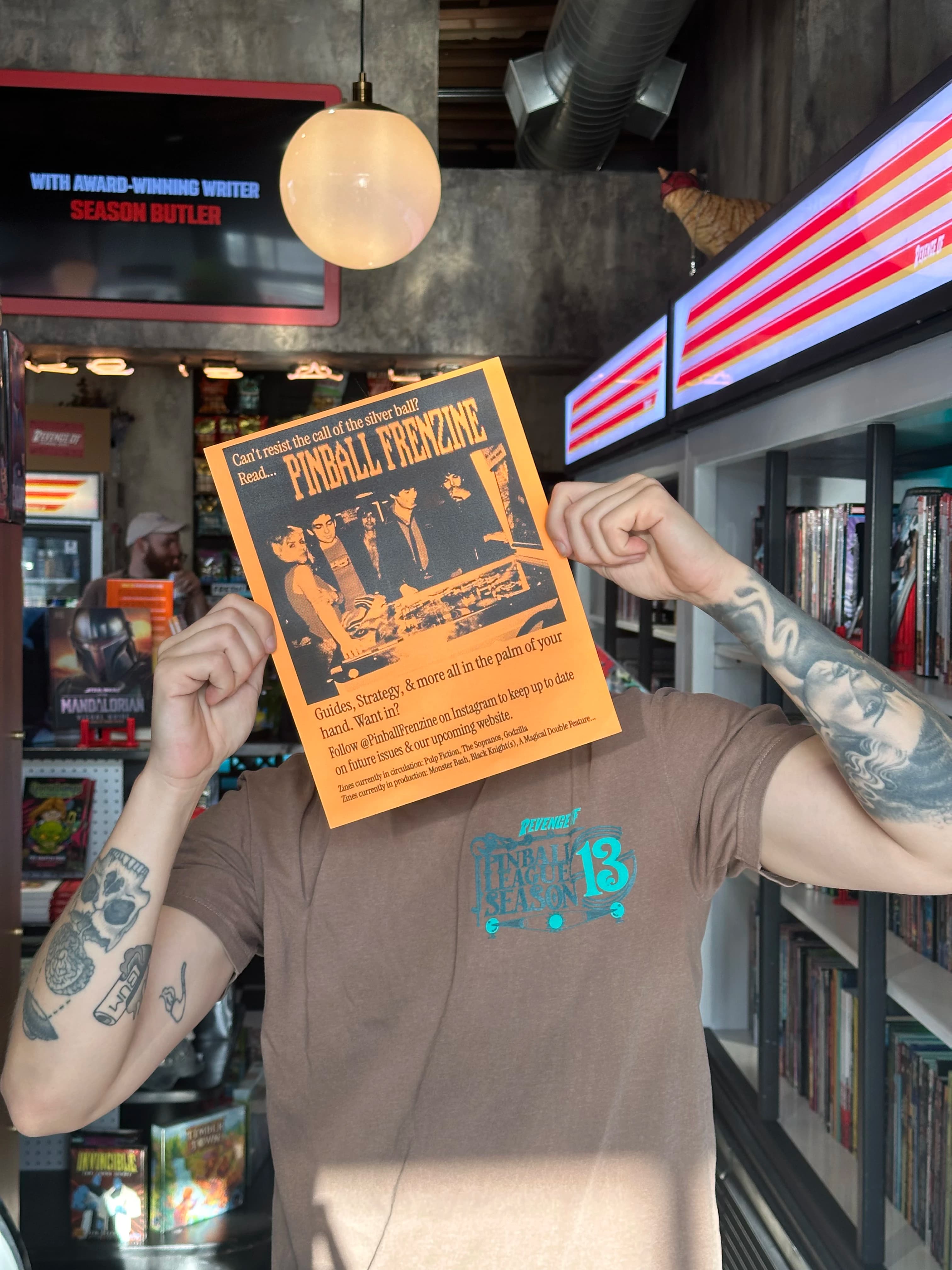
While we’re out here endlessly doom-scrolling AI slop, Bruce Sheldon is sharing his love for pinball with hand-made charm, wit, and DIY gusto, spreading the silverball gospel – and touching a lot of copier paper, if not so much grass – through his passion project, Pinball Frenzine. A new series of self-published pinball guides (available in physical form and on Instagram), the Frenzine is real hands-on, low-tech fun, and each half-letter paper-sized issue is packed with information and insights.
Bruce, a Southern California native who recently relocated to the Pacific Northwest (I’m not saying he moved just to be close to the Portland pinball scene, but you do the math) took time out of his flipping and printing schedule to talk to me about how Pinball Frenzine came to be, what it takes to put it all together, and where he wants to go with it in the future.
Interview with Bruce Sheldon of Pinball Frenzine
Benjamin Plotkin: Tell me about how you got into pinball.
Bruce Sheldon: The first time I ever remember playing pinball, I had to be around 8-10 years old. This restaurant down the street from my house had a Stern Pirates of the Caribbean. I remember playing it one time, just slapping the flippers as children do, and somehow I got a score in the realm of 10 million. In my head, that seemed like the highest score ever, and I looked at the leaderboard to see that the high score #3 was only 40 million. I thought that I too could reach that point if I kept playing it, with my little 10-year-old self being able to brag to all my friends that MY initials were on the leaderboard. I then promptly forgot all about that machine and never played it again.
Fast forward to when I’m around 14 years old, and my family goes on a trip to Las Vegas. The one thing I remember my dad being adamant about the whole trip was that we had to check out this place called the “Pinball Hall of Fame”. I remember being largely indifferent until I realized that they also had a bunch of claw machines. That was my shit right there. Once we arrived, I actually kind of dug all the pinball machines they had, and thought they were neat to just look at, even if I wasn’t super entertained playing them. That all changed when after probably two hours of my dad telling me I had to try this one machine, he corralled my sister and me into playing Monster Bash. For reasons still unbeknownst to me today, this was the one machine in the entire Hall of Fame set to a 5-ball game. That alone won me over. Combine that with Frankenstein slamming the keys and The Wolfman pleading for me to fetch him a razor? I was head over heels. I got pinball after that, and Monster Bash was my gateway drug.
Benjamin: What inspired you to start Pinball Frenzine? Did it grow out of a desire to push yourself to learn more rulesets? Or did you just want to share the rules knowledge you’ve gained as a player thus far?
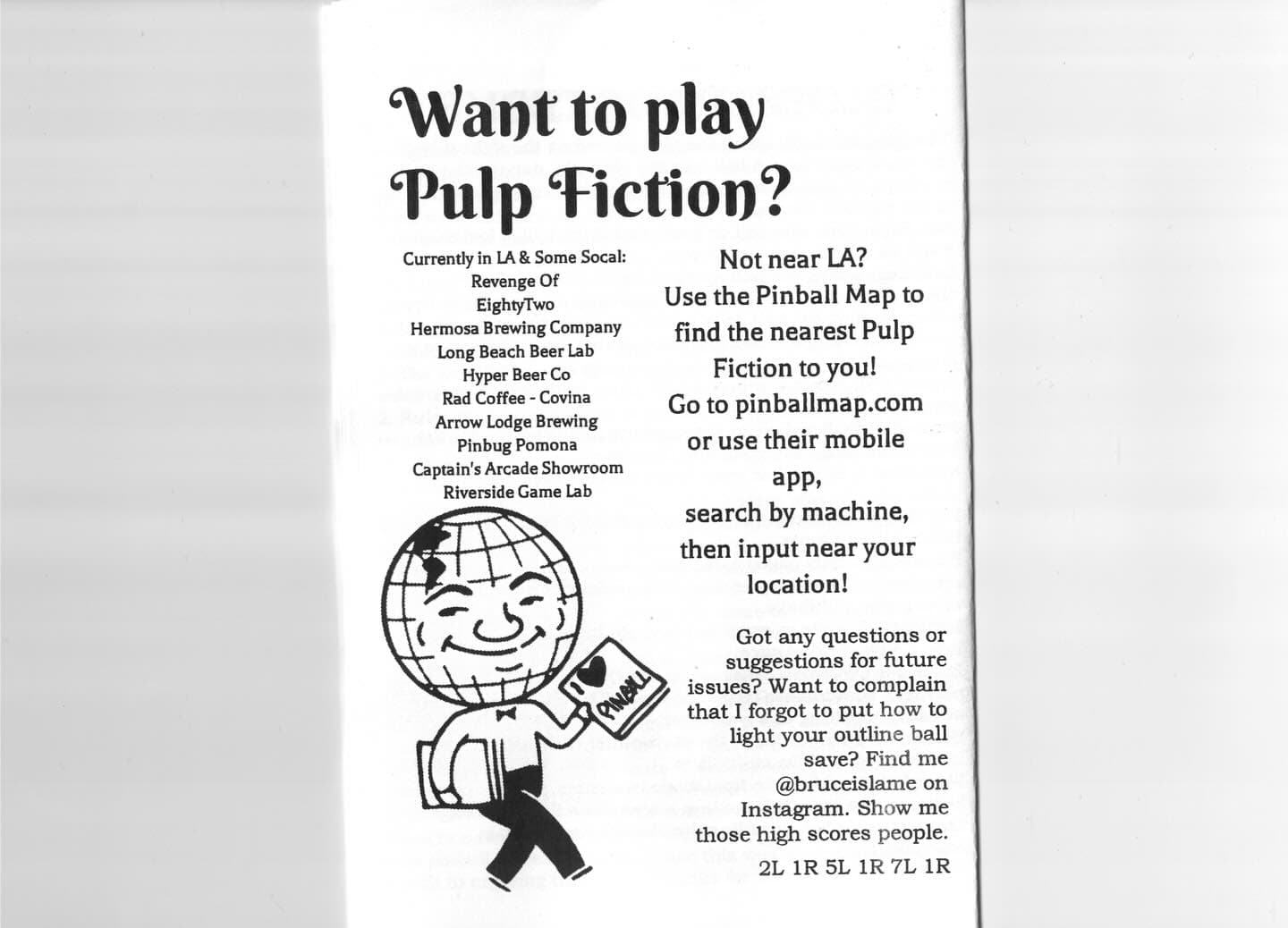
Bruce: The idea for the zine came from me just wanting to make a zine in the first place. I had that drive to make something burning in me for over a year, but I never had strong enough ideas to make a full one. The last time I was at Next Level, I guess my mind was just wandering while I was playing their copy of Pulp Fiction. While I was playing it, I thought to myself, “Why don’t my friends like this machine? It rules!” My friends all disliking Pulp Fiction made me realize that I should do something in order to show them what it has to offer. The physical element of a zine came from my previous desire to make one, and also thinking that a handheld guide would be more engaging than just pulling up a rulesheet on their phone, or sitting them down to watch a tutorial. It’s also less awkward of a scenario to hand someone a copy and say, “Hey! You should check this out to learn more about Pulp Fiction,” instead of mansplaining the rules to them directly or watching over their shoulders while they play a game. I thought a relatively short zine would be the perfect medium to show new players what Pulp Fiction is all about, while also giving me the opportunity to share some pieces of the game that more experienced players may not be aware of.
Benjamin: I like that your guides give the reader the option to progress through a game’s features and/or rack up a big score. What do you find more gratifying, unlocking mini-wizard modes, or rolling a game?
Bruce: It’s on a game-to-game basis for me. New games are designed to have rulesets that on-location players will never fully understand, so making it far into one and getting a crazy endgame mode is rewarding to me when I feel like I’ve earned it. Big scores are always satisfying to all players, though. This question is hard! If I had to pick one, it would be getting a big score, with the caveat that I have to feel like I deserved that score for the work I put in. Playfield multipliers do not apply!
Benjamin: What’s your process for creating an issue of Pinball Frenzine?
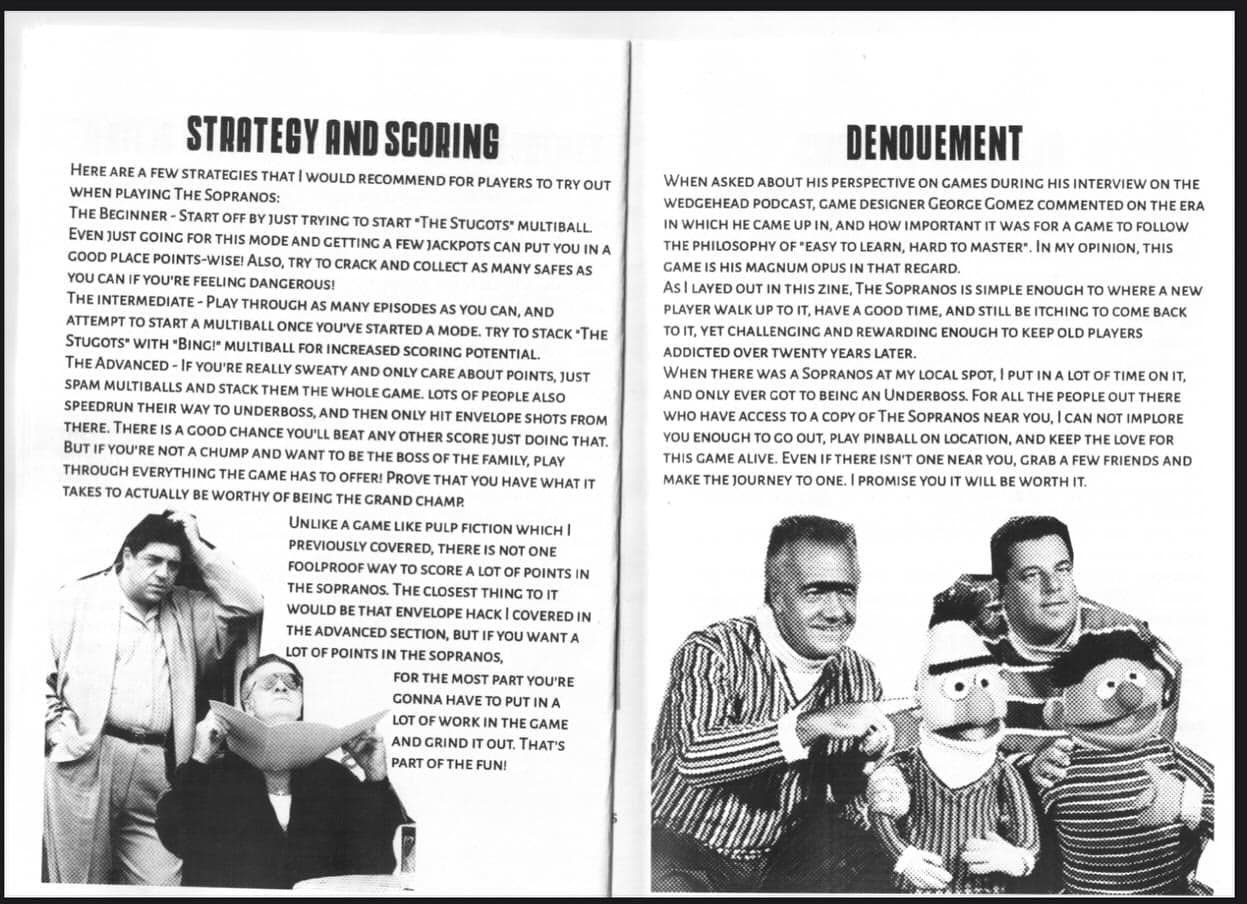
Bruce: It starts with me picking a machine I think would be good to cover, and then wracking my brain to see what I already know about it. Pulp Fiction, for example: I knew how to start both the main multiballs, how to collect characters, and how each of the episodes worked. But I had no idea how to actually progress in the multiballs, or how something like Super Spinners worked. At this point in the process, I will search through a few different rulesheets so I can double-check that my information is correct, and then plan out a table of contents for everything that’s going to go in an issue. I normally start writing them in the order I lay out in the table of contents. The natural progression of them makes it easier for me to flow from topic to topic, since they’re arranged typically how I would progress in an actual game if I were playing. I’ll also normally start out just generally looking for images I think would look good for the zine, and then filling in any gaps as they come up as I put together the pages.
Benjamin: Do you spend more time finding cool imagery or researching rules?
Bruce: I definitely spend more time researching rules. I’d say it’s probably 45% researching, 45% writing, and 10% finding cool pictures for the issues. I’d much rather have a lame picture on a page than spread misinformation, though I’m sure I’ve messed up on something in an issue that’s yet to be corrected. Finding cool imagery is probably my favorite part of the process. I find most of them on Pinterest, but if I have a specific idea for an image I really want, I’ll just search for it directly on a search engine.
Benjamin: Is Pinball Frenzine a solo endeavor?
Bruce: For the most part; I do get some help from my dad, Ryan Sheldon, and my girlfriend, Alyssa Loffelmann. My dad is a big help with a lot of the technical issues I have with printing and things of that nature. He’s also going to be a big help when we move to making a website to house the zines, at some point in the nearish future. Alyssa helps a lot with actually putting the zines together, stapling them, and making sure they’re all ready to be in people’s hands. Other than that, I’m not at the stage where a larger form of collaboration has been proposed to me, but I’m open to it.
Benjamin: What tools do you use to create the zines?
Bruce: I make each of the pages for the zines individually on Photopea, a free browser version of Photoshop that I already have a lot of experience working in. When I print them, I just use my family printer or go to Office Depot for a larger order. From there, I have this nifty long stapler my dad got me that staples all the zines, and then I use a wooden spoon to fold them. Once they’re finally put together, I usually put them under a heavy object to try and flatten them for ease of travel and storage. Just a lot of simple tools that everyone can use and understand. Nothing crazy fancy, you know? “Hashtag DIY.”
Benjamin: What part of the zine-making process is the most satisfying to you, graphics and layout, or writing up the content (or something else)?
Bruce: The process that’s most rewarding to me is definitely when I get the zine into my hands, and it’s a finished product. I always get a wave of satisfaction when I can flip through an issue that is printed properly.
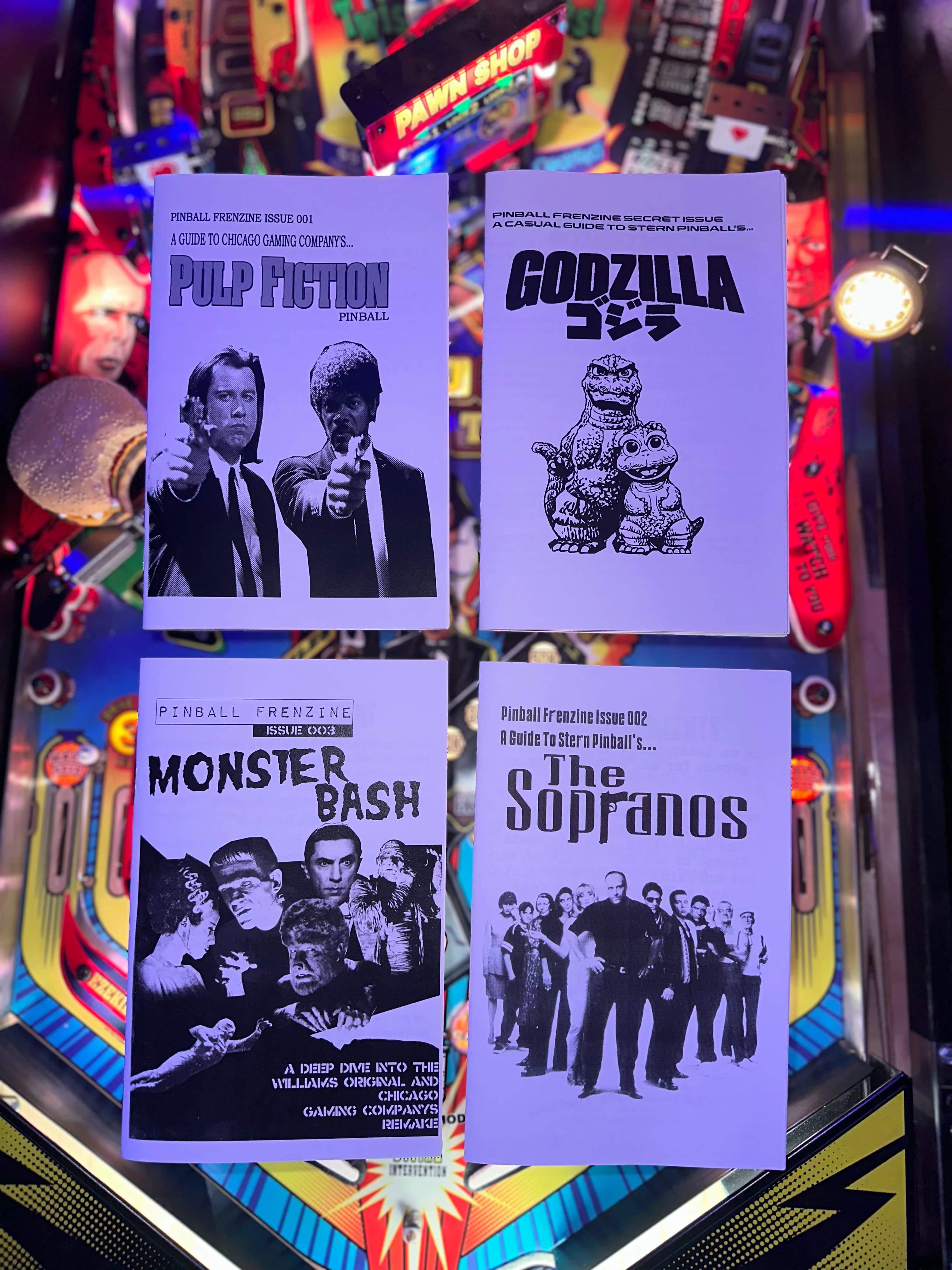
Benjamin: You’ve created cool guides for Pulp Fiction, Sopranos, Godzilla, and Monster Bash – what’s next on the agenda?
Bruce: I’ll probably take a short break as I move from Southern California to Southern Washington, but I’m going to eventually start work on the next two issues: a Black Knight trilogy and a double feature of Theatre of Magic and Pinball Magic. A big supersized issue might come out sometime around the end of the year. No promises, though.
Benjamin: You’re cool with letting folks print out and share Pinball Frenzine freely; is that something you plan to continue as you build up your collection of guides?
Bruce: I’m still experimenting and learning as I go with distribution. I’m big on keeping it free for the most part, since in my eyes, all the information found in it is already available online. If I were to make them cost something, you’d be paying for the cost of printing, but I don’t feel like it’s worth it to get paid for compiling the contents of the zine. I’m fine with that just being something I do out of passion. Since I’m big on wanting to keep the zine free in most cases, I think it’s a natural progression to just make them available to print for everyone.
Benjamin: Do you see yourself expanding Pinball Frenzine content into other media, like video, or long-form features?
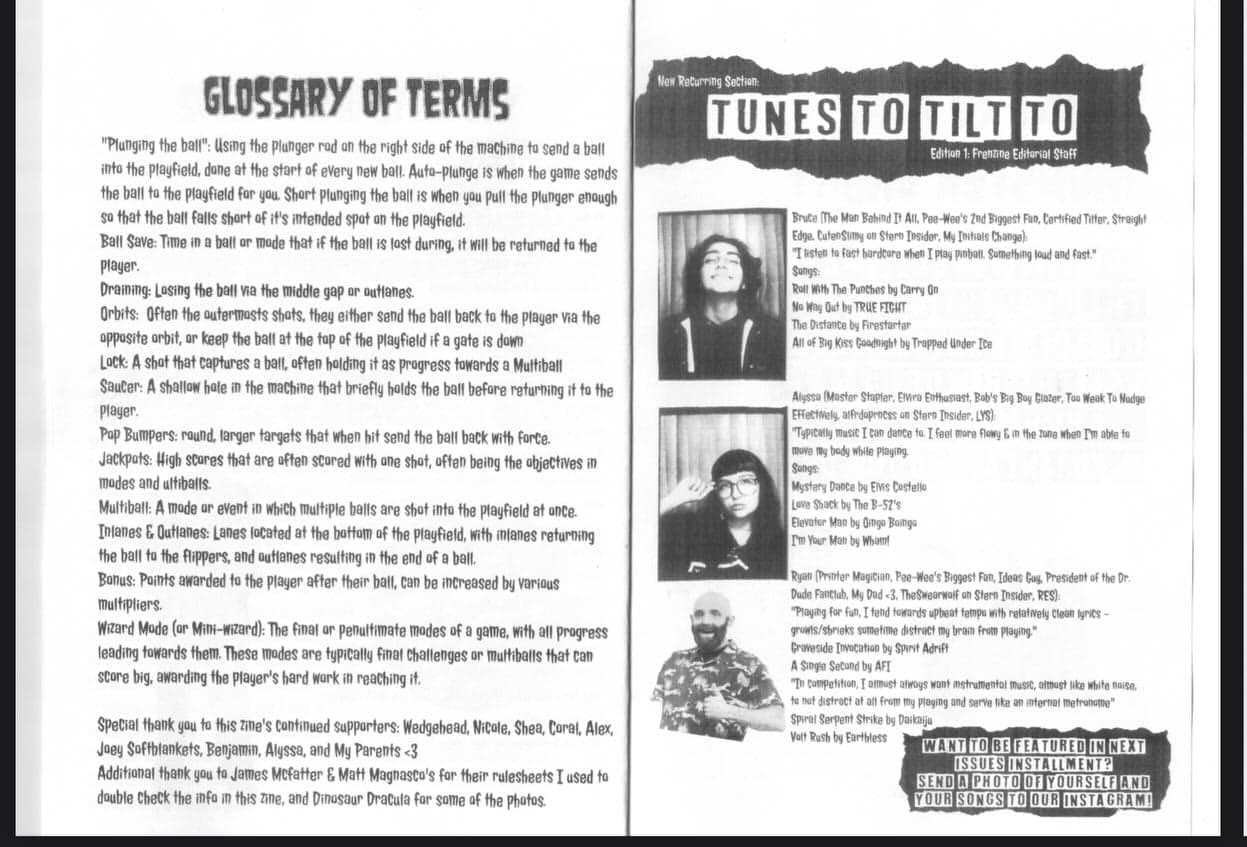
Bruce: At some point I’ll be streaming pinball with my dad, but I think that will be separate from the zines. I think the zines will remain physical tools and pieces of media. If anything, I’ll expand the zines to hold other pinball media and topics, not limited to the specific machine I’m covering. In the Monster Bash issue, I’ve introduced a new featured section called “Tunes to Tilt to,” where readers can submit a photo of themselves, their initials, and what songs they listen to while playing pinball, with an explanation as to their choice. I think it’ll be a cool way to increase reader interactivity, but also show the diversity in what people are listening to, and I’m thinking about keeping a running playlist with all the songs that get submitted.
Also, Alyssa and I just brainstormed an idea for a new featured section where I’ll interview people about what their dream-themed machine or homebrew is, and I’ll give my best artist's interpretation of how that game would look, and write out whatever rules that person dreams up. I think it could be funny!
Benjamin: It sounds great! Speaking of dream machines, what are your current fave pins? Do you have a “holy grail” pin you’d love to have?
Bruce: If we’re going off my PinballRanker list, my top three in order are Theatre of Magic, No Fear, and Total Nuclear Annihilation. I’ll stand on my opinions for all three of those games any day of the week. They’re endlessly fun to me. Besides that, right now I’m especially loving Eight Ball Deluxe, Alien Star, Fathom, Strikes & Spares, Baywatch, and Star Wars (2017).
I think if I were to have a true holy grail, it would have to be Pinball Circus. There is quite literally nothing like that game. I’d also love to have the ability to get the Total Recall machine that was prototyped by Data East made and in my hands. You gotta check that out if you don’t know about it. Machines that would actually be somewhat feasible for me to have? Kingpin, Playboy (2002), Diamond Lady, or Demolition Man.
Benjamin: What words of encouragement can you give to folks thinking about starting their own independent creative pursuits in the pinball space?
Bruce: You just have to start. It’s cliché, but that is the hardest part. Even if you don’t end up with a finished product, the fact that you started and made something is something to be proud of, as opposed to never making anything at all. Pinball is so niche and insular that any contribution to the space is bound to be noticed, heard, and appreciated by others.
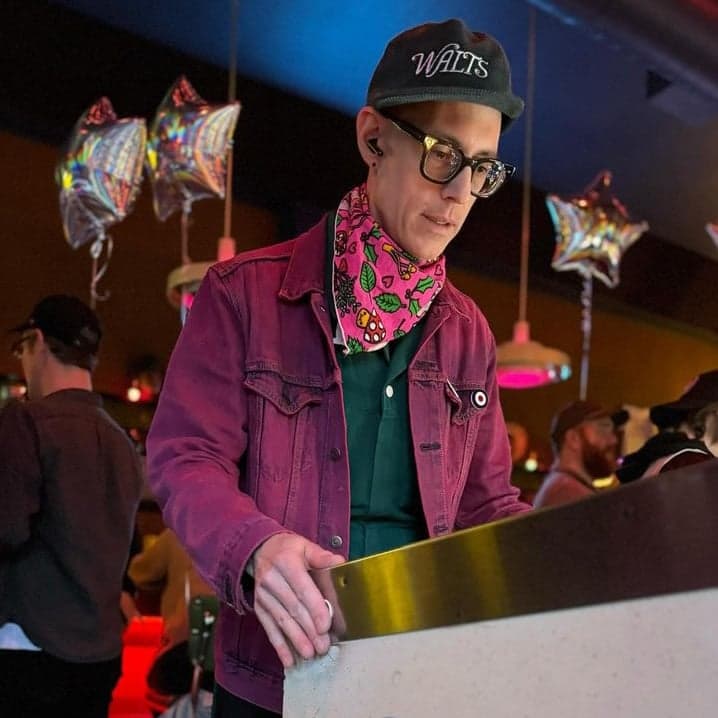
Benjamin Plotkin grew up flipping pins in bowling alleys in the 1970s…then he got distracted by the video game boom of the 1980s. Completing his "prodigal son" arc post-pandemic, he has returned to the hobby with a passion and focus that, frankly, scares him just a little bit. Benjamin plays in multiple leagues and weekly tournaments in and around Los Angeles and enjoys keeping his pinball machines – including a well-loved Stern Electronics Stars – up and running. He keeps himself in quarters leading a team of student software developers at a state university, and in a past life, he was a music journalist, writing and editing for a number of trade publications. Someday he's going to get the band back together, too.
Like what you're reading?
Get pinball news, analysis, and deep dives delivered to your inbox.
Related Posts
More in Interviews or browse all topics.