
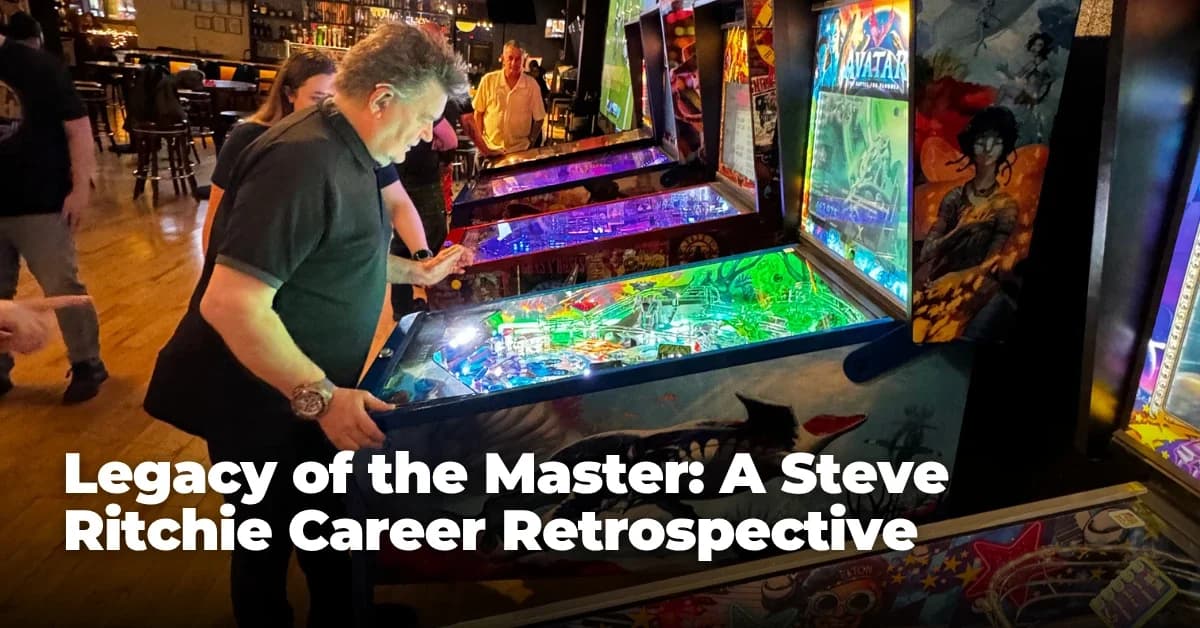
Steve Ritchie entered the gaming industry as the 50th employee at Atari in 1974, and made the jump to pinball design in 1977. Nearly half a century later, at Pinball Expo 2026, Ritchie announced his retirement from the coin-op games industry. We salute the Master of Flow with this career retrospective, highlighting his most celebrated, iconic, and impactful contributions to pinball across multiple generations.
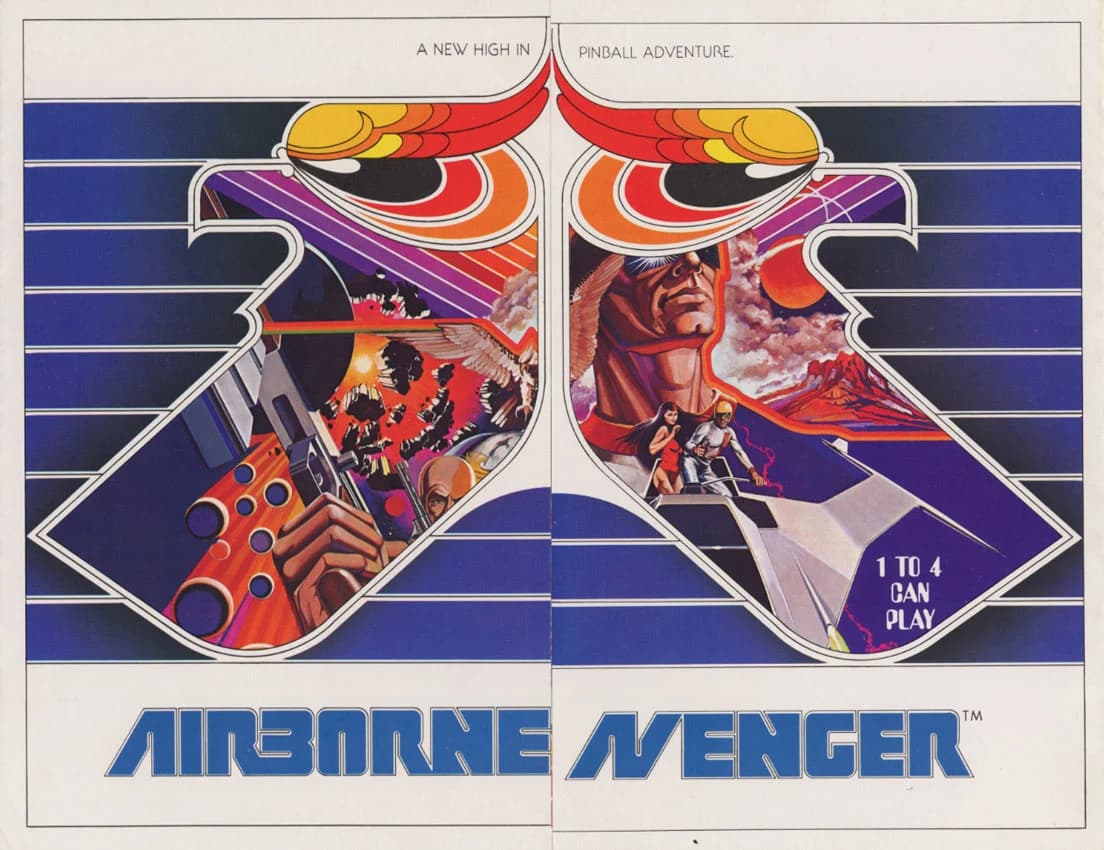
His Pinball Debut: Airborne Avenger (Atari, 1977)
When Atari first opened a pinball division in 1976, they were at the forefront of solid state technology. The Atarians was one of the first solid state games from any manufacturer, was certainly the first solid state widebody, and dared to be different by replacing conventional rollover switches with magnetic induction sensors and placing player score displays on the apron rather than the backglass. Where they fell short early on, though, was in their designs. 1976’s The Atarians and 1977’s Time 2000 have playfields that seem incoherent by modern standards, with flippers and saucers scattered about and scoring that doesn’t really correlate to the difficulty of a task. Steve Ritchie brought new philosophies to the table with Airborne Avenger at the end of 1977, bringing back skill shots, spinners, a captive ball, and attainable, intuitive progression. Airborne Avenger still suffers from having a little bit more room on the playfield than it knows what to do with, but is by far the best offering from Atari’s first couple years, and sold over 3,000 copies.
The Move to Williams: Superman (Atari, 1979) and Flash (Williams, 1978)
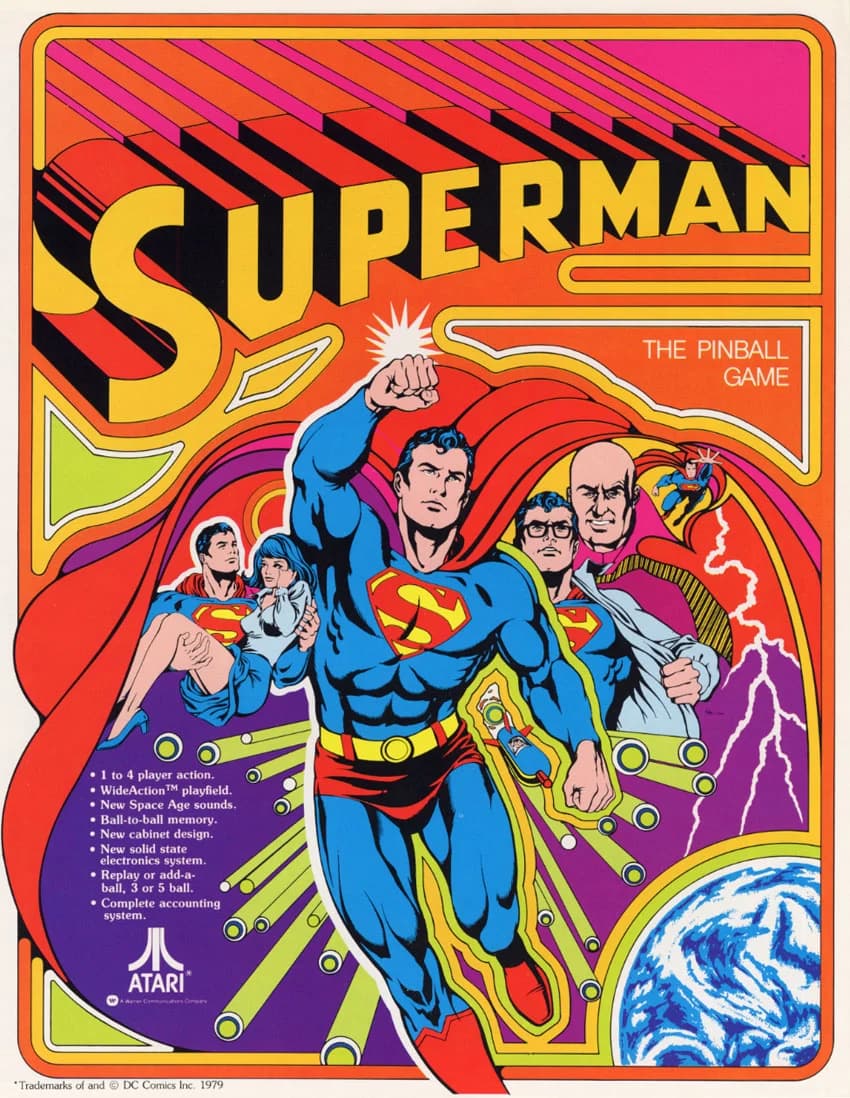
Ritchie’s second and final game at Atari, Superman, had a notably long development cycle in its day. When some designers were cranking out three or four designs into production every year, Ritchie reportedly spent about 13 months working on Superman with sound and software designer Eugene Jarvis, going through many whitewood designs in the process. During this time, Ritchie conceptualized constant electronic background noise for Superman, but to his surprise, the ideas were shut down by Atari management. Before Superman reached production in March of 1979, Ritchie left to work at Williams, where he describes being much happier.
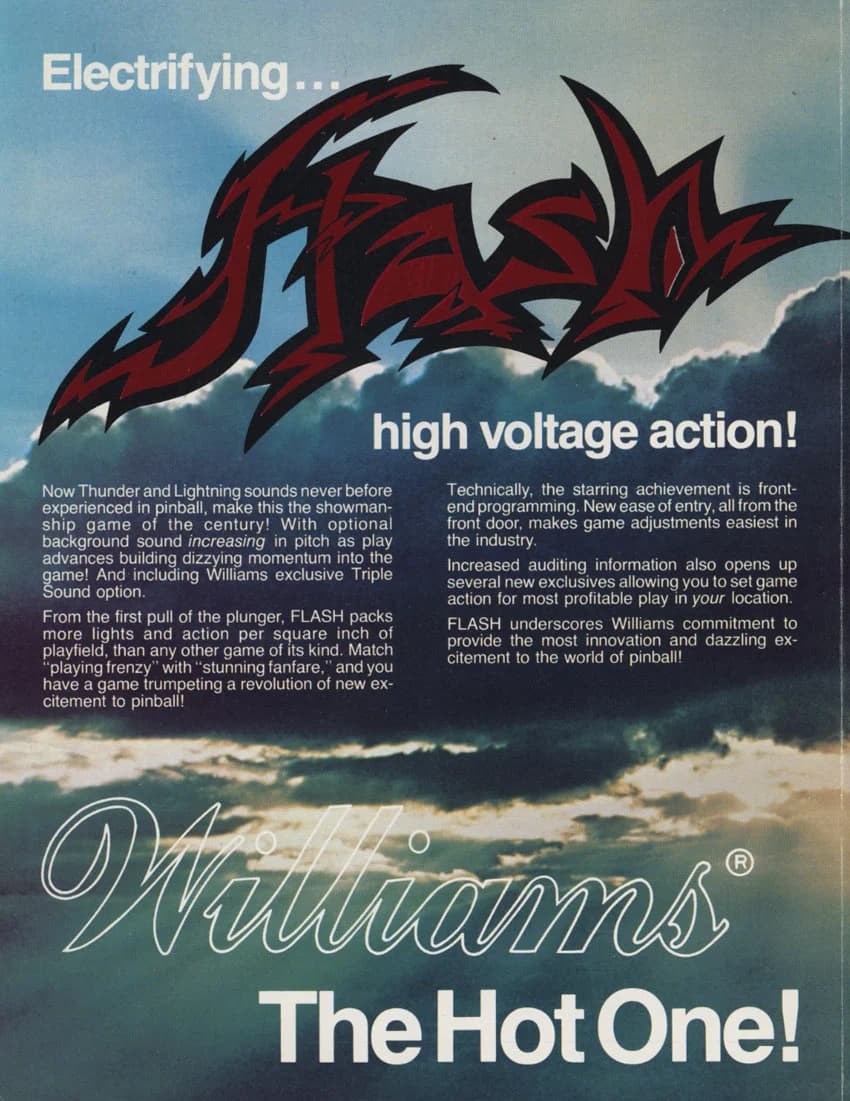
Steve Ritchie hit the ground running at Williams, quickly devising the game Flash, which had a sample run in late 1978 and a celebrated production run of over 19,000 units in the first half of 1979. The similarities between Superman and Flash are apparent, especially with respect to the layout and rules of the top lanes and center drop targets. With Flash, though, everything evolved one step further. Flash offered the background noise that Ritchie was looking for on Superman; the world’s first decorative, computer-controlled flashing lamps; intense, eye-catching artwork on a black background; and one of the earliest loopable upper flipper shots in pinball. At 19,505 copies sold, Flash remains the best-selling Steve Ritchie game, and still has the third-highest confirmed sales number in flipper pinball history.
Enter Multiball: Firepower (Williams, 1980)
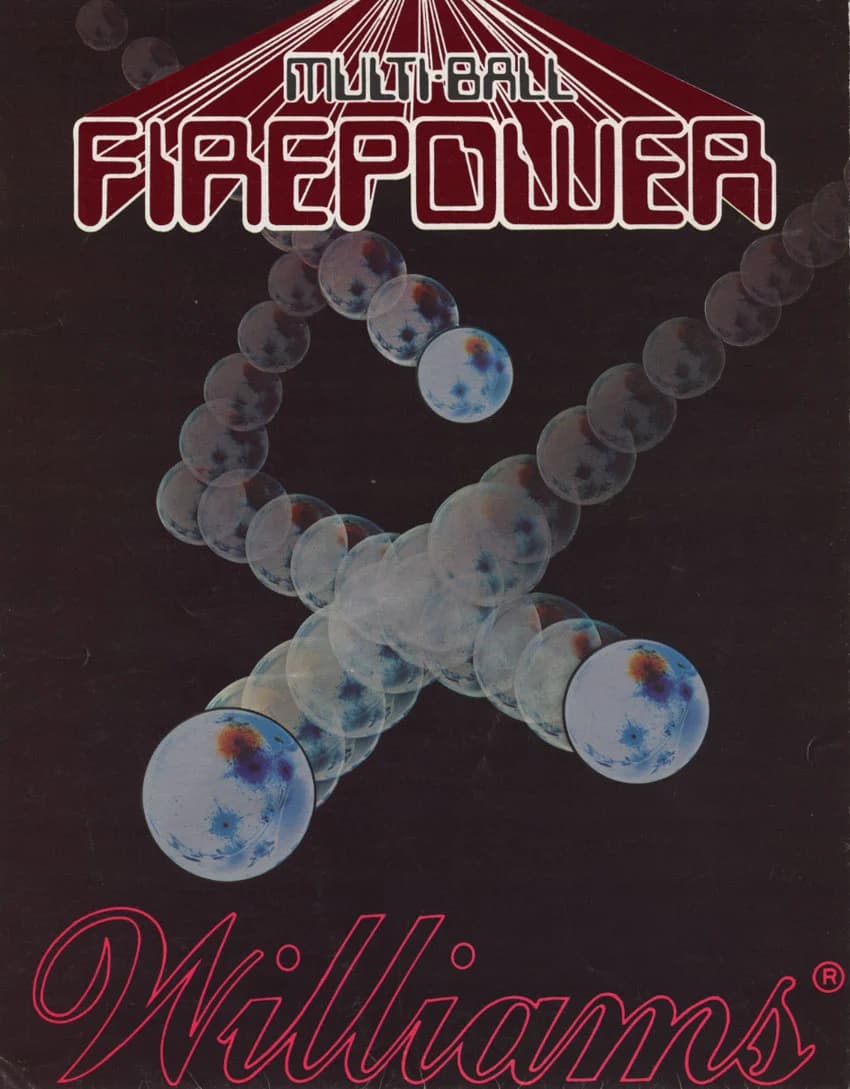
Following Flash and the widebody Stellar Wars in 1979, Steve Ritchie was ready to make more giant leaps in pinball with Firepower, which reached production early in 1980. Firepower needs no introduction for hardcore pinball fans: it was the first solid-state game with multiball, and it was also the first game to introduce flipper lane change, allowing players to move lights on the top lanes with the right flipper button to complete them faster. Firepower pulls out all the stops on the available hardware and creates an iconic pinball experience. Firepower later received a sequel, simply dubbed Firepower II, designed by Steve’s brother Mark in 1983.
The Dawn of a Franchise: the Black Knight series
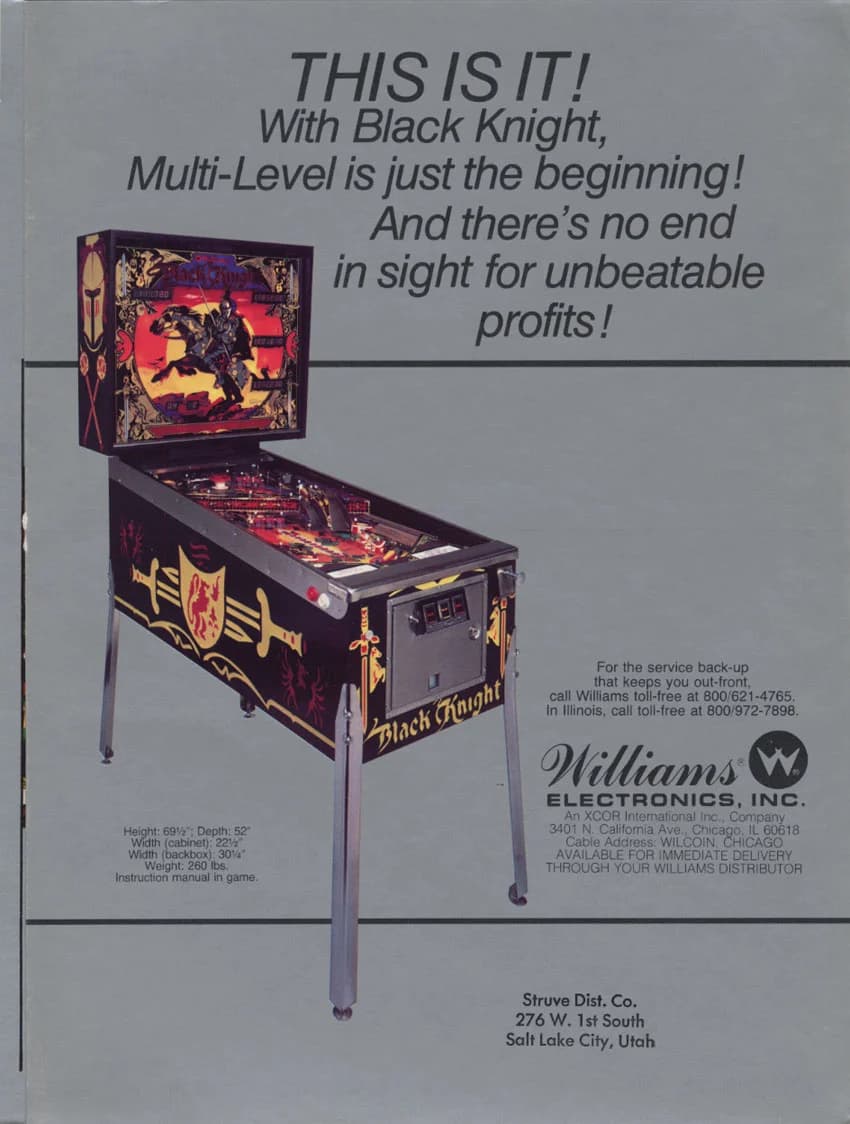
Firepower’s hardware was, by all internal accounts, only barely able to run its software. The countdown sequence to multiball requires precise memory manipulation to ensure scores don’t get corrupted and give out phantom free games. Steve Ritchie’s vision for a follow-up required a new processor — the Williams System 7 — and a new “background” firmware program to handle it all programmed by Larry DeMar. The result was 1980’s Black Knight, one of the single most innovative pinball machines of all time. Black Knight introduced magna-saves, playfield multipliers during multiball, a solid-state multi-level playfield, faceted inserts, and timed bonus balls — and to put a cherry on top, Steve Ritchie himself provided the voice of the eponymous Black Knight, taunting players throughout the game. The magic of Black Knight was often imitated but never duplicated, both by competitors (see also Bally’s Flash Gordon and Elektra, Stern Electronics’ Lightning, and Gottlieb’s Black Hole) and by Williams themselves (see also Pharaoh, Jungle Lord, and Solar Fire).
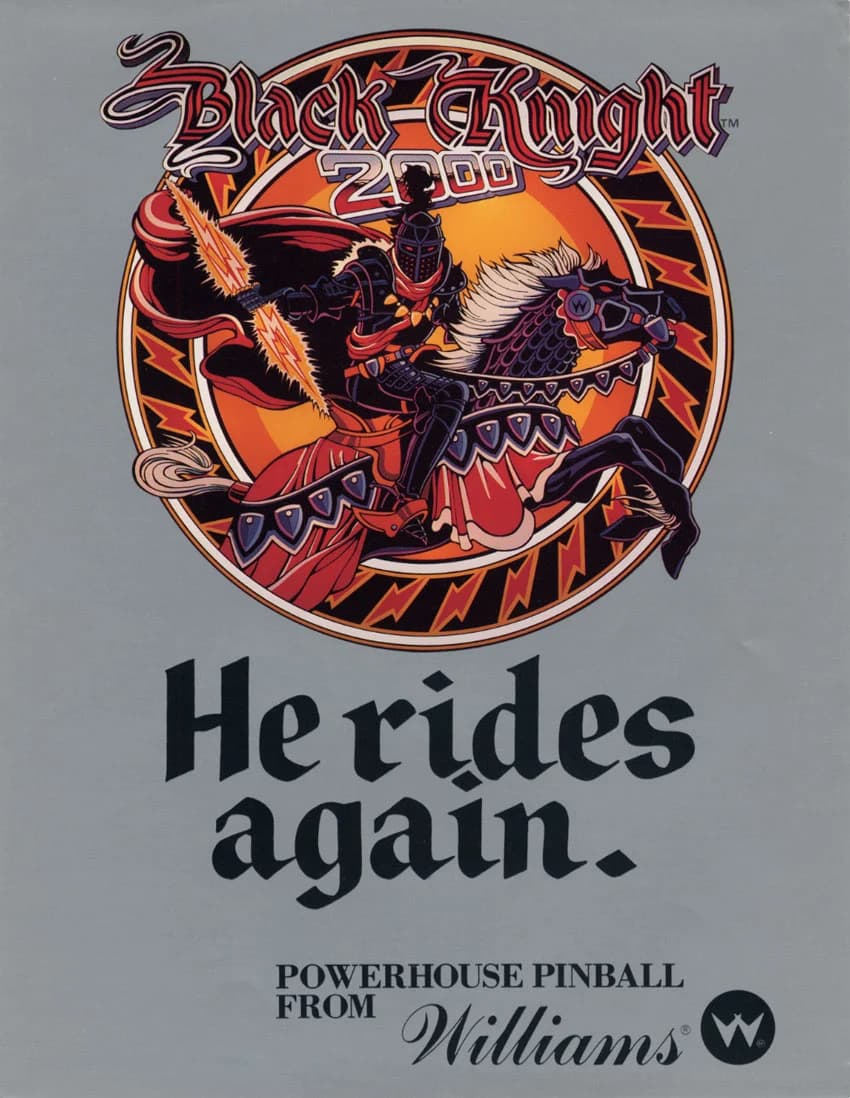
Black Knight received two sequels, both also designed by Steve Ritchie. Black Knight 2000 was released in 1989, and is best known for its catchy, 80s-nostalgia music and for (arguably) introducing the concept of the wizard mode to pinball with The King’s Ransom carryover award; Ritchie also reprises his role as the voice of the Black Knight. Black Knight: Sword of Rage, by Stern Pinball, was released in 2019, and is considered one of the finer recent efforts from Stern due to its satisfying shot layout and its balance of the novel and the familiar; it was Ritchie’s second-to-last game at Stern after more than 15 years there.
An Industry Revitalized: High Speed (Williams, 1986)
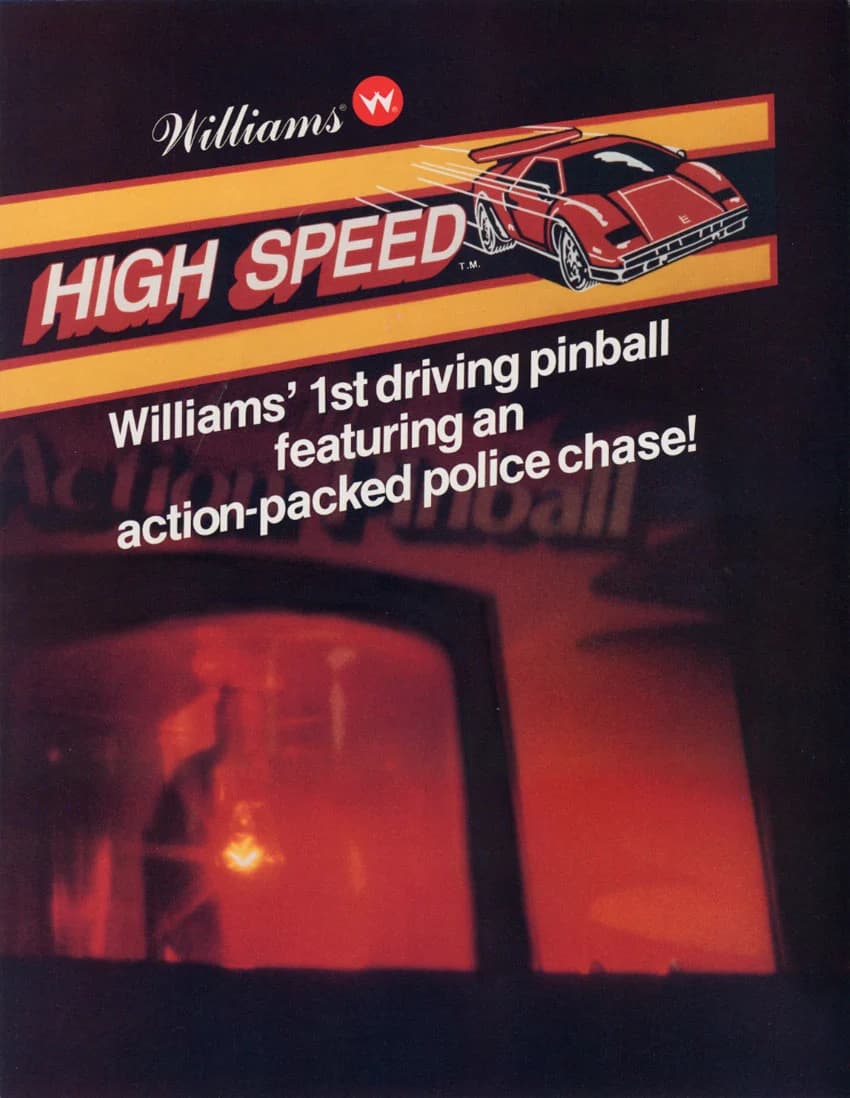
After founding King Video Design and working in the video game world for a few years, Steve Ritchie returned to pinball in 1985, and his first design of this new era was High Speed in early 1986. Chronicling Ritchie’s own tale of getting chased by police for driving his Porsche at 146 miles per hour, High Speed certainly lives up to its name, and is one of the first games to really personify Ritchie’s nickname of “the Master of Flow”. High Speed’s historical significance lies in both its features and its legacy. The game was the first to play a full song; the first with a carryover or multiball-exclusive jackpot; the first game with autopercentaging; the first game with broken switch compensation; and the first game with an operator report. It was also Williams’ first foray into the alphanumeric world, a frontier previously reached by Wico Games and Premier Gottlieb. Beyond that, though, High Speed is also credited with saving the pinball industry, sparking new interest in flipper games after the original early-80s arcade craze had died down. With 17,080 copies produced, it is Steve Ritchie’s third-best-selling game, trailing only the aforementioned Flash and Firepower.
Setting the DMD Standard: 1991-1995
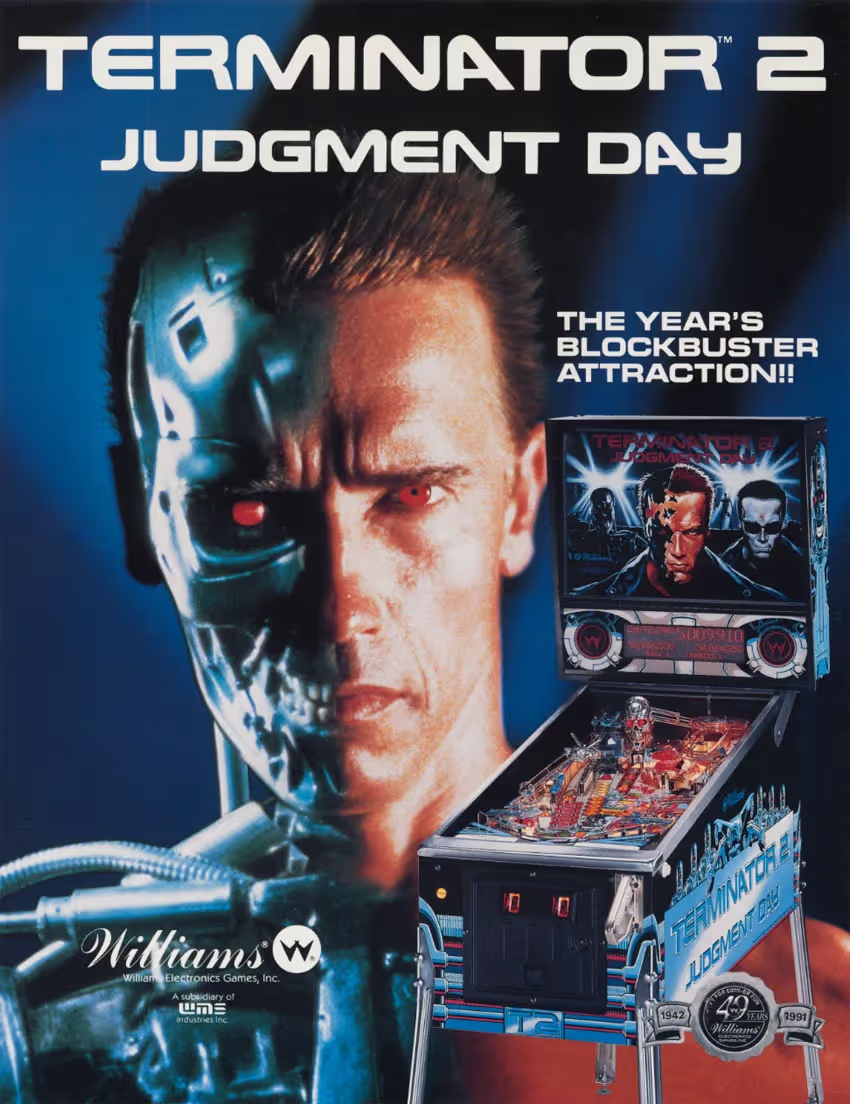
Terminator 2: Judgment Day was intended to be the first game by the recently-merged Bally Williams company to feature the all-new dot matrix display technology, previously pioneered by Data East on their game Checkpoint. T2 ended up being preceded by Gilligan’s Island to give T2 a little bit more time and also to better align the pin’s release with that of the film. Terminator 2 includes quotes and callouts from Arnold Schwarzenegger himself and is famous for its long, looping shots, its combo potential, the first-ever video mode, and for the ultra-rewarding Payback Time mode where every shot gives big points. Terminator 2 was followed by:
- The Getaway: High Speed II (1992), featuring the Supercharger ramp using magnets to send balls flying at ludicrous speeds
- Star Trek: The Next Generation (1993), including the voices of the TV show characters; it was the last game to sell 10,000 copies for many years, but modern games like Stern Pinball’s Godzilla have likely eclipsed the mark
- No Fear: Dangerous Sports (1995), a high-octane mashup between Terminator 2 and The Getaway featuring an aerial jump ramp and bringing back the voice of Ritchie himself as the Skull
Stern Pinball and Beyond: 2003-present
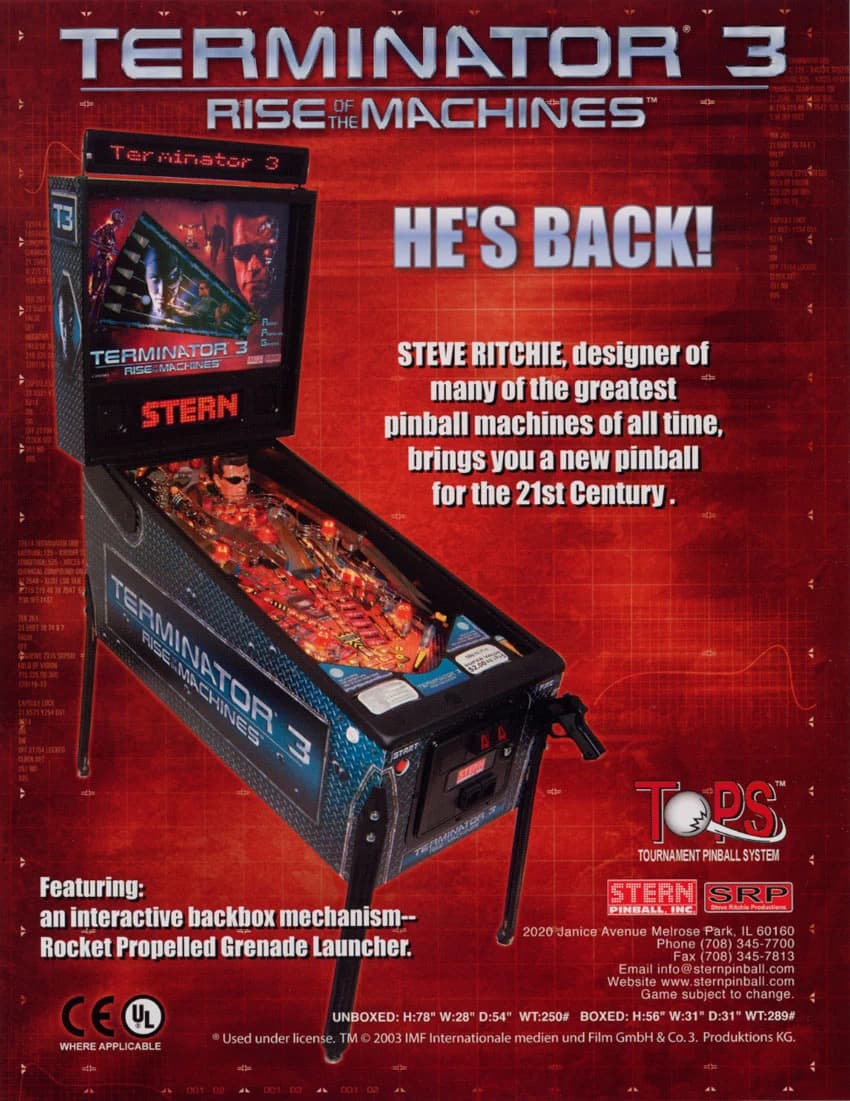
Following the release of No Fear, Ritchie again decided to jump to the video game side of the arcade, joining Atari Games for the next handful of years. During this time, the “pinball crash” of 1999 took place, with Bally Williams leaving the industry and Sega selling their pinball division back to Gary Stern to form Stern Pinball. In 2002, Stern hired Ritchie as a contractor, and his pinball re-debut came in the form of 2003’s Terminator 3, based on the sequel to the 1991 film and inspired heavily by the 1991 table. Terminator 3 was followed by Elvis, World Poker Tour, Spider-Man, and 24 during the remainder of the 2000s.
To cut costs during the Great Recession, Ritchie was dismissed by Stern following the completion of 24, but he was rehired in 2011 for a second stint. This re-re-return brought us AC/DC, Star Trek (2013), Game of Thrones, Star Wars (2017), Black Knight: Sword of Rage, and Led Zeppelin. AC/DC has been in the news recently thanks to Stern’s announcement of a coming AC/DC remaster, though Stern credits the reimagining of his AC/DC playfield to John Borg.
In 2021, Ritchie jumped to Jersey Jack Pinball, where he released two final games: Elton John in 2023 and Sonic the Hedgehog in the summer of 2026. Following the successful launch of Sonic, Steve Ritchie announced his retirement from the gaming industry at Pinball Expo in October 2026. All of us at Kineticist and in the pinball world at large wish him a long and happy retirement at his home in Nevada.

Sources: Internet Pinball Database (ipdb.org); Williams software history by lkoziarz.
Comments