

Steve Kordek was born on Boxing Day 1911 in Chicago, Illinois, where he would live for his entire life. In 1937, he got caught in a rainstorm near the factory headquarters of Genco, a local pinball and amusement games manufacturer, and ducked inside for shelter. There, he was offered a job basically on sight — and what ensued was a career in pinball spanning eight decades and nearly 100 machines. Enjoy this look back on the life of an industry icon.
His Flipper Pinball Debut: Triple Action (Genco, 1948)
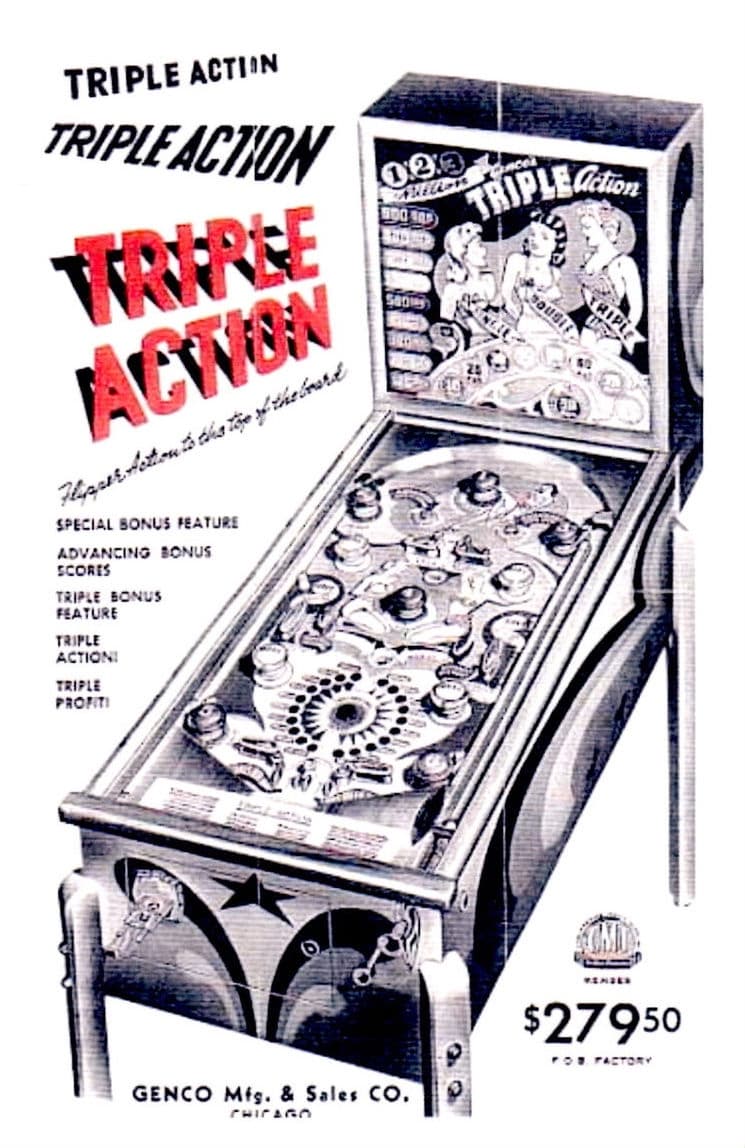
Steve Kordek started his time at Genco on the production line, building flipperless pinball machines as well as devices like walkie-talkies during World War II. It took him the better part of a decade to work his way up into an engineering role. As the story goes, with just a few short months until a major pinball exposition of 1947, Genco’s lead designer fell ill, and Kordek was called up to design a machine that would rock the industry. He did just that with Triple Action, Genco’s first game with flippers, and the first game by any manufacturer to include just two flippers at the bottom of the playfield. (Kordek was previously credited on Broncho earlier in 1947, but that game never shipped with flippers, and it was Triple Action that really put him on the map.) Triple Action’s flippers, called “action bumpers”, were still a far cry from those of today: they faced outward instead of inward, were single-stage and couldn’t be held up, and would both be triggered at once when either flipper button was pressed. Nevertheless, they caught the industry’s attention for using direct-current power to be able to send the ball up the whole playfield, at a time when Gottlieb needed three pairs of flippers on Humpty Dumpty to compete.
The Move to Williams: Bo Bo (1961)
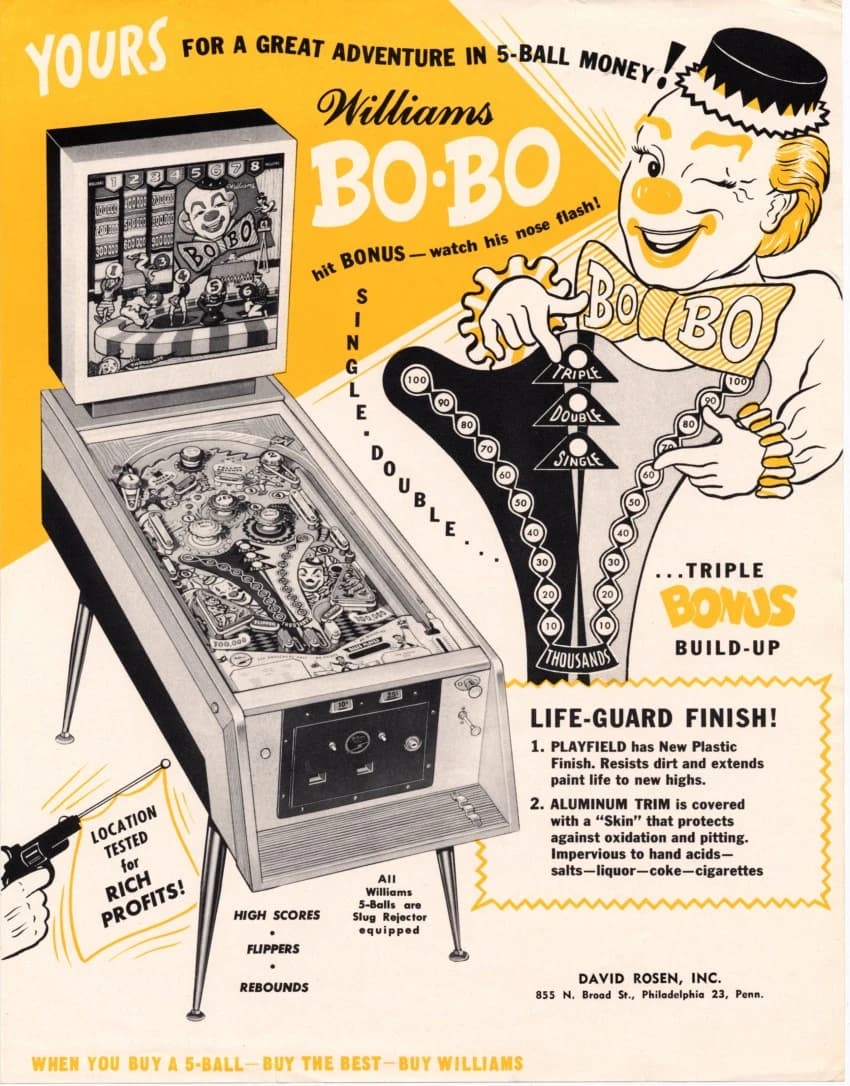
Kordek worked at Genco for the remainder of the 1940s and 1950s, but is only credited on IPDB as the designer for two games at Genco following Triple Action: 1948’s Bone Head, which had less than 100 copies produced, and 1950’s Flying Saucers. When Genco merged with rival Chicago Coin in 1959, Kordek parted ways, joining Williams instead. His first design of any kind with Williams was the gun game Space Glider in 1960; he rejoined flipper pinball at the beginning of 1961 with Bo Bo. By now, his two flipper design had become commonplace in the industry, and Bo Bo seems to take quite a bit of inspiration from Triple Action, with two carryover bonuses that can be tripled. Only 400 copies of Bo Bo were produced, but the game physically stands out from others thanks to its “Styling of the 60s” featuring shiny aluminum trim and a drink tray sticking out from the front of the game.
The First Drop Target: Vagabond (1962)
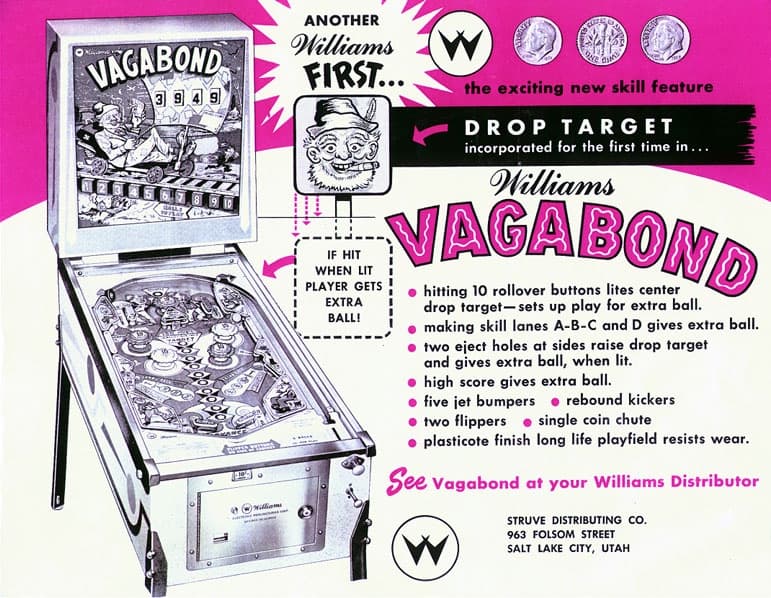
In the 1950s, the phrase “drop target” would have referred to a mechanism seen only on a few Gottlieb games wherein hitting a target would cause a piece of plastic on the table to drop down into the cabinet. Notably, though, the target itself never moved. Steve Kordek took it upon himself to redefine the term with his design for Vagabond in the fall of 1962. This reimagined drop target is, itself, the piece that drops down under the table, and skillful shots into side saucers were needed to manually raise it. In many of these early instances of drop targets in the modern sense, they were standalone targets with their own progression and high value: it would take Gottlieb nearly ten years, and Williams nearly fifteen, to devise a “bank” of multiple adjacent drop targets with incentives for clearing them all.
The First Multiball…? Beat the Clock (1963)
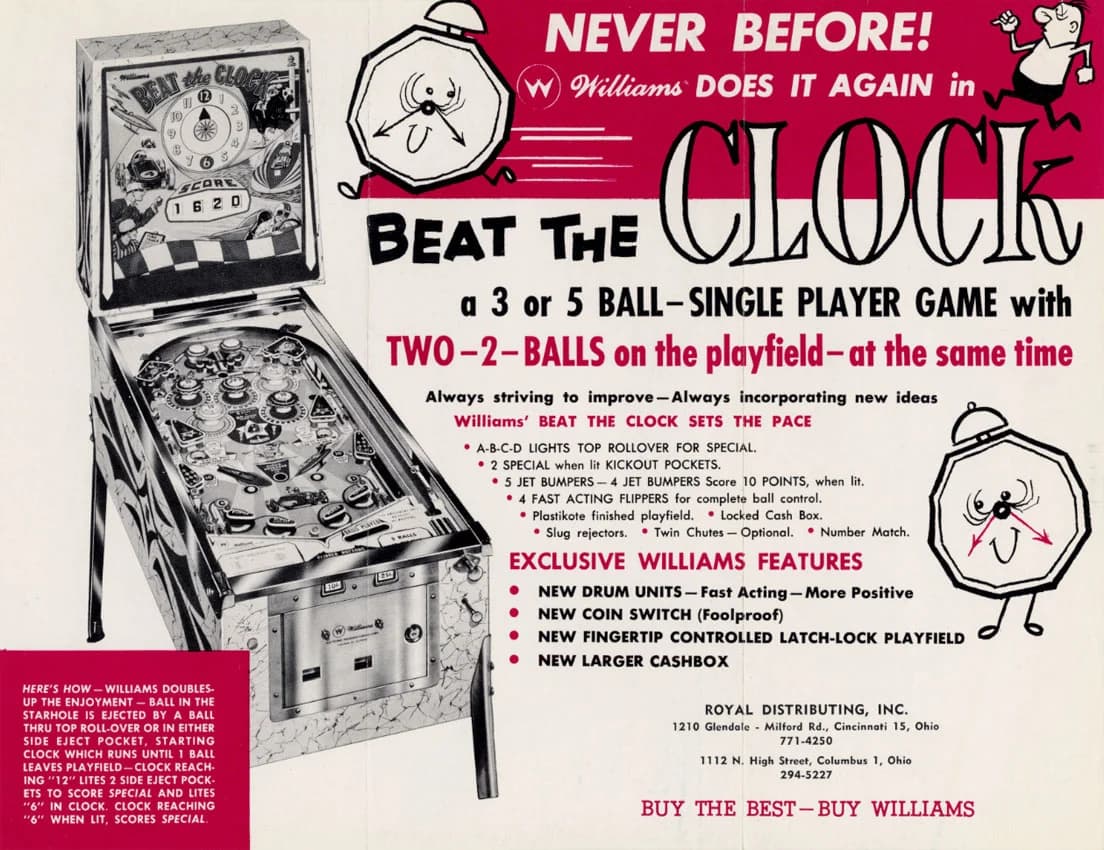
The concept of “the first multiball in pinball” can be a bit of a rarefied definition. Any game with a manual ball lift equipped with three or five separate balls can technically have a player-initiated multiball just by serving and plunging one ball without waiting for another one to drain. Bally’s Balls-a-Poppin’ from 1956 is often cited as the first multiball reward; it works by building up a ladder of ‘advances’, then automatically firing balls based on the advances recorded when a center saucer is made. Beat the Clock, designed by Steve Kordek for Williams in 1963, is considered the first game to feature the now-familiar method of locking a ball, then releasing it for multiball later. The one caveat: both of them counted toward the total of 5 balls you can play in a game, so it’s a little bit like intentionally getting a ship captured to give yourself a twin fighter in Galaga at the cost of one of your lives. Whenever two balls are in play, a motor mechanism gives points and moves the hands of a clock every real-time second until a ball is relocked or drains, giving a level of fast-paced action not often seen in 1960s pinball.
The Last EM Gobble Hole: San Francisco (1964)
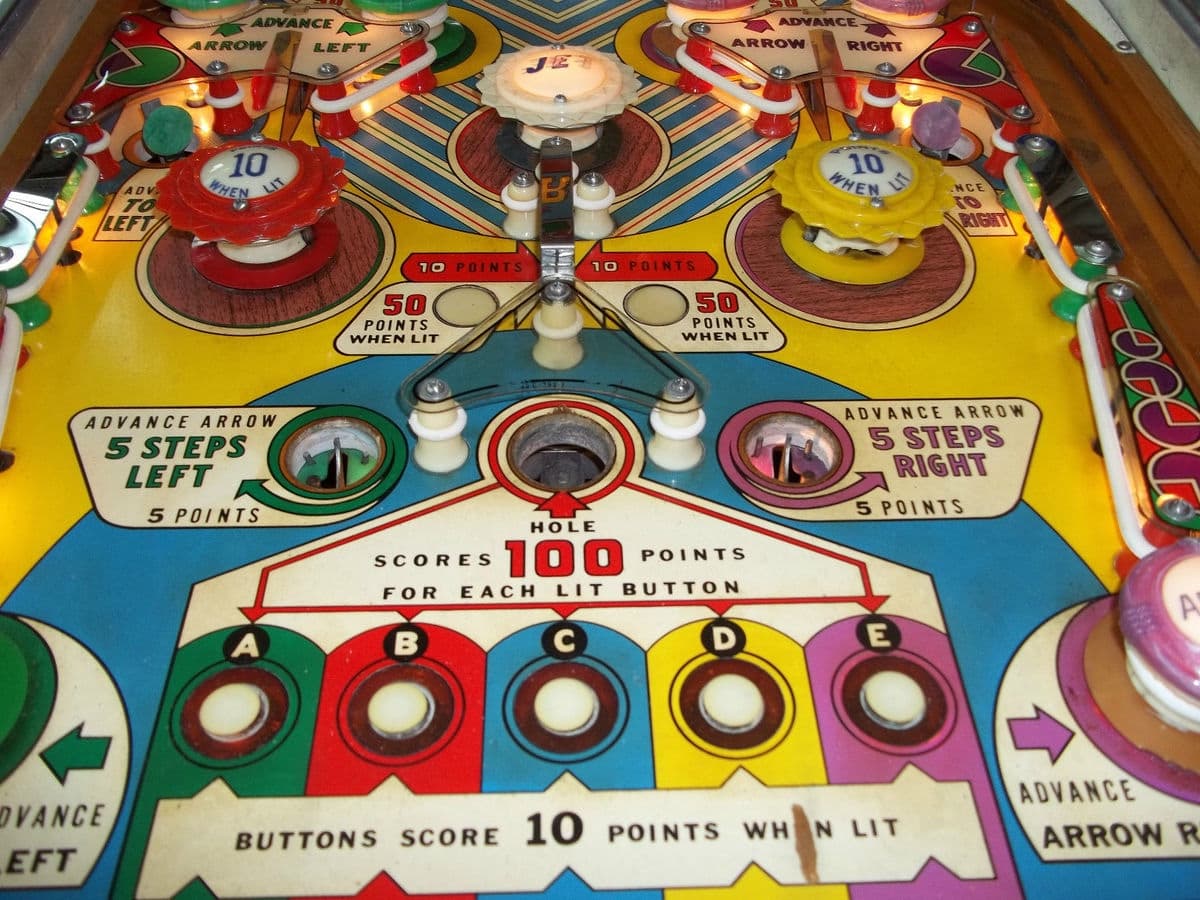
For much of the early 1960s, pinball was still trying to shake its reputation as a gambling device, pushing slogans like “a game of skill” and “it’s more fun to compete!” to win over new generations of players and stay on the good side of contemporary politicians. Whether those particular methods were helpful can be debated, but one key turning point can be seen in a Steve Kordek design: the last electromechanical game to include a gobble hole. Gobble holes are drain holes on the playfield: they are often located smack in the center of the playfield, but can also be along the edges, or anywhere else that’s not between the flippers. A significant portion of the games from the 1950s and 60s to include gobble holes have a way to light one or more Specials at said holes, and make it far easier to earn a free game by paying a ball for one rather than earning it entirely through skill. The gobble hole on San Francisco doesn’t give free games, but can award as many as 500 points, on a game where nothing else gives more than 50 at once. The removal of gobble holes after San Francisco — or at least, the decision to completely leave them in the world of bingo games — was one of many steps that paved the way for Roger Sharpe’s famous “called shot” and the sweeping pinball legalization efforts of the 1970s.
Kordek’s Greatest Hits of the 60s and 70s
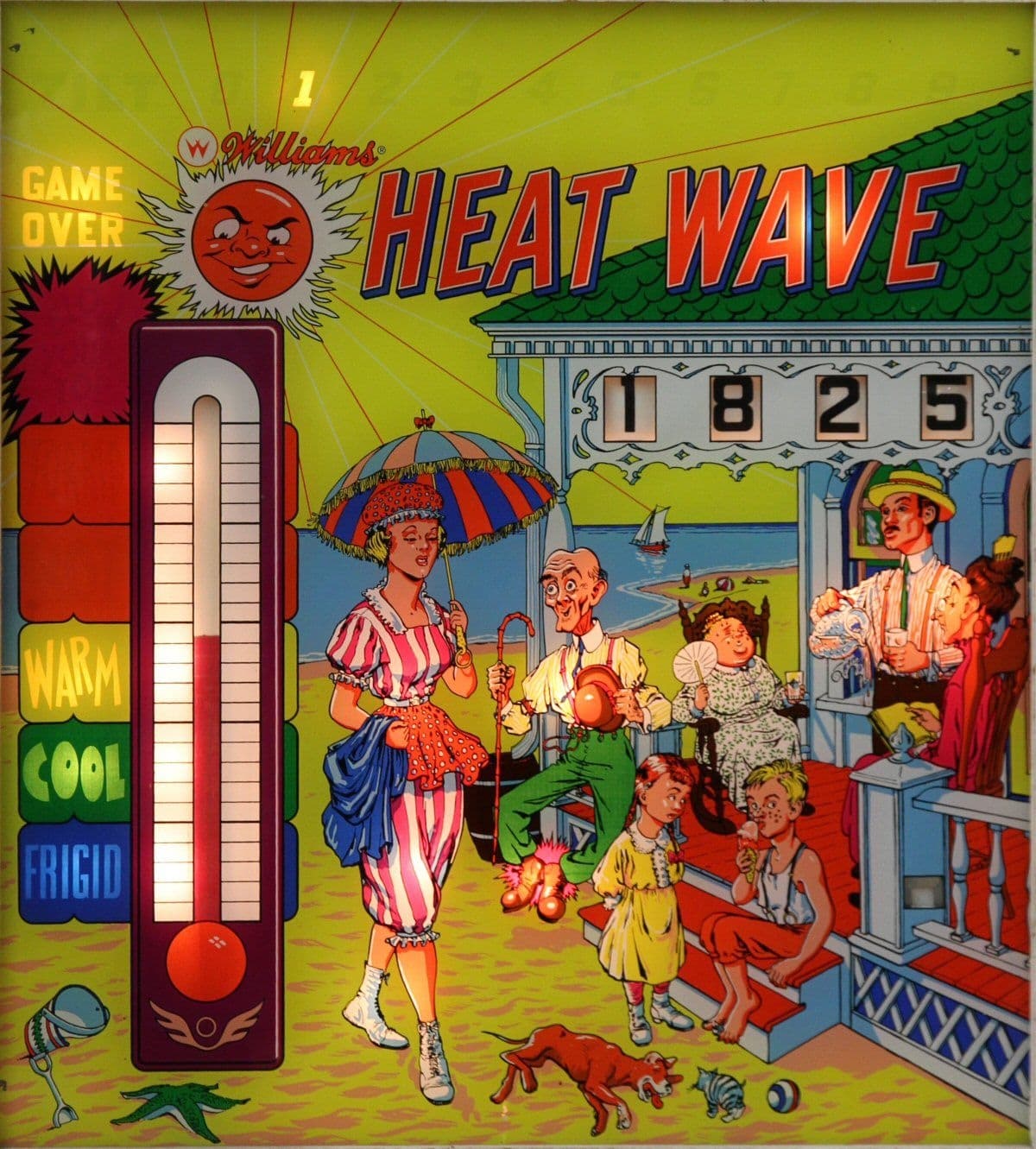
For the fifteen years spanning 1961-1976, Steve Kordek was one of the hardest-working men in pinball, designing anywhere from 4 to 6 games every single year and totalling nearly 100 designs by the end of the electromechanical era. Just a few highlights from that time include:
- Heat Wave (1964), a remarkably fun layout with one of the deepest single-game progression rulesets of any pre-1970s machine
- Hot Line (1966), which can form the letters in its own name by lighting up rollover buttons in a large grid on the playfield near the flippers
- Student Prince (1968), mentioned previously in the Exploring EMs series as the highest user-rated EM machine across all of IPDB
- Jubilee and Darling (1973), featuring 5 captive balls in a “looping” u-turn mechanism with rewards for getting them all on one side, later seen on games like Skylab and Big Bang Bar
- Space Mission and Space Odyssey (1976), his best-selling design with nearly 16,000 copies produced across the 4- and 2-player versions combined
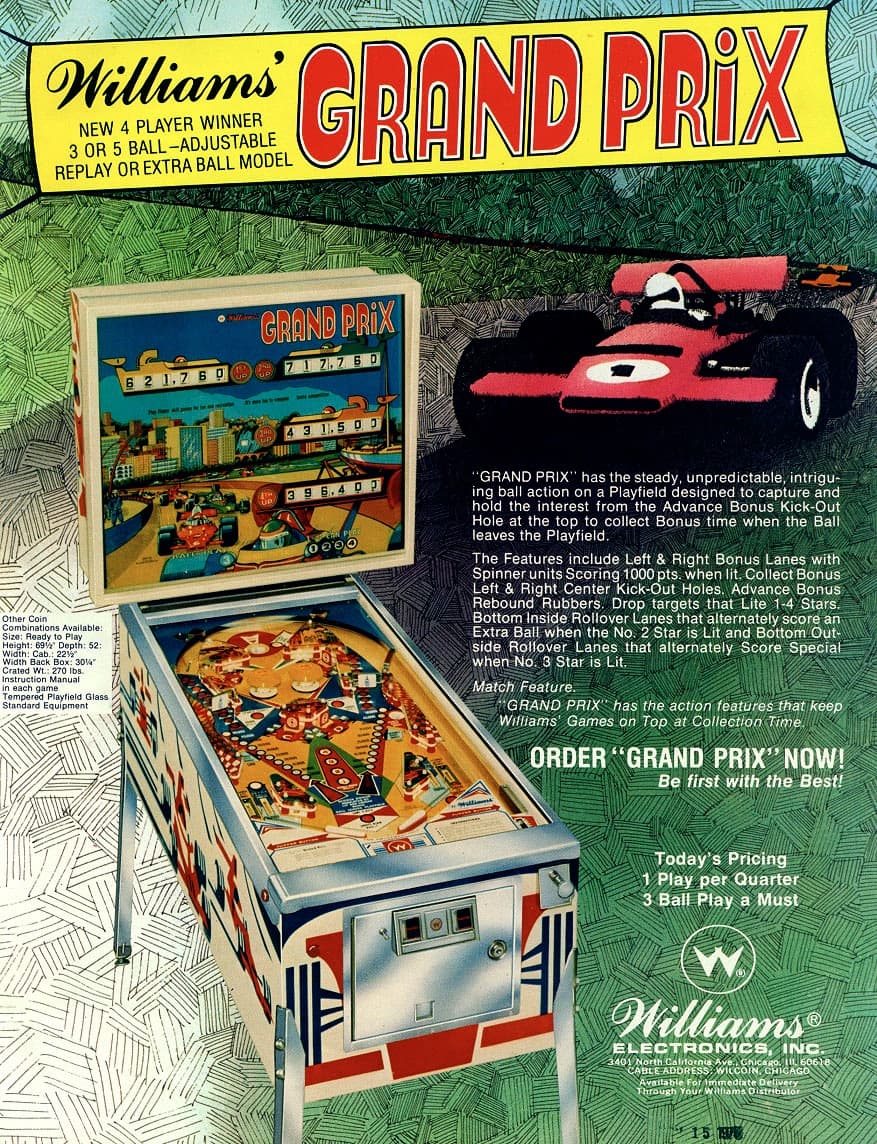
- Grand Prix (1976), a frequent flier in pinball tournaments the world over and commonly considered one of the best and most satisfying spinner shots in pinball
Later Career: The Solid State Era and Beyond
As the solid state boom began in the mid-1970s, Kordek was reaching the age of retirement. Following his last electromechanical game, 1977’s Wild Card, he is credited as designer for two solid state games at Williams: Contact and Pokerino, both from 1978. Neither sold particularly well for the time, and both are looked at quite negatively in retrospect for not using their widebody space particularly well. Shortly thereafter, Kordek stepped away from direct design to take an executive and mentor role at Williams, which he served until Williams left the pinball industry in 1999. Steve Kordek officially retired from the coin-op industry in 2000, but continued to regularly appear at conventions and trade shows to keep up with pinball, meet fans, and host panels well into his 90s. The last game to which Kordek contributed was Vacation America, released by Chicago Gaming in 2003. Steve Kordek passed away in February 2012 at the age of 100, leaving behind a legacy in classic pinball that few other individuals can match.
Sources: the Internet Pinball Database; Time; Pinball News; a 2009 Chicago Tribune article; and PinWiki.




Comments