Audio Appreciation: Six Great Pinball Sound Designers Who Shaped the Sounds of the Game
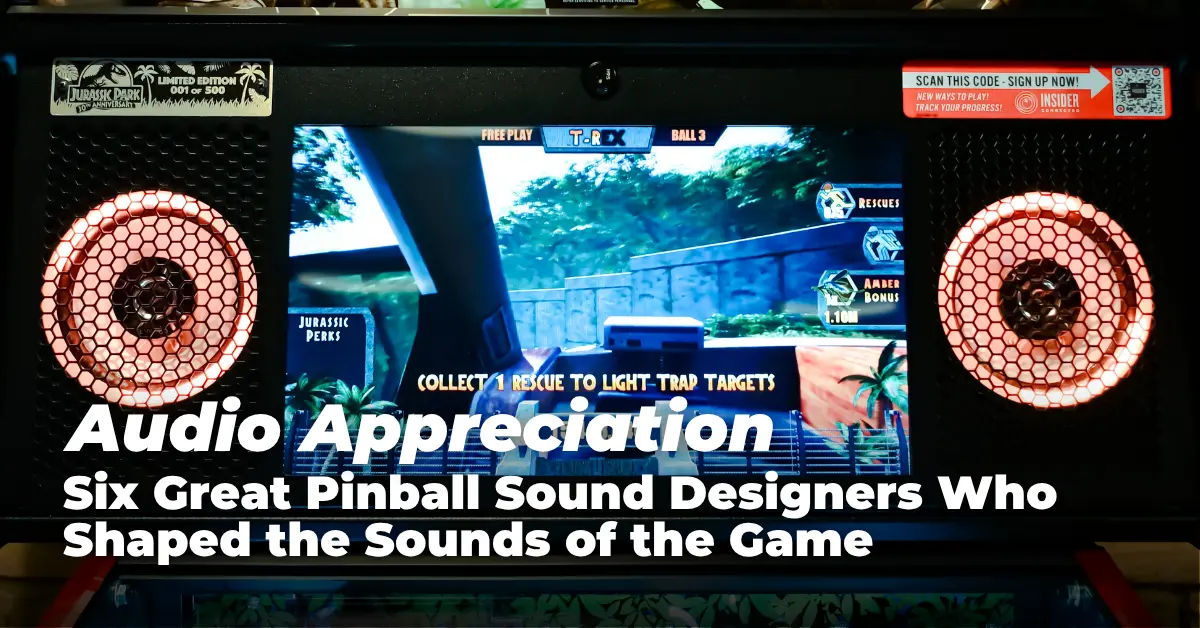
Pinball wouldn’t be pinball without sound design. The chimes of the EM pinball machines of the 60s & 70s are still eponymous with the game to this day, but as the industry evolved and the capabilities of pinball machines improved, sound design did along with it. In my 10+ years of playing pinball, I’ve found myself championing the sound design of tables even at locations where they might be tough to hear; and though you might see me wearing headphones a lot, sometimes I’ll just be listening to what I can of the machine’s audio.
For this article I wanted to highlight 6 of the all-time great pinball sound designers, regarding both music and shot sound design. The designers will mostly range from the 80s up until today, though I will touch on some of the sound designers who made older pinball machines iconic for their own reasons.
Chris Granner
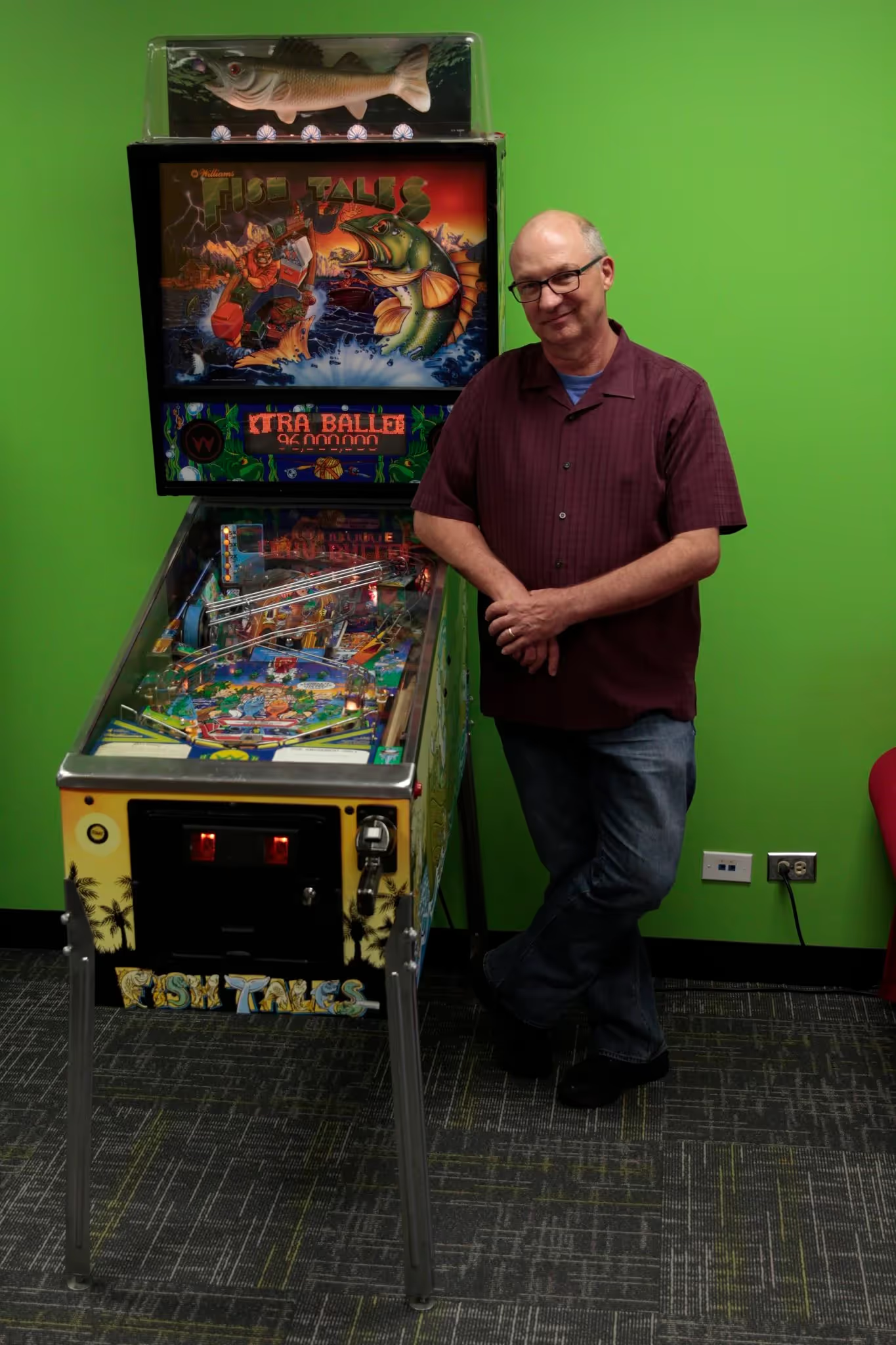
If you’ve played an 80s or 90s Williams table, chances are you’ve heard the work of Chris Granner without even realizing it! Granner was responsible for some of the earliest full audio tracks in pinball, including the ones played on Road Kings and PIN*BOT, with the help of Bill Parod. He was also heavily involved during the early production of Williams’ DCS sound system, which debuted on Indiana Jones: The Pinball Adventure and pushed pinball sound design to new levels.
Main Theme (Raft 1) - White Water (pinball music)
A ton of Granner’s work remains iconic – my personal favorite works of his are the myriad of excellent tracks on Whirlwind including one of the all-time classic jackpot collected themes, and the excellent main play theme on White Water that changes with every raft advanced. It could be argued that without Chris Granner and by extension Bill Parod, pinball sound design wouldn’t be anywhere near the level that it is today.
David Thiel

David Thiel’s name has been spreading around the pinball circuit ever since it was announced he was doing the audio for JJP’s Harry Potter pinball machine, and he’s had quite the history before working on that table, dating back to Gottlieb’s Q*Bert’s Quest. Thiel became a consistent name in pinball sound when he joined Data East and worked with their stereo sound equipment, which debuted on their first ever pinball machine, Laser War. After taking a break from pinball for most of the 1990s and 2000s, Thiel would return to Stern Pinball and make a name for himself with sound design that bridged the gap between subtle sound effects referencing the machine’s theme and full-blown exciting compositions. He also worked for JJP for a short time prior to the Harry Potter release and provided freelance audio for CGC’s Pulp Fiction and American Pinball's Barry O’s BBQ Challenge.
Main Theme (1980s) - Time Machine (Data East - pinball music)
I’ll fully admit I’m quite biased here as I feel that David Thiel’s work, even on his 80s tables for Data East, holds up incredibly well; I recommend anyone reading this to give the audio on Time Machine or Monday Night Football a listen, which dynamically changes to accompany the pitch of the current music. We also have him to thank for the excellent audio on Stern’s TRON: Legacy, purposefully calling back to sound design from earlier pinball machines but also evolving sound design in a way that wasn’t possible on those earlier tables.
Brian Schmidt
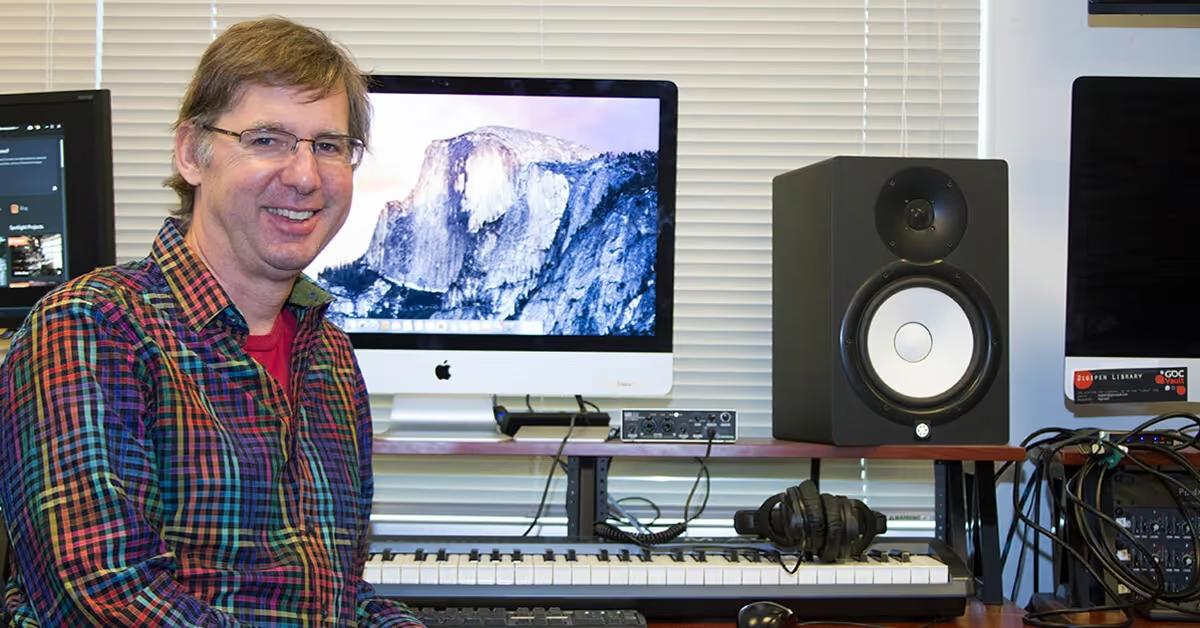
Brian Schmidt might be the only designer here to have an entire sound card named after him! If you’ve played a Data East or SEGA table, you might be familiar with the BSMT sound system (the abbreviation is short for “Brian Schmidt’s Mouse Trap”), and his audio can be heard on almost every table they released. Before working for Data East starting in 1990, he got his career started at Williams with a bang as lead sound designer on Space Station and Banzai Run. He would return to Stern after a short break from pinball following the shutdown of Data East / SEGA in 1999.
Country - Checkpoint (pinball music)
Schmidt’s audio is distinguished by its high energy, with some of his tracks being the fastest tempo tracks on any table. Despite the inherent limitations of the BSMT sound system, Schmidt was able to push through and produce some stellar tracks. My personal favorite works of his outside of his recreations of existing music are his soundtrack for Checkpoint, a passion project with six tracks of different styles and generic tracks; the jackpot collected theme from Rocky & Bullwinkle that remixes the show’s credits theme to an absurd degree; and the audio he created for The X-Files that utilizes some of the instruments used in the show’s iconic intro theme to create entirely new pieces.
Dan Forden
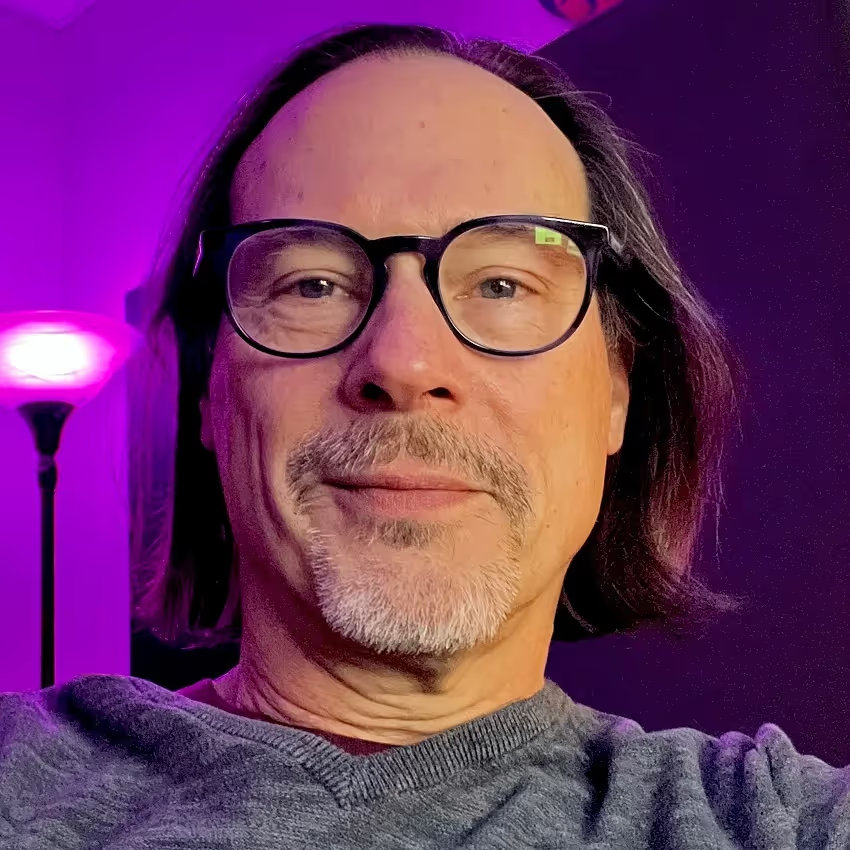
You read this right – before working on Mortal Kombat, Dan Forden worked on many Williams & Bally pinball machines as a sound designer! His earliest success was composing the hair metal influenced main theme to Black Knight 2000, one of the most famous tracks in pinball history, and he continued to contribute audio to Williams up until their 1999 closure.
Main Theme - Bad Cats (pinball music)
Forden’s tracks go above and beyond with incorporating the machine’s themes into their composition. My absolute favorite examples are his audio for Bad Cats, which intentionally evokes the Alice Cooper song “Gutter Cat & the Jets”, and the 50s doo-wop inspired audio for Mousin’ Around! that perfectly fits its cartoony art style. Forden was also capable of creating solid recreations of real songs using the Williams sound design, as both The Party Zone and The Getaway: High Speed II prove.
Vince Pontarelli
Ever played a pinball machine and thought to yourself “wow, this machine rocks”? Chances are, if you hear an electric guitar on a 90s Williams table, you have Vince Pontarelli to thank. Pontarelli lent his guitarist talents to Williams & Bally starting with their 1993 pinball machine, Judge Dredd, one of the earliest pinball machines to use the DCS sound system and one of Williams’ best sound packages ever created. You can also hear his music on World Cup Soccer during the multiball theme, and throughout the entirety of Monster Bash. He also helped contribute guitar samples to machines like Corvette that otherwise had sound design led by other composers.
Main Theme - Judge Dredd (pinball music)
There’s not a lot of pinball music I listen to regularly outside of playing the machine, but Pontarelli’s work has made it into my audio playlists on a regular basis, and his work proved that DCS was a sound system with almost no limits. As I mentioned earlier, Judge Dredd’s entire soundtrack provides a strong first impression for him, with the standouts being the slow & moody main play tune, and the hectic multiball & ultimate challenge themes. He also did an amazing job with the audio on No Good Gofers, contributing some rocking guitar themes for starting multiball and scoring a super jackpot.
Jerry Thompson
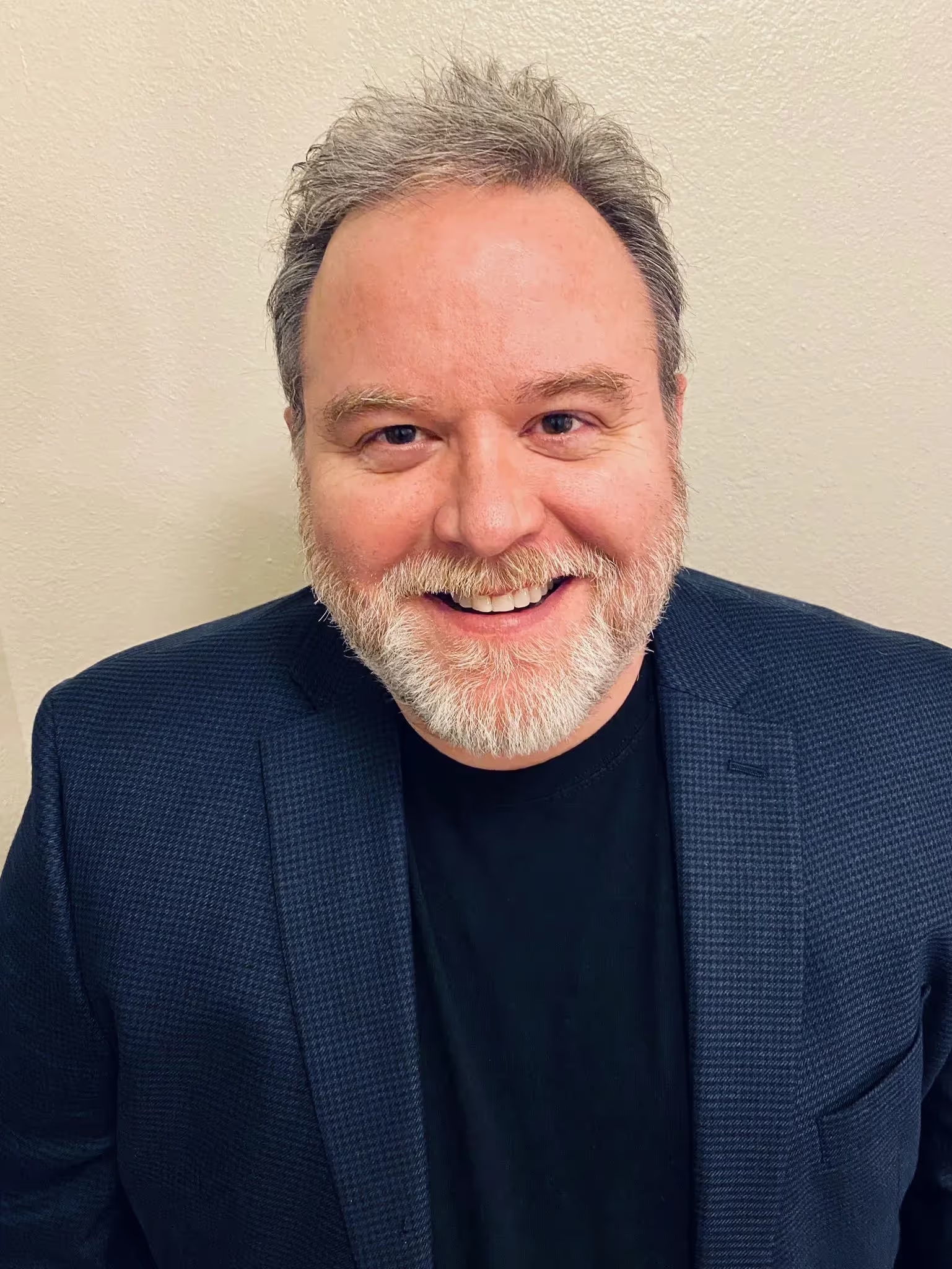
The last sound designer on our list is an interesting case, and is the most recent of all of the designers, having joined Stern in 2015. Like some of the designers before him, Jerry Thompson’s work isn’t entirely original, using some existing music associated with the license and some found via production music libraries; but does it really matter when you’re *this* good at sound design? Thompson is essentially the face of Stern Pinball’s sound design at this point and understands the importance of hooking players in with sounds that make you feel like you’re progressing through the game regardless of skill level.
Turtle Power Multiball / Game Over (edited) - Teenage Mutant Ninja Turtles (Stern - pinball music)
Oddly I would best compare Thompson’s work to Brian Schmidt’s sound design for Data East’s 90s tables. A lot of the sound effects on those are very recognizable especially after having played them enough, and as a massive fan of Godzilla I can certifiably claim that sounds like the audio for hitting the upper loop repeatedly or collecting an imposter battle award are iconic and deserve to be ranked up there with some of the best sounds in pinball. The music in the table isn’t too shabby either, with special mentions going to the rocking audio during monster rampage and the intense tracks that play throughout both planet X and king of the monsters wizard modes. Thompson’s work on King Kong: Myth of Terror Island is no different; making the gong feel good to hit is a talent that can only be accomplished by a great sound designer, and Thompson more than fulfills this role.

VHS collector, media archivist, and pinball rules aficionado, Noah has been invested in the hobby since he was a teenager - much to the surprise of his parents and others his age. As an expert on brand new machines he’s the guy to call if you’re new to the hobby, or an experienced player who wants some help. Noah hopes to participate in and perhaps even win major tournaments like INDISC as his skills improve and desires for pinball to become a more inclusive hobby.
Like what you're reading?
Get pinball news, analysis, and deep dives delivered to your inbox.
Related Posts
More in Pinball or browse all topics.